
Elizabeth Hamilton (2) (1758–1816)
Author of Letters of a Hindoo Rajah
For other authors named Elizabeth Hamilton, see the disambiguation page.
Works by Elizabeth Hamilton
Associated Works
The Other voice : Scottish women's writing since 1808 : an anthology (1988) — Contributor — 10 copies
Tagged
Common Knowledge
- Other names
- Hamilton, Eliza
- Birthdate
- 1758-07-25
- Date of death
- 1816-07-23
- Gender
- female
- Occupations
- poet
novelist
essayist - Relationships
- Hamilton, Charles (brother)
- Short biography
- Elizabeth Hamilton was born in Belfast, Ireland, into a Scottish family. Her father died before she was a year old, leaving his widow and three children with no means of financial support. Elizabeth was sent to live with her paternal aunt and uncle, the Marshalls, near Stirling, Scotland. They paid for her to attend boarding school, where she studied writing, geography, French, drawing, music, and dance. When she was 14, the Marshalls moved to Ingram's Crook in rural Scotland and that same year, Elizabeth was briefly reunited with her brother Charles, who was going off to work for the East India Company. Through their subsequent correspondence, Charles supplemented his sister's education by suggesting a reading list of books and discussing them with her. Elizabeth's relationship with Charles was the most influential of her life. When he returned to Scotland with a commission to translate the Hedaya, a commentary on Islamic laws, into English, Elizabeth served as his research assistant. In 1788, she accompanied him to London, where they lived together for two years. When Charles finished the Hedaya and was reappointed abroad, Elizabeth returned to Ingram's Crook. A few months later, she received the news that Charles had died of consumption. He had urged Elizabeth to pursue a literary career, and after his death she published Eastern scholarship, as well as historical, educational, and theoretical works. Her three-volume satirical novel Memoirs of Modern Philosophers (1800) brought her fame and in 1804, she was awarded a royal pension from King George III. That year, she moved back to Scotland, settling in Edinburgh, where she was part of a lively social scene and managed the Edinburgh House of Industry, a women's shelter and training facility. Her 1806 book The Cottagers of Glenburnie achieved both critical and popular success. Elizabeth continued to write and publish until 1816, when she died while undergoing treatment for an inflammation of the eye.
- Nationality
- UK
- Birthplace
- Belfast, Northern Ireland, UK
- Places of residence
- Stirling, Scotland
Edinburgh, Scotland
London, England, UK - Place of death
- Harrogate, England, UK
- Associated Place (for map)
- UK
Members
Reviews
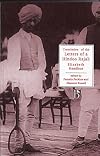
In the tradition of Montesquieu's Persian Letters and Goldsmith's Citizen of the World, Hamilton gives us the epistolary British adventures of Zaarmilla, raja of Rohilkand, as related to his friend Maandaara (these names have a total of six macrons between them, which I have omitted). Hamilton's politics were the wrong ones, which is forgivable on its own,but it makes it all the more jarring when Zaarmilla moves from Eastern naif to authorial mouthpiece, laying on the sarcasm with a trowel. show more Hamilton knows full well that her screeds against late eighteenth-century species like sentimentalists and defenders of the commons and skeptorationalists in the model of David Hume take on a different valence coming out of the mouth of the unimplicated, decent foreigner of breeding, and she milks it. Certainly, though, this novel is interesting from the feminist POV, and has a lot still to say to people who don't know where they stand on the "tolerance of others' intolerance" East/West questions of our own historical moment. And several of the character sketches are cute, and you get a lot of insight into the William Jonesian construction of India and Sanskrit as the Greco-Rome and Classical language, respectively, of the East--although that then gets deployed problematically in the service of a discourse justifying British imperial dominance of India as "liberation" from Mughal Mohammedanism. And so on. show less
You May Also Like
Associated Authors
Statistics
- Works
- 7
- Also by
- 1
- Members
- 101
- Popularity
- #188,709
- Rating
- 3.5
- Reviews
- 1
- ISBNs
- 59
- Languages
- 2