
John Hamilton (6)
Author of Isle Royale
For other authors named John Hamilton, see the disambiguation page.
John Hamilton (6) has been aliased into John C. Hamilton.
Series
Works by John Hamilton
Works have been aliased into John C. Hamilton.
Tagged
Common Knowledge
- Gender
- male
Members
Reviews
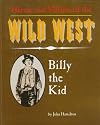
This is a quick to read children's book about Billy the Kid, complete with some of the legends involving him, the passed down stories of his life, and interesting images (photographs, maps, diagrams) to help present the information discussed. Overall, a solid book on the subject matter.
This is a very simple book that methodically guides young writers on how to create their very own mystery novel (or at least a short story). Most appealing is the structure of the book. Perhaps most daunting to young writers is the "how" of putting their many ideas to the page. This direction is where the book ultimately succeeds. Every aspect of a work of fiction--- setting, characters, plot--- is helpfully laid out and not overwrought with too much detail. It's a book for young beginning show more writers and there is a helpful glossary of standard literary terms in the back. I think this series (You Write It!) would be a great addition to any middle school English classroom. show less
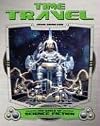
Honestly, I thought it rather lame, and I disagree with the value of most of selections for movies and books. I do agree that SF does have to at least have some attempt at some scientific explanation, though, otherwise it's fantasy... and that one of the best reasons to read SF is for the What If. This book might appeal more to the pre-teen intended audience but I doubt it.
This book is a how-to guide for writing graphic novels. Hamilton gives step-by-step instructions for young writers, beginning with a definition of graphic novel and ending with a list of helpful reading. This book is suitable for grades five and up. The chapters are organized according to steps in the process, from ideas to publishing. Each chapter is an average of 2-4 pages and includes several images of comic books, comic book covers, and comic strips.
As a how-to book it serves its show more purpose, though the ideas given are rudimentary. For a young student – perhaps late elementary or early middle school – it is a good introduction into the world of graphic novels, though even at that age students could understand a book with more specific suggestions and more complex ideas. At the end of the book the author includes two graphic novelist profiles of contemporary writers. Because this book only includes two profiles, they come across as an after thought instead of an intentional section.
Hamilton also includes a list of helpful reading which includes everything from an "idiot's guide" to writing a graphic novel to The Elements of Style by Strunk and White. Though Hamilton's book is a how-to guide, if I were trying to encourage a budding graphic novelist, I would be more likely to give him or her Leonard S Marcus's book Comic Confidential. It is not an explicit set of instructions, but it does create interest in the genre and it introduces readers to young writers from all different backgrounds who have realized their dreams through a variety of ways. Reading about these writers gives the reader an idea of where one can start and what some of the steps in the process are. Hamilton's book also includes a glossary of a handful of words and a fairly thorough index.
However, one major weakness in Hamilton's book is that there is nothing to speak to the author's qualifications. There is no author's note or bibliography, nothing to tell the reader that Hamilton is a reliable source on the topic. The steps he gives students are generic and could apply almost to any other form of writing. Even the two author profiles at the end do not suggest that the writer has done research or read extensively in the genre. There aren't any perceivable errors, but the information given is almost too general to be useful. This book's greatest weakness is that it has no great strength. There is no reason to pull the book an existing collection, but it's not a book I would promote or have any need for in my classroom. show less
As a how-to book it serves its show more purpose, though the ideas given are rudimentary. For a young student – perhaps late elementary or early middle school – it is a good introduction into the world of graphic novels, though even at that age students could understand a book with more specific suggestions and more complex ideas. At the end of the book the author includes two graphic novelist profiles of contemporary writers. Because this book only includes two profiles, they come across as an after thought instead of an intentional section.
Hamilton also includes a list of helpful reading which includes everything from an "idiot's guide" to writing a graphic novel to The Elements of Style by Strunk and White. Though Hamilton's book is a how-to guide, if I were trying to encourage a budding graphic novelist, I would be more likely to give him or her Leonard S Marcus's book Comic Confidential. It is not an explicit set of instructions, but it does create interest in the genre and it introduces readers to young writers from all different backgrounds who have realized their dreams through a variety of ways. Reading about these writers gives the reader an idea of where one can start and what some of the steps in the process are. Hamilton's book also includes a glossary of a handful of words and a fairly thorough index.
However, one major weakness in Hamilton's book is that there is nothing to speak to the author's qualifications. There is no author's note or bibliography, nothing to tell the reader that Hamilton is a reliable source on the topic. The steps he gives students are generic and could apply almost to any other form of writing. Even the two author profiles at the end do not suggest that the writer has done research or read extensively in the genre. There aren't any perceivable errors, but the information given is almost too general to be useful. This book's greatest weakness is that it has no great strength. There is no reason to pull the book an existing collection, but it's not a book I would promote or have any need for in my classroom. show less
Awards


Statistics
- Works
- 223
- Members
- 1,287
- Popularity
- #19,915
- Rating
- 2.9
- Reviews
- 19
- ISBNs
- 847
- Languages
- 4