
Yoel Hoffmann (1937–2023)
Author of Japanese Death Poems: Written by Zen Monks and Haiku Poets on the Verge of Death
About the Author
Works by Yoel Hoffmann
Japanese Death Poems: Written by Zen Monks and Haiku Poets on the Verge of Death (1998) — Editor — 868 copies, 8 reviews
ברנהרט 2 copies
ספר יוסף 2 copies
בפברואר כדאי לקנות פילים 1 copy
Radical Zen 1 copy
Sound Of The One Hand. The 1 copy
קולות האדמה 1 copy
Tagged
Common Knowledge
- Canonical name
- Hoffmann, Yoel
- Other names
- הופמן, יואל
- Birthdate
- 1937-06-23
- Date of death
- 2023-08-25
- Gender
- male
- Education
- Kyoto University (PhD)
- Occupations
- philosopher of religion
fiction writer
translator
professor - Organizations
- University of Haifa
- Awards and honors
- Bialik Prize (2002)
Koret Jewish Book Award (1999)
Newman Prize of Hebrew Literature (1999)
Prime Minister's Prize (2008) - Short biography
- His parents moved to pre-state Israel when Yoel was one. His mother died when he was a child, and he spent years living with various family members and in a children's home until his father remarried. Yoel studied extensively in Japan, translates Japanese poetry, and spent two years in a Buddhist monastery.
- Nationality
- Hungary (birth)
Israel - Birthplace
- Braşov, Romania
- Places of residence
- Galilee, Israel
- Associated Place (for map)
- Braşov, Romania
Members
Reviews
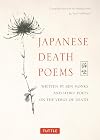
Japanese death poems = [Jisei] / written by Zen monks and Haiku poets on the verge of death ; compiled with an introduction and commentary by Yoel Hoffmann. Related Title: Jisei. by Yoel Hoffmann
GoodReads Review:
Yakuo Tokuken wrote, "The words of a man before he dies are no small matter. This is a barrier that all must pass through." Ryuho also said that Only a man's years can teach him the art of detachment and ultimate departure.
Apt words. Apt words indeed. I think that's the main idea of this book, detachment and the enlightenment of 'ultimate departure.' So much dread and despair and uncertainty hangs around the notion of death that it's paralyzing. This book demystifies death, show more it's a journey. Are these Zen Buddhists certain of where they're going? Probably not, but they don't make a fuss about it. They embrace it, as death surely should be. I think everyone should give this book a read. It'll change your life. show less
Yakuo Tokuken wrote, "The words of a man before he dies are no small matter. This is a barrier that all must pass through." Ryuho also said that Only a man's years can teach him the art of detachment and ultimate departure.
Apt words. Apt words indeed. I think that's the main idea of this book, detachment and the enlightenment of 'ultimate departure.' So much dread and despair and uncertainty hangs around the notion of death that it's paralyzing. This book demystifies death, show more it's a journey. Are these Zen Buddhists certain of where they're going? Probably not, but they don't make a fuss about it. They embrace it, as death surely should be. I think everyone should give this book a read. It'll change your life. show less

A prose poem in 39 parts, which takes the reader through the narrator's youth, from the small child on his grandfather's knee to the young man who finished his army-duty and makes plans to marry and settle down. Hoffmann has a fantastically evocative language mixed with an eye for descriptive detail, which is quite breathtaking at times. I'm not surprised he has been described as "Israel's avant-garde genius." Be prepared for lovely passages such as this one, where growing up (and hormones) show more has changed a young boy's view of his every-day surroundings:
"Girls now have bras, and cotton under-
pants have been replaced by silk.
The school is full of naked bodies (if
one subtracts the clothes from the sum
total) and sometimes, when there's an
assembly and everyone is gathered inside
the gymnasium, apocalyptic visions take
shape (on account of the myriad limbs)."
Even in translation (from Hebrew by Peter Cole), Hoffmann manages to conjure images of youth and growing up which are quite astute. Not an easy read, but quite rewarding once comfortable with the narrator's voice. show less
"Girls now have bras, and cotton under-
pants have been replaced by silk.
The school is full of naked bodies (if
one subtracts the clothes from the sum
total) and sometimes, when there's an
assembly and everyone is gathered inside
the gymnasium, apocalyptic visions take
shape (on account of the myriad limbs)."
Even in translation (from Hebrew by Peter Cole), Hoffmann manages to conjure images of youth and growing up which are quite astute. Not an easy read, but quite rewarding once comfortable with the narrator's voice. show less
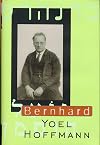
"Bernhard," by Israeli author Yoel Hoffman, is one of those books that has your scratching your head and totally fascinated at the same time. Written in 172 short chapters, Hoffman invites the reader inside the mind of widower Bernhard Stein of Jerusalem. Set between 1938 and 1946, the book begins with the death of Bernhard's wife Paula. Through the next 171 chapters, the reader experiences four spaces: Bernhard's past, Bernhard's present, Bernhard's imagination, and Bernhard's version of show more historical events that occurred during the time-span of the book. These historical events serve as more or less factual touchstones in a work that explores the world according to Bernhard. The storytelling is non-linear and character-driven. I suspect that except for the chronological events, the chapters could be presented in different order. There is no plot. Only Bernhard's life and the characters who inhabit it -- real and imagined. Hoffman's writing is spare and lyrical. This book is confusing and disorienting and thoroughly engaging. show less
I've been on Goodreads for under three weeks and am already finding and dipping into books I'd never heard of. What fun I'm having.
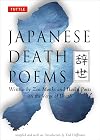
This one acquaints me with the ancient (since 7th c.) Japanese tradition of leaving poems as parting statements at the time of death. That many of the deaths in the first section are the self-inflicted outcomes of seppuku lends a grisly cast. A second section contains the less grisly goodbyes of monks, while the third offers a haiku miscellany, including show more legendary Basho's last, from Nov. 24, 1694, the day he left this world at age fifty-one.
I must confess to being initially underwhelmed by some of these farewell tankas and haikus as given here. It's hard to know whether the fault lies with translation that often doesn't even bother to count the syllables, or perhaps {who knows?) the tradition itself may not always have demanded or inspired the highest artistry in words and image. The little histories given with each poem suggest that many may have been composed on the spot, perhaps during the author's final minutes. It may be that in many cases simply performing the last-poem action in one's death's ceremony may have sufficed. For many, nothing strikingly novel in the use of traditional images like plum blossoms, cicadas, and the Pure Land journey was called for. But who am I, a westerner, to judge and try to balance novelty vs. convention in an ancient culture I can't hope ever to understand?
On a second reading, though, my inner critic is silenced and I am moved by each and every of these cries and sighs.
Basho's own last haiku does not disappoint, though this book's translator doesn't do it justice:
On a journey, ill:
My dream goes wandering
over withered fields.
Here's a better version, by David Bowles:
Ill on a journey,
Through desolate fields my dreams
Aimlessy wander.
And here's my own, somewhat licentious version:
Now journeying, ill;
My dream burns on, fluttering
Over stubbled fields. show less
This one acquaints me with the ancient (since 7th c.) Japanese tradition of leaving poems as parting statements at the time of death. That many of the deaths in the first section are the self-inflicted outcomes of seppuku lends a grisly cast. A second section contains the less grisly goodbyes of monks, while the third offers a haiku miscellany, including show more legendary Basho's last, from Nov. 24, 1694, the day he left this world at age fifty-one.
I must confess to being initially underwhelmed by some of these farewell tankas and haikus as given here. It's hard to know whether the fault lies with translation that often doesn't even bother to count the syllables, or perhaps {who knows?) the tradition itself may not always have demanded or inspired the highest artistry in words and image. The little histories given with each poem suggest that many may have been composed on the spot, perhaps during the author's final minutes. It may be that in many cases simply performing the last-poem action in one's death's ceremony may have sufficed. For many, nothing strikingly novel in the use of traditional images like plum blossoms, cicadas, and the Pure Land journey was called for. But who am I, a westerner, to judge and try to balance novelty vs. convention in an ancient culture I can't hope ever to understand?
On a second reading, though, my inner critic is silenced and I am moved by each and every of these cries and sighs.
Basho's own last haiku does not disappoint, though this book's translator doesn't do it justice:
On a journey, ill:
My dream goes wandering
over withered fields.
Here's a better version, by David Bowles:
Ill on a journey,
Through desolate fields my dreams
Aimlessy wander.
And here's my own, somewhat licentious version:
Now journeying, ill;
My dream burns on, fluttering
Over stubbled fields. show less
Lists
Awards


You May Also Like


Associated Authors
Statistics
- Works
- 32
- Members
- 1,374
- Popularity
- #18,723
- Rating
- 3.9
- Reviews
- 12
- ISBNs
- 48
- Languages
- 6
- Favorited
- 2