
Anastasia N. Karakasidou
Author of Fields of Wheat, Hills of Blood: Passages to Nationhood in Greek Macedonia, 1870-1990
Works by Anastasia N. Karakasidou
Associated Works
Ourselves and others : the development of a Greek Macedonian cultural identity since 1912 (1997) — Contributor — 8 copies
Tagged
Common Knowledge
- Other names
- Καρακασίδου, Αναστασία
- Birthdate
- 1956
- Gender
- female
- Education
- Columbia University (PhD, 1992)
- Organizations
- Wellesley College
City University of New York - Nationality
- Greece
USA - Places of residence
- Thessaloniki, Greece (birth)
- Associated Place (for map)
- Thessaloniki, Greece
Members
Reviews
Fields of Wheat, Hills of Blood : Passages to Nationhood in Greek Macedonia, 1870-1990 by Anastasia N. Karakasidou

http://www.incore.ulster.ac.uk/services/ecrd/new/reviews/102.html
This is a gripping and moving account of the construction of Greek nationhood in a municipality near Thessaloniki. Using both oral and official history, Karakasidou reveals how the inhabitants of the town once called Guvezna and now known as Assiros were altered from an Ottoman cocktail of Turks, Slavs and Greeks to the mono-ethnic culture present there today. The space left by departing Turks and Slavs after the town came show more under Greek control was partly filled by refugees forced to resettle in Greek Macedonia after the disastrous war of 1922. They mostly spoke Turkish themselves as a first language, but, like those Slavic speakers who remained in the town, they became assimilated during the course of the twentieth century. "In many ways," the author concludes, "the past has become very much a foreign country to the Assiriotes". (p.217)
But this book is not just about Macedonia, it is about nation-building. Karakasidou complains that "while there is overwhelming concern among Euro-American politicians and diplomats over what nationalism has brought to Eastern Europe in recent years, many seem unaware of the fact that nation-building processes are a longue duree", (p. 146) and she describes the process in all its brutality. War, religion, politics and capitalism all contributed to constructing the 'official narrative' of this particular nation in this particular place over the last 120 years.
Cambridge University Press declined to publish this book, fearing attacks on their Greek staff if the crisis over the official name of the Former Yugoslav Republic of Macedonia were to escalate. Fortunately it did not, and many Greeks now look to their new northern neighbour as a business opportunity rather than a military threat. Perhaps Karakasidou's courageous research helped to open up the space in which this became possible. There may be hope for all of us. show less
This is a gripping and moving account of the construction of Greek nationhood in a municipality near Thessaloniki. Using both oral and official history, Karakasidou reveals how the inhabitants of the town once called Guvezna and now known as Assiros were altered from an Ottoman cocktail of Turks, Slavs and Greeks to the mono-ethnic culture present there today. The space left by departing Turks and Slavs after the town came show more under Greek control was partly filled by refugees forced to resettle in Greek Macedonia after the disastrous war of 1922. They mostly spoke Turkish themselves as a first language, but, like those Slavic speakers who remained in the town, they became assimilated during the course of the twentieth century. "In many ways," the author concludes, "the past has become very much a foreign country to the Assiriotes". (p.217)
But this book is not just about Macedonia, it is about nation-building. Karakasidou complains that "while there is overwhelming concern among Euro-American politicians and diplomats over what nationalism has brought to Eastern Europe in recent years, many seem unaware of the fact that nation-building processes are a longue duree", (p. 146) and she describes the process in all its brutality. War, religion, politics and capitalism all contributed to constructing the 'official narrative' of this particular nation in this particular place over the last 120 years.
Cambridge University Press declined to publish this book, fearing attacks on their Greek staff if the crisis over the official name of the Former Yugoslav Republic of Macedonia were to escalate. Fortunately it did not, and many Greeks now look to their new northern neighbour as a business opportunity rather than a military threat. Perhaps Karakasidou's courageous research helped to open up the space in which this became possible. There may be hope for all of us. show less
Fields of Wheat, Hills of Blood : Passages to Nationhood in Greek Macedonia, 1870-1990 by Anastasia N. Karakasidou

A book so controversial that Cambridge University Press caved in to threats and declined to publish it. Why is it controversial? Because Karakasidou, a Greek, dared to say that Macedonia is not Greek, but a multi-ethnic, multicultural region. She has the nerve (the guts?) to speak the truth, that Macedonian is a Slavic language, the Macedonians a Slavic people, even those who live within the geo-political borders of Greece.
Seriously researched, very academic.
Seriously researched, very academic.
Fields of Wheat, Hills of Blood: Passages to Nationhood in Greek Macedonia, 1870-1990 by Anastasia N. Karakasidou
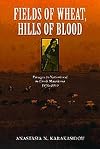
Moving on the border between social anthropology, social history and cultural history, a very interesting book on the nationalisation of a macedonian village
Awards

You May Also Like
Associated Authors
Statistics
- Works
- 2
- Also by
- 1
- Members
- 49
- Popularity
- #320,874
- Rating
- 4.6
- Reviews
- 4
- ISBNs
- 4
- Languages
- 1