
Wendy Walker (2) (1967–)
Author of Emma in the Night
For other authors named Wendy Walker, see the disambiguation page.
About the Author
Image credit: Wendy Walker
Works by Wendy Walker
Tagged
Common Knowledge
- Birthdate
- 1967
- Gender
- female
- Agent
- Wendy Sherman
- Nationality
- USA
- Associated Place (for map)
- USA
Members
Reviews

Laura Heart is back in her home town, staying with her sister and her family while she gets back on her feet. When she disappears after going on a date with a man she met online, her sister Rosie is desperate to find her. But Rosie starts to wonder if Laura is more of a danger than the stranger she went out with.
Ooh, this was good! I couldn't turn the pages fast enough. I wanted the book to just end already because I couldn't stand not knowing what happened to Laura. This is told from show more Laura's point of view and also from Rosie's point of view while she's worrying and looking for her sister. Both sisters' stories are weaved together so well that you don't miss a beat. This book is full of suspense and twists and ugh, did I mention how good it was?! I was pleasantly surprised at a few things.. I thought I had it all figured out but I was wrong. Loved the characters and the depth of this whole book.
Thank you to Netgalley and St. Martin's Press for an ARC. show less
Ooh, this was good! I couldn't turn the pages fast enough. I wanted the book to just end already because I couldn't stand not knowing what happened to Laura. This is told from show more Laura's point of view and also from Rosie's point of view while she's worrying and looking for her sister. Both sisters' stories are weaved together so well that you don't miss a beat. This book is full of suspense and twists and ugh, did I mention how good it was?! I was pleasantly surprised at a few things.. I thought I had it all figured out but I was wrong. Loved the characters and the depth of this whole book.
Thank you to Netgalley and St. Martin's Press for an ARC. show less
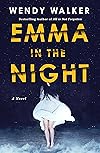
All hail Wendy Walker! I loved her previous thriller, "All Is Not Forgotten," and grabbed "Emma in the Night" immediately. (A second hail for my amazing library system, Arlington County Public Libraries -- my hold arrived the day the book was released.)
Walker nails the true psychological thriller. In "Emma," we meet Cassandra Tanner, who shows up on her mother's doorstep three years after disappearing in the night -- the same night her sister, Emma, also disappeared. But lest you think Cass show more will explain everything that happened, there are really screwed up family dynamics at play, and you *know* she's lying. About some of it, or all of it, or somewhere in between.
The narration switches between Cass and Dr. Abigail Winter, a forensic psychologist with the F.B.I. who just happens to specialize in narcissistic personality disorder, which we soon learn that Cass and Emma's mother likely suffers from. (How tortuous is it to live with a narcissistic mother? When Cass and Emma were kids, Cass begged for a trinket necklace with an angel that reminded her of Tinker Bell from Peter Pan. Emma scoffed at it. Judy, the mother, in turn purchased it for the favored Emma, who wore it every day as a twisted means to torment her sister.)
What I love about Wendy Walker and "Emma in the Night" is that she manages to carve out a unique, compelling storyline in this heyday of thrillers. It's not cliche or overdone; nor the same topic that every other suspense writer is writing and then rewriting. The plot is fascinating and, clearly, well-researched -- I learned a lot, particularly about narcissistic personality disorder.
Consider me sold. I'll pick up anything and everything that Walker writes next. show less
Walker nails the true psychological thriller. In "Emma," we meet Cassandra Tanner, who shows up on her mother's doorstep three years after disappearing in the night -- the same night her sister, Emma, also disappeared. But lest you think Cass show more will explain everything that happened, there are really screwed up family dynamics at play, and you *know* she's lying. About some of it, or all of it, or somewhere in between.
The narration switches between Cass and Dr. Abigail Winter, a forensic psychologist with the F.B.I. who just happens to specialize in narcissistic personality disorder, which we soon learn that Cass and Emma's mother likely suffers from. (How tortuous is it to live with a narcissistic mother? When Cass and Emma were kids, Cass begged for a trinket necklace with an angel that reminded her of Tinker Bell from Peter Pan. Emma scoffed at it. Judy, the mother, in turn purchased it for the favored Emma, who wore it every day as a twisted means to torment her sister.)
What I love about Wendy Walker and "Emma in the Night" is that she manages to carve out a unique, compelling storyline in this heyday of thrillers. It's not cliche or overdone; nor the same topic that every other suspense writer is writing and then rewriting. The plot is fascinating and, clearly, well-researched -- I learned a lot, particularly about narcissistic personality disorder.
Consider me sold. I'll pick up anything and everything that Walker writes next. show less
As you all know, I’m a huge sucker for missing person stories, fiction and non fiction alike. As someone who lurks on the Unresolved Mysteries subreddit, I am fully taken in by disappearances that remain unsolved, but will gladly admit that it’s a bit safer and less exploitative when it’s within fiction. So when I heard about “Emma in the Night”, the story of two sisters who go missing and one of them being found, I knew that I would need to read it ASAP. But little did I know that show more another unsettling reality/thriller trope managed to rear it’s head into this book as well: the narcissistic parent. As someone who also lurks on the subreddit that tells survival tales of escaping narcissistic family members, this was just an added bit of icing onto an already tantalizing cake. But Wendy Walker presented something far more complex and attention grabbing than I thought it was going to be, and does a good job of giving victims and survivors a voice instead of objectifying them for the sake of a good story.
The two different narratives are both steeped in unreliable perspectives. The first is that of Cass, the daughter who came back who clearly has a separate agenda from what she’s presenting to those around her. Through her we start to see that perhaps there are other villains in this world outside of the strangers that lurk behind every turn, and see that she has a deep vendetta against her mother Judy. Judy is a classic narcissistic personality, with a golden child (Emma) and a scapegoat (Cass), and the hatred that Cass feels towards her in palpable. I will admit that as I was going into this I was trying to find all the clues and hints towards what the end game was, but Walker hid them in such a way that I pretty much didn’t find them. Like, at all. I don’t know if my game was off, but the reading experience for me was disorienting in a good way because I KNEW that there was more to the story, but I couldn’t figure out what it was. I liked how much I questioned Cass as well, as while I pretty much believed her and her revulsion for her mother, I still wondered if she too didn’t have problems and ulterior motives because she was raised by a narcissist, and was therefore messed up herself because of it.
Abby, too, was an interesting character, with complexities and flaws that made her unreliable, but also completely sympathetic. She was also raised by a narcissistic mother, and therefore goes into this case with experience and the ability to recognize behaviors when it comes to Judy, Cass, and the missing Emma. She was used in a way for Walker to really put narcissism out there and to really dive into it, as Abby has her own past experiences with it because of her mother. I think that a lot of the time we see narcissistic parents in over the top ways (“Mother, Mother” by Koren Zailckas comes to mind) where they are scary monsters with deliberately violent or abusive tendencies. But in “Emma in the Night” we see a lot more of the less definable traits, like Judy manipulating her children into warfare against each other, or turning on a facade that wins her custody when she is actually a terrible parent. But then, there is the fact that Abby is completely biased, so we end up questioning her too. Because of these various red herrings and inconsistencies between the characters and their motivations, Walker’s sleight of hand distracted me enough throughout the narration that I didn’t see the ultimate prestige coming. Which I greatly appreciated by the time I finished out the book.
I will say that there were a couple of things that I did find a bit too convenient to be really believable. I don’t really want to spoil anything for anyone who might be interested in reading this, because I do think that it’s ultimately worth the read and a solid thriller, but just know that a couple of things within the ultimate solution to the whole thing just kind of felt too coincidental for me to take it terribly seriously. Yes, life is random, and yes, technically anything is possible, but when it comes to probability that’s where certain plot points in this book start to get a little iffy. It’s not enough to put me off, just know that it knocked a couple of points off if we’re keeping score. I think that sometimes authors can get carried away with the red herrings, but Walker actually got carried away with trying to eliminate as many red herrings as possible and to make unreliability more reliable.
Overall I think that “Emma in the Night” did a good job of keeping this reader on her toes. I am definitely going to look into whatever Walker comes out with next (I would actually love to see more of Abby Winter as well), and definitely think that thriller fans ought to give her a go. show less
The two different narratives are both steeped in unreliable perspectives. The first is that of Cass, the daughter who came back who clearly has a separate agenda from what she’s presenting to those around her. Through her we start to see that perhaps there are other villains in this world outside of the strangers that lurk behind every turn, and see that she has a deep vendetta against her mother Judy. Judy is a classic narcissistic personality, with a golden child (Emma) and a scapegoat (Cass), and the hatred that Cass feels towards her in palpable. I will admit that as I was going into this I was trying to find all the clues and hints towards what the end game was, but Walker hid them in such a way that I pretty much didn’t find them. Like, at all. I don’t know if my game was off, but the reading experience for me was disorienting in a good way because I KNEW that there was more to the story, but I couldn’t figure out what it was. I liked how much I questioned Cass as well, as while I pretty much believed her and her revulsion for her mother, I still wondered if she too didn’t have problems and ulterior motives because she was raised by a narcissist, and was therefore messed up herself because of it.
Abby, too, was an interesting character, with complexities and flaws that made her unreliable, but also completely sympathetic. She was also raised by a narcissistic mother, and therefore goes into this case with experience and the ability to recognize behaviors when it comes to Judy, Cass, and the missing Emma. She was used in a way for Walker to really put narcissism out there and to really dive into it, as Abby has her own past experiences with it because of her mother. I think that a lot of the time we see narcissistic parents in over the top ways (“Mother, Mother” by Koren Zailckas comes to mind) where they are scary monsters with deliberately violent or abusive tendencies. But in “Emma in the Night” we see a lot more of the less definable traits, like Judy manipulating her children into warfare against each other, or turning on a facade that wins her custody when she is actually a terrible parent. But then, there is the fact that Abby is completely biased, so we end up questioning her too. Because of these various red herrings and inconsistencies between the characters and their motivations, Walker’s sleight of hand distracted me enough throughout the narration that I didn’t see the ultimate prestige coming. Which I greatly appreciated by the time I finished out the book.
I will say that there were a couple of things that I did find a bit too convenient to be really believable. I don’t really want to spoil anything for anyone who might be interested in reading this, because I do think that it’s ultimately worth the read and a solid thriller, but just know that a couple of things within the ultimate solution to the whole thing just kind of felt too coincidental for me to take it terribly seriously. Yes, life is random, and yes, technically anything is possible, but when it comes to probability that’s where certain plot points in this book start to get a little iffy. It’s not enough to put me off, just know that it knocked a couple of points off if we’re keeping score. I think that sometimes authors can get carried away with the red herrings, but Walker actually got carried away with trying to eliminate as many red herrings as possible and to make unreliability more reliable.
Overall I think that “Emma in the Night” did a good job of keeping this reader on her toes. I am definitely going to look into whatever Walker comes out with next (I would actually love to see more of Abby Winter as well), and definitely think that thriller fans ought to give her a go. show less
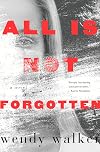
After trying to write this review without spoilers more times than I want to admit, I am just going to have to say that this review may contain spoilers of some sort because I just cannot write about the impressions it made on me without discussing certain aspects of the book. Consider yourself warned.
All Is Not Forgotten touts itself as a thriller. In one light, this is a valid categorization. There is a slow build-up of evidence and tension that reaches a peak and fades away during the show more resolution. There is a mystery to solve in the form of Jenny’s attacker, and one gets to that answer following a very twisted path. However, as is so often the case these days, what the synopsis says the book is about and what the book is actually about are two very different things.
Your first inkling that something is not quite right is the narrator. In the beginning, he is this unknown entity who has taken an interest in Jenny and her family. We don’t know why he has done so, and his attention to detail is a bit disturbing while he remains this unknown figure. Later, the knowledge that he is their therapist should make you feel better, but his self-aggrandizing quickly grows old. More than that, it seems unnecessary and makes you question why he feels the need to tout his credentials.
The next troubling thought is the dawning realization that we never see the story through the victim’s eyes. All Is Not Forgotten may be about Jenny, her assault, and her struggle to recover those memories, but we never find out what Jenny is experiencing in any capacity. Nor do we get inside Tom or Charlotte’s heads from a first-person perspective or even a third-person omniscient point-of-view. We only know what they tell their psychiatrist. While he certainly believes they are incapable of hiding anything from him, human nature is fallible, and the possibility exists that they are indeed keeping secrets from him. Moreover, we lose the intimacy that would exist were we to get their side of the story without someone else editing or interpreting their words.
The nail in the coffin as to the fact that the book is not what it says it is about is when the dear, esteemed psychiatrist goes rogue in an effort to protect his family. Suddenly, the story is not about Jenny and her trauma but about the doctor’s need to justify himself. This discovery is not sudden, as there are plenty of hints to that point that indicate the doctor may have a somewhat altered role in the Kramer case than we initially think, but it is unwelcome because it takes a tragic story about a sympathetic character and turns it into a nasty psychological drama about a decidedly unsympathetic character.
All Is Not Forgotten was a novel that captured my attention quickly and never really let go. I was absorbed in the drama the entire time and only set it down in brief spurts when I needed a break from the strong emotions it was evoking in me. In that, it is an excellent novel. Jenny’s story is one that piques your interest from the very beginning. Her horrific assault, including the details, implied and otherwise, as well as the equally horrific treatment spark the need to protect and care for this lost and damaged girl.
However, upon finishing the store, I felt and still feel used. You think you are reading about one thing, only to have that story roughly hijacked by someone else with his own agenda. There is nothing remotely subtle about the story, including the mind games involved by the doctor and the author. As your awareness of his machinations and the impact they had on his clients, who he is sworn to protect no less, the feeling of betrayal by the author grows. The manipulation of the reader is so overt and so extreme that I feel downright dirty.
The sad(?) part is that in spite of – or maybe even because of – my strong reaction to the story as a whole, I want people to read it. I want others to form their own opinions and tell me whether I am justified in mine. I want you to experience Dr. Alan Forrester for yourself and see the story shift between disinterested third-party medical professional to highly vested unethical psychiatrist with his own agenda. After all, while All Is Not Forgotten may not be the novel I thought it was, the strong reaction I had to it tells me that Ms. Walker did something right. show less
All Is Not Forgotten touts itself as a thriller. In one light, this is a valid categorization. There is a slow build-up of evidence and tension that reaches a peak and fades away during the show more resolution. There is a mystery to solve in the form of Jenny’s attacker, and one gets to that answer following a very twisted path. However, as is so often the case these days, what the synopsis says the book is about and what the book is actually about are two very different things.
Your first inkling that something is not quite right is the narrator. In the beginning, he is this unknown entity who has taken an interest in Jenny and her family. We don’t know why he has done so, and his attention to detail is a bit disturbing while he remains this unknown figure. Later, the knowledge that he is their therapist should make you feel better, but his self-aggrandizing quickly grows old. More than that, it seems unnecessary and makes you question why he feels the need to tout his credentials.
The next troubling thought is the dawning realization that we never see the story through the victim’s eyes. All Is Not Forgotten may be about Jenny, her assault, and her struggle to recover those memories, but we never find out what Jenny is experiencing in any capacity. Nor do we get inside Tom or Charlotte’s heads from a first-person perspective or even a third-person omniscient point-of-view. We only know what they tell their psychiatrist. While he certainly believes they are incapable of hiding anything from him, human nature is fallible, and the possibility exists that they are indeed keeping secrets from him. Moreover, we lose the intimacy that would exist were we to get their side of the story without someone else editing or interpreting their words.
The nail in the coffin as to the fact that the book is not what it says it is about is when the dear, esteemed psychiatrist goes rogue in an effort to protect his family. Suddenly, the story is not about Jenny and her trauma but about the doctor’s need to justify himself. This discovery is not sudden, as there are plenty of hints to that point that indicate the doctor may have a somewhat altered role in the Kramer case than we initially think, but it is unwelcome because it takes a tragic story about a sympathetic character and turns it into a nasty psychological drama about a decidedly unsympathetic character.
All Is Not Forgotten was a novel that captured my attention quickly and never really let go. I was absorbed in the drama the entire time and only set it down in brief spurts when I needed a break from the strong emotions it was evoking in me. In that, it is an excellent novel. Jenny’s story is one that piques your interest from the very beginning. Her horrific assault, including the details, implied and otherwise, as well as the equally horrific treatment spark the need to protect and care for this lost and damaged girl.
However, upon finishing the store, I felt and still feel used. You think you are reading about one thing, only to have that story roughly hijacked by someone else with his own agenda. There is nothing remotely subtle about the story, including the mind games involved by the doctor and the author. As your awareness of his machinations and the impact they had on his clients, who he is sworn to protect no less, the feeling of betrayal by the author grows. The manipulation of the reader is so overt and so extreme that I feel downright dirty.
The sad(?) part is that in spite of – or maybe even because of – my strong reaction to the story as a whole, I want people to read it. I want others to form their own opinions and tell me whether I am justified in mine. I want you to experience Dr. Alan Forrester for yourself and see the story shift between disinterested third-party medical professional to highly vested unethical psychiatrist with his own agenda. After all, while All Is Not Forgotten may not be the novel I thought it was, the strong reaction I had to it tells me that Ms. Walker did something right. show less
Lists
Awards


You May Also Like


Associated Authors
Statistics
- Works
- 12
- Members
- 3,445
- Popularity
- #7,375
- Rating
- 3.7
- Reviews
- 269
- ISBNs
- 172
- Languages
- 11