
Duane Simolke
Author of Degranon: A Science Fiction Adventure
About the Author
Image credit: Duane Simolke
Works by Duane Simolke
Tagged
Common Knowledge
There is no Common Knowledge data for this author yet. You can help.
Members
Reviews
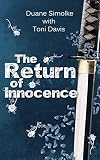
This was a really fun fantasy book. I loved the world Simolke created, because it has the traditional "medieval" sort of feel what with how it took place in villages where people bartered and traded, but it had many modern elements that I appreciated. In my opinion, I'm sick of fantasy books with sexist mindsets where women are regarded as second class citizens, who literally have to fight for their right to be warriors, and the men are the ones who get to go out and have fun adventures. So show more "The Return of Innocence" was very refreshing to read. Even if the main character hadn't been female, but everything else stayed the same I still would have really enjoyed it. I recommend it to anyone who is sick of reading books in the "Game of Thrones" fashion, but still want a great story to read. show less
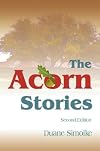
The Acorn StoriesThe Acorn Stories tells about the lives of the people of Acorn, Texas so that it reads like a collection of short stories. I found myself not wanting to put this book down because I quickly felt like I belonged in this town. The stories tell about a community and how their lives are intertwined, as is the case in most small towns. I loved the glimpses into their lives in a relaxed style. Prepare to sink into a nice comfortable chair and make yourself home in Acorn, Texas.
I show more was given this book by NetGalley in exchange for my honest review. show less
I show more was given this book by NetGalley in exchange for my honest review. show less
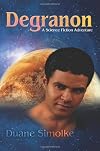
Admitedly sci-fiction is not my cup of tea and that is a big gap if you want to read Degranon, since I think the main inspiration for this novel are the old fashioned classic of sci-fiction, but more the ’70 and ’80 style. In those year, due to the political climate, people were trying to understand the right level of government influence in your everyday life, and to do that utopian worlds were developed on fictional novels (as often happen).
Degranon has an interesting approach: is the show more world a better place to live if there are no differences among the men, nor of colors or of genders? If people is unable to see colors, and they see only in Black and White, then they cannot single out people due to the race; if being gay is as ordinary as being heterosexual, then it’s not something you are sigled out for; if being woman, or man, doesn’t influence your authority or your chances to be a leader, then it’s not something you have to fight for… but to remove all differences is the path to a better world or to a tyranny? I think the most excel minds are born as a challenge to the system, and so in a society like the one at the beginning of this novel, it’s only natural that you will have a situation of clash with the power.
It’s interesting to notice that, even if the author himself says in the preface that Degranon included a gay theme (While I thought of Degranon as a science fiction novel that included gay themes but only minor gay characters, I found that many of my readers identified with those gay aspects. (…) With all of that in mind, I kept wondering what Degranon would be like if I rewrote some of the major characters as gay.), there is not even once the word “gay” in all the novel: the homosexuality is so blended (or recognized) in this future society, that there is not need to singling out someone as gay or heterosexual. Actually you understand someone is gay only since he is in a relationship, or he is interested in someone else of his same-sex. So I quite disagree with other reviews I read about this novel, when the reviewer warns the possible sci-fiction reader of the gay-theme of the story, since there is really little of gay in the story.
The second aspect of the novel I noticed, and liked, is an almost regression to family value; in this modern society the family has lost of importance. Dr. Lorfeltez, later Taldra, should be impartial, her quest should be to create something better for the society, but she is also a mother, and a lover, and I felt for her impossible to separate these two side of her persona. Her choices are both for her people and her sons, and when the choices clash against each other, I’m not sure she is impartial enough; that is basically something very old fashioned, she is indead a mother, and that is something that no future government can change. Taldra is also the reason why this novel is and is not gay themed: Taldra is a woman, a mother, and this is mostly her story, nothing gay here; her twin sons are gays, or at least you can understand that (two times, referring to Argen’s possible partner, people use the word “boyfriend”). Now I’m not entirely sure Taldra’s behaviour is healthy, and I read a tad of fanaticism in her, but I suppose her motherly nature helps in balancing it.
http://www.amazon.com/dp/0595317138/?tag=elimyrevandra-20 show less
Degranon has an interesting approach: is the show more world a better place to live if there are no differences among the men, nor of colors or of genders? If people is unable to see colors, and they see only in Black and White, then they cannot single out people due to the race; if being gay is as ordinary as being heterosexual, then it’s not something you are sigled out for; if being woman, or man, doesn’t influence your authority or your chances to be a leader, then it’s not something you have to fight for… but to remove all differences is the path to a better world or to a tyranny? I think the most excel minds are born as a challenge to the system, and so in a society like the one at the beginning of this novel, it’s only natural that you will have a situation of clash with the power.
It’s interesting to notice that, even if the author himself says in the preface that Degranon included a gay theme (While I thought of Degranon as a science fiction novel that included gay themes but only minor gay characters, I found that many of my readers identified with those gay aspects. (…) With all of that in mind, I kept wondering what Degranon would be like if I rewrote some of the major characters as gay.), there is not even once the word “gay” in all the novel: the homosexuality is so blended (or recognized) in this future society, that there is not need to singling out someone as gay or heterosexual. Actually you understand someone is gay only since he is in a relationship, or he is interested in someone else of his same-sex. So I quite disagree with other reviews I read about this novel, when the reviewer warns the possible sci-fiction reader of the gay-theme of the story, since there is really little of gay in the story.
The second aspect of the novel I noticed, and liked, is an almost regression to family value; in this modern society the family has lost of importance. Dr. Lorfeltez, later Taldra, should be impartial, her quest should be to create something better for the society, but she is also a mother, and a lover, and I felt for her impossible to separate these two side of her persona. Her choices are both for her people and her sons, and when the choices clash against each other, I’m not sure she is impartial enough; that is basically something very old fashioned, she is indead a mother, and that is something that no future government can change. Taldra is also the reason why this novel is and is not gay themed: Taldra is a woman, a mother, and this is mostly her story, nothing gay here; her twin sons are gays, or at least you can understand that (two times, referring to Argen’s possible partner, people use the word “boyfriend”). Now I’m not entirely sure Taldra’s behaviour is healthy, and I read a tad of fanaticism in her, but I suppose her motherly nature helps in balancing it.
http://www.amazon.com/dp/0595317138/?tag=elimyrevandra-20 show less
Awards

Statistics
- Works
- 8
- Members
- 42
- Popularity
- #357,756
- Rating
- 4.3
- Reviews
- 3
- ISBNs
- 12
- Languages
- 1