
Martha Ackmann
Author of The Mercury 13: The True Story of Thirteen Women and the Dream of Space Flight
About the Author
Martha Ackmann, also the author of Curve-ball and The Mercury 13, writes about women who have changed America. The recipient of a Guggenheim Fellowship, Ackmann taught a popular seminar on Dickinson at Mount Holyoke College and lives in western Massachusetts.
Image credit: Author Martha Ackmann (right) speaks with former astronaut Eileen Collins and Office of Equal Opportunity and Diversity representative Evett Turner at a luncheon during her visit to JSC.
(NASA)
Works by Martha Ackmann
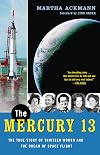
The Mercury 13: The True Story of Thirteen Women and the Dream of Space Flight (2003) 344 copies, 8 reviews
These Fevered Days: Ten Pivotal Moments in the Making of Emily Dickinson (2020) 127 copies, 6 reviews
Curveball: The Remarkable Story of Toni Stone the First Woman to Play Professional Baseball in the Negro League (2010) 58 copies, 3 reviews
Associated Works
My Bookstore: Writers Celebrate Their Favorite Places to Browse, Read, and Shop (2012) — Contributor — 621 copies, 16 reviews
Tagged
Common Knowledge
- Birthdate
- 20th Century
- Gender
- female
- Occupations
- journalist
teacher - Organizations
- Mount Holyoke College
- Nationality
- USA
- Places of residence
- Leverett, Massachusetts, USA
- Associated Place (for map)
- Massachusetts, USA
Members
Reviews
To take part in this adventure, no matter how small, I consider the most important thing we have ever done. To be ASKED to participate, the greatest honor. To accept, an absolute duty. So, go Jan, go. And take your part, even as a statistic, in man's great adventure. - Marion Dietrich's heartfelt letter to her twin sister Jan - who was hesitant about being part of the Lovelace testing.
As with all stories of grave injustices, this was an incredibly frustrating one to read.
Despite being just show more as - and in some cases, much more - qualified as the Mercury 7 astronauts, institutional sexism prevented thirteen highly accomplished pilots from becoming America's first female astronauts in the 60s.
To read about all the physical and mental hurdles they had to pass as well as having to contend with being a woman in the 60s while knowing that the first American female astronaut wasn't till 1983; Knowing that despite all their triumphs in passing these rigorous testings, their hard work and skill and determination were all for nought; That the catharsis of all their disappointments and lost hope could only come twenty, thirty years later for someone else. All this background knowledge made the book a struggle to read.
No less infuriating were all the gatekeepers of the sexism that prevented these worthy space candidates. The societal expectations, the stereotypes, the gross jokes made (the most egregious being by a director at NASA), the ludicrous excuse that if we let women be astronauts, then we gotta let all these minorities be astronauts too and we can't have that, the petty jealousies fueled by the need for patriarchal approvals. The number of times I growled and cussed at people in the book.
Ackmann does a superbly detailed, well-researched account (which alternated between being very clinical and impossibly insightful of individual character's motives - a real range of authorial liberties taken here) of the physical, personal, and social pressures that these ambitious women had to overcome to get to where they were. It was bittersweet to learn about their achievements despite all the obstacles. And thus, instead of an uplifting tale of space being a true equaliser of humanity, it's a sobering reminder of how sexism/racism/other-isms have buried and continues to bury potential.
Aside: I was prompted to read this book after Mary Roach mentioned Mercury 13 in her book Packing for Mars. She had raised the excellent point that women physically are better candidates for space travel, being of smaller stature and less weight meaning rocket fuel and food and oxygen and space can be conserved, but of course, what are reasonable arguments when sexism has worked so well for the established select-few.
Character question: was Jackie Cochran really as big a villain as portrayed here? Her villainy only stands out even more due to the fact she was an accomplished pilot who had had to fight against the same boys-club sexism. Her acceptance into these boys-club (mainly due to her riches/influences) and her way of pushing down other women reminded me a lot of Adrienne Rich's speech on the dangers of tokenism.
Story wise: It is a real shame that the women were tested individually/in pairs. Even though they are presented here as a group, they were in real life much more fragmented and less unified for the societal battle they had to fight. I imagine if there were ever to be a film version a la Hidden Figures though, liberties would absolutely be taken to have the ensemble together GLOW-style. Cue training montage. show less
As with all stories of grave injustices, this was an incredibly frustrating one to read.
Despite being just show more as - and in some cases, much more - qualified as the Mercury 7 astronauts, institutional sexism prevented thirteen highly accomplished pilots from becoming America's first female astronauts in the 60s.
To read about all the physical and mental hurdles they had to pass as well as having to contend with being a woman in the 60s while knowing that the first American female astronaut wasn't till 1983; Knowing that despite all their triumphs in passing these rigorous testings, their hard work and skill and determination were all for nought; That the catharsis of all their disappointments and lost hope could only come twenty, thirty years later for someone else. All this background knowledge made the book a struggle to read.
No less infuriating were all the gatekeepers of the sexism that prevented these worthy space candidates. The societal expectations, the stereotypes, the gross jokes made (the most egregious being by a director at NASA), the ludicrous excuse that if we let women be astronauts, then we gotta let all these minorities be astronauts too and we can't have that, the petty jealousies fueled by the need for patriarchal approvals. The number of times I growled and cussed at people in the book.
Ackmann does a superbly detailed, well-researched account (which alternated between being very clinical and impossibly insightful of individual character's motives - a real range of authorial liberties taken here) of the physical, personal, and social pressures that these ambitious women had to overcome to get to where they were. It was bittersweet to learn about their achievements despite all the obstacles. And thus, instead of an uplifting tale of space being a true equaliser of humanity, it's a sobering reminder of how sexism/racism/other-isms have buried and continues to bury potential.
Aside: I was prompted to read this book after Mary Roach mentioned Mercury 13 in her book Packing for Mars. She had raised the excellent point that women physically are better candidates for space travel, being of smaller stature and less weight meaning rocket fuel and food and oxygen and space can be conserved, but of course, what are reasonable arguments when sexism has worked so well for the established select-few.
Character question: was Jackie Cochran really as big a villain as portrayed here? Her villainy only stands out even more due to the fact she was an accomplished pilot who had had to fight against the same boys-club sexism. Her acceptance into these boys-club (mainly due to her riches/influences) and her way of pushing down other women reminded me a lot of Adrienne Rich's speech on the dangers of tokenism.
Story wise: It is a real shame that the women were tested individually/in pairs. Even though they are presented here as a group, they were in real life much more fragmented and less unified for the societal battle they had to fight. I imagine if there were ever to be a film version a la Hidden Figures though, liberties would absolutely be taken to have the ensemble together GLOW-style. Cue training montage. show less
Rating: 5* of five
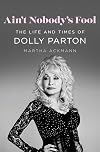
The Publisher Says: A larger-than-life new biography of country music legend and philanthropist Dolly Parton.
In Ain't Nobody's Fool: The Life and Times of Dolly Parton, Martha Ackmann chronicles the life of an American Original. From her impoverished childhood in the Smoky Mountains to international stardom as a singer, songwriter, actress, businesswoman, and philanthropist, Dolly Parton has exceeded everyone's expectations except her own. During a time when the Beatles set show more the standard for contemporary music, Dolly appeared on a local country music television show that her high school classmates thought was pure cornpone. The day after her high school graduation, she boarded a bus for Nashville, but record executives turned her down. One said her voice sounded like a screech owl.
When Dolly finally got her foot in the door, her talent and focus catapulted her to the top of country charts, the pop world, and movie stardom. Yet her success came at a price. Shunned by many in Nashville who saw her ambition as a betrayal of her country music roots, Dolly became the target of death threats, lawsuits, and a judge who threatened to throw her in jail. She nearly collapsed on-stage and later succumbed to depression that pushed her to the brink, but she refused to be counted out and came back stronger than ever developing Dollywood, the amusement park that became the economic engine of East Tennessee, and founding the Imagination Library that provides free books to children around the world. Her philanthropy to health organizations led to creation of the Moderna COVID vaccine. And, finally, she returned to her roots, recording bluegrass albums that became the most celebrated of her unparalleled 60-year career.
Ain't Nobody's Fool is a deep dive into the social, historical, and personal forces that made Dolly Parton one of the most beloved and unifying figures in public life and includes interviews with friends, family members, school mates, Nashville neighbors, members of her band, studio musicians, producers, and many others. It also features never before seen photographs and unearthed documents shedding light on her family's hardscrabble life. More than anything, Martha Ackmann's fresh and animated new book proves Dolly Parton knows just who she is and she ain't nobody's fool.
I RECEIVED A DRC FROM THE PUBLISHER VIA NETGALLEY. THANK YOU.
My Review: Author Ackmann, she of The Mercury 13, knows how to present the stories of women in powerful positions without triumphalizing or trivializing their struggles, obstacles, and successes. Miss Dolly deserves no better biographer.
As a longtime fan of the woman, and one who came to appreciate her musical talents despite not much liking the genre she's performed in for decades, I enjoyed my time spent here. It was a lot like renewing my acquaintance with someone once dear who's been out of touch. A couple years ago I reviewed an illustrated book about her career, DOLLY PARTON: 100 Remarkable Moments in an Extraordinary Life, with a similar degree of pleasure.
What I most enjoy about reading the life and times of Miss Dolly in this book is the context, the societal setting of her triumphs and her struggles. The way the book is written is to offer a fan a history lesson sweetened by a favorite celebrity's life experiences. This is, to me, a strength...I'm alway interested in why and how before what. The greatest stregth of the read is the very clear-eyed assessment of the whys and hows...overcoming misogyny to make a huge mark in the music and entertainment industry, overcoming depression and isolation to turn notoriety into lasting fame...all while using her celebrity to serve, to help, to lift others higher than they could have reached on their own.
It is inspiring, humbling, enlightening.
What an ordinary person would've done when faced with those obstacles is...surrender, collapse, give up. It's a mark of Miss Dolly's indomitable spirit and drive that she collapsed but rebounded; failed but got up to do it again, only better; got rejected, but went where she was wanted, instead of curling up in a ball and crying until the cows came home. It's not luck alone that makes someone successful, and this book makes that so very clear you can see it from space.
As a biographer of a living person Author Ackmann took full advantage of the mountains and mountains of information our modern age makes available. The notes are copious, but you can ignore them if you like. I myownself was delighted to see them because the force of nature that is Miss Dolly deserves all the ink spilled on her doings in television production, literacy programs, the music and theme-park industries...the list is impressive.
What you won't get in this work is celebri-tea. There's nothing breathlessly revealed, no salacious little gossipy nuggets. This is a biography about a very serious, focused, driven person whose successes span more than sixty years and counting.
It is respectful. That is refreshing, warranted, and welcome.
I left the read more uplifted than entertained. Again, to me, a feature not a bug. i think it's a great Yule gift for your Dolly fan, for anyone who feels ground down and needs uplift without treacle, for someone who admires women's success stories.
Pretty much anybody not into toxic masculinity, then. show less
The Publisher Says: A larger-than-life new biography of country music legend and philanthropist Dolly Parton.
In Ain't Nobody's Fool: The Life and Times of Dolly Parton, Martha Ackmann chronicles the life of an American Original. From her impoverished childhood in the Smoky Mountains to international stardom as a singer, songwriter, actress, businesswoman, and philanthropist, Dolly Parton has exceeded everyone's expectations except her own. During a time when the Beatles set show more the standard for contemporary music, Dolly appeared on a local country music television show that her high school classmates thought was pure cornpone. The day after her high school graduation, she boarded a bus for Nashville, but record executives turned her down. One said her voice sounded like a screech owl.
When Dolly finally got her foot in the door, her talent and focus catapulted her to the top of country charts, the pop world, and movie stardom. Yet her success came at a price. Shunned by many in Nashville who saw her ambition as a betrayal of her country music roots, Dolly became the target of death threats, lawsuits, and a judge who threatened to throw her in jail. She nearly collapsed on-stage and later succumbed to depression that pushed her to the brink, but she refused to be counted out and came back stronger than ever developing Dollywood, the amusement park that became the economic engine of East Tennessee, and founding the Imagination Library that provides free books to children around the world. Her philanthropy to health organizations led to creation of the Moderna COVID vaccine. And, finally, she returned to her roots, recording bluegrass albums that became the most celebrated of her unparalleled 60-year career.
Ain't Nobody's Fool is a deep dive into the social, historical, and personal forces that made Dolly Parton one of the most beloved and unifying figures in public life and includes interviews with friends, family members, school mates, Nashville neighbors, members of her band, studio musicians, producers, and many others. It also features never before seen photographs and unearthed documents shedding light on her family's hardscrabble life. More than anything, Martha Ackmann's fresh and animated new book proves Dolly Parton knows just who she is and she ain't nobody's fool.
I RECEIVED A DRC FROM THE PUBLISHER VIA NETGALLEY. THANK YOU.
My Review: Author Ackmann, she of The Mercury 13, knows how to present the stories of women in powerful positions without triumphalizing or trivializing their struggles, obstacles, and successes. Miss Dolly deserves no better biographer.
As a longtime fan of the woman, and one who came to appreciate her musical talents despite not much liking the genre she's performed in for decades, I enjoyed my time spent here. It was a lot like renewing my acquaintance with someone once dear who's been out of touch. A couple years ago I reviewed an illustrated book about her career, DOLLY PARTON: 100 Remarkable Moments in an Extraordinary Life, with a similar degree of pleasure.
What I most enjoy about reading the life and times of Miss Dolly in this book is the context, the societal setting of her triumphs and her struggles. The way the book is written is to offer a fan a history lesson sweetened by a favorite celebrity's life experiences. This is, to me, a strength...I'm alway interested in why and how before what. The greatest stregth of the read is the very clear-eyed assessment of the whys and hows...overcoming misogyny to make a huge mark in the music and entertainment industry, overcoming depression and isolation to turn notoriety into lasting fame...all while using her celebrity to serve, to help, to lift others higher than they could have reached on their own.
It is inspiring, humbling, enlightening.
What an ordinary person would've done when faced with those obstacles is...surrender, collapse, give up. It's a mark of Miss Dolly's indomitable spirit and drive that she collapsed but rebounded; failed but got up to do it again, only better; got rejected, but went where she was wanted, instead of curling up in a ball and crying until the cows came home. It's not luck alone that makes someone successful, and this book makes that so very clear you can see it from space.
As a biographer of a living person Author Ackmann took full advantage of the mountains and mountains of information our modern age makes available. The notes are copious, but you can ignore them if you like. I myownself was delighted to see them because the force of nature that is Miss Dolly deserves all the ink spilled on her doings in television production, literacy programs, the music and theme-park industries...the list is impressive.
What you won't get in this work is celebri-tea. There's nothing breathlessly revealed, no salacious little gossipy nuggets. This is a biography about a very serious, focused, driven person whose successes span more than sixty years and counting.
It is respectful. That is refreshing, warranted, and welcome.
I left the read more uplifted than entertained. Again, to me, a feature not a bug. i think it's a great Yule gift for your Dolly fan, for anyone who feels ground down and needs uplift without treacle, for someone who admires women's success stories.
Pretty much anybody not into toxic masculinity, then. show less
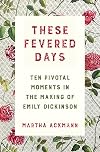
In her Author's Note, Martha Ackmann tells of her first encounter with Emily Dickinson's poetry in high school English when she read, "After great pain, a formal feeling comes--"* Ackmann said she "woke up" and spent a lifetime trying to understand the poem and its effect on her. It's one of my favorite Dickinson poems.
Sadly, the selections in my high school American Lit textbook did nothing for me. When a college friend said he liked Dickinson, I shuddered.
It was Steve Allen's Meeting of show more Minds that changed my mind. The 1977 episode paired the poet with Charles Darwin, Atilla the Hun, and Galileo. Emily Dickinson recited, "I cannot live with You--" ending with, "So We must meet apart--/You there--I--here--/With just the Door ajar/That oceans are--and Prayer--/And that White Sustenance, Despair."** I stood up to attention. Wait! This couldn't be Dickinson! This was amazing stuff.
I bought her complete poems and soon became a fan.
Ackmann's These Fevered Dreams condescends Emily's life into ten moments that give insight into her life and work. Drawing from Emily's letters and poems, photographs and new understandings, she creates a vivid and fresh portrait of the poet.
Readers encounter Emily's strong, original, and independent mind.
She preferred the struggle of doubt over unexamined certainty, unwilling to profess her faith, regardless of social pressure at Mount Holyoke Seminary.
I loved learning that Emily dove into learning to play the piano, which taught her "style", and how she played late into the night, inventing her own "weird and beautiful melodies."
The vision of a girl with dandelions in her hair taught her how "one image could change everything."
We come to understand Emily's ambition, her life-long love affair with words, her dedication to perfecting her art. She strove to understand the impact of words on others, the responsibility of the writer, and how to remain anonymous while sharing her work. She created fascicles, handsewn booklets of her poems, found after her death.
She enjoyed her costly Mount Holyoke education--$60 a year--learning algebra, astronomy, and botany. When other girls hoped to teach or become missionaries, and of course marry and raise a family, Emily had no vocation but poetry. She returned to Amhurst and became mired in deadly household duties. She did enjoy bread making.
Amhurst is not portrayed as a back-water safe zone during the Civil War; we see how it impacted the community, the shared losses, and Emily's deep anxiety.
I had not known about the vision issue that threatened her sight that brought Emily to Boston for treatment.
Emily's friendships are there: Sue, who married Emily's brother, Austin Dickinson; her school friend and fellow author Helen Hunt Jackson; Samuel Bowles who published Emily's poems clandestinely shared with him; Carlo, her beloved dog.
Emily died a spinster, but she loved the special men in her life.
There was the Rev. Charles Wadsworth, the brilliant preacher Emily met in Philadelphia, "my closest earthly friend" she wrote, and who one day unexpectedly came to her door.
Emily sent poems to Thomas Wentworth Higginson (who with Mabel Loomis Todd, a family friend, and Austin's lover, would publish the first volume of Emily's poetry. During the Civil War, Col. Higginson lead the first Negro regiment of Union soldiers and when wounded was returned home by Louise May Alcott. When they finally met, Emily talked and a dazzled Higginson listened.
Other relationships are cloaked in mystery: the secret love between Emily and her father's peer Otis Phillips Lord, and the mysterious Master to whom she wrote unsent letters.
After Emily's early death at age 55, her family discovered her fascicles of nearly 2,000 poems--and the unsent Master letters. Emily had instructed her papers be burned after her death, but her sister Vinnie could not do that.
Emily comes alive through these ten moments, along with her family and friends and her beloved Amherst.
The book is illustrated with photographs of Emily's family, friends, and homes.
I was given access to a free ebook by the publisher through NetGalley. My review is fair and unbiased. show less
Sadly, the selections in my high school American Lit textbook did nothing for me. When a college friend said he liked Dickinson, I shuddered.
It was Steve Allen's Meeting of show more Minds that changed my mind. The 1977 episode paired the poet with Charles Darwin, Atilla the Hun, and Galileo. Emily Dickinson recited, "I cannot live with You--" ending with, "So We must meet apart--/You there--I--here--/With just the Door ajar/That oceans are--and Prayer--/And that White Sustenance, Despair."** I stood up to attention. Wait! This couldn't be Dickinson! This was amazing stuff.
I bought her complete poems and soon became a fan.
Ackmann's These Fevered Dreams condescends Emily's life into ten moments that give insight into her life and work. Drawing from Emily's letters and poems, photographs and new understandings, she creates a vivid and fresh portrait of the poet.
Readers encounter Emily's strong, original, and independent mind.
She preferred the struggle of doubt over unexamined certainty, unwilling to profess her faith, regardless of social pressure at Mount Holyoke Seminary.
I loved learning that Emily dove into learning to play the piano, which taught her "style", and how she played late into the night, inventing her own "weird and beautiful melodies."
The vision of a girl with dandelions in her hair taught her how "one image could change everything."
We come to understand Emily's ambition, her life-long love affair with words, her dedication to perfecting her art. She strove to understand the impact of words on others, the responsibility of the writer, and how to remain anonymous while sharing her work. She created fascicles, handsewn booklets of her poems, found after her death.
She enjoyed her costly Mount Holyoke education--$60 a year--learning algebra, astronomy, and botany. When other girls hoped to teach or become missionaries, and of course marry and raise a family, Emily had no vocation but poetry. She returned to Amhurst and became mired in deadly household duties. She did enjoy bread making.
Amhurst is not portrayed as a back-water safe zone during the Civil War; we see how it impacted the community, the shared losses, and Emily's deep anxiety.
I had not known about the vision issue that threatened her sight that brought Emily to Boston for treatment.
Emily's friendships are there: Sue, who married Emily's brother, Austin Dickinson; her school friend and fellow author Helen Hunt Jackson; Samuel Bowles who published Emily's poems clandestinely shared with him; Carlo, her beloved dog.
Emily died a spinster, but she loved the special men in her life.
There was the Rev. Charles Wadsworth, the brilliant preacher Emily met in Philadelphia, "my closest earthly friend" she wrote, and who one day unexpectedly came to her door.
Emily sent poems to Thomas Wentworth Higginson (who with Mabel Loomis Todd, a family friend, and Austin's lover, would publish the first volume of Emily's poetry. During the Civil War, Col. Higginson lead the first Negro regiment of Union soldiers and when wounded was returned home by Louise May Alcott. When they finally met, Emily talked and a dazzled Higginson listened.
Other relationships are cloaked in mystery: the secret love between Emily and her father's peer Otis Phillips Lord, and the mysterious Master to whom she wrote unsent letters.
After Emily's early death at age 55, her family discovered her fascicles of nearly 2,000 poems--and the unsent Master letters. Emily had instructed her papers be burned after her death, but her sister Vinnie could not do that.
Emily comes alive through these ten moments, along with her family and friends and her beloved Amherst.
The book is illustrated with photographs of Emily's family, friends, and homes.
I was given access to a free ebook by the publisher through NetGalley. My review is fair and unbiased. show less
The Mercury 13 : the untold story of thirteen American women and the dream of space flight by Martha Ackmann
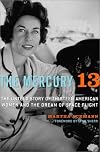
In 1961, just as NASA launched its first man into space, a group of women underwent secret testing in the hopes of becoming America’s first female astronauts. They passed the same battery of tests at the legendary Lovelace Foundation as did the Mercury 7 astronauts, but they were summarily dismissed by the boys’ club at NASA and on Capitol Hill. The USSR sent its first woman into space in 1963; the United States did not follow suit for another twenty years. For the first time, Martha show more Ackmann tells the story of the dramatic events surrounding these thirteen remarkable women, all crackerjack pilots and patriots who sometimes sacrificed jobs and marriages for a chance to participate in America’s space race against the Soviet Union. In addition to talking extensively to these women, Ackmann interviewed Chuck Yeager, John Glenn, Scott Carpenter, and others at NASA and in the White House with firsthand knowledge of the program, and includes here never-before-seen photographs of the Mercury 13 passing their Lovelace tests. Despite the crushing disappointment of watching their dreams being derailed, the Mercury 13 went on to extraordinary achievement in their lives: Jerrie Cobb, who began flying when she was so small she had to sit on pillows to see out of the cockpit, dedicated her life to flying solo missions to the Amazon rain forest; Wally Funk, who talked her way into the Lovelace trials, went on to become one of the first female FAA investigators; Janey Hart, mother of eight and, at age forty, the oldest astronaut candidate, had the political savvy to steer the women through congressional hearings and later helped found the National Organization for Women. A provocative tribute to these extraordinary women, The Mercury 13 is an unforgettable story of determination, resilience, and inextinguishable hope. show less
Lists
Awards


You May Also Like


Associated Authors
Statistics
- Works
- 4
- Also by
- 1
- Members
- 603
- Popularity
- #41,678
- Rating
- 4.0
- Reviews
- 23
- ISBNs
- 25
- Languages
- 1
- Favorited
- 1
