
Brian Trent
Author of Lady Philosopher: The Story of Hypatia
Works by Brian Trent
War Hero (short story) 1 copy
The Last Library [short story] — Author — 1 copy
Associated Works
L. Ron Hubbard Presents Writers of the Future, Volume 29 (2013) — Contributor — 69 copies, 14 reviews
Grimm, Grit, and Gasoline: Dieselpunk and Decopunk Fairy Tales (2019) — Contributor — 21 copies, 9 reviews
The Magazine of Fantasy and Science Fiction May/June 2018, Vol. 134, Nos. 5 & 6 (2018) — Contributor — 14 copies, 1 review
The Magazine of Fantasy and Science Fiction September/October 2018, Vol. 135, Nos. 3 & 4 (2018) — Author — 13 copies, 1 review
Tagged
Common Knowledge
- Canonical name
- Trent, Brian
- Gender
- male
- Nationality
- USA
- Birthplace
- Waterbury, Connecticut, USA
- Associated Place (for map)
- Connecticut, USA
Members
Reviews
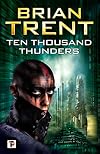
Gethin Bryce was killed in a mysterious space shuttle explosion en route from Mars to the moon. Thanks to scientific advancements in the far future, he is brought back to life and returns to his position as an investigator of anomalies with the InterPlanetary Council. During his investigation, he links up with Jack and Keiko who work for Prometheus Industries, a massive corporation that was also rocked by a lab explosion on the moon, and Celeste, a woman from the outlands that are wild, show more unpredictable, and ruled by savagery. Together, they travel across the Earth of the far future, revealing the history of Earth, from the very beginning to our present and beyond. In doing so, they also learn startling revelations about the history of the planet and that history is about to collide with their present.
Ten Thousand Thunders is a stunning science fiction book that takes place far into the future. The world is divided between those who live in the arcologies and have access to the technology that makes them superhuman and allows them to live forever and those who live in the wastelands where the people do what they can simply to survive. But this book was much more than a mere commentary on the division between the haves and the have nots. It's also an incredible inquiry and investigation into how the past impacts the present and future.
I have to admit that, while I loved this book, it felt like it was far beyond my comprehension level. It seems to be greater than what I can fathom, but, while I sometimes felt overwhelmed, this didn't detract from my overall enjoyment of the story. There was so much information, so many revelations, and so many things to sort through to understand the underlying science fiction part of it, but the story was beautiful and terrifying and everything was seamlessly woven together.
Fantasy is my true love, but the problem with the vast majority of fantasy novels is the info dumping and the massive amount of time spent world building, which either draws out the story to be too long or makes the story suffer. While this book is science fiction, it takes place so far in the future that very little of this world is recognizable. Which means the whole world needs to be built. Trent did an amazing job of just throwing the reader in and letting us figure it out on our own. There was always just enough information for the reader to puzzle it out without having to spend too much time on it and I don't feel the story ever suffered because of it. Instead, I very much enjoyed it. The story could just continue to roll out and I felt free to be swept up in it. Actually, I enjoyed it so much and needed to find out what happened next that I probably should have given myself time to digest it, but didn't.
I was most impressed by Trent's writing style. It was crisp and succinct and did everything to keep the story going. The metaphors were always fitting, but never long. They painted the perfect pictures and I loved how they were descriptive while being stingy with the number of words. There was a great deal of information and a great deal of events going on and every word carried importance and weight. The reader is given everything they need and nothing they don't. Most of all, I just really enjoyed his style. Short and sweet while being crisp and packing a punch.
Because I'm not a regular science fiction reader and science is not exactly my specialty, it took me a few chapters to really get into the book. I spent much of the early chapters trying to figure out what everything was and what was going on. But, once I sorted it out, I was swept away by the story. It never felt like it was dragged down by unnecessary scenes and actions. Everything was important and everything told the story of the Earth's past and present colliding. The characters were unique, but tender to be static, though we occasionally learned something new about them as the story progressed. The relationships between Gethin, Jack, Keiko, and Celeste were interesting and intriguing and, while it did progress, there was still the initial atmosphere of distrust. It was kind of amazing how they managed to not kill each other and instead rely on each other.
My one complaint would be the revelation about the Earth's beginning. It was definitely surprising and kind of knocked me out of the story. While it ended up making perfect sense, it always felt a little off. Though Trent did do an amazing job of incorporating this surprising part into the greater story and weaving it in so it made complete sense. By the end of the book, I was satisfied, but, when it was presented, I was left scratching my head a little.
I am very glad that Ten Thousand Thunders is the start of a series. The last 10-20% of the book made me a little angry because I didn't want it to end. There was so much going on and, by the end of the book, much of it is wrapped up, but not everything. I did not want to leave this future Earth. I was mollified to learn there is going to be a second book and I look forward to it.
Overall, this is an incredible book. A little dense, but the writing, story, and pacing are all wonderful. There was definitely a little more violence in the middle than I could stomach and not everything made complete sense to me, but this was a very enjoyable read. I definitely recommend stopping once in a while to digest the story.
Note: Thank you to NetGalley and the publisher for an advance reader copy of this book.
Post date on blog: 10/5/18
Blog: https://thelilycafe.wordpress.com show less
Ten Thousand Thunders is a stunning science fiction book that takes place far into the future. The world is divided between those who live in the arcologies and have access to the technology that makes them superhuman and allows them to live forever and those who live in the wastelands where the people do what they can simply to survive. But this book was much more than a mere commentary on the division between the haves and the have nots. It's also an incredible inquiry and investigation into how the past impacts the present and future.
I have to admit that, while I loved this book, it felt like it was far beyond my comprehension level. It seems to be greater than what I can fathom, but, while I sometimes felt overwhelmed, this didn't detract from my overall enjoyment of the story. There was so much information, so many revelations, and so many things to sort through to understand the underlying science fiction part of it, but the story was beautiful and terrifying and everything was seamlessly woven together.
Fantasy is my true love, but the problem with the vast majority of fantasy novels is the info dumping and the massive amount of time spent world building, which either draws out the story to be too long or makes the story suffer. While this book is science fiction, it takes place so far in the future that very little of this world is recognizable. Which means the whole world needs to be built. Trent did an amazing job of just throwing the reader in and letting us figure it out on our own. There was always just enough information for the reader to puzzle it out without having to spend too much time on it and I don't feel the story ever suffered because of it. Instead, I very much enjoyed it. The story could just continue to roll out and I felt free to be swept up in it. Actually, I enjoyed it so much and needed to find out what happened next that I probably should have given myself time to digest it, but didn't.
I was most impressed by Trent's writing style. It was crisp and succinct and did everything to keep the story going. The metaphors were always fitting, but never long. They painted the perfect pictures and I loved how they were descriptive while being stingy with the number of words. There was a great deal of information and a great deal of events going on and every word carried importance and weight. The reader is given everything they need and nothing they don't. Most of all, I just really enjoyed his style. Short and sweet while being crisp and packing a punch.
Because I'm not a regular science fiction reader and science is not exactly my specialty, it took me a few chapters to really get into the book. I spent much of the early chapters trying to figure out what everything was and what was going on. But, once I sorted it out, I was swept away by the story. It never felt like it was dragged down by unnecessary scenes and actions. Everything was important and everything told the story of the Earth's past and present colliding. The characters were unique, but tender to be static, though we occasionally learned something new about them as the story progressed. The relationships between Gethin, Jack, Keiko, and Celeste were interesting and intriguing and, while it did progress, there was still the initial atmosphere of distrust. It was kind of amazing how they managed to not kill each other and instead rely on each other.
My one complaint would be the revelation about the Earth's beginning. It was definitely surprising and kind of knocked me out of the story. While it ended up making perfect sense, it always felt a little off. Though Trent did do an amazing job of incorporating this surprising part into the greater story and weaving it in so it made complete sense. By the end of the book, I was satisfied, but, when it was presented, I was left scratching my head a little.
I am very glad that Ten Thousand Thunders is the start of a series. The last 10-20% of the book made me a little angry because I didn't want it to end. There was so much going on and, by the end of the book, much of it is wrapped up, but not everything. I did not want to leave this future Earth. I was mollified to learn there is going to be a second book and I look forward to it.
Overall, this is an incredible book. A little dense, but the writing, story, and pacing are all wonderful. There was definitely a little more violence in the middle than I could stomach and not everything made complete sense to me, but this was a very enjoyable read. I definitely recommend stopping once in a while to digest the story.
Note: Thank you to NetGalley and the publisher for an advance reader copy of this book.
Post date on blog: 10/5/18
Blog: https://thelilycafe.wordpress.com show less
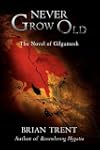
The story of Gilgamesh is one of the very first literary efforts in existence, an epic Mesopotamian poem whose subject is the King of Uruk, a city state on the Euphrates. This novel is an adaption of the Sumerian work, written in present day prose.
While perhaps a worthy premise for a novel, there is nothing in particular to recommend this particular work. It is very short, not especially well written (especially with respect to the sophomoric sexual encounters) or captivating. In fact, the show more longer I read it, the more irritated I became. Granted, this is a novel, and the author is entitled to a certain degree of literary license, however in this instance the license was abused.
For example, it is his theory (premise?) that Neanderthal man survived to the days of ancient, recorded Mesopotamian civilization. While this is ridiculous to the tune of about 30,000 years, I can almost let that go. In this case, however, he presents Neanderthal man as quite the cosmopolitan, bon-vivant man about town. He is an accomplished linguist, boasts culture and ethics beyond reproach and (hold onto your hat) is a gentle, compassionate lover, who despite being a virgin, has impeccable sexual techniques guaranteed to please the ladies.
In a role reminiscent of Ayla from Clan of the Cave Bear, the story also features a sorceress/medicine woman of sorts who, were she born 3,000 years later could have been one of the greatest minds of the Renaissance. For example, she knew that plague was carried by rats (not entirely true, as it was the fleas on the rats that carried the plague), a fact that was not even posited until well after the Bubonic Plague decimated the world in the Middle Ages. The plague wipes out her village as a result of “plague rats” dumped into the water source for the village. I’m not even sure this is a viable means of spreading plague.
She points out that her village is democratically ruled. Silly me, and I thought the Ancient Greeks brought us our concept of democratically elected government, 2,000 years after the setting of this story. The whole book suffers from this annoying habit of instilling skills, knowledge, practices and beliefs into characters who could not have possibly enjoyed them. Goodness gracious, one savage ruler is concerned about premature ejaculation as he rapes his victim, as if it will destroy his ability to entice future rape victims. I’m not sure that sexual staying power was one of the characteristics most prized by early Mesopotamian rapists.
I think it says a lot, when the presence of mythological creatures (which I have absolutely no problem with) in a novel is not even the most unbelievable facet of the story. The actual existence of Humbaba is far more likely than the linguistic skills of the Neanderthal character or the medical/scientific knowledge of the story’s medicine woman.
In closing, I’ll leave you with this puzzler:
“Twelve was the sacred number for all of Sumer. There were Twelve Tablets of Destiny seized by the monster Anzu and rescued by Ninurta. The Annunaki statues were twelve in number, as were (wait for it… wait for it…) the celestial bodies in the heavens- ten planets and the sun and moon.”
Holy Copernicus! You mean the ancient Sumerians actually posited the existence of the solar system, and without the aid of telescopes even identified TEN planets? Even before Pluto was removed from the pantheon of planets, we could only come up with nine!
I’m perfectly aware of the lunatic fringe (yes, aliens are involved) which ascribes seemingly impossible astronomical skills and powers to the ancient Sumerians. The fact is, mainstream historians and researchers recognize that the planet Venus was not identified until 1500 B.C.E., approximately 1,000 years after the era of Gilgamesh. While the Babylonians later identified several more planets, the outer planets could not possibly have been discovered or observed before introduction of powerful optical telescopes in early modern times.
I can’t imagine a readership to which I would recommend this work. show less
While perhaps a worthy premise for a novel, there is nothing in particular to recommend this particular work. It is very short, not especially well written (especially with respect to the sophomoric sexual encounters) or captivating. In fact, the show more longer I read it, the more irritated I became. Granted, this is a novel, and the author is entitled to a certain degree of literary license, however in this instance the license was abused.
For example, it is his theory (premise?) that Neanderthal man survived to the days of ancient, recorded Mesopotamian civilization. While this is ridiculous to the tune of about 30,000 years, I can almost let that go. In this case, however, he presents Neanderthal man as quite the cosmopolitan, bon-vivant man about town. He is an accomplished linguist, boasts culture and ethics beyond reproach and (hold onto your hat) is a gentle, compassionate lover, who despite being a virgin, has impeccable sexual techniques guaranteed to please the ladies.
In a role reminiscent of Ayla from Clan of the Cave Bear, the story also features a sorceress/medicine woman of sorts who, were she born 3,000 years later could have been one of the greatest minds of the Renaissance. For example, she knew that plague was carried by rats (not entirely true, as it was the fleas on the rats that carried the plague), a fact that was not even posited until well after the Bubonic Plague decimated the world in the Middle Ages. The plague wipes out her village as a result of “plague rats” dumped into the water source for the village. I’m not even sure this is a viable means of spreading plague.
She points out that her village is democratically ruled. Silly me, and I thought the Ancient Greeks brought us our concept of democratically elected government, 2,000 years after the setting of this story. The whole book suffers from this annoying habit of instilling skills, knowledge, practices and beliefs into characters who could not have possibly enjoyed them. Goodness gracious, one savage ruler is concerned about premature ejaculation as he rapes his victim, as if it will destroy his ability to entice future rape victims. I’m not sure that sexual staying power was one of the characteristics most prized by early Mesopotamian rapists.
I think it says a lot, when the presence of mythological creatures (which I have absolutely no problem with) in a novel is not even the most unbelievable facet of the story. The actual existence of Humbaba is far more likely than the linguistic skills of the Neanderthal character or the medical/scientific knowledge of the story’s medicine woman.
In closing, I’ll leave you with this puzzler:
“Twelve was the sacred number for all of Sumer. There were Twelve Tablets of Destiny seized by the monster Anzu and rescued by Ninurta. The Annunaki statues were twelve in number, as were (wait for it… wait for it…) the celestial bodies in the heavens- ten planets and the sun and moon.”
Holy Copernicus! You mean the ancient Sumerians actually posited the existence of the solar system, and without the aid of telescopes even identified TEN planets? Even before Pluto was removed from the pantheon of planets, we could only come up with nine!
I’m perfectly aware of the lunatic fringe (yes, aliens are involved) which ascribes seemingly impossible astronomical skills and powers to the ancient Sumerians. The fact is, mainstream historians and researchers recognize that the planet Venus was not identified until 1500 B.C.E., approximately 1,000 years after the era of Gilgamesh. While the Babylonians later identified several more planets, the outer planets could not possibly have been discovered or observed before introduction of powerful optical telescopes in early modern times.
I can’t imagine a readership to which I would recommend this work. show less
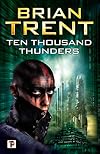
In Ten Thousand Thunders, Brian Trent creates a relatively near-future yet posthuman world—think Richard K. Morgan’s Altered Carbon and Thin Air, for example. Gethin Bryce, an investigator for the Interplanetary Council, is revived in a “newly sculpted” body fourteen hours after he is killed in a shuttle explosion. The plot slowly unfolds as he investigates his own murder. Along the way, he picks up three allies, whose characters are diverse and well-developed. But frankly, it is show more world-building, not plot or character, that is the focus of the novel. Trent describes a rebuilding post-apocalyptic future in which privileged citizens have all the technology one could want, while others live in places like the Hudson Wastes or the Old Minnesota ash bowls. Gethin, for example, has two implanted online AIs that he calls Ego and Id. He has martial arts skills, enhanced by a BLURMOD that permits brief periods of hyper-fast activity. The novel is not billed as the first of a series, but a teaser suggests that Trent’s recently published Redspace Rising is set a few years in the future of the same universe. 4 stars. show less
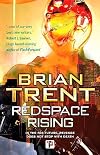
I expected to like Brian Trent’s Redspace Rising more than I did. It put checkmarks in many of my favorite genre boxes, but it never fully engaged my attention—perhaps more my fault than the Trent’s. Several centuries from now, political turmoil has led to a civil war on Mars. Memories are moveable data. Think Altered Carbon, The Old Man’s War, and The Light Brigade. Whether our protagonist is a hero, villain, or victim depends on who you ask and when you put the question. As I said, show more I don’t know why it did not draw me in as much as the works that may have inspired it. show less
Lists
History (1)
You May Also Like
Associated Authors
Statistics
- Works
- 13
- Also by
- 24
- Members
- 119
- Popularity
- #166,387
- Rating
- 3.8
- Reviews
- 12
- ISBNs
- 15