
Jeff Peters
Author of Fusebox: Developing ColdFusion Applications
Works by Jeff Peters
Tagged
Common Knowledge
There is no Common Knowledge data for this author yet. You can help.
Members
Reviews
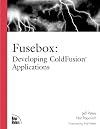
This book goes from theory to nuts-and-bolts and back again on how to design, implement, use, manipulate, and manage code written in the Fusebox method. While I particularly like Wireframes and FLiP, my favorite Fusebox piece by far are FuseDocs.
The book spends a fair amount of time explaining each piece of the Fusebox methodology and gives plenty of examples. There is a companion website, which is more than handy. The book is broken into two sections: coding and the life cycle of the code. show more Each section seems to have a bit different focus, and I imagine that the Life Cycle Process section is more immediately attractive to managers and independent developers. Yet I am glad to find both pieces here, juxtaposed. It keeps me from losing the forest for the trees in the coding section, and from getting too far removed from the actual work at hand in the FLiP section.
According to the authors, Fusebox was developed for use by small teams with a theoretical manager somewhere. I can see how this methodology would bring focus to and demystify any application development. But I have to write that while teams might have been the target audience, contractors will come to love this. Fusebox and especially its FuseDoc element empower the novice contractor to tackle the Big Project that has been landed at long last and produce results without becoming overwhelmed. Far more importantly, though, it allows a developer familiar with FuseBox to speak a fluid language about time, task, and integration. As someone who finds herself after lunch looking over code written before breakfast and wondering what the heck I was trying to do, FuseDocs are a godsend.
Fusebox methodology, while written for ColdFusion, isn't limited to the ColdFusion world. One could easily pick up any FuseDoc and translate it to PHP. This portability of the process renders the Fusebox methodology a staying power we haven't seen in a long time. And while extreme programming has much to recommend it, it doesn't result in a task-oriented product in the same way that Fusebox does. The Fusebox process seems to lend itself to real world applications, development and concerns in a way I haven't found in other methodologies. It also has the added bonus of becoming widely known, and could approach a standard for web-based application development.
As a developer, I found the book well written as well, and one that addresses each area discretely. I personally read it form front to back, but the material seems to hold up to a piecemeal reading as well (this chapter, that section, or this reference). All this means that the Fusebox book will be kept close at hand and used often. Buy it, and don't be afraid to write in it, dog-ear it, and put flags where they make the most sense for you. I truly believe that use of the Fusebox methodology singly or by whole teams will result in programmers who get to spend more time doing what they love, and doing it in an environment they enjoy. show less
The book spends a fair amount of time explaining each piece of the Fusebox methodology and gives plenty of examples. There is a companion website, which is more than handy. The book is broken into two sections: coding and the life cycle of the code. show more Each section seems to have a bit different focus, and I imagine that the Life Cycle Process section is more immediately attractive to managers and independent developers. Yet I am glad to find both pieces here, juxtaposed. It keeps me from losing the forest for the trees in the coding section, and from getting too far removed from the actual work at hand in the FLiP section.
According to the authors, Fusebox was developed for use by small teams with a theoretical manager somewhere. I can see how this methodology would bring focus to and demystify any application development. But I have to write that while teams might have been the target audience, contractors will come to love this. Fusebox and especially its FuseDoc element empower the novice contractor to tackle the Big Project that has been landed at long last and produce results without becoming overwhelmed. Far more importantly, though, it allows a developer familiar with FuseBox to speak a fluid language about time, task, and integration. As someone who finds herself after lunch looking over code written before breakfast and wondering what the heck I was trying to do, FuseDocs are a godsend.
Fusebox methodology, while written for ColdFusion, isn't limited to the ColdFusion world. One could easily pick up any FuseDoc and translate it to PHP. This portability of the process renders the Fusebox methodology a staying power we haven't seen in a long time. And while extreme programming has much to recommend it, it doesn't result in a task-oriented product in the same way that Fusebox does. The Fusebox process seems to lend itself to real world applications, development and concerns in a way I haven't found in other methodologies. It also has the added bonus of becoming widely known, and could approach a standard for web-based application development.
As a developer, I found the book well written as well, and one that addresses each area discretely. I personally read it form front to back, but the material seems to hold up to a piecemeal reading as well (this chapter, that section, or this reference). All this means that the Fusebox book will be kept close at hand and used often. Buy it, and don't be afraid to write in it, dog-ear it, and put flags where they make the most sense for you. I truly believe that use of the Fusebox methodology singly or by whole teams will result in programmers who get to spend more time doing what they love, and doing it in an environment they enjoy. show less
Statistics
- Works
- 4
- Members
- 18
- Popularity
- #630,788
- Rating
- 3.0
- Reviews
- 1
- ISBNs
- 4