
About the Author
Disambiguation Notice:
If your book appears on this page and is not by the band called Primus, please edit your information to include the author's full name, rather than the surname only. Your book should then appear on the correct author page. Do NOT combine this page with any of the authors who share this surname. Thank you.
Image credit: Les Claypool, Larry LaLonde and Jay Lane performing with Primus circa 2014. By User:Watermastermonkey, [1] (Les, LaLonde and Jay) - Les, LaLonde, Jay: Primus - Primus and the Chocolate Factory Detroit - 03 November 2014, CC BY 2.0, https://en.wikipedia.org/w/index.php?curid=35715441
Works by Primus
Primus, Over the Electric Grapevine: Insight into Primus and the World of Les Claypool (2014) 50 copies, 18 reviews
Primus - Sailing the Seas of Cheese: Guitar and Bass Transcriptions (Play-It-Like-It-Is) (2002) 2 copies
Blame It On The Fish 2 copies
Conspiranoia (White Vinyl) 1 copy
Sessanta Live 1 copy
Primus - Pork Soda 1 copy
Associated Works
Tagged
Common Knowledge
- Gender
- n/a
- Disambiguation notice
- If your book appears on this page and is not by the band called Primus, please edit your information to include the author's full name, rather than the surname only. Your book should then appear on the correct author page. Do NOT combine this page with any of the authors who share this surname. Thank you.
Members
Reviews

Primus is one of those bands that either divides or unites. Strangers become instant soul mates the minute you discover you both love the band. People you’ve known and perhaps loved for years start to be people you barely understand if they don’t like the band. It’s a thing, you get it or you don’t. Luckily for me (and maybe not my husband) I get it.
The first time I heard a Primus album, my head almost exploded. What was that sound? Just what the hell was the singer on anyway? Are show more those really the lyrics and what the hell was the bass player doing to that poor thing? Seemingly unserious and like a musical cartoon, Primus is an easy band to misunderstand and underestimate. They aren’t easy to characterize and often get lumped in with genres that don’t have much in common (I loved the bits about OzzFest and Horde and how square peg in round hole the experience was).
This book, unlike many in the same general category, is about the music, the relationships and the creative process; not about the underbelly of the rock music industry. It's related in a series of interview answers that not only feature the band members and management/support, but other musicians as well including Geddy Lee, Kirk Hammett (a high-school buddy of Les's), Tom Waits, Chad Smith and Stewart Copeland. It seems that even if unfamiliar with the music of Primus, musicians who come to work with the band quickly realize how accomplished they all are. Some who are difficult to pin down are eager to work with Les and so there are many, many side bands that get nearly equal attention in the book. There's also a handy who's who at the beginning in case you're not familiar with a person.
Often I’d read the book with one or other of the many Les-based albums in my possession and it was pretty great to hear the music being discussed. (Pork Soda is still my favorite Primus record and Live Frogs Set 2 is my favorite side project record) I learned a lot about the band, the process and the weird variety of shenanigans these guys get up to. I kept parrotting various things in the book to my husband, who suffers my weird musical taste with patience. I did win him over with Clutch, but alas Primus and Claypool elude him. I wonder if my secret desire for a Warren Zevon/Les Claypool collaboration could have brought him around? show less
The first time I heard a Primus album, my head almost exploded. What was that sound? Just what the hell was the singer on anyway? Are show more those really the lyrics and what the hell was the bass player doing to that poor thing? Seemingly unserious and like a musical cartoon, Primus is an easy band to misunderstand and underestimate. They aren’t easy to characterize and often get lumped in with genres that don’t have much in common (I loved the bits about OzzFest and Horde and how square peg in round hole the experience was).
This book, unlike many in the same general category, is about the music, the relationships and the creative process; not about the underbelly of the rock music industry. It's related in a series of interview answers that not only feature the band members and management/support, but other musicians as well including Geddy Lee, Kirk Hammett (a high-school buddy of Les's), Tom Waits, Chad Smith and Stewart Copeland. It seems that even if unfamiliar with the music of Primus, musicians who come to work with the band quickly realize how accomplished they all are. Some who are difficult to pin down are eager to work with Les and so there are many, many side bands that get nearly equal attention in the book. There's also a handy who's who at the beginning in case you're not familiar with a person.
Often I’d read the book with one or other of the many Les-based albums in my possession and it was pretty great to hear the music being discussed. (Pork Soda is still my favorite Primus record and Live Frogs Set 2 is my favorite side project record) I learned a lot about the band, the process and the weird variety of shenanigans these guys get up to. I kept parrotting various things in the book to my husband, who suffers my weird musical taste with patience. I did win him over with Clutch, but alas Primus and Claypool elude him. I wonder if my secret desire for a Warren Zevon/Les Claypool collaboration could have brought him around? show less
 This review was written for LibraryThing Early Reviewers.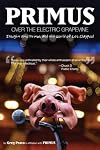
Primus got pretty popular back when I was in middle school and Sailing the Seas of Cheese came out. I always appreciated the unique style of the band and Les's amazing skill as a bass player, but some of the songs were a little too strange/eclectic for me which gave me concerns about how this book would be. It was really impressive and interesting though. The interview style covers topics quickly, but in depth and doesn't lead to boring factual diatribes that some biographies can fall victim show more to. Also, I didn't realize the amount/variety of side projects Les has had over the years and the vast amount of musicians he had collaborated with. This book is really fascinating and a great read for even a casual fan! show less
This review was written for LibraryThing Early Reviewers.If any band could be said to prove the maxim that writing about music is like dancing about architecture, it's Primus. Descriptions of their sound—"Zappa meets Rush" is the best I can do—while often containing a grain of accuracy, don't do them justice; they are truly a band that has to be heard to be believed. (If you've never heard them and you're intrigued, go over to Spotify right now.) This oral history, previously published in 2014 (I can’t tell how much it’s been brought up to show more date), centers around interviews the author did with bandleader-vocalist-bassist Les Claypool in 2012, filled out with interviews of band members past and present, managers, and fellow musicians like Kirk Hammett (of Metallica, but also one of Claypool's high school classmates), Stewart Copeland and Trey Anastasio (of The Police and Phish, respectively, but also of Oysterhead, a side project of Claypool's), Tom Waits (an unlikely collaborator, to be sure), Geddy Lee, and Warren Haynes. Unlike many rock bios, there's not much drug use beyond weed-smoking, nor is there much drinking beyond the occasional beer. What's more, no one has an unkind word for anyone else; the worst you'll find is that someone contradicts someone else's version of an event. Which is not to say the book is boring (I usually find endless tales of substance abuse to be the most boring parts of these kinds of books), only that there's a relaxed, just-the-facts-ma'am vibe about it that contradicts the band’s over-the-top image. Definitely recommended for Primus fans as well as anyone interested in rock music of the 1990s. show less
This review was written for LibraryThing Early Reviewers.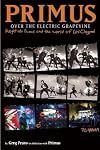
I’ve been a fan of Primus since middle school. The first time I heard Sailing the Seas of Cheese I thought ‘This is the weirdest, most awesome music I’ve ever heard’. Most of my friends agreed that it was definitely the weirdest, so my relationship with Primus was always solitary venture. I devoured every album they put out and on release day I’d drive to Best Buy (when they used to sell CDs). For me Primus scratched a musical itch that nobody else could and I was grateful.
When show more LibraryThings.com sent me an early review copy of Greg Prato’s new book Primus: Over the Electric Grapevine I was pretty jazzed. The book chronicles the musical history of Les Claypool and Primus from it’s earliest beginnings all the way to the present. I don’t know if Greg created the documentary/interview style used for this book, but it absolutely the perfect way to tell this kind of story.
Most ‘rock and roll’ bios are written by official biographers or music journalists. These writers generally craft the story of a band into a type of history book. Those types of books are good and I’ve ready my share of them. One of the things I hate about them is that often the writer’s opinions dictates the story. The author’s own feelings about and experiences with the artist tend to determine how the story is told. You get an image of the artist, but it’s definitely the author’s perspective. Greg avoids all those pitfalls by simply facilitating a conversation between all the individual artists. The read gets front row seats to listen in!
The book consists of various transcribed interviews that were chopped up and pieced back together. Certainly the result is something greater than any one interview could have been. You get to hear from Les, Ler, and Tim, but also Adam Gates, Jay Lane, Todd Huth, and a cast of others who have been in the Primus/Claypool circle. As a reader you aren’t privy to the questions that prompted the responses, but you don’t ever wonder about them either. It’s almost as if you’re sitting across from them at the bar as they reminisce about the past and debate what really happened.
That ‘debate’ aspect is my favorite part of this book. (Debate is probably not the right word though– plurality of perspectives?) Prato allows the reader to hear Les’s version of events, followed by Larry’s, followed my Tim’s, followed by the road manager or some other party. This multi-voiced approach leaves you with richer and more vibrant stories. Rather than one “officially factual” story you get something far more honest. In the process you begin to understand the relationship dynamics and the personalities of each person.
I was always a Primus fan rather than just a Les Claypool fan (although I did have Sausage’s record the Holy Mackerel album). The parts of this book that cover when Primus was on hiatus were like hearing a new artist for the first time. While it was probably nostalgic for some to read about Frog Brigade, Bernies Brains, and Oysterhead, but it was pure discovery for me. The jam band scene was never my thing, but hearing how Les got into it and listening to the stories from the other artists compelled me to seek out those recordings. I was not disappointed. Hearing those recording reminded me of the first time I heard Primus (especially C2B3’s The Big Eyeball in the Sky record). Reading this book even changed the way I listened to the old Sausage album. I heard it fresh and new for maybe the first time and fell in love with Jay Lane’s drumming style.
The way Greg Prato has structured the book and presented the interviews makes it an extremely personal experience. It will remind you of how your own past as a fan is intertwined with Primus’ music, albums, and imagery. That nostalgia element was huge part of this book’s fun for me. I hadn’t really thought back to how Primus had been a musical back beat for my youth, but as I was reading about their history I was often reminded of my own.
I remember when the Brown Album came out and some folks were bitching about it. I loved it. It was still quirky and weird and Primus, but more polished and punchy. Shake Hands With Beef was my favorite track on the album. My first foray into smoking was because of Les’ mention of Tijuana Smalls in that song. [Pull out the cannon boys, steal us some wine. Puff Tijuana Smalls and shake hands with beef!] I was 17 and working at CVS as a cashier. On the bottom shelf of the cigar aisle (before cigars were behind the counter with the cigarettes) there were these eye-catching packs of cigars. The box looked like some cheesy easy listening album cover from the late 70’s. Each held ten plastic tipped, cherry flavored Tijuana Smalls.
I lusted after those cigar like most guys my age lusted after porno mags. I needed to have them. Finally one evening I walked down the aisle, pick up a pack, shoved them in my pocket and continued about my business. I couldn’t wait to get to my car and light one up. It tasted like shit and I coughed and choked through the experience. (Nobody ever told me you weren’t supposed to inhale cigars!). I may have been a little green by the end, but I felt like hot shit. The next time I got a co-worker to sell them to me instead of stealing them. Eventually the store stopped carrying them, but to this day, if I smoke, I prefer some sort of tipped cigar (which I also still inhale). Thankfully I never did feel compelled to rob a liquor store.
Anyway, this book was the most fun I’ve had reading a book all year. Go get it! show less
When show more LibraryThings.com sent me an early review copy of Greg Prato’s new book Primus: Over the Electric Grapevine I was pretty jazzed. The book chronicles the musical history of Les Claypool and Primus from it’s earliest beginnings all the way to the present. I don’t know if Greg created the documentary/interview style used for this book, but it absolutely the perfect way to tell this kind of story.
Most ‘rock and roll’ bios are written by official biographers or music journalists. These writers generally craft the story of a band into a type of history book. Those types of books are good and I’ve ready my share of them. One of the things I hate about them is that often the writer’s opinions dictates the story. The author’s own feelings about and experiences with the artist tend to determine how the story is told. You get an image of the artist, but it’s definitely the author’s perspective. Greg avoids all those pitfalls by simply facilitating a conversation between all the individual artists. The read gets front row seats to listen in!
The book consists of various transcribed interviews that were chopped up and pieced back together. Certainly the result is something greater than any one interview could have been. You get to hear from Les, Ler, and Tim, but also Adam Gates, Jay Lane, Todd Huth, and a cast of others who have been in the Primus/Claypool circle. As a reader you aren’t privy to the questions that prompted the responses, but you don’t ever wonder about them either. It’s almost as if you’re sitting across from them at the bar as they reminisce about the past and debate what really happened.
That ‘debate’ aspect is my favorite part of this book. (Debate is probably not the right word though– plurality of perspectives?) Prato allows the reader to hear Les’s version of events, followed by Larry’s, followed my Tim’s, followed by the road manager or some other party. This multi-voiced approach leaves you with richer and more vibrant stories. Rather than one “officially factual” story you get something far more honest. In the process you begin to understand the relationship dynamics and the personalities of each person.
I was always a Primus fan rather than just a Les Claypool fan (although I did have Sausage’s record the Holy Mackerel album). The parts of this book that cover when Primus was on hiatus were like hearing a new artist for the first time. While it was probably nostalgic for some to read about Frog Brigade, Bernies Brains, and Oysterhead, but it was pure discovery for me. The jam band scene was never my thing, but hearing how Les got into it and listening to the stories from the other artists compelled me to seek out those recordings. I was not disappointed. Hearing those recording reminded me of the first time I heard Primus (especially C2B3’s The Big Eyeball in the Sky record). Reading this book even changed the way I listened to the old Sausage album. I heard it fresh and new for maybe the first time and fell in love with Jay Lane’s drumming style.
The way Greg Prato has structured the book and presented the interviews makes it an extremely personal experience. It will remind you of how your own past as a fan is intertwined with Primus’ music, albums, and imagery. That nostalgia element was huge part of this book’s fun for me. I hadn’t really thought back to how Primus had been a musical back beat for my youth, but as I was reading about their history I was often reminded of my own.
I remember when the Brown Album came out and some folks were bitching about it. I loved it. It was still quirky and weird and Primus, but more polished and punchy. Shake Hands With Beef was my favorite track on the album. My first foray into smoking was because of Les’ mention of Tijuana Smalls in that song. [Pull out the cannon boys, steal us some wine. Puff Tijuana Smalls and shake hands with beef!] I was 17 and working at CVS as a cashier. On the bottom shelf of the cigar aisle (before cigars were behind the counter with the cigarettes) there were these eye-catching packs of cigars. The box looked like some cheesy easy listening album cover from the late 70’s. Each held ten plastic tipped, cherry flavored Tijuana Smalls.
I lusted after those cigar like most guys my age lusted after porno mags. I needed to have them. Finally one evening I walked down the aisle, pick up a pack, shoved them in my pocket and continued about my business. I couldn’t wait to get to my car and light one up. It tasted like shit and I coughed and choked through the experience. (Nobody ever told me you weren’t supposed to inhale cigars!). I may have been a little green by the end, but I felt like hot shit. The next time I got a co-worker to sell them to me instead of stealing them. Eventually the store stopped carrying them, but to this day, if I smoke, I prefer some sort of tipped cigar (which I also still inhale). Thankfully I never did feel compelled to rob a liquor store.
Anyway, this book was the most fun I’ve had reading a book all year. Go get it! show less
This review was written for LibraryThing Early Reviewers.Lists
Awards

You May Also Like


Associated Authors
Statistics
- Works
- 31
- Also by
- 2
- Members
- 249
- Popularity
- #91,697
- Rating
- 3.6
- Reviews
- 19
- ISBNs
- 11
