
Martin Carver
Author of Sutton Hoo: Burial Ground of Kings?
About the Author
Martin Carver was an army officer for fifteen years, a commercial archaeologist for thirteen and Professor of Archaeology at the University of York from 1986 to 2007. He has created two commercial archaeology units (Birmingham Archaeology and FAS-Heritage Ltd.) and initiated two museums (at Sutton show more Hoo and Portmahomack). He has carried out archaeological research in England, Scotland, France, Italy and Algeria and is the author of Archaeological Investigation (2009). show less
Series
Works by Martin Carver
The Cross Goes North: Processes of Conversion in Northern Europe, AD 300-1300 (2004) — Editor; Introduction — 47 copies
Sutton Hoo: A Seventh-Century Princely Burial Ground and its Context (Reports of the Research Committee of the Society of Antiquar) (2005) 16 copies
Formative Britain: An Archaeology of Britain, Fifth to Eleventh Century AD (Routledge Archaeology of Northern Europe) (2019) 12 copies
The Archaeology of Medieval Europe, Vol. 2: Twelfth to Sixteenth Centuries (2011) 11 copies, 1 review
Portmahomack on Tarbat Ness : changing ideologies in north-east Scotland, sixth to sixteenth century AD (2016) 3 copies
Arguments in Stone: Archaeological Research and the European Town in the First Millennium (1993) 3 copies
Sutton Hoo 2 copies
Transactions Of The Worcestershire Archaeological Society Third Series Vol. 7, 1980 Medieval Worcester An Archaelogical Framework (1980) 2 copies
Medieval Worcester - An Archaeological Framework: Reports, Surveys, texts and Essays (1980) 2 copies
Discovery at Tarbat 1 copy
Antiquity - Vol, 84, No. 326 1 copy
Tarbat's Pictish Sculptors 1 copy
Associated Works
The Introduction of Christianity into the Early Medieval Insular World: Converting the Isles I (Cultural Encounters in Late Antiquity and the Middle Ages) (2016) — Contributor — 6 copies
Towns in Transition: Urban Evolution in Late Antiquity and the Early Middle Ages (1996) — Contributor — 4 copies
Tagged
Common Knowledge
- Legal name
- Carver, Martin Oswald Hugh
- Birthdate
- 1941
- Gender
- male
- Education
- University of London (BS)
Durham University (Dip. Archaeology) - Occupations
- archaeologist
professor (Archaeology | University of York)
director of research (Tarbat, Scotland)
director of research (Sutton Hoo, England)
editor (Antiquity) - Relationships
- Hummler, Madeleine (partner)
- Nationality
- UK
- Associated Place (for map)
- UK
Members
Reviews
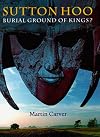
So this continues my Beowulf journey.* A detail oriented academic read (the second half; the first half reads like a whodunnit) but for me fascinating for its ties to Beowulf. And this connection is addressed by Carver in the Open Forum epilogue of is book where he answers questions posed by lecture attendees and viewers of the BBC2 program that focused on Sutton Hoo. (A wonderful and informative way to wrap things up)
Here he states “A burial is composed of selected objects and it is show more likely that the objects, taken individually and together, were also full of allusions to rank, power, ancestry, ideology and allegiance to kin at home and overseas. I therefore regard a ship burial as just as much a poem as Beowulf is, just as difficult to interpret but just as capable of giving us insights into the Anglo-Saxon mind. Burials are poems written with material culture; so that the choice of burial rite and choice of what is put into the grave are choices to what was known or feared or loved by the mourners.”
“Neither Sutton Hoo or Beowulf represents a straight account of reality. Both contain allusions to the real world, but we do not know for certain which the were.”
*so the Beowulf course i was in has taken me from Tacitus writing in the 2nd A.D. to Sutton Hoo with Basil’s 1939 dig** and various interpretations of Beowulf (Heaney, Hedley, Tolkien) including modern novels and movies (Crichton’s Eaters of the Dead and The 13th Warrior and The Mere Wife). Now onto Gardner’s Grendel and Ibn Fadlan’s travels.
**Serendipitously, last year before the Beowulf course, I’d watched the movie The Dig with Ralph Fiennes and Carey Mulligan as Basil Brown and Edith Pretty which, based on this reading, fairly accurately captures the events surrounding that dig (well, except the whole love triangle (?) tangent involving Lily James) show less
Here he states “A burial is composed of selected objects and it is show more likely that the objects, taken individually and together, were also full of allusions to rank, power, ancestry, ideology and allegiance to kin at home and overseas. I therefore regard a ship burial as just as much a poem as Beowulf is, just as difficult to interpret but just as capable of giving us insights into the Anglo-Saxon mind. Burials are poems written with material culture; so that the choice of burial rite and choice of what is put into the grave are choices to what was known or feared or loved by the mourners.”
“Neither Sutton Hoo or Beowulf represents a straight account of reality. Both contain allusions to the real world, but we do not know for certain which the were.”
*so the Beowulf course i was in has taken me from Tacitus writing in the 2nd A.D. to Sutton Hoo with Basil’s 1939 dig** and various interpretations of Beowulf (Heaney, Hedley, Tolkien) including modern novels and movies (Crichton’s Eaters of the Dead and The 13th Warrior and The Mere Wife). Now onto Gardner’s Grendel and Ibn Fadlan’s travels.
**Serendipitously, last year before the Beowulf course, I’d watched the movie The Dig with Ralph Fiennes and Carey Mulligan as Basil Brown and Edith Pretty which, based on this reading, fairly accurately captures the events surrounding that dig (well, except the whole love triangle (?) tangent involving Lily James) show less
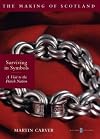
A good basic introduction to what we know - or think we know - about the Picts. Carver emphasises the extent to which experts disagree on many areas, especially language and customs.
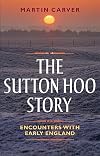
A good overview of the history of the Sutton Hoo site from prehistory to modern day as suggested by the archaeological work done in various phases at the site.
A detailed, scientific account of the real story behind Netflix's "The Dig" film and places the story of the Sutton Hoo burials in a historical, and geographical context. Essential reading g for anyone seeking a greater understanding of the 7th century AD in which the burial took place.
Lists
Awards

You May Also Like


Associated Authors
Statistics
- Works
- 39
- Also by
- 3
- Members
- 509
- Popularity
- #48,720
- Rating
- 4.0
- Reviews
- 6
- ISBNs
- 62
- Favorited
- 1