
Dave Sargent
Author of Roy Raccoon: I Love Adventure
About the Author
Dave Sargent was born in northwest Arkansas in May of 1941. His childhood was spent in the hills of Arkansas where he learned the way of animals but did not learn to read or write. Sargent has inverted-mirrored vision, a severe form of dyslexia, and didn't learn to read until age 20. Sargent spent show more most of his life as a dairy farmer and didn't start his wrting career till he had retired from the dairy business. Sargent began writing books for children in 1990, after his wife, Pat, encouraged him to write down the stories he often told his children. Once he overcame the obstacle of being unable to read or write, he successfully began a writing career with his wife. Sargent has published 328 books. (Bowker Author Biography) show less
Series
Works by Dave Sargent
I Can Read, Too/ Puedo Leer, Tambien Book 4 (Learn to Read Level K/ Aprenda Leer K) (Spanish Edition) (2001) 23 copies
Edge city on two different plans : a collection of lesbian and gay writing from Australia (1983) — Editor — 11 copies
Young Roy/ El Joven Roy: I Love Adventure!/ Me Encanta La Aventura! (Young Animal Pride/ Jovenes Animales Distinguidos) (2003) 6 copies
Young Greta/ La Joven Greta: I'm Special!/ Soy Especial! (Young Animal Pride/ Jovenes Animales Distinguidos) (Spanish Edition) (2006) 5 copies
Young Sammy/ El Joven Sammy: I'm a Little Stinker!/ Soy Un Apestoso! (Young Animal Pride/ Jovenes Animales Distinguidos) (Spanish Edition) (2006) 5 copies
Introduction to Program Design (The Mcgraw-Hill International Series in Software Engineering) (1991) 4 copies
I Can Read, Too/ Puedo Leer, Tambien Book 1 (Learn to Read Level K/ Aprenda Leer K) (Spanish Edition) (2003) 2 copies
Young Dawn/ El Joven Dawn: Friends Care!/ Los Amigos Se Cuidan! (Young Animal Pride/ Jovenes Animales Distinguidos) (Spanish Edition) (2006) 2 copies
Fuzzy Bunny/ El Conejito Velloso (Learn to Read 1st Grade/ Aprenda Leer) (Spanish Edition) (2004) 2 copies
My favorite skunk 1 copy
I Can Read, Too/ Puedo Leer, Tambien Book 6 (Learn to Read Level K/ Aprenda Leer K) (Spanish Edition) (2003) 1 copy
Chip Chipmunk 1 copy
Robbie Razorback 1 copy
Annie Antelope 1 copy
Prater the Prairie Dog 1 copy
I Can Read, Too / puedo Leer, Tambien Book 7 (Learn to Read Level K / Aprenda Leer K) (Spanish Edition) (2003) 1 copy
Young Kitty / La Joven Kitty: Overcome Trouble! / Supera Los Problemas! (Young Animal Pride / Jovenes Animales Distinguidos) (2008) 1 copy
Young Jack / El Joven Jack: Be Grateful! / Se Agradecido! (Young Animal Pride / Jovenes Animales Distinguidos) (2008) 1 copy
Young Buddy/ El Joven Buddy: Don't Bully!/ No Abuses! (Young Animal Pride/ Jovenes Animales Distinguidos) (Spanish Edition) (2006) 1 copy
Associated Works
Tagged
Common Knowledge
There is no Common Knowledge data for this author yet. You can help.
Members
Reviews

Summary: “The Cat Who Barked” is an eighteen page picture book. It tells the story of a cat that behaves like a dog. The cat barks, chases other “dogs”, chews on bones, scratches at fleas, and digs in the yard. The illustrations are done in a bright, pop art style. The plot is simple: the cat introduces itself, and then spends the next seventeen pages questioning whether it is a cat or a dog. In the end, the cat thinks it is a dog and concludes that it is because of its show more thinking.
Personal Reflection: I am a fan of subversive children’s literature—when it is done right. The message in “The Cat Who Barked” is one rooted in the theory of performativity and gender identity. The cat is a signifier of the feminine, whereas the dog is a signifier of the masculine. By identifying as a dog, the cat becomes a queered signifier. Judith Butler would be proud of the simple way that gender performativity is represented in “The Cat Who Barked”. The conclusion of the book presents gender as fluid, and teaches that internalized ideas of expression are greater than outward identifiers. When the cat proclaims “am I a dog? I think I am…I bark like a dog…so I am a dog!” it represents the acceptance of the self despite traditional binary systems of representation.
Extension 1: To explore this idea further within a classroom setting, the students could compare the cat’s proclamation of “I bark like a dog, so I am a dog” to Descartes famous “I think, therefore I am”. A short writing exercise could be held in which students expound on the two statements and decide for themselves if the cat and Descartes are making the same declaration.
Extension 2: As a further extension, students could hold a class discussion about the way animals have been gendered. In this case a cat (traditionally feminine) believes it is a dog (traditionally masculine). Students should debate whether the story would work in the reverse. show less
Personal Reflection: I am a fan of subversive children’s literature—when it is done right. The message in “The Cat Who Barked” is one rooted in the theory of performativity and gender identity. The cat is a signifier of the feminine, whereas the dog is a signifier of the masculine. By identifying as a dog, the cat becomes a queered signifier. Judith Butler would be proud of the simple way that gender performativity is represented in “The Cat Who Barked”. The conclusion of the book presents gender as fluid, and teaches that internalized ideas of expression are greater than outward identifiers. When the cat proclaims “am I a dog? I think I am…I bark like a dog…so I am a dog!” it represents the acceptance of the self despite traditional binary systems of representation.
Extension 1: To explore this idea further within a classroom setting, the students could compare the cat’s proclamation of “I bark like a dog, so I am a dog” to Descartes famous “I think, therefore I am”. A short writing exercise could be held in which students expound on the two statements and decide for themselves if the cat and Descartes are making the same declaration.
Extension 2: As a further extension, students could hold a class discussion about the way animals have been gendered. In this case a cat (traditionally feminine) believes it is a dog (traditionally masculine). Students should debate whether the story would work in the reverse. show less
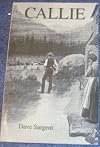
Dave and Pat Sargent author many books located in my children's elementary school library, and by many, I mean more than 50. I never really knew anything about these authors, but after Dave Sargent visited my son's school, he came home with Callie, the story of Mr. Sargent's grandmother. Wow. This was the most engaging non-fiction for children that I have ever read. This story, while told in very kid-friendly language, let the reader feel the trials and harsh realities of early Colonial show more living. I appreciated that. Kids appreciate that. This biography related the meat of 70 years of her life and maintained the reader's interest throughout. Highly recommended! show less
This book makes children think if the cat is really a cat or a dog. It is appropriate for Pre-K and Kindergarten.

Summary: White Thunder is a natural born leader, like his father. When he was old enough to lead the herd, he did. One day, there were some men who rounded up the horses and they corraled the mustangs and broke them to ride. As he watch his friends get broke, he thought to himself “They will never ride me.”When they tried to break White Thunder, he would just lay on the ground. One day, he began to run and he decided to jump the fence and escape to freedom, but when he tried to jump the show more fence and his back feet got caught and he fell back into the corral. When his leg felt better he tried once again but he was successful. When he got free he searched for his friends and his herd, but the only herd that he found was that of another herd. Suddenly men on the back of horses were trying to corral the herd and White Thunder tried to stop the herd. Due to their loyalty to their leader, they still followed. Then White Thunder challenged the leader and after a long battle, White Thunder won and lead the herd toward the men and scared them away.
Personal Beliefs: This is a good book for student who are interested in animals. This book teaches student that they need to help other no matter how they treat others. Student need to be taught to help others when other genuinely need the help.
Extension: This can be used to teach children that people or mustangs in this case, can learn from their mistakes and help others from making similar mistakes. This book can also be used to help students read chapter books and student should do a chapter breakdown and the story line and plot series. show less
Personal Beliefs: This is a good book for student who are interested in animals. This book teaches student that they need to help other no matter how they treat others. Student need to be taught to help others when other genuinely need the help.
Extension: This can be used to teach children that people or mustangs in this case, can learn from their mistakes and help others from making similar mistakes. This book can also be used to help students read chapter books and student should do a chapter breakdown and the story line and plot series. show less
Awards

You May Also Like


Associated Authors
Statistics
- Works
- 292
- Also by
- 1
- Members
- 1,949
- Popularity
- #13,205
- Rating
- 3.7
- Reviews
- 8
- ISBNs
- 741
- Languages
- 1