
Walter Farley (1915–1989)
Author of The Black Stallion
About the Author
Walter Farley was born in Syracuse, New York on June 26, 1915. He began writing The Black Stallion when he was a student at Columbia University and completed it while working as an advertising copywriter in New York City. It was an immediate success when it was published in 1941. During World War show more II, he served in the army where he wrote the second book in the series, The Black Stallion Returns. After his discharge from the service in 1946, he became a full-time author. He wrote 20 novels in the Black Stallion series. His also wrote a fictionalized biography of America's greatest Thoroughbred, Man O'War. He died of heart failure on October 17, 1989 at the age of 74. (Bowker Author Biography) show less
Series
Works by Walter Farley
The Black Stallion / The Black Stallion Returns / The Black Stallion's Ghost / The Black Stallion Revolts (2005) 45 copies
Larry and the Undersea Raider 5 copies
Svarten og spøkelseshingsten 1 copy
Svarten kommer tilbake 1 copy
Signal til topps 1 copy
Svarten gjør opprør 1 copy
The Horse-Tamer, F-14 1 copy
Son of the Black Beauty 1 copy
Walter Farley THE BLACK STALLION'S FILLY 1952 Random House, NY MENASCO Illust's [Hardcover] unknown 1 copy
De glemte hesters øy 1 copy
01 The Black Stallion 1941 1 copy
Svarta hingstens travfl̲ 1 copy
Song of the Black Stallion 1 copy
Le retour de l'etalon noir 1 copy
L'étalon noire 1 copy
Associated Works
Tagged
Common Knowledge
- Canonical name
- Farley, Walter
- Legal name
- Farley, Walter Lorimer
- Birthdate
- 1915-06-26
- Date of death
- 1989-10-16
- Gender
- male
- Education
- Columbia University (BA|1941)
- Occupations
- children's book author
- Organizations
- United States Army (WWII)
- Relationships
- Farley, Steven (son)
- Cause of death
- heart failure
- Nationality
- USA
- Birthplace
- Syracuse, New York, USA
- Places of residence
- Syracuse, New York, USA
Venice, Florida, USA
Earlville, Pennsylvania, USA
Sarasota, Florida, USA - Place of death
- Sarasota, Florida, USA
- Burial location
- Venice, Florida, USA
- Map Location
- New York, USA
Members
Discussions
The Black Stallion Series, Walter Farley in World Reading Circle (January 2014)
Reviews

Admit it, someone says "horse adventure" and this is one of the very first images that comes to mind: a beautiful Arabian standing on a beach, the wind blowing his mane, and a shipwrecked boy beside him. Anyone who has ever read this book or seen the movie has been so caught up in that "horse adventure" that it has become a part of their lives in some way or another, even deep in the subconscious mind.
This book isn't considered a classic for nothing. Though the writing is simple, the plot is show more mildly outrageous, and things fall into place a little too easily, the whole of the package is somehow pure perfection. The story perfectly feeds off of the deep desires of so many who want to wake up one day and have a horse of their own just fall into their lap. Any young reader who picks up this book is certain to try and read it all in one sitting and will most probably deepen their love of horses.
As an adult, rereading this book transports me to a time when the racetracks of America were open and alive. I can exist in a time when people talked as much about what horse was the best as they now wonder who will be the National Champion at basketball. Reading the lives of Alec and Henry, taking in the words that so perfectly describe the action and sound of a racetrack, and experiencing the call of the race as if it were live on the radio, are all elements of this book that jump quickly to life inside the hearts of so many, capturing a time gone by and making this story one that will keep readers forever young. show less
This book isn't considered a classic for nothing. Though the writing is simple, the plot is show more mildly outrageous, and things fall into place a little too easily, the whole of the package is somehow pure perfection. The story perfectly feeds off of the deep desires of so many who want to wake up one day and have a horse of their own just fall into their lap. Any young reader who picks up this book is certain to try and read it all in one sitting and will most probably deepen their love of horses.
As an adult, rereading this book transports me to a time when the racetracks of America were open and alive. I can exist in a time when people talked as much about what horse was the best as they now wonder who will be the National Champion at basketball. Reading the lives of Alec and Henry, taking in the words that so perfectly describe the action and sound of a racetrack, and experiencing the call of the race as if it were live on the radio, are all elements of this book that jump quickly to life inside the hearts of so many, capturing a time gone by and making this story one that will keep readers forever young. show less
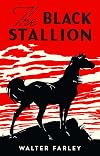
When I was about 10 years old, I lived in a brown stone row house in Philadelphia. It was a few years before they planted trees on our block. We had about a 10 by 10-foot slab of concrete for a back yard. When I read The Black Stallion by Walter Farley, I fell in love with horses and horse stories. I doubt I had ever seen a live horse by then. But I loved that book so much, it became a frequent companion. We had an alley between our house and a neighbor’s, and I begged my parents to let me show more have a horse, which I could stable in the alley. As time passed, I forgot about Farley and horse stories.
Recently, I began searching for nice, clean copies of Farley’s 41 stories. I have found about 6, but “The Black” as Farley named him, eluded me. Suddenly, I found a pristine copy of a new edition of Farley’s work. In every detail, it perfectly matched my memory. I sat down and red it again—complete with the original illustrations and dust jacket. I am going to intensify my search for others in the series.
The story line is a typical YA novel. A young boy, Alec Ramsey, is on a ship bound for home from an Arabian port on the red sea. Alec watches as the huge, magnificent stallion tries to break out of the hold, with no success. Then a storm comes, and the small ship is tossed up and down and all around. The ship began to sink. Alec and the other passengers abandoned the ship. Farley wrote, “When he came up, his first thought was of the ship; then he heard an explosion, and he saw the Drake settling deep into the water. Frantically, he looked around for a lifeboat, but there was none in sight. Then he saw the Black swimming not more than ten yards away. Something swished by him—a rope. And it was attached to the Black’s halter! The same rope they had used to bring the stallion aboard the boat, and which they had never been able to get close enough to the horse to untie. Without stopping to think, Alec grabbed hold of it. Then he was pulled through the water, out onto the open sea” (22). Ah, how those thrilling words came back to me.
Alec was ship wrecked on an uninhabited island. First, he tried to get close to the horse with no luck. He began to explore and found some fruit trees. Slowly the Black began to trust Alec, and they formed a heart-warming bond. He was able to build a fire, which spread to some trees. He ran to the shore. A ship saw the smoke. As they approached, the Black ran off. The sailors tried to convince Alec to leave the island without the Black. Farley writes, “Alec’s eyes blurred; he couldn’t see. He stumbled and fell and then clambered to his feet. Again, he rushed forward. Then they had their arms around him. // ‘For the love of St. Patrick,’ the man called Pat groaned, ‘he’s just a boy!’” Alec stubbornly refused to leave the island without the horse. Then the stallion appeared, and Alec mounted him. Farley wrote, “Approximately thirty yards away, Alec cane to a halt. ‘You just have to take us both, Captain! I can’t leave without him!’” he yelled” (59). Lots of exclamation points and lots of suspense.
Walter Farley’s, The Black Stallion, is a magnificent story for readers of all ages. It is a story sure to delight Texans who love horses. 5 stars
--Chiron, 9/11/18 show less
Recently, I began searching for nice, clean copies of Farley’s 41 stories. I have found about 6, but “The Black” as Farley named him, eluded me. Suddenly, I found a pristine copy of a new edition of Farley’s work. In every detail, it perfectly matched my memory. I sat down and red it again—complete with the original illustrations and dust jacket. I am going to intensify my search for others in the series.
The story line is a typical YA novel. A young boy, Alec Ramsey, is on a ship bound for home from an Arabian port on the red sea. Alec watches as the huge, magnificent stallion tries to break out of the hold, with no success. Then a storm comes, and the small ship is tossed up and down and all around. The ship began to sink. Alec and the other passengers abandoned the ship. Farley wrote, “When he came up, his first thought was of the ship; then he heard an explosion, and he saw the Drake settling deep into the water. Frantically, he looked around for a lifeboat, but there was none in sight. Then he saw the Black swimming not more than ten yards away. Something swished by him—a rope. And it was attached to the Black’s halter! The same rope they had used to bring the stallion aboard the boat, and which they had never been able to get close enough to the horse to untie. Without stopping to think, Alec grabbed hold of it. Then he was pulled through the water, out onto the open sea” (22). Ah, how those thrilling words came back to me.
Alec was ship wrecked on an uninhabited island. First, he tried to get close to the horse with no luck. He began to explore and found some fruit trees. Slowly the Black began to trust Alec, and they formed a heart-warming bond. He was able to build a fire, which spread to some trees. He ran to the shore. A ship saw the smoke. As they approached, the Black ran off. The sailors tried to convince Alec to leave the island without the Black. Farley writes, “Alec’s eyes blurred; he couldn’t see. He stumbled and fell and then clambered to his feet. Again, he rushed forward. Then they had their arms around him. // ‘For the love of St. Patrick,’ the man called Pat groaned, ‘he’s just a boy!’” Alec stubbornly refused to leave the island without the horse. Then the stallion appeared, and Alec mounted him. Farley wrote, “Approximately thirty yards away, Alec cane to a halt. ‘You just have to take us both, Captain! I can’t leave without him!’” he yelled” (59). Lots of exclamation points and lots of suspense.
Walter Farley’s, The Black Stallion, is a magnificent story for readers of all ages. It is a story sure to delight Texans who love horses. 5 stars
--Chiron, 9/11/18 show less

It is a classic and deservedly so in so many ways. Once, when life was a bit slower, people traveled the world on ships. And the ships stopped at many ports, and at one of those ports young Alec Ramsey sees a magnificent black stallion that can barely be contained by his handlers. Somehow, he manages to come onboard the ship where a specially-built stall is constructed for him, and Alec manages to befriend him with a cube of sugar, a bit of apple, and the adventure begins.
What captured me as show more a young, horse-mad girl, at a time when horse pastures were being "zoned" out of existence in and around Atlanta, was the solitude that Alec had with his horse on the desert island. I was so very glad that the movie captured the look and the feel of living there, only the two of them, learning to trust one another, and eventually Alec climbs on The Black's back for that marvelous ride around the island, feeling joy in existence and possibilities.
What I noticed now was the publication date: 1941. This book was written before the US entered World War II, horses were still kept near people's homes, and the return Alec makes to his home is not quite as jarring as it once was. The training that Alec goes through with Henry is intense (how on earth did Alec stay awake in class??) but again, there is that sense that *this* is the most wonderful of horses ever and adds a bit of apprenticeship to the magic of The Black Stallion. show less
What captured me as show more a young, horse-mad girl, at a time when horse pastures were being "zoned" out of existence in and around Atlanta, was the solitude that Alec had with his horse on the desert island. I was so very glad that the movie captured the look and the feel of living there, only the two of them, learning to trust one another, and eventually Alec climbs on The Black's back for that marvelous ride around the island, feeling joy in existence and possibilities.
What I noticed now was the publication date: 1941. This book was written before the US entered World War II, horses were still kept near people's homes, and the return Alec makes to his home is not quite as jarring as it once was. The training that Alec goes through with Henry is intense (how on earth did Alec stay awake in class??) but again, there is that sense that *this* is the most wonderful of horses ever and adds a bit of apprenticeship to the magic of The Black Stallion. show less

I changed my mind...
Sometimes when I've read a childhood favorite, it remains a favorite, but more often it loses something in revisiting. Frequently I regret rereading a story, once so beloved, but now become tarnished. I never considered The Black Stallion and the Girl as a favorite, so I approached my reread with less than high hopes for a change in feelings.
And yet, they were there.
With the addition of a new trainer to Hopeful Farm we are once again treated to not only schooling show more methods and daily care of thoroughbred horses, but also shown the racing world struggling with changes to its long held domination by men. The author explores the inroads women were making into the sport at the time this book was written, some fifty years ago, done with a fairly deft hand, much more realistic than agenda-driven. And through it all Walter Farley shines in his details of the jockey rooms, the paddocks, the announcer's booth, even the starting gates so central to it all.
While I would not place this with the best of the series, it's close. Don't judge this book by its cover, or title. show less
Sometimes when I've read a childhood favorite, it remains a favorite, but more often it loses something in revisiting. Frequently I regret rereading a story, once so beloved, but now become tarnished. I never considered The Black Stallion and the Girl as a favorite, so I approached my reread with less than high hopes for a change in feelings.
And yet, they were there.
With the addition of a new trainer to Hopeful Farm we are once again treated to not only schooling show more methods and daily care of thoroughbred horses, but also shown the racing world struggling with changes to its long held domination by men. The author explores the inroads women were making into the sport at the time this book was written, some fifty years ago, done with a fairly deft hand, much more realistic than agenda-driven. And through it all Walter Farley shines in his details of the jockey rooms, the paddocks, the announcer's booth, even the starting gates so central to it all.
While I would not place this with the best of the series, it's close. Don't judge this book by its cover, or title. show less
Lists
Books Read in 2014 (10)
4th Grade Books (1)
1940s (1)
Five star books (1)
Ryan's Books (1)
Awards


You May Also Like


Associated Authors
Statistics
- Works
- 76
- Also by
- 5
- Members
- 26,012
- Popularity
- #801
- Rating
- 3.9
- Reviews
- 187
- ISBNs
- 588
- Languages
- 10
- Favorited
- 22
