
Ronald Arbuthnott Knox (1888–1957)
Author of The Belief of Catholics
About the Author
Monsignor Ronald Knox (1888-1957) was ordained an Anglican priest in 1912 but converted to Catholicism in 1917, an event influenced by Knox's friendship with G. K. Chesterton. Knox wrote numerous books, including Enthusiasm, Essays in Satire, and several detective novels, and completed a full show more translation of the Latin Vulgate into English. show less
Series
Works by Ronald Arbuthnott Knox
The Church on Earth: The Nature and Authority of the Catholic Church, and the Place of the Pope Within (2003) 64 copies
A New Testament Commentary for English Readers, Vol. II: The Acts of the Apostles, St Paul's Letters to the Churches (1953) 17 copies
University and Anglican sermons: Together with sermons preached on various occasions (1963) 15 copies
A New Testament Commentary for English Readers, Vol. III: The Later Epistles, The Apocalypse (1956) 14 copies
The Little Office of the Blessed Virgin Mary in English, Simply Arranged for Use by Lay People (1979) 5 copies
An Open-Air Pulpit 5 copies
Sanctions : a frivolity 5 copies
A selection from the occasional sermons of the Right Reverend Monsignor Ronald Arbuthnott Knox (1949) 4 copies
The miracles of King Henry VI being an account and translation of twenty-three miracles taken from the manuscript in the (2010) 3 copies
The Fame of Blessed Thomas More: Being Addresses Delivered in His Honour in Chelsea, July 1929 (1929) 3 copies
Law, rhetoric and comedy in classical Athens : essays in honour of Douglas M. MacDowell (2004) — Editor — 3 copies
La mia messa 3 copies
O Credo 2 copies
Studies in the Literature of Sherlock Holmes: The Blue Book, Volume I, No. II, July 1912 (1912) 2 copies
Mystery of the kingdom 2 copies
New testament commentary 2 copies
Proving God : a new apologetic 2 copies
Patrick Shaw-Stewart 2 copies
Ronald Knox 1 copy
Rich Young Man 1 copy
Catholic Catechism: Book Two 1 copy
Msgr. Ronald Knox 1 copy
Holy Rosary, The 1 copy
An hour at the front 1 copy
Juxta salices 1 copy
St. Wulstan: Being the substance of a sermon preached in St. Wulstan's Church, Fleetwood, January 19th 1947 (1947) 1 copy
The seven penitential psalms 1 copy
Nazi and Nazarene 1 copy
Il Credo 1 copy
Une retraite pour laïques 1 copy
Meditações para um retiro 1 copy
Priestly Life 1 copy
The Vietnam reader 1 copy
Associated Works
The Autobiography of Saint Therese of Lisieux: The Story of a Soul (1899) — Translator, some editions — 3,657 copies, 43 reviews
Tagged
Common Knowledge
- Birthdate
- 1888-02-17
- Date of death
- 1957-08-24
- Gender
- male
- Education
- Eton College, Eton, Berkshire, England, UK
Balliol College, Oxford - Occupations
- priest
theologian
apostolic protonotary to Pope Pius XII
broadcaster
detective novelist - Organizations
- Detection Club
Catholic Church
University of Oxford - Relationships
- Fitzgerald, Penelope (niece)
Knox, E. V. (brother)
Knox, Wilfred (brother)
Peck, Winifred (sister)
Waugh, Evelyn (friend) - Nationality
- UK
- Birthplace
- Kibworth, Leicestershire, England, UK
- Places of residence
- Kibworth, Leicestershire, England, UK
- Place of death
- Mells, Somerset, England, UK
- Burial location
- St Andrew's Church, Mells, Somerset, England, UK
- Map Location
- England, UK
Members
Reviews

Knox was well-positioned to write a book like this: close enough to Trollope's world to still have a real sense of what it was like, though coloured by a glow of nostalgia which is absent from Trollope (the world of Barsetshire was already on its way out when Trollope wrote, but he is less sentimentally attached to it): the children of the Barsetshire protagonists would have been the generation of Knox's father.
It is not Trollope, though; it is Knox. Trollope was a layman who si times wrote show more about clerical matters (and clerical matters as an aspect of politics); Knox was an Anglican bishop's son and a Roman Monsignor. There are many more RCs in Knox's Barsetshire (easy to do, as I recall none in Trollope's) and inter-eccesial tensions are a theme developed by Knox which are entirely absent from Trollope. The Higher Criticism, which did not interest Trollope at all, plays a role in one story.
There are points when it feels clever, as Trollope rarely does.
Still, Knox does well at capturing the humane character of the Barsetshire milieu and pulling it forward into the 20th Century; one can with a little effort, feel that it might be authentic, in a way which fails completely in so many continuations of Nineteenth-Century novels. show less
It is not Trollope, though; it is Knox. Trollope was a layman who si times wrote show more about clerical matters (and clerical matters as an aspect of politics); Knox was an Anglican bishop's son and a Roman Monsignor. There are many more RCs in Knox's Barsetshire (easy to do, as I recall none in Trollope's) and inter-eccesial tensions are a theme developed by Knox which are entirely absent from Trollope. The Higher Criticism, which did not interest Trollope at all, plays a role in one story.
There are points when it feels clever, as Trollope rarely does.
Still, Knox does well at capturing the humane character of the Barsetshire milieu and pulling it forward into the 20th Century; one can with a little effort, feel that it might be authentic, in a way which fails completely in so many continuations of Nineteenth-Century novels. show less
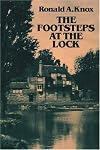
I won't go over the plot as other people already have. I really enjoy Knox's set-ups. His characters and dialogue are usually a hoot, especially between Miles Bredon and his wife, Angela. I always think I'm embarking on a Wodehouse-esque mystery, only to have it devolve into something rather more prosaic and technical. Still, I'll keep reading them as I find them.
A clear, honest reflection on Knox's struggle to understand the history of his church (C of E) and its connection to the Apostolic tradition. He finally concludes he can do no other than leave the Anglican church for the Catholic church. But it is the journey of his mind and heart driven by his brilliant, logical mind, that provides the drama and the pain that finally leads to "paying the price of unity". I'm glad I read it before diving into some of his later work, especially Enthusiasm show more (which I just began). show less
Enthusiasm; a chapter in the history of religion with special reference to the XVII and XVIII centuries by Ronald Arbuthnott Knox

If you need me to explain the sense of the word "enthusiasm", as it is used in this book, you probably lack the cultural suavity to get much from it. Still, in the interests of public enlightenment, it should be understood that the meaning is -- or for centuries WAS -- something very different from what it has been stretched-out to mean today, that is, a peppy and sustained approval. In earlier times it was applied pejoratively by Christian controversialists to any form of heterodox belief show more or practice, i. e., whatever they didn't like. Accordingly Father Knox applies the pandybat of his mainstream Roman Catholicism to the metaphorical fundament of any number of Protestant and Catholic thinkers alike. Despite his own wit and learning, he somehow emerges here as a high-falutin' bigot. Too bad. I mkjuch prefer to remember as the author of three of the best limericks I know, including the ones beginning, "There once was a man who said God . . ." and "Evangelical Bishop in want . . . " show less
Lists
Awards


You May Also Like


Associated Authors
Statistics
- Works
- 147
- Also by
- 22
- Members
- 4,169
- Popularity
- #6,037
- Rating
- 3.9
- Reviews
- 57
- ISBNs
- 154
- Languages
- 6
- Favorited
- 8
