
Emmett Rensin
Author of Twitterature: The World's Greatest Books Retold Through Twitter
Works by Emmett Rensin
Twitterature: The World's Greatest Books Retold Through Twitter (2009) — Author — 333 copies, 17 reviews
Tagged
Common Knowledge
- Birthdate
- 1990-01-20
- Gender
- male
- Education
- Université de l'Iowa (MFA)
Université de Chicago - Occupations
- Journaliste
- Organizations
- Los Angeles Review of Books (Rédacteur en chef)
Chicago's First Floor Theatre, Troupe de théâtre (Fondateur, 20 12) - Nationality
- Etats-Unis
- Map Location
- Etats-Unis
Members
Reviews
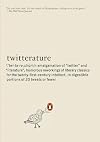
From the cover: amalgamation of “twitter” and “literature”; humorous reworkings of literary classics for the twenty-first century intellect, in digestible portions of 20 tweets or fewer.
If you, dear reader, like me, thought you’d be delving into a clever and witty little book of old texts reborn with a modern twist via social media, then you, like me, would be incredibly disappointed. I expected that this book would reflect an appreciation and understanding of the classics with show more modern-day insights from the characters within the novels. I expected to chuckle or even laugh when reading this (as I often do when reading jokes on my current Twitter timeline). In short, I expected too much from this book.
What I received (fortunately in exchange for less than $3.50 courtesy of Book Outlet) instead, was a crass, harshly satiric and mildly offensive batch of tweets that don’t honor the original works. Let me preface the rest of this review by saying I don’t mind vulgar language or content, when appropriate to the work, nor do I mind my favorite classics being adapted into clever retellings (Pride, Prejudice and Zombies anyone?) or even poked fun at.
Twitterature seems to simply mercilessly make fun of or criticize the classics within, dubbing the originals as overly long and boring. In their introduction Aciman and Rensin touch on how the classics are outdated and hard to understand and that this book strives to remedy that by “present[ing] their most essential elements, distilled into the voice of Twitter.” They strive to give us “the means to absorb the strong voices, valuable lessons and stylistic innovations of the Greats without the burdensome duty of hours spent reading.” I think, in hindsight, that maybe their introduction is a bad joke as well.
I also want to say that I did not read this entire book – after reading the first three sections (Catcher in the Rye, The Da Vinci Code and Paradise Lost), I quickly grasped that this book was not at all what I thought it would be and I then proceeded to skip to books I’m familiar with. What’s the point in reading something that tears apart a work I’ve never read? But let me highlight some of the more bothersome tweets:
From Pride and Prejudice – “Isn’t it cool how I’m defying my gender role by standing up for myself?”
“He and I are wed and have moved to our own home in the country. I got the man, his money, and uh…women’s power!”
From Alice in Wonderland – “I don’t know what’s going on, but in a typically feminine manner, I’ll allow confusion and being flustered to make me cry up a storm.”
“I found a stoner Arab caterpillar. He made fun of me. Oh yeah? At least I’m not three inches tall with a case of the munchies.”
From Twilight – “Pretty boy is a vampire. A bit obvious, but I still feel such a hormonal pull. He’s pure pussy magnet.”
“My life lately has been a bit like a lonely girl’s slightly creepy juvenile sex fantasy. But at least it really happened!!!”
Last, and featuring what I found to be most offensive, from Jane Eyre – “I wish my parents had died impressively. Like Harry Potter, that kid’s got one hell of an orphan story.”
“The education is legit. Like we read books, but kids are dying of illness. This place is grimier than a hooker’s snatch.”
(In reference to Rochester’s wife) “The Kunta Kinte pyro bitch is dead. Maaaaawwwage!”
Seriously!?
It seems to me that rather than a funny, insightful twist on classics, readers are given bare-bones, spark notes-esque summaries, interjected with “modern language” (swearing and some “lols”), from people who don’t appreciate or even understand the classics. I’m glad I spent so little on this book, because I won’t be keeping it. Unless you hate the classics and want to read tweets that mostly make fun of them, I wouldn’t recommend this book.
Wait, let me rephrase my review in the spirit of this book: TBH guys, this book is fucking garbage. LOL #sucks show less
If you, dear reader, like me, thought you’d be delving into a clever and witty little book of old texts reborn with a modern twist via social media, then you, like me, would be incredibly disappointed. I expected that this book would reflect an appreciation and understanding of the classics with show more modern-day insights from the characters within the novels. I expected to chuckle or even laugh when reading this (as I often do when reading jokes on my current Twitter timeline). In short, I expected too much from this book.
What I received (fortunately in exchange for less than $3.50 courtesy of Book Outlet) instead, was a crass, harshly satiric and mildly offensive batch of tweets that don’t honor the original works. Let me preface the rest of this review by saying I don’t mind vulgar language or content, when appropriate to the work, nor do I mind my favorite classics being adapted into clever retellings (Pride, Prejudice and Zombies anyone?) or even poked fun at.
Twitterature seems to simply mercilessly make fun of or criticize the classics within, dubbing the originals as overly long and boring. In their introduction Aciman and Rensin touch on how the classics are outdated and hard to understand and that this book strives to remedy that by “present[ing] their most essential elements, distilled into the voice of Twitter.” They strive to give us “the means to absorb the strong voices, valuable lessons and stylistic innovations of the Greats without the burdensome duty of hours spent reading.” I think, in hindsight, that maybe their introduction is a bad joke as well.
I also want to say that I did not read this entire book – after reading the first three sections (Catcher in the Rye, The Da Vinci Code and Paradise Lost), I quickly grasped that this book was not at all what I thought it would be and I then proceeded to skip to books I’m familiar with. What’s the point in reading something that tears apart a work I’ve never read? But let me highlight some of the more bothersome tweets:
From Pride and Prejudice – “Isn’t it cool how I’m defying my gender role by standing up for myself?”
“He and I are wed and have moved to our own home in the country. I got the man, his money, and uh…women’s power!”
From Alice in Wonderland – “I don’t know what’s going on, but in a typically feminine manner, I’ll allow confusion and being flustered to make me cry up a storm.”
“I found a stoner Arab caterpillar. He made fun of me. Oh yeah? At least I’m not three inches tall with a case of the munchies.”
From Twilight – “Pretty boy is a vampire. A bit obvious, but I still feel such a hormonal pull. He’s pure pussy magnet.”
“My life lately has been a bit like a lonely girl’s slightly creepy juvenile sex fantasy. But at least it really happened!!!”
Last, and featuring what I found to be most offensive, from Jane Eyre – “I wish my parents had died impressively. Like Harry Potter, that kid’s got one hell of an orphan story.”
“The education is legit. Like we read books, but kids are dying of illness. This place is grimier than a hooker’s snatch.”
(In reference to Rochester’s wife) “The Kunta Kinte pyro bitch is dead. Maaaaawwwage!”
Seriously!?
It seems to me that rather than a funny, insightful twist on classics, readers are given bare-bones, spark notes-esque summaries, interjected with “modern language” (swearing and some “lols”), from people who don’t appreciate or even understand the classics. I’m glad I spent so little on this book, because I won’t be keeping it. Unless you hate the classics and want to read tweets that mostly make fun of them, I wouldn’t recommend this book.
Wait, let me rephrase my review in the spirit of this book: TBH guys, this book is fucking garbage. LOL #sucks show less

I've never tweeted once. After reading Twitterature: The World's Greatest Books in Twenty Tweets or Less -- at first a nominally amusing read that turned tiresome and awfully unfunny fast once the cutesy tweeting novelty wore off -- it's clear I've missed nothing by not embracing this brave new (and hyper-abridged) culture of the twit, tweeter, whatever.
Twitterature is the classics in 140 characters or less. Har. Like an evening spent with a bad, linguistically challenged stand up comic. show more Irritating.
Twitterature's individual entries are so short they're like Spark Notes to the real Spark Notes of the classics. Frankly, I'd rather read the real classics. Unabridged.
It's unfortunate that the made up word, "twitterature," just so happened to rhyme with the real word, "literature," thus making the gimmicky publication of this co-collegiate-authored book of mostly bad gags, possible.
But, on the flip-side, isn't it fortunate that "twitterature" also rhymes with "shitterature". Because "shitterature" encapsulates Twitterature to a "t". show less
Twitterature is the classics in 140 characters or less. Har. Like an evening spent with a bad, linguistically challenged stand up comic. show more Irritating.
Twitterature's individual entries are so short they're like Spark Notes to the real Spark Notes of the classics. Frankly, I'd rather read the real classics. Unabridged.
It's unfortunate that the made up word, "twitterature," just so happened to rhyme with the real word, "literature," thus making the gimmicky publication of this co-collegiate-authored book of mostly bad gags, possible.
But, on the flip-side, isn't it fortunate that "twitterature" also rhymes with "shitterature". Because "shitterature" encapsulates Twitterature to a "t". show less
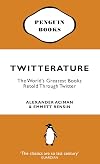
3.5 stars. Of course, I only read about half of the book, because I stuck to the works that I have read. You really need to read the original before reading the Twitterature for it to make any sense.
This book was absolutely hilarious. Some sections, such as Catcher in the Rye were absolutely amazing. Twitter captures Holden (or @HoldenLOLfield)'s voice perfectly and I couldn't help but laugh at loud at many parts. Several of them, such as Twilight, were not in the voice of the protagonist, show more however the tweets worked and were absolutely hilarious. But then there were the ones like Pride and Prejudice that just didn't work at all. I can't picture Lizzie talking about how great women's power is.
Overall, this book was fantastic! I wish that the authors just stuck with the protagonists whose voices lended themselves to the works though. show less
This book was absolutely hilarious. Some sections, such as Catcher in the Rye were absolutely amazing. Twitter captures Holden (or @HoldenLOLfield)'s voice perfectly and I couldn't help but laugh at loud at many parts. Several of them, such as Twilight, were not in the voice of the protagonist, show more however the tweets worked and were absolutely hilarious. But then there were the ones like Pride and Prejudice that just didn't work at all. I can't picture Lizzie talking about how great women's power is.
Overall, this book was fantastic! I wish that the authors just stuck with the protagonists whose voices lended themselves to the works though. show less
Be warned--there is some strong language here. But if that doesn't bother you, then it's totally worth the read. As someone who uses Twitter, reading the classics from a Twitter perspective was absolutely hilarious. I'd already used Twitter as a strategy in class at the end of a novel--sum up the novel in 140 characters--but I can't wait to read them the Twitter version of Slaughterhouse Five when we're done reading it.
Lists
Our digital age (1)
You May Also Like
Associated Authors
Statistics
- Works
- 2
- Members
- 351
- Popularity
- #68,158
- Rating
- 3.0
- Reviews
- 17
- ISBNs
- 12
- Languages
- 2