
Daniel Poliquin
Author of A Secret Between Us
About the Author
Image credit: Daniel Poliquin
Works by Daniel Poliquin
Associated Works
The Inconvenient Indian: A Curious Account of Native People in North America (2012) — Translator, some editions — 1,293 copies, 54 reviews
The Comeback: How Aboriginals Are Reclaiming Power And Influence (2014) — Translator, some editions — 92 copies, 1 review
Tagged
Common Knowledge
- Birthdate
- 1953-12-18
- Gender
- male
- Awards and honors
- Order of Canada
- Nationality
- Canada
- Places of residence
- Montréal, Québec, Canada
Ottawa, Ontario, Canada - Associated Place (for map)
- Canada
Members
Reviews
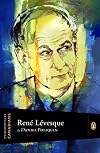
In this informative, entertaining, and witty biography Daniel Poliquin demystifies one of Canada's most famous Premiers and Quebec nationalists. Poliquin has stripped away fanciful and villainous illusions about Levesque, has shown us his personal flaws, his frugal lifestyle, his fondness of America, his concerns (e.g. the working people, Aboriginals in Quebec's north), his integrity (e.g. the ending of patronage and kickbacks in Quebec provincial politics) to show us the unapologetic, show more scruffy, skirt-chasing democrat who tirelessly worked to get a better deal for the Quebec that he always was.
Levesque made tangible improvements to the lives of the people in Quebec. He was the one who convinced Lesage to go through with expansion Hydro-Quebec and the nationalization of Quebec's electric industry, which was previously owned by the English-Canadian elite. From the start of his political career with Quebec’s Liberal Party, Levesque worked against the grain to reform the corruption and violence of Quebec politics by making state transparency mandatory, e.g. calls for tenders, ending post-election patronage. And he was always thinking how to unleash Quebec's creativity to gain international respectability. For example on pg. 189, when a group of "young street performers adept at walking on stilts and breathing fire" were turned down for an arts grant, Levesque (personally) stepped in, and reversed that decision. Those "young street performers" became Cirque du Soleil, a billion-dollar entertainment company known throughout the world and a pride of Quebec.
Poliquin reminds us, again and again, that Levesque was not a Quebec separatist. What he wanted was a new deal on sovereignty-association, however far-fetched it was. He sought sovereignty-association because the Anglais, the English-speaking Canadian business elite, had controlled Quebec for decades, had exploited its people, and had essentially (with the Catholic Church, and later with the heavy-hand of the Union Nationale) kept Quebec in a backwards, poorly-educated, 18th century agrarian society. Levesque wanted to improve people's lives, and he believed that the only pragmatic way for the Quebecois to get that new deal from the those who held the reins of power were with small careful steps.
Moreover, Poliquin made pains to remind us that Levesque sought sovereignty-association and a continuation of relations with (English) Canada over his own Parti Quebecois caucus. He fought against his own PQ to maintain public funding for minority language public schools. He threatened to quit almost a dozen times to stop his caucus' radical independence and Quebec nationalist programs to protect minorities in Quebec and his dreams of sovereignty-association.
This short 201-page biography is never dull, it’s never boring, and it certainly succeeds in reminding us about the always interesting and "extraordinary" Canadian that was Rene Levesque. show less
Levesque made tangible improvements to the lives of the people in Quebec. He was the one who convinced Lesage to go through with expansion Hydro-Quebec and the nationalization of Quebec's electric industry, which was previously owned by the English-Canadian elite. From the start of his political career with Quebec’s Liberal Party, Levesque worked against the grain to reform the corruption and violence of Quebec politics by making state transparency mandatory, e.g. calls for tenders, ending post-election patronage. And he was always thinking how to unleash Quebec's creativity to gain international respectability. For example on pg. 189, when a group of "young street performers adept at walking on stilts and breathing fire" were turned down for an arts grant, Levesque (personally) stepped in, and reversed that decision. Those "young street performers" became Cirque du Soleil, a billion-dollar entertainment company known throughout the world and a pride of Quebec.
Poliquin reminds us, again and again, that Levesque was not a Quebec separatist. What he wanted was a new deal on sovereignty-association, however far-fetched it was. He sought sovereignty-association because the Anglais, the English-speaking Canadian business elite, had controlled Quebec for decades, had exploited its people, and had essentially (with the Catholic Church, and later with the heavy-hand of the Union Nationale) kept Quebec in a backwards, poorly-educated, 18th century agrarian society. Levesque wanted to improve people's lives, and he believed that the only pragmatic way for the Quebecois to get that new deal from the those who held the reins of power were with small careful steps.
Moreover, Poliquin made pains to remind us that Levesque sought sovereignty-association and a continuation of relations with (English) Canada over his own Parti Quebecois caucus. He fought against his own PQ to maintain public funding for minority language public schools. He threatened to quit almost a dozen times to stop his caucus' radical independence and Quebec nationalist programs to protect minorities in Quebec and his dreams of sovereignty-association.
This short 201-page biography is never dull, it’s never boring, and it certainly succeeds in reminding us about the always interesting and "extraordinary" Canadian that was Rene Levesque. show less

A Secret Between Us was a finalist for the 2007 Giller Prize, and is my fourth book for The Canadian Book Challenge. It’s the story of a man, Lusignan, starting from childhood, through WWI, through the Depression, and ending around the beginning of WWII. The majority of it takes place after WWI, when Lusignan returns to Canada as a complete drunk whose only thoughts rest on a fellow officer in the war, Essiambre d’Argenteuil. He is determined to meet one Amalia Driscoll who also has ties show more to Essiambre, in hopes that knowing her will keep him somehow connected to Essiambre.
I loved this book. Loved it. Even when it made me angry; even for the first two thirds of the book where I hated the characters. I don’t know the last time I enjoyed a book this much. And to think I was seriously considering not buying it.
It was the narration style that pulled me in right from the beginning. It reminded me a bit of Robertson Davies’ Fifth Business, which may be part of the reason I enjoyed it so much. And not just the narration style either – at first it seemed there were quite a few similarities. Both main characters come from small rural towns, both go to war, both are obsessed for the majority of their life with one female who is totally and completely out of their reach. Both stories are told as the main character has lived most of his life and is looking back on it.
While I did love this book, there were some things that I really disliked – in the form of three major characters. The main character, Lusignan; the man Lusignan loves, Essiambre d’Argenteuil; and the woman who Lusignan tries to bring into his own life in order to keep Essiambre in his life, Amalia Driscoll. They all come from such different circumstances in life, and have such different attitudes towards life, and yet all of them are highly not-nice. But they seemed real. They have so many faults, which was refreshing – no Mary Sue’s in this novel. By the end of the novel, however, Lusignan and Amalia have changed and grown to a point where they are almost likeable, or at least not as dislikeable as before.
This is definitely going to be added to my list of books that I recommend to anyone and everyone, and I’m going to be on the hunt for more of Poliquin’s novels. show less
I loved this book. Loved it. Even when it made me angry; even for the first two thirds of the book where I hated the characters. I don’t know the last time I enjoyed a book this much. And to think I was seriously considering not buying it.
It was the narration style that pulled me in right from the beginning. It reminded me a bit of Robertson Davies’ Fifth Business, which may be part of the reason I enjoyed it so much. And not just the narration style either – at first it seemed there were quite a few similarities. Both main characters come from small rural towns, both go to war, both are obsessed for the majority of their life with one female who is totally and completely out of their reach. Both stories are told as the main character has lived most of his life and is looking back on it.
While I did love this book, there were some things that I really disliked – in the form of three major characters. The main character, Lusignan; the man Lusignan loves, Essiambre d’Argenteuil; and the woman who Lusignan tries to bring into his own life in order to keep Essiambre in his life, Amalia Driscoll. They all come from such different circumstances in life, and have such different attitudes towards life, and yet all of them are highly not-nice. But they seemed real. They have so many faults, which was refreshing – no Mary Sue’s in this novel. By the end of the novel, however, Lusignan and Amalia have changed and grown to a point where they are almost likeable, or at least not as dislikeable as before.
This is definitely going to be added to my list of books that I recommend to anyone and everyone, and I’m going to be on the hunt for more of Poliquin’s novels. show less
This is a short book about the political life of Rene Levesque, nationalist premier of Quebec and first leader of the Parti Quebecois. It is highly readable and well written, with the occasional tongue-in-cheek turn of phrase that broings the subject to life. While the Extraordinary Canadians series is not an in-depth study of its subjects, this author has packed a lot of analysis and insight into these 200 pages.
This is a well written biography of Rene Levesque, the first leader of the Parti Quebecois. It provides the historical foundation of the reasons why Levesque was able to assemble a group of like minded people to pursue the separation of Quebec from Canada. Levesque was a very innovative minister in the government of Jean Lesage who defeated the Union National's Duplessis. The UN had kept quebecers under the thumb of the Catholic Church as illiterate and unambitious peasants. Levesque show more introduced the consolidation of hundreds of hydroelectric utilities to create Hydro Quebec. The creation of the PQ is told in detail but one gets the sense that Levesque was never a true believer in in Quebec's independence. Levesques fights with Pierre Trudeau over the repatriation do the Canadian constitution and the Charter of Rights are well describes. Poor Rene was a troubled man, a skirt chaser and heavy drinker. He died at an early age of a massive heart attack. Good book show less
Awards


You May Also Like
Associated Authors
Statistics
- Works
- 16
- Also by
- 6
- Members
- 136
- Popularity
- #149,925
- Rating
- 4.1
- Reviews
- 5
- ISBNs
- 39
- Languages
- 1