
Steve Himmer
Author of The Bee-Loud Glade
Works by Steve Himmer
Associated Works
Tagged
Common Knowledge
- Gender
- male
Members
Reviews
Fram by Steve Himmer
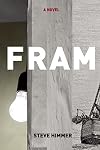
Fram by Steve Himmer
Available January 13, 2015
I received an ARC from the publisher.
A fantastic romp with an ending that couldn’t make sense any other way. Oscar, a bureaucrat made dry and brittle by a life of paperwork and duplicate copies, lives in his imagination. He nurtures a childhood dream of being an arctic explorer, something he vicariously fulfills by working at the U.S. Bureau of Ice Prognostication, an agency created to counter the Soviet’s Cold War threat. The agency never show more died, nor did Oscar’s dreams.
He spends his days living those dreams by imagining what might be discovered in the Arctic then generating the reams of paperwork to prove that these “discoveries” are real. Towns, schools, mining companies and paper mills, even hot springs are all drawn onto the vast emptiness of the ice. At home, he communes with decades of old National Geographic magazines that trumpeted the original polar explorers’ journeys.
When Oscar is sent on an actual mission to this place he has only ever dreamed about, he becomes entangled in a snarl of espionage and rival agencies. As he digs deeper into the secrets and strangeness, he discovers that the arctic expanse of his marriage has been as important an element in his life as the actual region. At the end, readers will know that there could have been no other resolution to the bizarre journey that is Oscar’s life. show less
Available January 13, 2015
I received an ARC from the publisher.
A fantastic romp with an ending that couldn’t make sense any other way. Oscar, a bureaucrat made dry and brittle by a life of paperwork and duplicate copies, lives in his imagination. He nurtures a childhood dream of being an arctic explorer, something he vicariously fulfills by working at the U.S. Bureau of Ice Prognostication, an agency created to counter the Soviet’s Cold War threat. The agency never show more died, nor did Oscar’s dreams.
He spends his days living those dreams by imagining what might be discovered in the Arctic then generating the reams of paperwork to prove that these “discoveries” are real. Towns, schools, mining companies and paper mills, even hot springs are all drawn onto the vast emptiness of the ice. At home, he communes with decades of old National Geographic magazines that trumpeted the original polar explorers’ journeys.
When Oscar is sent on an actual mission to this place he has only ever dreamed about, he becomes entangled in a snarl of espionage and rival agencies. As he digs deeper into the secrets and strangeness, he discovers that the arctic expanse of his marriage has been as important an element in his life as the actual region. At the end, readers will know that there could have been no other resolution to the bizarre journey that is Oscar’s life. show less
Postmodern Crusoe
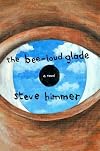
The Bee-Loud Glade
By Steve Himmer
Kensington, MD: Atticus Books, 2011
The conceit of this novel is an appealing one: a man who has grown so accustomed to a dull, trivial office job that when he’s let go he simply sits in his apartment, unwilling or unable to take an action of any kind – is hired by a fabulously wealthy man to enjoy a permanent life as the official hermit in his vast garden. The man, Finch, and the billionaire, Mr. Crane (along with his trophy wife) then show more enter into a long, slow dance of periodic pas-de-deux; for the most part, Mr. Crane – who looks in on Finch from his house with a telescope – is an employer of few demands, though inclined toward sudden whims: he asks his hermit to take up Tai-Chi, to meditate on top of the cave that is his shelter, to learn to play the flute. True, he can be generous – he pays Finch handsomely, even as he provides food and shelter to the point where his hermit has no real needs – but he remains a cryptic employer, and Finch his hired cipher. He even builds a river, upon which his personal recluse takes to floating on his back each afternoon, working on a self-proposed project of thinking about nothing.
It would seem to be a veritable paradise – Finch has only to dodge the less-successful of his employer’s notions (artificial winter, a resident lion) and keep one very specific vow: that of silence. And so, when the telegenic Mrs. Crane comes to call upon Finch in his solitary cave, there is every manner of temptation: personal, sexual, and (worst of all) conversational. Finch, though tested, clings to his vows as devoutly as an observant Benedictine monk, and though tried in the flesh conquers in the spirit. In addition to Mrs. Crane, Mr. Crane also – though more rarely – visits his man, spewing bits of random CEO-speak like a sort of corporate version of Chauncey Gardner in Being There: “We must delegate” – “Share the load” – “Landscapes, Finch, it’s all landscapes” – “The river’s the thing.” His workers maintain the gardens, adding rivers and weather on command, and leave food and the odd, quizzical gift – a flute, a box of paints, garden tools – at Finch’s cave. Every garden needs a hermit, Mr. Crane believes, and he regularly re-tools both man and garden.
The jacket blurbs would lead one to believe that Thoreau’s Walden is one of the sources with which this tale tinkers, but the real tutor text here is surely Defoe’s Robinson Crusoe. It’s a meditation on solitude, though unlike Crusoe Finch is completely, almost monomaniacally non-productive. His task is not to turn his island into a miniature version of an English farm, to cultivate – but simply to ruminate. He’s almost disturbingly compliant, not only obeying every one of Mr. Crane’s commands, but daily searching his mind to discern what it is Mr. Crane *might* have wanted. He never violates his vow of silence, though sorely tempted to do so when joined for a swim by Mrs. Crane, or when his solitude is interrupted by two hikers who pitch their tent a stone’s throw from his cave. In his previous career, Finch had enjoyed a listless life in a corner cubicle at a company that sold plastic plants; in his new world, he similarly leads an existence which to call “retiring" falls short of the mark. If Crusoe was industry, Finch is lassitude, an office-worker-turned-hermit who makes herb tea and paddles about in his pond with all the passion of a postmodern Bartelby. Here, in a land where he can do nothing in the usual sense of the word, he doesn’t even have to prefer not to.
There’s an enchantment in this book – an engagement – but also a sort of stasis. The end of the novel alludes to a significant change in Finch’s circumstances, but we’re left to guess what it was. Still, in this strikingly original début, Steve Himmer, at his best, reminds ones of another Steve – Millhauser – with the wry dryness of his prose. show less
The Bee-Loud Glade
By Steve Himmer
Kensington, MD: Atticus Books, 2011
The conceit of this novel is an appealing one: a man who has grown so accustomed to a dull, trivial office job that when he’s let go he simply sits in his apartment, unwilling or unable to take an action of any kind – is hired by a fabulously wealthy man to enjoy a permanent life as the official hermit in his vast garden. The man, Finch, and the billionaire, Mr. Crane (along with his trophy wife) then show more enter into a long, slow dance of periodic pas-de-deux; for the most part, Mr. Crane – who looks in on Finch from his house with a telescope – is an employer of few demands, though inclined toward sudden whims: he asks his hermit to take up Tai-Chi, to meditate on top of the cave that is his shelter, to learn to play the flute. True, he can be generous – he pays Finch handsomely, even as he provides food and shelter to the point where his hermit has no real needs – but he remains a cryptic employer, and Finch his hired cipher. He even builds a river, upon which his personal recluse takes to floating on his back each afternoon, working on a self-proposed project of thinking about nothing.
It would seem to be a veritable paradise – Finch has only to dodge the less-successful of his employer’s notions (artificial winter, a resident lion) and keep one very specific vow: that of silence. And so, when the telegenic Mrs. Crane comes to call upon Finch in his solitary cave, there is every manner of temptation: personal, sexual, and (worst of all) conversational. Finch, though tested, clings to his vows as devoutly as an observant Benedictine monk, and though tried in the flesh conquers in the spirit. In addition to Mrs. Crane, Mr. Crane also – though more rarely – visits his man, spewing bits of random CEO-speak like a sort of corporate version of Chauncey Gardner in Being There: “We must delegate” – “Share the load” – “Landscapes, Finch, it’s all landscapes” – “The river’s the thing.” His workers maintain the gardens, adding rivers and weather on command, and leave food and the odd, quizzical gift – a flute, a box of paints, garden tools – at Finch’s cave. Every garden needs a hermit, Mr. Crane believes, and he regularly re-tools both man and garden.
The jacket blurbs would lead one to believe that Thoreau’s Walden is one of the sources with which this tale tinkers, but the real tutor text here is surely Defoe’s Robinson Crusoe. It’s a meditation on solitude, though unlike Crusoe Finch is completely, almost monomaniacally non-productive. His task is not to turn his island into a miniature version of an English farm, to cultivate – but simply to ruminate. He’s almost disturbingly compliant, not only obeying every one of Mr. Crane’s commands, but daily searching his mind to discern what it is Mr. Crane *might* have wanted. He never violates his vow of silence, though sorely tempted to do so when joined for a swim by Mrs. Crane, or when his solitude is interrupted by two hikers who pitch their tent a stone’s throw from his cave. In his previous career, Finch had enjoyed a listless life in a corner cubicle at a company that sold plastic plants; in his new world, he similarly leads an existence which to call “retiring" falls short of the mark. If Crusoe was industry, Finch is lassitude, an office-worker-turned-hermit who makes herb tea and paddles about in his pond with all the passion of a postmodern Bartelby. Here, in a land where he can do nothing in the usual sense of the word, he doesn’t even have to prefer not to.
There’s an enchantment in this book – an engagement – but also a sort of stasis. The end of the novel alludes to a significant change in Finch’s circumstances, but we’re left to guess what it was. Still, in this strikingly original début, Steve Himmer, at his best, reminds ones of another Steve – Millhauser – with the wry dryness of his prose. show less
I had some serious misconceptions about this book. The start of the blurb mentioned that the main character of the book worked for a corporation as some kind of marketing blogger that maintained a dozen or more online identities, all aimed at promoting a certain brand of artificial plant. I didn't read the rest of the blurb, I got myself a copy because I thought that sounded amazing.
The Bee-Loud Glade is really about a guy named Finch that loses his corporate job and gives up on life. When show more he's offered a job by the super-rich Mr. Crane to become an ornamental hermit in Crane's garden, he jumps at the offer.
"Hermits, Mr. Finch. Any respectable estate had a hermit in residence on the grounds. Visible from the windows, in the background as estate holders and their guests strolled the lawn, that sort of thing. Usually for a term of seven years, subject to evaluation, of course. How does seven years sound to you, Mr. Finch?"
How did it sound? I didn't know - it sounded perfect, and it sounded absurd, and it sounded like an elaborate practical joke in which I'd been ensnared. So I just asked, "As a hermit?"
The rest of the book is concerned with Finch's life in Mr. Crane's garden. Finch is given an uncomfortable tunic, a cave in which he can sleep and seek shelter, and three meals a day. He must take a vow of silence, stop cutting his hair and shaving his beard, and cease bathing. Mr. Crane occasionally gives him instructions or inserts objects in his life. Finch is instructed to paint, to sit in trees, to meditate, to keep a small garden. He is given a wooden flute until it is taken away and then given back. A river is installed.
Yes, a river. Installed.
There's a certain amount of absurdity in The Bee-Loud Glade, but it fits so cleanly into the world that Steve Himmer has built that it's easy to be like Finch and just go with the flow. There's very little spoken dialog and most of the novel is made up of Finch's internal dialog.
When I had gotten through about a quarter of the novel I started to become concerned about how this hermit story was going to hold my attention for another 150 pages. I had nothing to be worried about because Himmer is up to something here. The Bee-Loud Glade isn't just a silly story about a hermit, but it's about being alone, religion, the absurdity of money and power, the nature of work, the distortion of fame, and the impossibility of true independence. With all of those big ideas, Himmer never gets preachy. He allows Finch naturally grow from a sad, gray little man to a man at peace with life and his surroundings.
The Bee-Loud Glade is Steve Himmer's first novel and I hope there will be many more to come. The writing is light and fun and while full of ideas, it never feels like he's beating you over the head. The ideas are not unique, but the way in which they are presented is fresh and with a dash of humor. I really enjoyed The Bee-Loud Glade and I'm looking forward to seeing what Steve Himmer does next. show less
The Bee-Loud Glade is really about a guy named Finch that loses his corporate job and gives up on life. When show more he's offered a job by the super-rich Mr. Crane to become an ornamental hermit in Crane's garden, he jumps at the offer.
"Hermits, Mr. Finch. Any respectable estate had a hermit in residence on the grounds. Visible from the windows, in the background as estate holders and their guests strolled the lawn, that sort of thing. Usually for a term of seven years, subject to evaluation, of course. How does seven years sound to you, Mr. Finch?"
How did it sound? I didn't know - it sounded perfect, and it sounded absurd, and it sounded like an elaborate practical joke in which I'd been ensnared. So I just asked, "As a hermit?"
The rest of the book is concerned with Finch's life in Mr. Crane's garden. Finch is given an uncomfortable tunic, a cave in which he can sleep and seek shelter, and three meals a day. He must take a vow of silence, stop cutting his hair and shaving his beard, and cease bathing. Mr. Crane occasionally gives him instructions or inserts objects in his life. Finch is instructed to paint, to sit in trees, to meditate, to keep a small garden. He is given a wooden flute until it is taken away and then given back. A river is installed.
Yes, a river. Installed.
There's a certain amount of absurdity in The Bee-Loud Glade, but it fits so cleanly into the world that Steve Himmer has built that it's easy to be like Finch and just go with the flow. There's very little spoken dialog and most of the novel is made up of Finch's internal dialog.
When I had gotten through about a quarter of the novel I started to become concerned about how this hermit story was going to hold my attention for another 150 pages. I had nothing to be worried about because Himmer is up to something here. The Bee-Loud Glade isn't just a silly story about a hermit, but it's about being alone, religion, the absurdity of money and power, the nature of work, the distortion of fame, and the impossibility of true independence. With all of those big ideas, Himmer never gets preachy. He allows Finch naturally grow from a sad, gray little man to a man at peace with life and his surroundings.
The Bee-Loud Glade is Steve Himmer's first novel and I hope there will be many more to come. The writing is light and fun and while full of ideas, it never feels like he's beating you over the head. The ideas are not unique, but the way in which they are presented is fresh and with a dash of humor. I really enjoyed The Bee-Loud Glade and I'm looking forward to seeing what Steve Himmer does next. show less
Fram by Steve Himmer

Bureaucratic satire, action/adventure parody, psychological intimacy and evasion, postmodern befuddlement—Himmer does it all well. Fram is oddly suspenseful in unexpected ways, as you wait to see what the writer will do with and to his everyman-but-not protagonist.
You May Also Like
Associated Authors
Statistics
- Works
- 4
- Also by
- 1
- Members
- 115
- Popularity
- #170,829
- Rating
- 3.9
- Reviews
- 9
- ISBNs
- 9