
Laura Alary
Author of Make Room: A Child's Guide to Lent and Easter
Series
Works by Laura Alary
Tagged
Common Knowledge
- Gender
- female
Members
Reviews
The Curious Life of Cecilia Payne: Discovering the Stuff of Stars (Incredible Lives for Young Readers (ILYR)) by Laura Alary

Cecilia Payne revolutionized astrophysics, but only after she had climbed over the steep hurdles erected for her by men in her profession. Male colleagues belittled her and her research, and then tried to claim credit for her seminal discoveries once they were proven irrefutable.
Cecilia Payne (after marriage known as Payne-Gaposchkin) was born in England on May 10, 1900 (she died December 7, 1979). The author takes us through Cecilia’s childhood, when Cecilia was “always exploring.” In show more school “she learned to look carefully, measure accurately, and store facts in her memory.” Eventually she won a scholarship to the University of Cambridge, where a whole new world of learning opened up to her. After listening to a talk by the famous astronomer Arthur Eddington, she decided she too wanted to be an astronomer.
Often the sole woman in her Cambridge science classes, she faced open hostility, disparagement, and humiliation, particularly at the hands of the renowned scientist Ernest Rutherford, the 1908 recipient of the Nobel Prize in chemistry. Seeking to find a less hostile environment, she moved to another Cambridge, in America, and went to Harvard in 1923. There, she joined other women working to process astronomical data at the Harvard College Observatory under Edward Pickering. (These women were famously known as “the Harvard Computers” and included Henrietta Leavitt, whose discovery of how to measure vast astronomical distances led to a shift in the understanding of the scale and nature of the universe.)
In her 1925 doctoral thesis (later hailed as “the greatest PhD thesis ever written in astronomy”), Cecilia presented her theories about the composition of stars. By applying cutting-edge quantum theory to an analysis of the light dispersed from stars, she calculated that stars were mostly made of hydrogen and helium. This contradicted the prevailing consensus that all stellar objects were primarily iron at core, like Earth, the Moon, and the other nearby rocky bodies.
When she showed her work to the leading astronomer at the time, Henry Norris Russell, he flatly told her she was wrong, per Donovan Moore, author of What Stars Are Made of: The Life of Cecilia Payne-Gaposchkin.
[Discover Magazine shared this great anecdote]:
“As the scientific community adjusted to the idea that the stars and sun were not the same as the Earth, Payne-Gaposchkin’s detractors rushed forward to claim credit for themselves.
Years later, she was, in fact, proven to be right — by the very man who told her she was wrong: Norris Russell. He got the credit. . . .
History would later correct itself, and Payne-Gaposchkin would become known as the scientist who truly identified what the stars were made of. . . . And in the end, Payne-Gaposchkin prevailed. Three years before her death in 1979, she received a lifetime achievement award from the American Astronomical Society. Ironically, the award was named in honor of Henry Norris Russell, one of her early detractors and one of the scientists who tried to claim credit for her work.”
Given the seismic nature of her findings, it is perhaps no surprise that her male colleagues hurried to co-opt the glory. Her discoveries not only fundamentally altered what scientists thought they knew about the universe, but led to major advancements in understanding its chemistry and evolution.
Laura Alary ends this introduction to Cecilia's life for young readers by noting that Cecilia became a professor of astronomy herself at Harvard. (She was made a full professor in 1956 and head of the astronomy department. This made her the first woman to run a Harvard department.). Cecilia taught her students “to trust themselves and what they knew was right - no matter who said it was impossible. She had learned that lesson the hard way.”
End matter includes additional notes on Cecilia Payne’s accomplishments; two timelines: one of her life and one of the scientific developments during her lifetime; a section on “More About Cecilia’s World” (including information on Pickering’s “Harvard Computers”); a list of her honors and awards; and recommendations for further reading.
Illustrator Yas Imamura alternated using the soft textures of watercolor with the rich vibrancy of gouache. Thus she was able to transition from muted academic scenes to images of jewel-like celestial bodies and swirling starry skies.
Evaluation: The history of science is unfortunately filled with names of women whose breakthrough discoveries were credited to their male colleagues. The famous 1962 Nobel Prize for the structure of DNA, awarded to James Watson and Francis Crick, relied heavily on Rosalind Franklin’s essential work. Similarly, Lise Meitner was the driving force behind the discovery of nuclear fission, yet only Otto Hahn received the 1944 Nobel Prize in Chemistry.
Cecilia Payne almost shared that fate, but she had influential admirers who helped ensure she got her due. Eventually, as the American Philosophical Society reported, "She received too many honors to name, among them the Rittenhouse Medal in 1961 and six honorary Doctor of Science degrees, including one from Cambridge University."
Laura Alary’s picture biography for readers 7 and over will help illustrate that determination and perseverance in the face of discrimination is not only rewarding for what you may accomplish in spite of obstacles, but could even have earth-shattering results for the benefit of all mankind. show less
Cecilia Payne (after marriage known as Payne-Gaposchkin) was born in England on May 10, 1900 (she died December 7, 1979). The author takes us through Cecilia’s childhood, when Cecilia was “always exploring.” In show more school “she learned to look carefully, measure accurately, and store facts in her memory.” Eventually she won a scholarship to the University of Cambridge, where a whole new world of learning opened up to her. After listening to a talk by the famous astronomer Arthur Eddington, she decided she too wanted to be an astronomer.
Often the sole woman in her Cambridge science classes, she faced open hostility, disparagement, and humiliation, particularly at the hands of the renowned scientist Ernest Rutherford, the 1908 recipient of the Nobel Prize in chemistry. Seeking to find a less hostile environment, she moved to another Cambridge, in America, and went to Harvard in 1923. There, she joined other women working to process astronomical data at the Harvard College Observatory under Edward Pickering. (These women were famously known as “the Harvard Computers” and included Henrietta Leavitt, whose discovery of how to measure vast astronomical distances led to a shift in the understanding of the scale and nature of the universe.)
In her 1925 doctoral thesis (later hailed as “the greatest PhD thesis ever written in astronomy”), Cecilia presented her theories about the composition of stars. By applying cutting-edge quantum theory to an analysis of the light dispersed from stars, she calculated that stars were mostly made of hydrogen and helium. This contradicted the prevailing consensus that all stellar objects were primarily iron at core, like Earth, the Moon, and the other nearby rocky bodies.
When she showed her work to the leading astronomer at the time, Henry Norris Russell, he flatly told her she was wrong, per Donovan Moore, author of What Stars Are Made of: The Life of Cecilia Payne-Gaposchkin.
[Discover Magazine shared this great anecdote]:
“As the scientific community adjusted to the idea that the stars and sun were not the same as the Earth, Payne-Gaposchkin’s detractors rushed forward to claim credit for themselves.
Years later, she was, in fact, proven to be right — by the very man who told her she was wrong: Norris Russell. He got the credit. . . .
History would later correct itself, and Payne-Gaposchkin would become known as the scientist who truly identified what the stars were made of. . . . And in the end, Payne-Gaposchkin prevailed. Three years before her death in 1979, she received a lifetime achievement award from the American Astronomical Society. Ironically, the award was named in honor of Henry Norris Russell, one of her early detractors and one of the scientists who tried to claim credit for her work.”
Given the seismic nature of her findings, it is perhaps no surprise that her male colleagues hurried to co-opt the glory. Her discoveries not only fundamentally altered what scientists thought they knew about the universe, but led to major advancements in understanding its chemistry and evolution.
Laura Alary ends this introduction to Cecilia's life for young readers by noting that Cecilia became a professor of astronomy herself at Harvard. (She was made a full professor in 1956 and head of the astronomy department. This made her the first woman to run a Harvard department.). Cecilia taught her students “to trust themselves and what they knew was right - no matter who said it was impossible. She had learned that lesson the hard way.”
End matter includes additional notes on Cecilia Payne’s accomplishments; two timelines: one of her life and one of the scientific developments during her lifetime; a section on “More About Cecilia’s World” (including information on Pickering’s “Harvard Computers”); a list of her honors and awards; and recommendations for further reading.
Illustrator Yas Imamura alternated using the soft textures of watercolor with the rich vibrancy of gouache. Thus she was able to transition from muted academic scenes to images of jewel-like celestial bodies and swirling starry skies.
Evaluation: The history of science is unfortunately filled with names of women whose breakthrough discoveries were credited to their male colleagues. The famous 1962 Nobel Prize for the structure of DNA, awarded to James Watson and Francis Crick, relied heavily on Rosalind Franklin’s essential work. Similarly, Lise Meitner was the driving force behind the discovery of nuclear fission, yet only Otto Hahn received the 1944 Nobel Prize in Chemistry.
Cecilia Payne almost shared that fate, but she had influential admirers who helped ensure she got her due. Eventually, as the American Philosophical Society reported, "She received too many honors to name, among them the Rittenhouse Medal in 1961 and six honorary Doctor of Science degrees, including one from Cambridge University."
Laura Alary’s picture biography for readers 7 and over will help illustrate that determination and perseverance in the face of discrimination is not only rewarding for what you may accomplish in spite of obstacles, but could even have earth-shattering results for the benefit of all mankind. show less
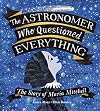
To my utter shame, I had not heard of Maria Mitchell. So when I saw this children’s picture book dedicated to her life, I knew I had to give it a go. And what an enlightening experience it has been!
Maria Mitchell was the first professional female astronomer in the United States, the first female member of the American Academy of Arts and Sciences, and one of the first female college professors, that too at Vassar. Society expected her to live a more traditional “womanly” life. But she show more was a little lucky that she was born to a Quaker family, who believed in education for all and equality of genders. Having an astronomer for a father and a librarian for a mother certainly helped Maria’s brilliance. What a loss it would have been for the world had she been part of a more orthodox family!
The book details out Maria’s life from her younger years, her scholarly and scientific achievements, and her discovery of what we today know as “Miss Mitchell’s Comet”. What I loved even more is the inclusion of practical life lessons in the author’s note. This section provides many wonderful thoughts on what lessons can be learnt from Maria’s life. How I loved this section! I wish all picture books could include something like this rather than leaving the parents/teachers to figure out the morals and messages from a book.
The illustrations are ‘out of this world’, as they need to be to depict an astronomer’s life. show less
Maria Mitchell was the first professional female astronomer in the United States, the first female member of the American Academy of Arts and Sciences, and one of the first female college professors, that too at Vassar. Society expected her to live a more traditional “womanly” life. But she show more was a little lucky that she was born to a Quaker family, who believed in education for all and equality of genders. Having an astronomer for a father and a librarian for a mother certainly helped Maria’s brilliance. What a loss it would have been for the world had she been part of a more orthodox family!
The book details out Maria’s life from her younger years, her scholarly and scientific achievements, and her discovery of what we today know as “Miss Mitchell’s Comet”. What I loved even more is the inclusion of practical life lessons in the author’s note. This section provides many wonderful thoughts on what lessons can be learnt from Maria’s life. How I loved this section! I wish all picture books could include something like this rather than leaving the parents/teachers to figure out the morals and messages from a book.
The illustrations are ‘out of this world’, as they need to be to depict an astronomer’s life. show less
In a Nutshell: Has a good premise, but needed some fine-tuning in the execution. Will work better for classroom discussions.
~~~~~~~~~~~~~~~~~~~~~~~~~~~~
Story Synopsis:
I do like the intent of the story. The concept of a little girl realising that she is not always smiling, that there are varying moods inside of her, and each of the emotions is an important part of her identity, is excellent. Not everyone is happy all the time, though the world expects them to. This misrepresentation of human emotions is especially worse in these social-media dominated days when everyone shares a multitude of smiling “happy family” photos online, which creates feelings of inadequacy and envy in others who might not be going through a satisfying family phase.
However, the intent needs to be converted into a more refined storyline. A few things felt too rushed, and too much was left unsaid.
I am never a fan of stories that let children get away with inappropriate behaviour. I liked that Nana is clear about how the Matryoshka dolls were *hers* and how her granddaughter should have asked her before sketching those new faces on her beloved dolls. However, after the little one’s explanation about how those varied faces are all parts of her, Nana cools down almost immediately and forgives her granddaughter without any further fuss. The granddaughter doesn’t even offer an apology for damaging her grandma’s personal possessions without permission. This doesn’t sit right by me. Justification isn’t a substitute for reparation, and children ought to be taught how to respect others’ belongings and to apologise when they make a mistake.
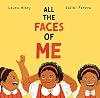
The illustrations are decent. I liked the granddaughter’s varying expressions and also the pet Persian cat who is cute and fluffy. But Nana was drawn too white for my liking. (I don’t mean ‘white’ as in her race, but her hair and skin was literally coloured a bright white that hurt my eyes. The little girl is of a different race (I couldn’t figure out whether she was Black or brown), but an explanation for her biracial background is provided in the photos on Nana’s windowsill. This was a nice touch, though the text doesn’t explore the biracial aspect further.
The story is written in simple prose, with not more than 4-5 lines per page. The vocabulary is quite simple, and will work well for ages 5-7.
This might be a good book for classroom discussions as it offers quite a few important topics to talk about. I am not sure if I could recommend it for personal collections.
2.75 stars.
My thanks to Owlkids Books and NetGalley for the DRC of “All the Faces of Me”. This review is voluntary and contains my honest opinion about the book.
~~~~~~~~~~~~~~~~~~~~~~~~~~~~
Connect with me through:
My Blog | The StoryGraph | Instagram | Facebook | Twitter show less
~~~~~~~~~~~~~~~~~~~~~~~~~~~~
Story Synopsis:
Written in the first person perspective of a little girl, the story tells us of how her Nana has six wooden dolls sitting side by side on her window sill. The five bigger dolls have the same fixed smling expression, but the sixth one, the smallest of the lot, is entirely unpainted. The narrator decides to colour in anshow more
expression on the sixth doll, and while doing so, she also draws on the other dolls different expressions. Needless to say, Nana is furious at her dolls being defaced. What happens next?
I do like the intent of the story. The concept of a little girl realising that she is not always smiling, that there are varying moods inside of her, and each of the emotions is an important part of her identity, is excellent. Not everyone is happy all the time, though the world expects them to. This misrepresentation of human emotions is especially worse in these social-media dominated days when everyone shares a multitude of smiling “happy family” photos online, which creates feelings of inadequacy and envy in others who might not be going through a satisfying family phase.
However, the intent needs to be converted into a more refined storyline. A few things felt too rushed, and too much was left unsaid.
I am never a fan of stories that let children get away with inappropriate behaviour. I liked that Nana is clear about how the Matryoshka dolls were *hers* and how her granddaughter should have asked her before sketching those new faces on her beloved dolls. However, after the little one’s explanation about how those varied faces are all parts of her, Nana cools down almost immediately and forgives her granddaughter without any further fuss. The granddaughter doesn’t even offer an apology for damaging her grandma’s personal possessions without permission. This doesn’t sit right by me. Justification isn’t a substitute for reparation, and children ought to be taught how to respect others’ belongings and to apologise when they make a mistake.
The illustrations are decent. I liked the granddaughter’s varying expressions and also the pet Persian cat who is cute and fluffy. But Nana was drawn too white for my liking. (I don’t mean ‘white’ as in her race, but her hair and skin was literally coloured a bright white that hurt my eyes. The little girl is of a different race (I couldn’t figure out whether she was Black or brown), but an explanation for her biracial background is provided in the photos on Nana’s windowsill. This was a nice touch, though the text doesn’t explore the biracial aspect further.
The story is written in simple prose, with not more than 4-5 lines per page. The vocabulary is quite simple, and will work well for ages 5-7.
This might be a good book for classroom discussions as it offers quite a few important topics to talk about. I am not sure if I could recommend it for personal collections.
2.75 stars.
My thanks to Owlkids Books and NetGalley for the DRC of “All the Faces of Me”. This review is voluntary and contains my honest opinion about the book.
~~~~~~~~~~~~~~~~~~~~~~~~~~~~
Connect with me through:
My Blog | The StoryGraph | Instagram | Facebook | Twitter show less
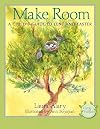
Lent comes early this year, starting on February 10th. I'm already thinking about what my Lenten practices will be, but as a father of four I haven't always done so well on opening up Lent for my kids. Making Room: A Child's Guide to Lent and Easter by religious educator and children's author Laura Alary, explores Lent and Holy Week in accessible ways for young children. Illustrations from Ann Boyajian adorn each page.
Four headings guide kid's toward a meaningful experience of Lent and show more Easter: Making Time, Making Space, Making Room and Holy Week. Alary begins with a description of how in the church, Lent is a season of waiting before whisking us off to the wilderness where Jesus made time to be with God. Likewise, she encourages kids to make time for God by reading the bible, wondering what God is telling us and asking ourselves probing questions about the life we are living (9). She then talks about Jesus' teaching of the kingdom and what it means to make space for God in our life:
This how you make space:
If you have done wrong,
tell God you are sorry.
Sweep your heart clean and start fresh.
Be kind to all people,
not just the ones who like you.
Open your heart wide.
If someone hurts you
ask God to help you forgive
Do not store angry thoughts.
Let them go.
Make space inside for better things.
Share so everyone has enough.
If you have two coats
give one to someone who has none.
Make space for what really matters . (14-15)
She goes on to describe how our Lenten practice can help us to live simply, and be generous with others, and how we can make room in our lives to include others in hospitality. The section on Holy Week summarizes the final week of Jesus, with his resurrection as the grand finale.
Alary has a rare gift of talking about deep things in a way that children can understand. Adults too often miss the connection with how giving up sweets prepares the way of the Lord. By focusing attention on what this season is meant to make space for (time for God, space for him and his kingdom and room to welcome others into), she is able to suggest practices that call children to stretch their capacity to love God and others well. Kids aren't the only one's who will benefit from this book. Parents too will be challenged to deepen their love and devotion for Jesus.
My own kids range from eight to one. I would say this is most accessible for my eight-year old, though my six and five year old will also enjoy it. I look forward to reading this through with them throughout the coming season. I give this four stars.
Note: I received this book from Paraclete Press in exchange for my honest review. show less
Awards


You May Also Like


Statistics
- Works
- 23
- Members
- 496
- Popularity
- #49,830
- Rating
- 4.1
- Reviews
- 11
- ISBNs
- 34