
Joshua Long
Author of Weird City: Sense of Place and Creative Resistance in Austin, Texas
Works by Joshua Long
Tagged
Common Knowledge
There is no Common Knowledge data for this author yet. You can help.
Members
Reviews
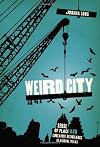
The worst person in the world is the Houstonian who moved to Austin one year ago complaining about the Californian who moved here one month ago. Austinites, no matter our origin prior to arriving at what it is indisputably the greatest city in the world, love having strong opinions about our city almost even more than actually living here. This is a good look at those opinions, which are firmly held even, or especially, when they make no sense at all. Though its origin as a grad school show more thesis burdens it with a lot of dull conceptual maundering over the "sense of place" in the subtitle, the majority of the book is devoted to attempts at identifying what makes us distinct as a city, case studies over development battles, and, best of all, interviews with a variety of citizens of our fair metropolis.
As the saying goes, "I wasn't born here but I got here as fast as I could". My parents moved to Austin when I was less than a year old, and aside from having gone to university elsewhere I've spent my whole life here. So in theory I could play that tedious game of "things were perfect right before you showed up to ruin it" with the best of them, conjure up a long list of things from my childhood that aren't around anymore, and prove that Austin is doomed because someone else thought my city was a nice place to live their own life. Except that I don't agree - even the most jaded, die-hard 60s survivor has to admit that the food has never been better, the live shows have never been more plentiful, and there are more new bars to visit and festivals to attend than humanly possible.
But what about the weirdness, man? Well, the famous "Keep Austin Weird" slogan is an almost too-perfect marker of the city's attitudes towards itself. As Long's interviews reveal, it is, variously:
- a proud symbol of defiance towards outsiders seeking to corrupt the True Austin Spirit
- an anti-corporate motto instantly trademarked and marketed by a corporation
- a try-hard desperation attempt to preserve something already lost and gone
- an emblem of local pride immediately copied by jealous, lesser cities far away
- a misguided quest to save something that doesn't need saving at all
- an adolescent attempt to live in the past and avoid "growing up" into a "real city"
Or, really, all of the above all at once. That completely contradictory, mutually exclusive jumble of arguments sums up the Austin attitude more than anything else. Your opinion about our city doesn't have to make sense, you just have to have one. I love that Austin has a distinct character to it, it makes our city so much more alive than the bland facelessness of the other big Texas cities or the dismal backwater spirit of the rest of the state. But are we losing our edge? Is all this growth ruining us? My answer is no, but we could very easily, and I will dissent from the majority of my fellow citizens by saying that the surest way to ruin Austin is to attempt to freeze time and stop people from contributing their energies to the city. Nothing kills weirdness faster than stagnation.
Long presents several short case studies of contentious development projects: Maria's, the Northcross Wal-Mart, and the Mean-Eyed Cat. He could have added many more examples, since the script is usually fairly similar for each new development. Each case study involves a protracted struggle to develop a moribund or otherwise utilized space into something that would actually be useful to someone, fiercely resisted by local busybodies who would prefer that their own personal approval be required before any future change. Everyone gets really worked up, developers offer random concessions, then the project goes forward and everyone forgets that things were ever any different (a great historical example would have been the Triangle at Lamar and Guadalupe; a good current example is the Riverside/Lamar Taco Cabana condo proposal). Weirdness apparently has a short memory.
What's most frustrating about this is not that citizens are getting involved in the character of their town, but that these fights are so often pointlessly and falsely oppositional. Everyone, no matter how weird you are, has to live somewhere, and it doesn't seem like the typical angry guy currently protesting new housing construction has ever stopped to think about what would have happened if the city had successfully fought off his own housing construction back in the day. Each new layer of complicated zoning overlays and all-powerful neighborhood associations slowly but surely guarantees that the people who lucked into moving here in the 70s have a leg up over arrivals from the 80s, who in turn live in nicer places than the 90s transplants, who can definitely afford more than 00s newcomers. Potential 10s homeowners? Don't make me laugh. Weirdness for me but not for thee.
There are a few too many doofus phrases like "social praxis" or sentences like "the space of a social order is hidden in the order of space" to make this book as readable as it could be, and even though Richard Florida's work on creativity and economic growth is valuable, I would have appreciated some more cultural analysis of Austin specifically. What about pronunciation, our shibboleths of Burnet, Koenig, Guadalupe, and Manchaca? What about a deeper look at the demographic impact that the state government and the university have had on Austin's population, or the general demographic shifts that have taken place more recently? How does the concept of "weirdness" play in the city's east side? All the same, Long's interviews are welcome reminders that apart from the irreplaceable natural gems, Austin's best resource is its people. Luckily we're getting more every day. show less
As the saying goes, "I wasn't born here but I got here as fast as I could". My parents moved to Austin when I was less than a year old, and aside from having gone to university elsewhere I've spent my whole life here. So in theory I could play that tedious game of "things were perfect right before you showed up to ruin it" with the best of them, conjure up a long list of things from my childhood that aren't around anymore, and prove that Austin is doomed because someone else thought my city was a nice place to live their own life. Except that I don't agree - even the most jaded, die-hard 60s survivor has to admit that the food has never been better, the live shows have never been more plentiful, and there are more new bars to visit and festivals to attend than humanly possible.
But what about the weirdness, man? Well, the famous "Keep Austin Weird" slogan is an almost too-perfect marker of the city's attitudes towards itself. As Long's interviews reveal, it is, variously:
- a proud symbol of defiance towards outsiders seeking to corrupt the True Austin Spirit
- an anti-corporate motto instantly trademarked and marketed by a corporation
- a try-hard desperation attempt to preserve something already lost and gone
- an emblem of local pride immediately copied by jealous, lesser cities far away
- a misguided quest to save something that doesn't need saving at all
- an adolescent attempt to live in the past and avoid "growing up" into a "real city"
Or, really, all of the above all at once. That completely contradictory, mutually exclusive jumble of arguments sums up the Austin attitude more than anything else. Your opinion about our city doesn't have to make sense, you just have to have one. I love that Austin has a distinct character to it, it makes our city so much more alive than the bland facelessness of the other big Texas cities or the dismal backwater spirit of the rest of the state. But are we losing our edge? Is all this growth ruining us? My answer is no, but we could very easily, and I will dissent from the majority of my fellow citizens by saying that the surest way to ruin Austin is to attempt to freeze time and stop people from contributing their energies to the city. Nothing kills weirdness faster than stagnation.
Long presents several short case studies of contentious development projects: Maria's, the Northcross Wal-Mart, and the Mean-Eyed Cat. He could have added many more examples, since the script is usually fairly similar for each new development. Each case study involves a protracted struggle to develop a moribund or otherwise utilized space into something that would actually be useful to someone, fiercely resisted by local busybodies who would prefer that their own personal approval be required before any future change. Everyone gets really worked up, developers offer random concessions, then the project goes forward and everyone forgets that things were ever any different (a great historical example would have been the Triangle at Lamar and Guadalupe; a good current example is the Riverside/Lamar Taco Cabana condo proposal). Weirdness apparently has a short memory.
What's most frustrating about this is not that citizens are getting involved in the character of their town, but that these fights are so often pointlessly and falsely oppositional. Everyone, no matter how weird you are, has to live somewhere, and it doesn't seem like the typical angry guy currently protesting new housing construction has ever stopped to think about what would have happened if the city had successfully fought off his own housing construction back in the day. Each new layer of complicated zoning overlays and all-powerful neighborhood associations slowly but surely guarantees that the people who lucked into moving here in the 70s have a leg up over arrivals from the 80s, who in turn live in nicer places than the 90s transplants, who can definitely afford more than 00s newcomers. Potential 10s homeowners? Don't make me laugh. Weirdness for me but not for thee.
There are a few too many doofus phrases like "social praxis" or sentences like "the space of a social order is hidden in the order of space" to make this book as readable as it could be, and even though Richard Florida's work on creativity and economic growth is valuable, I would have appreciated some more cultural analysis of Austin specifically. What about pronunciation, our shibboleths of Burnet, Koenig, Guadalupe, and Manchaca? What about a deeper look at the demographic impact that the state government and the university have had on Austin's population, or the general demographic shifts that have taken place more recently? How does the concept of "weirdness" play in the city's east side? All the same, Long's interviews are welcome reminders that apart from the irreplaceable natural gems, Austin's best resource is its people. Luckily we're getting more every day. show less
You May Also Like
Associated Authors
Statistics
- Works
- 5
- Members
- 20
- Popularity
- #589,234
- Rating
- 3.0
- Reviews
- 1
- ISBNs
- 17