
Mark Samuels (1967–2023)
Author of The White Hands and Other Weird Tales
Works by Mark Samuels
Posterity 2 copies
Sentinels 2 copies
Ghorla 1 copy
Glyphotech [short story] 1 copy
Nephilim [short story] 1 copy
Sphinxes and Obelisks 1 copy
Shallaballah 1 copy
Death in All Its Ripeness 1 copy
Moon Blood-Red, Tide Turning 1 copy
Losenef Express 1 copy
Associated Works
The Year's Best Fantasy & Horror 2006: 19th Annual Collection (2006) — Contributor — 245 copies, 4 reviews
Spores of Doom: Dank Tales of the Fungal Weird: 59 (British Library Tales of the Weird) (2025) — Contributor — 36 copies, 2 reviews
Grave Predictions: Tales of Mankind’s Post-Apocalyptic, Dystopian and Disastrous Destiny (2016) 35 copies, 9 reviews
Tagged
Common Knowledge
- Birthdate
- 1967
- Date of death
- 2023-12-03
- Gender
- male
- Occupations
- fiction writer
- Organizations
- Arthur Machen Society
Friends of Arthur Machen - Relationships
- Diaz-Enciso, Adriana (spouse)
- Nationality
- UK
- Birthplace
- London, England, UK
- Places of residence
- London, England, UK
- Associated Place (for map)
- London, England, UK
Members
Discussions
THE DEEP ONES: "A Gentleman from Mexico" by Mark Samuels in The Weird Tradition (March 2024)
Reviews
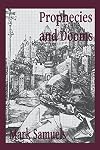
This is Samuels in critic mode, cogent in presentation and never failing to say something interesting about his subjects no matter how familiar I was with them. Between the lines, something of Samuels’ own criteria for good weird fiction peeps through.
There were plenty of material new to me about writers I have a very peripheral knowledge of.
Samuels’ “The Root of Evil: Hanns Heinz Ewers and Alraune” certainly did not have to work hard to educate me. I only knew Ewers through his much show more reprinted “The Spider” and about his espionage work on behalf of Germany in World War 1-era America. Samuels looks at Ewers’ persona as a drug addict and a bisexual predator (allegedly aided by hypnotism) on men and women and his greatest work, Alraune. Ewers, in that novel, becomes the “Master-Artist Braun” who alone can control the destructive force he has created, the “mandrake-woman” Alraune.
It’s the opening essay, and I don’t think it’s a coincidence that it ends with a metaphor of an artist in control of his material.
Oscar Wilde is a writer I know only through dramatic adaptations of his work, not the actual texts, and, while I certainly knew of his famous trial for “gross indecency” related to homosexuality, I knew nothing of his lover, Alfred Douglas. “A Great Life Spoilt: Wilde, Douglas And Machen” looks at Arthur Machen’s relationship with those other two men, especially the turbulent one with Douglas. Machen inspired Douglas to take a step Machen never did — convert to Roman Catholicism, but Douglas also cost Machen his journalism career when Machen wrote a premature and unflattering obituary of him. (We even get reproductions of the obituary and Douglas’ response.)
I thought another Machen piece, “Where Angels Fear to Tread: Some Reflections on ‘Dr. Stiggins” and Arthur Machen, the least successful one in the book. However, it certainly gave me a better sense of Machen’s problems with contemporary Christianity and modernity and a "’pure ethics-based’, doggedly anti-sacramental interpretation of Christianity as mere ‘rationalism’".
The eponymous Dr. Stiggins of Machen’s novel was a stand-in for one such proponent of those ideas: Dr. Robert Forman Horton, a pastor in the Hampstead Congregationalist church. In the wake of the controversy over the “reality” of Machen’s “The Bowmen”, the two men swapped sides in the miraculous vs. rationality debate.
Algernon Blackwood is another writer of weird fiction I’ve read but am not that familiar with. “In Search of Pan: Algernon Blackwood” illustrates not only how he sought the mystical in nature but was that oddity in weird fiction writers: an optimist.
But Samuels also surprised me with two looks at writers I am familiar with from extensive reading of their work and biographies.
“The Immortal Renown of Edgar A. Poe” is a fine summation of the man, his work, and influence. I’ve read of all of Poe’s fiction and poetry, many of his articles and essays and bios of him. I’ve even read Eureka. Yet, Samuels introduced me to new things like Poe’s contemporary Thomas Dunn English’s (whom I had heard of) vicious treatment of Poe via his character Marmaduke Hammerhead or the idea that Poe’s corpus of work could be gathered in a book titled “My Heart Laid Bare”. That was Poe’s notion of a book that no one would ever write, could not even bear to write, despite it being the “road to renown”. A minor quibble is that Samuels, when talking about Poe’s family, doesn’t mention the sister who outlived him.
S. T. Joshi’s H.P. Lovecraft: A Life probably mentioned the influence of Lovecraft’s aunts and grandfather on his intellectual development (namely an interest in astronomy and chemistry), but it got buried in the mass of detail, and Samuels’ brings it to the center with “Little Sunshine: The Origins of H.P. Lovecraft”. He also corrects the bogus genealogy that Lovecraft got from his family.
The sole piece of film criticism here is “Night of the Living Dead (1968)”. It briefly reminds us that zombies don’t have to be weighted down with political or social metaphors. Accept them for what they appear to be: “apolitical avatars of madness and of physical decay”.
Samuels believes that Thomas Ligotti will one day join Poe and Lovecraft in the pantheon of American writers of the weird. Poe strayed off into abstruse metaphysics with his beloved (to him at least) Eureka. Ligotti has given us The Conspiracy Against the Human Race, the subject of Samuels’ “’It’s the Conspiracy, Stupid’: Thomas Ligotti’s Anti-Gospel”.
It’s the sole original piece in the collection, and Samuels reminds us that weird fiction does not equal nihilism or pure dread. The visions of Algernon Blackwood and Arthur Machen certainly do not solely rest on those.
“Most authors, thankfully, are generally not trained philosophers,” remarks Samuels, but he manages to do a fair job philosophizing him in this piece. By pointing out that Lovecraft was opposed to didactic literature because the desire to educate undercut the aesthetic of the weird tale, Samuels shows that the intent to instruct – specifically to instruct on the pointlessness and agony of human existence – that Ligotti embraces is not a core aesthetic of the weird. You can write successful and bleak weird tales – but bleakness by itself should not be confused with what the weird is all about: “dislocated terror and awe”. (Though, to me, this seems an incomplete definition of the genre.)
Samuels’ points out the teleologic rhetoric infusing Ligotti’s work. Evolution does not make mistakes because it has no ultimate purpose that a “mistake” would confound.
If the anti-natal aspect of Ligotti’s philosophy (reminiscent of a group many decades ago calling itself the “voluntary human extinction movement”) is good, why isn’t just getting rid of a particular group right now bad? Isn’t a partial solution better than no solution? By Ligotti’s rights, we are simply “programmed” to not realize our own extinction is for the best.
“Programmed”, of course, implies “programmer” instituting a purposeful agenda.
Samuels almost thinks Ligotti has written a black satire. But his personal conversations with Ligotti lead him to think that author is convinced pouring his great talents into weird fiction is now "a side-show from the main purpose of advising us all that people should not exist in the first place, although it is, even at best, still an imperfect vehicle for the delivery of Ligotti’s inherently contradictory" message: the great truth being that there is no great truth.
Thus the final essay concludes with an artist, Ligotti, no longer in control of his material.
In thinking about it, most of these essays are about the difficulties of a great artist in channeling his personal concerns into art without swamping it with didacticism or succumbing to the temptation of prophecy. show less
There were plenty of material new to me about writers I have a very peripheral knowledge of.
Samuels’ “The Root of Evil: Hanns Heinz Ewers and Alraune” certainly did not have to work hard to educate me. I only knew Ewers through his much show more reprinted “The Spider” and about his espionage work on behalf of Germany in World War 1-era America. Samuels looks at Ewers’ persona as a drug addict and a bisexual predator (allegedly aided by hypnotism) on men and women and his greatest work, Alraune. Ewers, in that novel, becomes the “Master-Artist Braun” who alone can control the destructive force he has created, the “mandrake-woman” Alraune.
It’s the opening essay, and I don’t think it’s a coincidence that it ends with a metaphor of an artist in control of his material.
Oscar Wilde is a writer I know only through dramatic adaptations of his work, not the actual texts, and, while I certainly knew of his famous trial for “gross indecency” related to homosexuality, I knew nothing of his lover, Alfred Douglas. “A Great Life Spoilt: Wilde, Douglas And Machen” looks at Arthur Machen’s relationship with those other two men, especially the turbulent one with Douglas. Machen inspired Douglas to take a step Machen never did — convert to Roman Catholicism, but Douglas also cost Machen his journalism career when Machen wrote a premature and unflattering obituary of him. (We even get reproductions of the obituary and Douglas’ response.)
I thought another Machen piece, “Where Angels Fear to Tread: Some Reflections on ‘Dr. Stiggins” and Arthur Machen, the least successful one in the book. However, it certainly gave me a better sense of Machen’s problems with contemporary Christianity and modernity and a "’pure ethics-based’, doggedly anti-sacramental interpretation of Christianity as mere ‘rationalism’".
The eponymous Dr. Stiggins of Machen’s novel was a stand-in for one such proponent of those ideas: Dr. Robert Forman Horton, a pastor in the Hampstead Congregationalist church. In the wake of the controversy over the “reality” of Machen’s “The Bowmen”, the two men swapped sides in the miraculous vs. rationality debate.
Algernon Blackwood is another writer of weird fiction I’ve read but am not that familiar with. “In Search of Pan: Algernon Blackwood” illustrates not only how he sought the mystical in nature but was that oddity in weird fiction writers: an optimist.
But Samuels also surprised me with two looks at writers I am familiar with from extensive reading of their work and biographies.
“The Immortal Renown of Edgar A. Poe” is a fine summation of the man, his work, and influence. I’ve read of all of Poe’s fiction and poetry, many of his articles and essays and bios of him. I’ve even read Eureka. Yet, Samuels introduced me to new things like Poe’s contemporary Thomas Dunn English’s (whom I had heard of) vicious treatment of Poe via his character Marmaduke Hammerhead or the idea that Poe’s corpus of work could be gathered in a book titled “My Heart Laid Bare”. That was Poe’s notion of a book that no one would ever write, could not even bear to write, despite it being the “road to renown”. A minor quibble is that Samuels, when talking about Poe’s family, doesn’t mention the sister who outlived him.
S. T. Joshi’s H.P. Lovecraft: A Life probably mentioned the influence of Lovecraft’s aunts and grandfather on his intellectual development (namely an interest in astronomy and chemistry), but it got buried in the mass of detail, and Samuels’ brings it to the center with “Little Sunshine: The Origins of H.P. Lovecraft”. He also corrects the bogus genealogy that Lovecraft got from his family.
The sole piece of film criticism here is “Night of the Living Dead (1968)”. It briefly reminds us that zombies don’t have to be weighted down with political or social metaphors. Accept them for what they appear to be: “apolitical avatars of madness and of physical decay”.
Samuels believes that Thomas Ligotti will one day join Poe and Lovecraft in the pantheon of American writers of the weird. Poe strayed off into abstruse metaphysics with his beloved (to him at least) Eureka. Ligotti has given us The Conspiracy Against the Human Race, the subject of Samuels’ “’It’s the Conspiracy, Stupid’: Thomas Ligotti’s Anti-Gospel”.
It’s the sole original piece in the collection, and Samuels reminds us that weird fiction does not equal nihilism or pure dread. The visions of Algernon Blackwood and Arthur Machen certainly do not solely rest on those.
“Most authors, thankfully, are generally not trained philosophers,” remarks Samuels, but he manages to do a fair job philosophizing him in this piece. By pointing out that Lovecraft was opposed to didactic literature because the desire to educate undercut the aesthetic of the weird tale, Samuels shows that the intent to instruct – specifically to instruct on the pointlessness and agony of human existence – that Ligotti embraces is not a core aesthetic of the weird. You can write successful and bleak weird tales – but bleakness by itself should not be confused with what the weird is all about: “dislocated terror and awe”. (Though, to me, this seems an incomplete definition of the genre.)
Samuels’ points out the teleologic rhetoric infusing Ligotti’s work. Evolution does not make mistakes because it has no ultimate purpose that a “mistake” would confound.
If the anti-natal aspect of Ligotti’s philosophy (reminiscent of a group many decades ago calling itself the “voluntary human extinction movement”) is good, why isn’t just getting rid of a particular group right now bad? Isn’t a partial solution better than no solution? By Ligotti’s rights, we are simply “programmed” to not realize our own extinction is for the best.
“Programmed”, of course, implies “programmer” instituting a purposeful agenda.
Samuels almost thinks Ligotti has written a black satire. But his personal conversations with Ligotti lead him to think that author is convinced pouring his great talents into weird fiction is now "a side-show from the main purpose of advising us all that people should not exist in the first place, although it is, even at best, still an imperfect vehicle for the delivery of Ligotti’s inherently contradictory" message: the great truth being that there is no great truth.
Thus the final essay concludes with an artist, Ligotti, no longer in control of his material.
In thinking about it, most of these essays are about the difficulties of a great artist in channeling his personal concerns into art without swamping it with didacticism or succumbing to the temptation of prophecy. show less
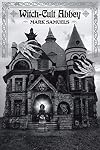
n one sense, this is Samuels in Gothic mode.
Rather than some young woman being lured to a sinister house or castle, our protagonist Saul Prior is offered a job at Thool Abbey. It’s 1940 in England, the middle of the Blitz, and he doesn’t have a lot of options. He lost his job when his bookstore employer closed. A bum leg means he’s not fit for military service.
Given the “bony myrmidon” servant who attends to him, the refusal of his putative employer Lady Degabaston to meet him, and show more his reluctance to go along with the pretext of such a meeting happening the next day, he decides he’s not staying over night and sets out on foot for the nearest railroad station.
But he doesn’t make it and soon finds himself back in the Abbey drugged, feasted on by bloodsucking worms, and chained to the floor of the Abbey’s library. His job will be to compile a bibliography of the Abbey’s extensive holding of occult books. Some of those tomes manifest occult activity apart from their mere words. Outside the Abbey, eternal darkness reigns.
What is to happen to him and can peace and rescue be found in the pages of some of those books?
About half way through the book, a defrocked priest shows up at the Abbey and we get the high point of the book: the back story behind one of Samuels’ most celebrated tales. That back story will reverberate through the rest of this novel.
With this book, it is becoming clear that Samuels’ is composing a mythos of his own. It is not a mythos based on a place as H. P. Lovecraft’s was centered around Arkham. It is centered around books. The number of occult works referenced in this novel probably exceeds the total mentioned by all writers of the Cthulhu Mythos. I will be reticent about specifics, but regular readers of Samuels will realize he is hinting at and sketching in a vast, horrifying mystery which reveals itself in the lives and literary productions of occult authors. Among other things, we learn books may create their authors.
In another sense, this is a more diffuse version, with its lengthy descriptions and longer length, of Samuels’ “An Interminable Abomination”, also from 2021. Yet, both stories offer another reality glimpsed only through literary works. Their endings are even, in a way, similar despite the dissimilarities of plot and setting.
The delights are many for Samuels’ fans, and those new to his work will be swept along with an increasingly surreal story in which basic expectations of reality are violated. Still, while Samuels puts the length of a novel to good use, I think his shorter work is stronger, and I’d advise those interested in Samuels to start with it rather than this novel. Given how many Samuels’ stories this novel links to, you could probably tap into the Samuels’ mythos with nearly any of his shorter titles you choose. show less
Rather than some young woman being lured to a sinister house or castle, our protagonist Saul Prior is offered a job at Thool Abbey. It’s 1940 in England, the middle of the Blitz, and he doesn’t have a lot of options. He lost his job when his bookstore employer closed. A bum leg means he’s not fit for military service.
Given the “bony myrmidon” servant who attends to him, the refusal of his putative employer Lady Degabaston to meet him, and show more his reluctance to go along with the pretext of such a meeting happening the next day, he decides he’s not staying over night and sets out on foot for the nearest railroad station.
But he doesn’t make it and soon finds himself back in the Abbey drugged, feasted on by bloodsucking worms, and chained to the floor of the Abbey’s library. His job will be to compile a bibliography of the Abbey’s extensive holding of occult books. Some of those tomes manifest occult activity apart from their mere words. Outside the Abbey, eternal darkness reigns.
What is to happen to him and can peace and rescue be found in the pages of some of those books?
About half way through the book, a defrocked priest shows up at the Abbey and we get the high point of the book: the back story behind one of Samuels’ most celebrated tales. That back story will reverberate through the rest of this novel.
With this book, it is becoming clear that Samuels’ is composing a mythos of his own. It is not a mythos based on a place as H. P. Lovecraft’s was centered around Arkham. It is centered around books. The number of occult works referenced in this novel probably exceeds the total mentioned by all writers of the Cthulhu Mythos. I will be reticent about specifics, but regular readers of Samuels will realize he is hinting at and sketching in a vast, horrifying mystery which reveals itself in the lives and literary productions of occult authors. Among other things, we learn books may create their authors.
In another sense, this is a more diffuse version, with its lengthy descriptions and longer length, of Samuels’ “An Interminable Abomination”, also from 2021. Yet, both stories offer another reality glimpsed only through literary works. Their endings are even, in a way, similar despite the dissimilarities of plot and setting.
The delights are many for Samuels’ fans, and those new to his work will be swept along with an increasingly surreal story in which basic expectations of reality are violated. Still, while Samuels puts the length of a novel to good use, I think his shorter work is stronger, and I’d advise those interested in Samuels to start with it rather than this novel. Given how many Samuels’ stories this novel links to, you could probably tap into the Samuels’ mythos with nearly any of his shorter titles you choose. show less
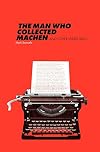
The stories of Mark Samuels are filled with perilous literary scholarship, sinister cartels, and encroaching decay of body and intellect – a mold of modernity. Yet, sometimes, hope is to be found in the alleys and wrecks of cities.
Some of the stories are homages or pastiches to dead writers of horror and the weird fiction: Poe, Stefan Grabinski, Karl Edward Wagner, Ambrose Bierce, and, of course, Arthur Machen. Bibliophilia, book collecting, and literary scholarship lead to strange show more places in Samuels’ fictions. Sometimes mere casual epigraphs from dead writers are surprisingly revelatory.
The first story, “Losenof Express”, is a fine example. Alcoholic horror writer Eddie Charles Knox hoists a shot of Jack Daniels to Poe as he drinks by himself in the obscure Eastern European capital of Strasgol. A well-paying career writing “the pulp adventures of Mungo the Barbarian and the sexual shenanigans of Mother Superior Lucia Vulva” seems like a waste of his talent, a betrayal of his one-time reputation as the “Berserker of Horror”. And when another man in the café seems to mirror Knox’s self-loathing, he becomes enraged and follows the man, eventually killing him. But things become strange when he hops the train out of town to flee arrest.
There are probably some allusions I missed and elements I don’t appreciate in “The Man Who Collected Machen” since I don’t collect Machen and have only read half of his fiction. But I have read enough Machen, know enough of his life, to appreciate this story as a well-done pastiche and tribute. Machen enthusiasts will see elements of “N”, The Three Impostors, The Secret Glory, and “The Lost Club”.
It’s one of H. P. Lovecraft’s literary acquaintances, Robert H. Barlow, that gets a mention in “Xapalpa”. Frank Mason is looking for a second retirement home in Mexico and finds himself in Xapalpa looking for a house to rent. Over drinks a local tells him the history of a local house that’s available. It’s the tale of young anthropologist visiting town, the local “Head Cult”, and the man’s disappearance.
While I liked the homage to Barlow and the Mexican location (Barlow is considered to be one of the founders of Mexican archaeology), I thought the story’s menace was a bit too obscure for my taste.
“Nor Unto Death Utterly by Edmund Bertrand” is a well-done Poe homage set in 1868. Bertrand, a doctor, is called to treat Arnold, a rich recluse who plans to live forever by an act of will. But he’s being brought low by a fatal case of constipation and his mind seems increasingly dominated by another. As a Poe fan, I liked this one.
There are a couple of stories that blend the book’s predominant themes of intellectual and memetic infections with pastiches and tributes to dead authors.
The first is a story with an unpronounceable title: “THYXXOLQU”. Its premise may owe something to William S. Burroughs’ “language is a virus” notion, but it definitely is inspired by a quote from Thomas de Quincy’s (published pseudonymously) “Voices from the Grave”. Our protagonist, proficient in multiple languages, begins to see ads with bits of a strange language in them. Then a co-worker begins to sprinkle strange words in his speech, and more and more the protagonist hears this strange tongue, spoken and written by ever more of the public. And this linguistic corruption seems to be accompanied by a leprosy-like infection. One of my favorites in the collection.
The second such story is “A Contaminated Text”. Written more like an essay than a piece of fiction, we hear about how a new text arrives at Mexico City’s Megabiblioteca, the country’s national library. And we’re off on another quest of literary provenance. The text, The Abyss of Voola, may be attributed to one Wolfgang Martz, but it also owes something to Bulwer-Lytton. In 1914, Martz gets a job in a mental asylum in the city and meets Major X, a patient there and a former member of the Sodality of Darkness. Martz’s work is a contaminating as well as contaminated text as the contents of the library start to change.
There are other tales of infection from both the past and present. “The Black Mould” is a short piece of weird, existential science fiction about a fungus that evolves sentience on a planet, spreads all over it and throughout the universe eventually consuming Earth. The mold wants to destroy itself and hopes, by consuming all sustenance in the universe, to die through want of nourishment.
“Glickman the Bibliophile”, another story of infection, is also sort of a takeoff on the zombie story. Glickman is a book collector and horror author who goes to his publisher Nemesis Press one day. He finds it is full of people now devoted, in what seems to be a parody of deconstructionism (and, perhaps, mainstream publishing), to destroying all texts printed and in cybersphere:
‘All texts were without a centre of meaning. Their interpretation rested with the reader, not the author. There could be no agreed purpose to a text. All was chaos. The text was an autonomous entity. In short, without the reader the text did not even exist save as a cipher.’
We have another of Samuels’ evil organizations with blandly sinister titles. The Bibliophobos Collective has deep roots in the past and plans for the future as “anti-publishers” and “anti-thinkers
“The Age of Decayed Futurity” is a signature title not only in its metaphor standing in for so much of Samuels most affecting work but for the story itself. In a nested series of tales, a Polish science fiction writer, facing a dwindling bank account and dissolving popularity, takes a room at a seaside resort. There she learns of the sinister Disassembly Cartel, billionaires so powerful and rich their names are unknown. But is their use of the cult of celebrity to transform the world really their idea? And how much of the story, in the end, is true?
Despite its World War One setting, I found “A Question of Obeying Orders” to be the slightest tale in the book. A deserter from German Army forces his way into a house and finds that he is in time for a séance. More than most stories here, it’s dependent on a surprise ending.
“The Tower” is original to the collection, a story of spiritual frisson and hope. A man, his money running out in London, catches a glimpse of a mysterious tower through the mist. He can’t approach it physically. It is a passage of sorts that can only be activated through the mind. And the story seems a fictional rebuttal to Thomas Ligotti’s The Conspiracy Against the Human Race.
Mark Samuels continues to be a writer I find very pleasing, solace in our current age of decayed futurity. show less
Some of the stories are homages or pastiches to dead writers of horror and the weird fiction: Poe, Stefan Grabinski, Karl Edward Wagner, Ambrose Bierce, and, of course, Arthur Machen. Bibliophilia, book collecting, and literary scholarship lead to strange show more places in Samuels’ fictions. Sometimes mere casual epigraphs from dead writers are surprisingly revelatory.
The first story, “Losenof Express”, is a fine example. Alcoholic horror writer Eddie Charles Knox hoists a shot of Jack Daniels to Poe as he drinks by himself in the obscure Eastern European capital of Strasgol. A well-paying career writing “the pulp adventures of Mungo the Barbarian and the sexual shenanigans of Mother Superior Lucia Vulva” seems like a waste of his talent, a betrayal of his one-time reputation as the “Berserker of Horror”. And when another man in the café seems to mirror Knox’s self-loathing, he becomes enraged and follows the man, eventually killing him. But things become strange when he hops the train out of town to flee arrest.
There are probably some allusions I missed and elements I don’t appreciate in “The Man Who Collected Machen” since I don’t collect Machen and have only read half of his fiction. But I have read enough Machen, know enough of his life, to appreciate this story as a well-done pastiche and tribute. Machen enthusiasts will see elements of “N”, The Three Impostors, The Secret Glory, and “The Lost Club”.
It’s one of H. P. Lovecraft’s literary acquaintances, Robert H. Barlow, that gets a mention in “Xapalpa”. Frank Mason is looking for a second retirement home in Mexico and finds himself in Xapalpa looking for a house to rent. Over drinks a local tells him the history of a local house that’s available. It’s the tale of young anthropologist visiting town, the local “Head Cult”, and the man’s disappearance.
While I liked the homage to Barlow and the Mexican location (Barlow is considered to be one of the founders of Mexican archaeology), I thought the story’s menace was a bit too obscure for my taste.
“Nor Unto Death Utterly by Edmund Bertrand” is a well-done Poe homage set in 1868. Bertrand, a doctor, is called to treat Arnold, a rich recluse who plans to live forever by an act of will. But he’s being brought low by a fatal case of constipation and his mind seems increasingly dominated by another. As a Poe fan, I liked this one.
There are a couple of stories that blend the book’s predominant themes of intellectual and memetic infections with pastiches and tributes to dead authors.
The first is a story with an unpronounceable title: “THYXXOLQU”. Its premise may owe something to William S. Burroughs’ “language is a virus” notion, but it definitely is inspired by a quote from Thomas de Quincy’s (published pseudonymously) “Voices from the Grave”. Our protagonist, proficient in multiple languages, begins to see ads with bits of a strange language in them. Then a co-worker begins to sprinkle strange words in his speech, and more and more the protagonist hears this strange tongue, spoken and written by ever more of the public. And this linguistic corruption seems to be accompanied by a leprosy-like infection. One of my favorites in the collection.
The second such story is “A Contaminated Text”. Written more like an essay than a piece of fiction, we hear about how a new text arrives at Mexico City’s Megabiblioteca, the country’s national library. And we’re off on another quest of literary provenance. The text, The Abyss of Voola, may be attributed to one Wolfgang Martz, but it also owes something to Bulwer-Lytton. In 1914, Martz gets a job in a mental asylum in the city and meets Major X, a patient there and a former member of the Sodality of Darkness. Martz’s work is a contaminating as well as contaminated text as the contents of the library start to change.
There are other tales of infection from both the past and present. “The Black Mould” is a short piece of weird, existential science fiction about a fungus that evolves sentience on a planet, spreads all over it and throughout the universe eventually consuming Earth. The mold wants to destroy itself and hopes, by consuming all sustenance in the universe, to die through want of nourishment.
“Glickman the Bibliophile”, another story of infection, is also sort of a takeoff on the zombie story. Glickman is a book collector and horror author who goes to his publisher Nemesis Press one day. He finds it is full of people now devoted, in what seems to be a parody of deconstructionism (and, perhaps, mainstream publishing), to destroying all texts printed and in cybersphere:
‘All texts were without a centre of meaning. Their interpretation rested with the reader, not the author. There could be no agreed purpose to a text. All was chaos. The text was an autonomous entity. In short, without the reader the text did not even exist save as a cipher.’
We have another of Samuels’ evil organizations with blandly sinister titles. The Bibliophobos Collective has deep roots in the past and plans for the future as “anti-publishers” and “anti-thinkers
“The Age of Decayed Futurity” is a signature title not only in its metaphor standing in for so much of Samuels most affecting work but for the story itself. In a nested series of tales, a Polish science fiction writer, facing a dwindling bank account and dissolving popularity, takes a room at a seaside resort. There she learns of the sinister Disassembly Cartel, billionaires so powerful and rich their names are unknown. But is their use of the cult of celebrity to transform the world really their idea? And how much of the story, in the end, is true?
Despite its World War One setting, I found “A Question of Obeying Orders” to be the slightest tale in the book. A deserter from German Army forces his way into a house and finds that he is in time for a séance. More than most stories here, it’s dependent on a surprise ending.
“The Tower” is original to the collection, a story of spiritual frisson and hope. A man, his money running out in London, catches a glimpse of a mysterious tower through the mist. He can’t approach it physically. It is a passage of sorts that can only be activated through the mind. And the story seems a fictional rebuttal to Thomas Ligotti’s The Conspiracy Against the Human Race.
Mark Samuels continues to be a writer I find very pleasing, solace in our current age of decayed futurity. show less
Good weird fiction doesn't lend itself to long reviews. The powers of the story are weakened when surprises are prematurely revealed. The effects of carefully paced narration are distorted or not conveyed. Latinate words like "alienation", "identity", "penance", and "transformation" are cold and insufficient words of thematic taxonomy.
And Samuels' collection is good weird fiction of a bleak yet, as Reggie Oliver notes in his introduction, exultant sort. The tone and effect may remind show more one of Thomas Ligotti, an author Samuels has called the greatest living writer of weird fiction. Yet Samuels rejects that writer's materialistic nihilism.
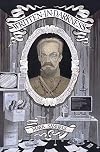
The most memorable, the most disturbing and, seemingly, least weird story is the opening one, "A Call to Greatness". Its setting is mostly historical; its concerns are very contemporary. Egremont, a wealthy, young, but world-weary functionary of a European Union he regards as sick and dead with apathy, sits in a cafe waiting to meet a stranger who has sent him some material to read. The stranger shows up, and we see what's in those documents: a 1921 account of the White Cassock Baron Maximilian. The Baron was a real person, Baron Robert Nicolaus Maximilian von Ungern-Sternberg, and it's his picture on the cover of the book.
The story opens with a quote from the chilling Order 15 to the Baron's troops: ''Truth and mercy' are no longer permissible. Henceforth, there can only be 'Truth and merciless hardness'. The evil which has fallen upon the land, with the object of destroying the divine principle in the human soul, must be extirpated root and branch. Fury against the heads of the revolution, and its devoted followers, must know no boundaries."
Workplace horror in the manner of Thomas Ligotti's My Work Is Not Yet Done or "The Town Manager" show up in two other memorable tales.
"The Ruins of Reality" takes place in a really bleak future, so chaotic and depressed that mass unemployment and suicide are common and there's no longer resources for the usual pacifiers and distractors: tv, video games, the internet, drugs and alcohol, and sports. But salvation seem at hand as the N Factory comes to the narrator's town with its gruesome posters of modern ills it promises to correct.
"Outside Interference" mixes the ambiance of dead teenager and zombie movies with quotidian workplace drudgery. The narrator and his co-workers, the slacker contingent of their company, get sent to a remote and dilapidated building to transcribe that office's paper records to electronic forms before the location is closed. But, when one emerges from an elevator ride to the unknown subterranean levels of the complex with charred fleshed and unburned clothes and strange white eyes, the horror begins.
Workplace horror also features in "The Hourglass of the Soul" with its IT protagonist sent on a trip to his employer's secret subterranean complex in the Gobi Desert. But I found this story underdeveloped and too short after the revelation as to what that complex holds.
An retired tv journalist, not even liked by his fellow traveler Marxists in the profession, stars in "The Other Tenant". At home, he hears weird shrieks and babblings from the too-loud tv of the next door apartment. Complaints to management go unanswered, so he decides to investigate.
"Alistair" is the most traditional story of the collection with its tale of a man a bit puzzled as to why his wife wants to move back to her childhood home. He's also puzzled at his general lack of affection for his son, and jealous of the close bond between his wife and the boy. All is explained on the revelation of a secret. This one is set in London around Highgate Cemetery.
"My World Has No Memories" has bits of Baudelaire and H. P. Lovecraft (not in the Cthulhu Mythos sense) and, in its nautical setting, William Hope Hodgson. A man awakes at sea. Not only is he missing memories to locate his sense of self. He can't locate the ship's position in the world. The GPS and radio are out, and the stars seem different. And there's a repulsive something in a jar on board and human bodies bobbing outside. It was another of my favorites in the collection.
"My Heretical Existence" appeared in a tribute anthology to Bruno Schulz, a figure I'm totally unfamiliar with. Perhaps I would have liked the story better if I did. Unlike "The Hourglass of the Soul", it wasn't obscure. It just didn't move me. The narrator, who lives in a city of exiles, wanders into a secret street and has a disturbing encounter with the patrons of the Under the Sign of the Hourglass Stilled Pub.
"In Eternity -- Two Lines Intersect" was written for an Arthur Machen tribute anthology, and it shows some of that writer's themes: reverence for nature, the occult secrets of the city, and Christian mysticism. Its narrator, after being released from the hospital for some unknown malady, requires social isolation. Not having much money, he rents a vacated apartment filled with its previous tenant's possessions. There are odd annotations in the books, strange sounds from the radio, and the narrator begins to view the wooded hill outside his window differently. show less
And Samuels' collection is good weird fiction of a bleak yet, as Reggie Oliver notes in his introduction, exultant sort. The tone and effect may remind show more one of Thomas Ligotti, an author Samuels has called the greatest living writer of weird fiction. Yet Samuels rejects that writer's materialistic nihilism.
The most memorable, the most disturbing and, seemingly, least weird story is the opening one, "A Call to Greatness". Its setting is mostly historical; its concerns are very contemporary. Egremont, a wealthy, young, but world-weary functionary of a European Union he regards as sick and dead with apathy, sits in a cafe waiting to meet a stranger who has sent him some material to read. The stranger shows up, and we see what's in those documents: a 1921 account of the White Cassock Baron Maximilian. The Baron was a real person, Baron Robert Nicolaus Maximilian von Ungern-Sternberg, and it's his picture on the cover of the book.
The story opens with a quote from the chilling Order 15 to the Baron's troops: ''Truth and mercy' are no longer permissible. Henceforth, there can only be 'Truth and merciless hardness'. The evil which has fallen upon the land, with the object of destroying the divine principle in the human soul, must be extirpated root and branch. Fury against the heads of the revolution, and its devoted followers, must know no boundaries."
Workplace horror in the manner of Thomas Ligotti's My Work Is Not Yet Done or "The Town Manager" show up in two other memorable tales.
"The Ruins of Reality" takes place in a really bleak future, so chaotic and depressed that mass unemployment and suicide are common and there's no longer resources for the usual pacifiers and distractors: tv, video games, the internet, drugs and alcohol, and sports. But salvation seem at hand as the N Factory comes to the narrator's town with its gruesome posters of modern ills it promises to correct.
"Outside Interference" mixes the ambiance of dead teenager and zombie movies with quotidian workplace drudgery. The narrator and his co-workers, the slacker contingent of their company, get sent to a remote and dilapidated building to transcribe that office's paper records to electronic forms before the location is closed. But, when one emerges from an elevator ride to the unknown subterranean levels of the complex with charred fleshed and unburned clothes and strange white eyes, the horror begins.
Workplace horror also features in "The Hourglass of the Soul" with its IT protagonist sent on a trip to his employer's secret subterranean complex in the Gobi Desert. But I found this story underdeveloped and too short after the revelation as to what that complex holds.
An retired tv journalist, not even liked by his fellow traveler Marxists in the profession, stars in "The Other Tenant". At home, he hears weird shrieks and babblings from the too-loud tv of the next door apartment. Complaints to management go unanswered, so he decides to investigate.
"Alistair" is the most traditional story of the collection with its tale of a man a bit puzzled as to why his wife wants to move back to her childhood home. He's also puzzled at his general lack of affection for his son, and jealous of the close bond between his wife and the boy. All is explained on the revelation of a secret. This one is set in London around Highgate Cemetery.
"My World Has No Memories" has bits of Baudelaire and H. P. Lovecraft (not in the Cthulhu Mythos sense) and, in its nautical setting, William Hope Hodgson. A man awakes at sea. Not only is he missing memories to locate his sense of self. He can't locate the ship's position in the world. The GPS and radio are out, and the stars seem different. And there's a repulsive something in a jar on board and human bodies bobbing outside. It was another of my favorites in the collection.
"My Heretical Existence" appeared in a tribute anthology to Bruno Schulz, a figure I'm totally unfamiliar with. Perhaps I would have liked the story better if I did. Unlike "The Hourglass of the Soul", it wasn't obscure. It just didn't move me. The narrator, who lives in a city of exiles, wanders into a secret street and has a disturbing encounter with the patrons of the Under the Sign of the Hourglass Stilled Pub.
"In Eternity -- Two Lines Intersect" was written for an Arthur Machen tribute anthology, and it shows some of that writer's themes: reverence for nature, the occult secrets of the city, and Christian mysticism. Its narrator, after being released from the hospital for some unknown malady, requires social isolation. Not having much money, he rents a vacated apartment filled with its previous tenant's possessions. There are odd annotations in the books, strange sounds from the radio, and the narrator begins to view the wooded hill outside his window differently. show less
Lists
Awards

You May Also Like


Associated Authors
Statistics
- Works
- 30
- Also by
- 42
- Members
- 491
- Popularity
- #50,319
- Rating
- 3.9
- Reviews
- 23
- ISBNs
- 34
- Languages
- 2
- Favorited
- 8