
Mark Valentine
Author of The Collected Connoisseur
About the Author
Series
Works by Mark Valentine
The Black Veil and Other Tales of Supernatural Sleuths (2008) — Editor; Contributor — 52 copies, 1 review
A Revelation of Cormorants 12 copies
Wormwood, Issue 25 8 copies
Faunus : The Journal of the Friends of Arthur Machen (Number 23, Spring 2011) (2011) — Editor — 8 copies
This World and That Other 7 copies
Faunus : The journal of the Friends of Arthur Machen (Number 16, Summer 2007) (2007) — Editor — 6 copies
Wormwood, Issue 27 6 copies
Wormwood, Issue 28 6 copies
Wormwood, Issue 20 6 copies
Faunus: the Journal of the Friends of Arthur Machen (Autumn 2012, number 26) — Editor — 6 copies
Qx and Other Pieces 5 copies
FAUNUS 18 - The Journal of the Friends of Arthur Machen — Editor — 5 copies
Faunus : The journal of the Friends of Arthur Machen (Number 7, Spring 2001) — Editor — 5 copies
Wormwood, Issue 19 5 copies
Wormwood, Issue 24 5 copies
Wormwood 32 5 copies
Tea and Gargoyles 5 copies
Faunus : The journal of the Friends of Arthur Machen (Number 4, Autumn 1999) — Editor — 5 copies
Possessions and Pursuits 4 copies
Wormwood, Number 30, Spring 2018 4 copies
Faunus : The Journal of the Friends of Arthur Machen (Number 22, Autumn 2010) (2006) — Editor — 4 copies
Faunus : The Journal of the Friends of Arthur Machen (Number 19, Spring 2009) — Editor — 4 copies
Faunus: The Journal of the Friends of Arthur Machen, Number 15 — Editor — 4 copies
FAUNUS 8 THE JOURNAL OF THE FRIENDS OF ARTHUR MACHEN — Editor — 4 copies
Qx 4 copies
Faunus 2 Autumn 1998: The Journal of the Friends of Arthur Machen — Editor — 4 copies
Wormwood, Issue 23 4 copies
Faunus : The Journal of the Friends of Arthur Machen (Number 20, Summer 2009) — Editor — 3 copies
Wormwood, Number 38, Spring 2022 3 copies
Wormwood, Number 34, Spring 2020 3 copies
Faunus: The Journal of the Friends of Arthur Machen, Number 13 — Editor — 3 copies
Faunus : The journal of the Friends of Arthur Machen (Number 14, Summer 2006) — Editor — 3 copies
Goat Songs 3 copies
The Adventure of the Green Skull 3 copies
Faunus : The journal of the Friends of Arthur Machen (Number 12, Summer 2005) — Editor — 3 copies
Faunus : The journal of the Friends of Arthur Machen (Number 3, Spring 1999) — Editor — 3 copies
Faunus : The journal of the Friends of Arthur Machen (Number 9, Autumn 2002) — Editor — 3 copies
Faunus 1 Spring 1998: The Journal of the Friends of Arthur Machen — Editor — 3 copies
Wormwood: Number 37, Autumn 2021 2 copies
The Axholme Toll 2 copies
Rain Instruments 2 copies
Infra Noir 2 copies
Wormwood, Number 35, Autumn 2020 2 copies
VOTIVE OFFERINGS 2 copies
Faunus 6 Autumn 2000 — Editor — 2 copies
As Blank As The Days Left To Be 2 copies
Quire no. 19 - Qx 1 copy
Shards: Journal Notes 1 copy
The Grave of Ani 1 copy
Borderlands and Other Worlds 1 copy
Qx and Orther Pieces 1 copy
QX 1 copy
The Master of the Macabre 1 copy
Haunted pavilions 1 copy
The Clerks of the Invisible 1 copy
Dreams and Visions: a brief journey into the remarkable imagination of Arthur Machen as recorded by Morchard Bishop (1987) 1 copy
Smoke 1 copy
Cartes de Visite 1 copy
Powers and Presences 1 copy
Dunwich 1 copy
Wormwood, Issue 14 1 copy
Stained Medium 1 copy
Wormwood 36 1 copy
Wormwood, No 36, Spring 2021 1 copy
Psammomancy 1 copy
Associated Works
The Collected Macabre Stories of L.P. Hartley (2001) — Introduction, some editions — 40 copies, 1 review
Selections from The Improbable Adventures of Sherlock Holmes (2009) — Contributor — 12 copies, 1 review
Faunus: The Journal of the Friends of Arthur Machen (Autumn 2016, number thirty-four) — Contributor — 7 copies
Faunus The Journal of the Friends of Arthur Machen Spring 2020 number forty-one — Contributor — 3 copies
Dark Dreams (nine issues, 1984-1992) — Contributor, some editions — 1 copy
Tagged
Common Knowledge
- Canonical name
- Valentine, Mark
- Birthdate
- 1959-07-09
- Gender
- male
- Nationality
- UK
- Birthplace
- Northampton, England, UK
- Associated Place (for map)
- England, UK
Members
Discussions
THE DEEP ONES: "The Fall of Ashes" by Mark Valentine in The Weird Tradition (July 2023)
Reviews

The book contains material mainly from Mark Valentine’s early writing years; specifically, there are ten occult detective stories and six others (also supernatural in hue). The main protagonist’s name is Ralph Tyler; he is apparently based on classic occult detectives like John Silence (Algernon Blackwood’s) and Carnacki (William Hope Hodgson’s), with some twists (like him not having a wealth of resources, connections and influence). Unfortunately I have just a passing contact with show more John Silence (and none whatsoever with Carnacki), so I cannot really make any comparisons. Still, the detective friend and companion's first person narration obviously brings into mind Sherlock and Watson. The stories’ setting is mostly pre-internet, late 20th century English rural suburbia, small villages and countryside, with a strong emphasis on the remnants of tradition.
Mark Valnetine’s lyrical language may be ornate and baroque but on the same time it is very much enjoyable, eloquent and in the end feels modern – it does not put a toll on the reader. The same goes for the structure of the stories – they are well-paced, offering enough lore to satisfy yet not so much to weigh down the narration.
As aforementioned, the first story (St Michael & All Angels) dissolves any notions about the subtlety of the supernatural – it is very real, even for most of Tyler’s clients. Unfortunately, this particular piece of fiction is not the book’s strongest, reading a lot like a trite ghost story. But the situation is rapidly improved from the next one (The Folly) forwards with the discarding (or even inversion at certain points) of some common (ghost story) tropes. With Ralph Tyler the supernatural is rarely seen as a one-dimensional adversary; occasionally it does not even fall to the category of a curiosity riddle (a thing common with the Other in detective fiction) though the investigation obviously tends to have an intellectual aspect. The supernatural is approached quite empathically, as something that can be interacted and reasoned with, as something deserving of communication attempts. The entities themselves are revealed to be multi-layered and dynamic (see the exemplary The Hermit’s House), the uncanny integrated in the setting and never reduce to thrill fodder. From ancient gods to spirits from the Far East and genius loci, these pages contain well-crafted aspects of the other-than-human.
As for the detective, despite his intellectual mien and emotional modesty, he does not discard emotion. And how could he, being well-versed in occult both theory- and practice-wise? Also, he seems to have a rather strong moral compass, which does not always align with the socially expected. In several of the stories he does not strive to drive away or make the supernatural “move forward,” but rather to intertwine it with the (human and/or geographical environment. This embracing of the Otherness is more than welcome.
The genre’s trappings are not completely absent. Despite his somewhat unpolished image (from the decrepit attire to his beloved foul-smelling cigarettes) Ralph Tyler retains at his core several of the characteristics of the quintessential detective: he is male, cool-headed, relies on intellect (though thankfully this intellect is not only the pure rationality of Sherlock but rather a love of knowledge and the wisdom stemming from it, with the unavoidable deduction thrown in); his first response to a new case is going to the library and he is obsessed with mental exercises in the form of board games. His house is the archetypal sanctuary where the team retreats to ponder, as well as a symbol of the detective’s love of reclusiveness. When facing the supernatural Ralph Tyler is cool-headed and modest, perhaps a tad too much. There is also the typical infuriating silence concerning any hypotheses and ideas about the situation before each case’s resolution (a literary need perhaps, but still something that has not aged well). Moreover, his friend, the nameless narrator, is rather caricature-ish, personifying up to a degree the voice of common sense and the common man (having for instance an inherent fear of abnormal situations and a seemingly magical distaste for taking initial, especially as far as investigation is concerned).
Finally, the six last (non-Tyler) stories read as interesting supernatural fiction. Of special note is Tree Worship, which unravels the hollowness of modernity’s obsession with security, control and individual isolation, as well as the compartmentalization of age groups, leading to an exultation of Nature in a most pagan way.
Despite embracing the environmental and aesthetic trappings of the detective and ghost-story genres, Herald of the Hidden breaks away with them at crucial points (there is more than a hint of imperialist anthropology critique in The Guardians of the Guest Room, and an ecological ethos permeates many of the stories) in an innovative and fresh (if not modern) way, all the time retaining the essence of a cozy candle-flame read.
Full review here: https://industriesofinferno.github.io/books/2020/06/05/herald-of-the-hidden.html show less
Mark Valnetine’s lyrical language may be ornate and baroque but on the same time it is very much enjoyable, eloquent and in the end feels modern – it does not put a toll on the reader. The same goes for the structure of the stories – they are well-paced, offering enough lore to satisfy yet not so much to weigh down the narration.
As aforementioned, the first story (St Michael & All Angels) dissolves any notions about the subtlety of the supernatural – it is very real, even for most of Tyler’s clients. Unfortunately, this particular piece of fiction is not the book’s strongest, reading a lot like a trite ghost story. But the situation is rapidly improved from the next one (The Folly) forwards with the discarding (or even inversion at certain points) of some common (ghost story) tropes. With Ralph Tyler the supernatural is rarely seen as a one-dimensional adversary; occasionally it does not even fall to the category of a curiosity riddle (a thing common with the Other in detective fiction) though the investigation obviously tends to have an intellectual aspect. The supernatural is approached quite empathically, as something that can be interacted and reasoned with, as something deserving of communication attempts. The entities themselves are revealed to be multi-layered and dynamic (see the exemplary The Hermit’s House), the uncanny integrated in the setting and never reduce to thrill fodder. From ancient gods to spirits from the Far East and genius loci, these pages contain well-crafted aspects of the other-than-human.
As for the detective, despite his intellectual mien and emotional modesty, he does not discard emotion. And how could he, being well-versed in occult both theory- and practice-wise? Also, he seems to have a rather strong moral compass, which does not always align with the socially expected. In several of the stories he does not strive to drive away or make the supernatural “move forward,” but rather to intertwine it with the (human and/or geographical environment. This embracing of the Otherness is more than welcome.
The genre’s trappings are not completely absent. Despite his somewhat unpolished image (from the decrepit attire to his beloved foul-smelling cigarettes) Ralph Tyler retains at his core several of the characteristics of the quintessential detective: he is male, cool-headed, relies on intellect (though thankfully this intellect is not only the pure rationality of Sherlock but rather a love of knowledge and the wisdom stemming from it, with the unavoidable deduction thrown in); his first response to a new case is going to the library and he is obsessed with mental exercises in the form of board games. His house is the archetypal sanctuary where the team retreats to ponder, as well as a symbol of the detective’s love of reclusiveness. When facing the supernatural Ralph Tyler is cool-headed and modest, perhaps a tad too much. There is also the typical infuriating silence concerning any hypotheses and ideas about the situation before each case’s resolution (a literary need perhaps, but still something that has not aged well). Moreover, his friend, the nameless narrator, is rather caricature-ish, personifying up to a degree the voice of common sense and the common man (having for instance an inherent fear of abnormal situations and a seemingly magical distaste for taking initial, especially as far as investigation is concerned).
Finally, the six last (non-Tyler) stories read as interesting supernatural fiction. Of special note is Tree Worship, which unravels the hollowness of modernity’s obsession with security, control and individual isolation, as well as the compartmentalization of age groups, leading to an exultation of Nature in a most pagan way.
Despite embracing the environmental and aesthetic trappings of the detective and ghost-story genres, Herald of the Hidden breaks away with them at crucial points (there is more than a hint of imperialist anthropology critique in The Guardians of the Guest Room, and an ecological ethos permeates many of the stories) in an innovative and fresh (if not modern) way, all the time retaining the essence of a cozy candle-flame read.
Full review here: https://industriesofinferno.github.io/books/2020/06/05/herald-of-the-hidden.html show less
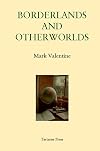
The always interesting esoteric volume by Mark Valentine. Here it is about mostly obscure authors (really obscure if you are an American) and books and all things bibliophilic but leaning towards the outre and numinous. Livened by the author’s personal experiences, it’s also a sort of memoir. Mark is a brilliant writer and easily likeable. However if you aren’t particularly literate it may send you running for the dictionary from time to time.
I have both the hard copy and my readers show more kindle copy. The kindle copy is also useful because you have the dictionary right there when you need it. show less
I have both the hard copy and my readers show more kindle copy. The kindle copy is also useful because you have the dictionary right there when you need it. show less

Desde la introducción, es imposible que no te caiga bien el autor, que admite su cariño y admiración por los investigadores de lo oculto Carnacki, de William Hope Hodgson; John Silence, de Algernon Blackwood; y Mr. Dyson, Arthur Machen, en ‘Los tres impostores’. Las historias fueron escritas entre 1983 y 2009 en diferentes revistas, para ser recogidas posteriormente en este volumen, junto con dos cuentos inéditos.
Con apenas 24 años escribió su primera historia de su particular show more detective psíquico, Ralph Tyler. La descripción que se nos proporciona es mínima, un tipo que fuma asquerosos cigarrillos y vive en un apartamento en 14, Bellchamber Tower. Los relatos son narrados por su amigo, una voz “tipo Watson”, y tiene lugar en Northampton. Suelen seguir el mismo patrón, se presenta un caso interesante que Tyler resuelve de manera erudita y no muy espectacular, para después el amigo preguntar, ¿qué, me dices cómo lo hiciste?, y pasa a narrar los detalles.
Hay fantasmas, mitología, folclore, leyendas que, si bien narrado muy bien, no son ni inquietantes ni terroríficos. Lo que menos me ha gustado es que en los últimos relatos no aparecen las figuras de Tyler y su amigo, parecen metidos con calzador. show less
Con apenas 24 años escribió su primera historia de su particular show more detective psíquico, Ralph Tyler. La descripción que se nos proporciona es mínima, un tipo que fuma asquerosos cigarrillos y vive en un apartamento en 14, Bellchamber Tower. Los relatos son narrados por su amigo, una voz “tipo Watson”, y tiene lugar en Northampton. Suelen seguir el mismo patrón, se presenta un caso interesante que Tyler resuelve de manera erudita y no muy espectacular, para después el amigo preguntar, ¿qué, me dices cómo lo hiciste?, y pasa a narrar los detalles.
Hay fantasmas, mitología, folclore, leyendas que, si bien narrado muy bien, no son ni inquietantes ni terroríficos. Lo que menos me ha gustado es que en los últimos relatos no aparecen las figuras de Tyler y su amigo, parecen metidos con calzador. show less
The Black Veil & Other Tales of Supernatural Sleuths (Tales of Mystery & the Supernatural) by Mark Valentine
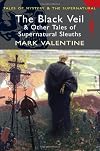
The supposed link between these sixteen stories is Supernatural Detectives. This premise does not work well however as not all the tales are supernatural and others do not really have a sleuth to investigate. Anyway they are a very varied bunch,and neither of the the best two stories -'The Ghost with the Club-foot' and 'Like Clockwork' contain a ghost. Several begin well such as 'The Sheelagh-na-gig' and 'Spirit Solutions',but end poorly. Rather a disappointment overall
as I expected much show more more from this collection. show less
as I expected much show more more from this collection. show less
You May Also Like


Associated Authors
Statistics
- Works
- 176
- Also by
- 59
- Members
- 1,239
- Popularity
- #20,719
- Rating
- 4.0
- Reviews
- 11
- ISBNs
- 58
- Languages
- 3
- Favorited
- 8