
Mary Beth Ingham
Author of Scotus for Dunces: An Introduction to the Subtle Doctor
Works by Mary Beth Ingham
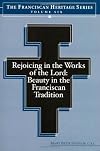
Rejoicing in the Works of the Lord: Beauty in the Franciscan Tradition (Franciscan Heritage Series, Volume 6) (2009) 24 copies, 1 review
The ethical method of John Duns Scotus : a contribution to Roman Catholic moral theology (1992) 2 copies
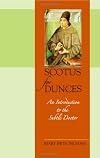
Scotus for Dunces 2 copies
Associated Works
Tagged
Common Knowledge
There is no Common Knowledge data for this author yet. You can help.
Members
Reviews
Rejoicing in the works of the Lord : beauty in the Franciscan Tradition : (Franciscan Heritage Series, Volume 6) [EBook] by Mary Beth Ingham
If you would like to share your joy in this book, please Click here
From the Preface
Perhaps instinctively we expect to find beauty playing an important role in a tradition founded by Francis of Assisi, himself a poet, musician and singer. His Canticle of Creatures extols the Most High for creatures with a rich vocabulary of their qualities: “bright, precious, and fair.” And his contemporary, Clare of Assisi, writes in her correspondence with Agnes of Prague of the beauty of her Beloved, show more using the medieval metaphor of the mirror. Beauty certainly can claim a place at the early Franciscan table.
But the special focus of this study is the appreciation of beauty in the writings of two great theorists of the tradition, Bonaventure of Bagnoregio and John Duns Scotus. Here we see the confluence of a rich earlier tradition of Christian reflection on beauty and its role in our journey toward God. From Augustine to the Victorines, a rich Platonic stream within the Western Catholic tradition spoke of God as Beauty; and our Franciscan authors drank deeply of that Pierian spring. show less
From the Preface
Perhaps instinctively we expect to find beauty playing an important role in a tradition founded by Francis of Assisi, himself a poet, musician and singer. His Canticle of Creatures extols the Most High for creatures with a rich vocabulary of their qualities: “bright, precious, and fair.” And his contemporary, Clare of Assisi, writes in her correspondence with Agnes of Prague of the beauty of her Beloved, show more using the medieval metaphor of the mirror. Beauty certainly can claim a place at the early Franciscan table.
But the special focus of this study is the appreciation of beauty in the writings of two great theorists of the tradition, Bonaventure of Bagnoregio and John Duns Scotus. Here we see the confluence of a rich earlier tradition of Christian reflection on beauty and its role in our journey toward God. From Augustine to the Victorines, a rich Platonic stream within the Western Catholic tradition spoke of God as Beauty; and our Franciscan authors drank deeply of that Pierian spring. show less
If you would like to share your joy in this book, please Click here
Your contribution of this book to the collection would be most appreciated!
Your contribution of this book to the collection would be most appreciated!
You May Also Like
Associated Authors
Statistics
- Works
- 15
- Also by
- 1
- Members
- 124
- Popularity
- #161,164
- Rating
- 5.0
- Reviews
- 2
- ISBNs
- 20
- Languages
- 1