
Robert Coram (1)
Author of Boyd: The Fighter Pilot Who Changed the Art of War
For other authors named Robert Coram, see the disambiguation page.
About the Author
Robert Coram lives in Atlanta.
Works by Robert Coram
Double Ace: The Life of Robert Lee Scott Jr., Pilot, Hero, and Teller of Tall Tales (2016) 29 copies, 2 reviews
Caribbean Time Bomb: The United States' Complicity in the Corruption of Antigua (1993) 6 copies, 1 review
Tagged
Common Knowledge
Members
Reviews
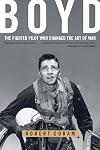
I'm a little bit obsessed with John Boyd and his theory of the OODA loop, but I knew little about the man himself. Corman paints a picture of a brilliant iconoclast: swimmer, fighter tactics instructor, engineer, Pentagon warrior, and finally philosopher-strategist. Corman draws heavily on the memories of Boyd's Acolytes, the six people closest too him in his career, his reticent family, and the public record. As Corman will freely admit, sometimes the myth overtakes the man, but the myth is show more more correct.
Boyd was a character. He had three good ideas in his life, which is three more than most people have. He literally wrote the book on air-to-air combat, revolutionized aircraft design with Energy-Maneuverability theory, and his OODA loop has become the dominant strategic metaphor of the 21st century. But for all that brilliance, and his frequent tactical victories and "hosings" of those who opposed him, he lost the war. Pentagon procurement is still very expensive gold-plated systems. Get-along managers rather than principled warriors are promoted. And Boyd's personal life was a wreck, and he died practically penniless and alienated from his children. But for all that, this was a great book and a great biography.
To share one bit of Boydian wisdom: You can either be somebody or do something. Follow the rules, agree with your superiors, and you'll rise to the best of your abilities but accomplish nothing. Stick to your principles, fight for what's right, and take no shit from anybody, and you may go down in flames but you'll have fought with honor. It's your life, so what will you do with it? show less
Boyd was a character. He had three good ideas in his life, which is three more than most people have. He literally wrote the book on air-to-air combat, revolutionized aircraft design with Energy-Maneuverability theory, and his OODA loop has become the dominant strategic metaphor of the 21st century. But for all that brilliance, and his frequent tactical victories and "hosings" of those who opposed him, he lost the war. Pentagon procurement is still very expensive gold-plated systems. Get-along managers rather than principled warriors are promoted. And Boyd's personal life was a wreck, and he died practically penniless and alienated from his children. But for all that, this was a great book and a great biography.
To share one bit of Boydian wisdom: You can either be somebody or do something. Follow the rules, agree with your superiors, and you'll rise to the best of your abilities but accomplish nothing. Stick to your principles, fight for what's right, and take no shit from anybody, and you may go down in flames but you'll have fought with honor. It's your life, so what will you do with it? show less
Coram begins the begins his hagiography with an explanation of why Americans have an almost mythic view of the Marine Corps, a service that was close to extinction by the turn of the 20th century -- before Belleau Woods. The American Expeditionary Force under General Pershing was sent quickly to France to bail out the exhausted British and French. Ludendorf, the German General, was about to deliver a hammer blow in an attempt to break through the trench lines and reach Paris. Pershing had show more forbidden war correspondents from identifying individual Army units, but left an inadvertent loophole with the Marines. The Army despised the Marines, wondering why they even existed as a separate command. At Belleau Woods, however, the Marines, identified as such by Floyd Gibbons, the only correspondent, to go with them, magnificently held off and beat a substantially larger force of Germans, and soon all anyone could talk about was the glorious Marines.
Krulak was a Marine. How he got there was quite interesting, but inauspicious. He was a Jew (non-practicing who lied about his background--antisemitism was rife with signs on establishments reading, "no dogs or jews"), short (5'4"), been married (it lasted but 16 days before being annulled as both he and the bride lied about their names), lied about his age, and failed the entrance exam the first time. So why Annapolis? One reason was that his father realized that graduating from the Naval Academy would open many doors for his son.
At the academy, because of some "commercial" activity, expressly forbidden by Academy rules, he racked up a huge number of demerits, but thanks to his friendship and mentor, an instructor (and unrequited racist and anti-semite, but then that was the Marine ethos of the time), made it through. Krulak had invented an entire backstory for his biography wholly at odds with his Cheyenne, WY and Jewish reality. Had the Navy known of that fiction he probably would not have made it.
Ever since the British debacle at Gallipoli, it had become standard doctrine that amphibious landings were obsolete and would never be part of future actions. The Ellis Report, part of War Plan Orange, presciently predicted the Japanese attack on Pearl Harbor and the island hopping strategy that made winning the war in the Pacific possible. That strategy required a multitude of amphibious landings but the Navy had no craft that would work. Krulak was to be instrumental in fixing that.
He and his pregnant wife had been posted to Shanghai, where, in 1937, he took the initiative to watch the Japanese amphibious landings in their conquest of the Chinese mainland. He was stunned to see the radical design of their landing craft and realized the flat-bottomed, ramp-equipped boats were just what the Navy needed. He whipped off a report (he was still a lowly 1st Lieutenant) to Washington anticipating swift action on their designing and building similar craft. The optimism of youth.
The story of the development of the famous landing craft and the role played by Krulak and, in particular, by a Louisiana boat builder named Higgins, is fascinating. Both Higgins and Krulak had to overcome Navy inertia and bureaucracy to get the boats built and approved. ( seeThe Boat That Won the War: An Illustrated History of the Higgins LCVP by Charles Roberts, Jr.) Inter-service rivalry also played a part and the Navy never did adopt the design. It was all Marines. Without the mentorship of General Holland Smith, whom Krulak knew from the Academy, however, he probably would have been drummed out of the Corps years before. He was later instrumental in developing tactics for the nascent Marine helicopter program.
Krulak was prominent participant in the inter-service rivalries following WW II and I was surprised at the vicious enmity that existed between the Army, which tried to get the Marines disbanded and molded into the Army, and even the Navy, envious of their reputation. The Marines never forgave the Navy for deserting them at Guadacanal. One might make a case that some of the "Chowder Gang's" (the name given to the Krulak led opposition to unifying the services) actions bordered on insubordination in their efforts to thwart Truman's wishes. He was, after all, the Commander -in-Chief. Krulak's certitude in himself spilled over into his treatment of their children, the eldest of whom described their childhood as resembling that of the Great Santini.
Reading this book, it's impossible not to come away with the feeling that the Marines won WW I, the Pacific in WW II, and Korea and that Krulak personally saved the Marines from the Marine-hating Army. Then again, Truman, got into a lot of trouble for complaining that the Marines had a propaganda campaign to rival Stalin's. Perhaps he was right.
P.S. My granddaughter was a Marine M.P. as was her husband. show less
Krulak was a Marine. How he got there was quite interesting, but inauspicious. He was a Jew (non-practicing who lied about his background--antisemitism was rife with signs on establishments reading, "no dogs or jews"), short (5'4"), been married (it lasted but 16 days before being annulled as both he and the bride lied about their names), lied about his age, and failed the entrance exam the first time. So why Annapolis? One reason was that his father realized that graduating from the Naval Academy would open many doors for his son.
At the academy, because of some "commercial" activity, expressly forbidden by Academy rules, he racked up a huge number of demerits, but thanks to his friendship and mentor, an instructor (and unrequited racist and anti-semite, but then that was the Marine ethos of the time), made it through. Krulak had invented an entire backstory for his biography wholly at odds with his Cheyenne, WY and Jewish reality. Had the Navy known of that fiction he probably would not have made it.
Ever since the British debacle at Gallipoli, it had become standard doctrine that amphibious landings were obsolete and would never be part of future actions. The Ellis Report, part of War Plan Orange, presciently predicted the Japanese attack on Pearl Harbor and the island hopping strategy that made winning the war in the Pacific possible. That strategy required a multitude of amphibious landings but the Navy had no craft that would work. Krulak was to be instrumental in fixing that.
He and his pregnant wife had been posted to Shanghai, where, in 1937, he took the initiative to watch the Japanese amphibious landings in their conquest of the Chinese mainland. He was stunned to see the radical design of their landing craft and realized the flat-bottomed, ramp-equipped boats were just what the Navy needed. He whipped off a report (he was still a lowly 1st Lieutenant) to Washington anticipating swift action on their designing and building similar craft. The optimism of youth.
The story of the development of the famous landing craft and the role played by Krulak and, in particular, by a Louisiana boat builder named Higgins, is fascinating. Both Higgins and Krulak had to overcome Navy inertia and bureaucracy to get the boats built and approved. ( seeThe Boat That Won the War: An Illustrated History of the Higgins LCVP by Charles Roberts, Jr.) Inter-service rivalry also played a part and the Navy never did adopt the design. It was all Marines. Without the mentorship of General Holland Smith, whom Krulak knew from the Academy, however, he probably would have been drummed out of the Corps years before. He was later instrumental in developing tactics for the nascent Marine helicopter program.
Krulak was prominent participant in the inter-service rivalries following WW II and I was surprised at the vicious enmity that existed between the Army, which tried to get the Marines disbanded and molded into the Army, and even the Navy, envious of their reputation. The Marines never forgave the Navy for deserting them at Guadacanal. One might make a case that some of the "Chowder Gang's" (the name given to the Krulak led opposition to unifying the services) actions bordered on insubordination in their efforts to thwart Truman's wishes. He was, after all, the Commander -in-Chief. Krulak's certitude in himself spilled over into his treatment of their children, the eldest of whom described their childhood as resembling that of the Great Santini.
Reading this book, it's impossible not to come away with the feeling that the Marines won WW I, the Pacific in WW II, and Korea and that Krulak personally saved the Marines from the Marine-hating Army. Then again, Truman, got into a lot of trouble for complaining that the Marines had a propaganda campaign to rival Stalin's. Perhaps he was right.
P.S. My granddaughter was a Marine M.P. as was her husband. show less
Boyd: The Fighter Pilot Who Changed the Art of War (January 23, 1927 – March 9, 1997) by Robert Coram

John Boyd may be the most remarkable unsung hero in all of American military history. Some remember him as the greatest U.S. fighter pilot ever-the man who, in simulated air-to-air combat, defeated every challenger in less than forty seconds. Some recall him as the father of our country's most legendary fighter aircraft-the F-15 and F-16. Still others think of Boyd as the most influential military theorist since Sun Tzu. They know only half the story.Boyd, more than any other person, saved show more fighter aviation from the predations of the Strategic Air Command. His manual of fighter tactics changed the way every air force in the world flies and fights. He discovered a physical theory that forever altered the way fighter planes were designed. Later in life, he developed a theory of military strategy that has been adopted throughout the world and even applied to business models for maximizing efficiency. On a personal level, Boyd rarely met a general he couldn't offend. He was loud, abrasive, and profane. A man of daring, ferocious passion and intractable stubbornness, he was that most American of heroes-a rebel who cared not for his reputation or fortune but for his country. show less
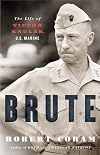
Brute: the life of Victor Krulak, U.S. Marine by Robert Coram this as the title would suggest is a biography of the USMC officer. Krulak had a long and eventful career. Serving in China, the Pacific, Korea and finally Vietnam. He was instrumental in the development of amphibious strategy, helicopter aviation and counterinsurgency. As well he was a member of the Chowder Society that successfully fought against the unification of the USMC and Army.
Coram clearly has a lot of regard for his show more chosen subject. His enthusiasm is infectious but occasionally he gets carried away with himself. For instance Krulak throughout his career told many untruths involving everything from his parents (he hid his Jewish ancestry) to when he first met JFK. Coram to his credit does point out when these discrepancies occur but he tends to excuse them by pointing out that Krulak was young or they were "harmless". I don't agree even if the USMC was as antisemitic as he suggests it strikes me as curious that Krulak had no problem speaking truth to power except in this one instance. There are some strange throwaway comments. When discussing the Unification debate Coram says that if it had passed it would have dismantled civilian control over the military. He doesn't explain how. Later he complains that what most people know about Vietnam has been corrupted by the Saigon Press core which had ideological reasons for hating the war. This has filtered down into the historical research. However he immediately points out that Krulak thought the Army view of counterinsurgency was doomed to failure. Funny that's what the leftist press core and most modern historians say....
Recommended with some caveats. show less
Coram clearly has a lot of regard for his show more chosen subject. His enthusiasm is infectious but occasionally he gets carried away with himself. For instance Krulak throughout his career told many untruths involving everything from his parents (he hid his Jewish ancestry) to when he first met JFK. Coram to his credit does point out when these discrepancies occur but he tends to excuse them by pointing out that Krulak was young or they were "harmless". I don't agree even if the USMC was as antisemitic as he suggests it strikes me as curious that Krulak had no problem speaking truth to power except in this one instance. There are some strange throwaway comments. When discussing the Unification debate Coram says that if it had passed it would have dismantled civilian control over the military. He doesn't explain how. Later he complains that what most people know about Vietnam has been corrupted by the Saigon Press core which had ideological reasons for hating the war. This has filtered down into the historical research. However he immediately points out that Krulak thought the Army view of counterinsurgency was doomed to failure. Funny that's what the leftist press core and most modern historians say....
Recommended with some caveats. show less
 This review was written for LibraryThing Early Reviewers.
Lists
You May Also Like


Associated Authors
Statistics
- Works
- 12
- Members
- 1,145
- Popularity
- #22,428
- Rating
- 4.2
- Reviews
- 42
- ISBNs
- 39
