
Peter De Vries (1) (–1993)
Author of The Blood of the Lamb: A Novel
For other authors named Peter De Vries, see the disambiguation page.
Works by Peter De Vries
Associated Works
Fierce Pajamas: An Anthology of Humor Writing from The New Yorker (2001) — Contributor — 790 copies, 5 reviews
Secret Ingredients: The New Yorker Book of Food and Drink (2007) — Contributor — 595 copies, 10 reviews
The 50 Funniest American Writers: An Anthology of Humor from Mark Twain to The Onion (2011) — Contributor — 287 copies, 3 reviews
Gentlemen, Scholars and Scoundrels: A Treasury of the Best of Harper's Magazine from 1850 to the Present (1972) — Contributor — 62 copies
Tagged
Common Knowledge
- Birthdate
- 1910-02--27
- Date of death
- 1993-09-28
- Gender
- male
- Birthplace
- Chicago, Illinois, USA
Members
Reviews
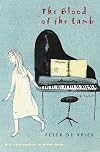
'The Blood of the Lamb' is the chronicle of a life the protagonist himself describes as his 'Book of the Dead'. It is both humorous and tragic; the omnipresent reader a witness to Don Wanderhope's struggle to fathom belief, love, meaning, medicine, faith and suffering.
De Vries writes with a dazzling mastery of language and sentiment - it is a wonder and disappointment that he and his works aren't more esteemed. Semi-autobiographical, his character's journey bleeds perspicacity and show more authenticity, none more so than at its climax:
'How I hate this world. I would like to tear it apart with my own two hands if I could. I would like to dismantle the universe star by star, like a treeful of rotten fruit. Nor do I believe in progress. A vermin:..eaten saint scratching his filth in the hope of heaven is better off than you damned in clean linen. Progress doubles our tenure in a vale of tears. Man is a mistake, to be corrected only by his abolition, which he gives promise of seeing to himself. Oh, let him pass, and leave the earth to the flowers that carpet the earth wherever he explodes his triumphs. Man is inconsolable, thanks to that eternal "Why?" when there is no Why, that question mark twisted like a fishhook in the human heart.'
The Blood of the Lamb poignantly embodies the fragility of existence and the struggles within it to which we all succumb. show less

This is the second De Vries book I have read (The Blood of the Lamb being the first) and it has done nothing to quell my passionate heralding of the greatness of a man so unexplainably excluded from the copious lists of excellent literature. His command of language is perfectly astute (perhaps ever more impressive due to his Dutch nationality) his handling of character perspicacious and his telling of a tale masterful.
A Mackerel Plaza is a farce, eruditely suffused with divine and show more mythological reflection. It is the story of a widowed pastor, who unwittingly falls for another woman a few months after the accidental death of his wife. Particularly scrupulous as to how his parish may perceive a new love interest, Andrew Mackerel makes great pains to nurture the budding romance with Molly Calico whilst keeping up appearances of widowhood and grievance before the church’s parishioners.
Throw into this his live-in housekeeper who is the sister of his deceased wife, adamant on infinitely observing a vigil of respect to her sibling that borders on martyrdom and a brooding bureaucracy chomping at the bit to use any excuse (say, a sprawling memorial plaza in dedication to the town’s recently lost heroine) to capitalise on the burgeoning business flirting with their potential suburban cash cow and you have a holy headache.
It is all a little much for our innocent protagonist, already wrestling tenets of his belief and religion (and unwanted ‘Jesus Saves’ signs which disturb his creative flow whilst attempting to write his sermons) never mind anything else.
Read De Vries. show less
A Mackerel Plaza is a farce, eruditely suffused with divine and show more mythological reflection. It is the story of a widowed pastor, who unwittingly falls for another woman a few months after the accidental death of his wife. Particularly scrupulous as to how his parish may perceive a new love interest, Andrew Mackerel makes great pains to nurture the budding romance with Molly Calico whilst keeping up appearances of widowhood and grievance before the church’s parishioners.
Throw into this his live-in housekeeper who is the sister of his deceased wife, adamant on infinitely observing a vigil of respect to her sibling that borders on martyrdom and a brooding bureaucracy chomping at the bit to use any excuse (say, a sprawling memorial plaza in dedication to the town’s recently lost heroine) to capitalise on the burgeoning business flirting with their potential suburban cash cow and you have a holy headache.
It is all a little much for our innocent protagonist, already wrestling tenets of his belief and religion (and unwanted ‘Jesus Saves’ signs which disturb his creative flow whilst attempting to write his sermons) never mind anything else.
Read De Vries. show less
The first half and second halves of this book seem like entirely separate books - it took me a couple of chapters to get in this, printed 1961, with the old book smell and the weird stain and that font that was so popular midcentury that just invites skimming, but I'm glad I gave it the time. This book is gorgeous. It's a semi-autobiographical account of the author's struggles with religion over the course of his life, and it ends up being kind of a defense of the idea that not everything show more can or should be redeemed - "Time heals nothing - which should make us the better able to minister." The author seems to give up on the possibility of satisfaction, but he continues anyway. "'Let there be light,' we cry, and only the dawn breaks." Compassion is possible, it's beautiful, but it's all. We can never be consoled, and maybe the worst thing is the waste that goes into trying to console ourselves, or trying to convince ourselves that there is something to console us. But there's no point in being angry about that. We can bear our own witness. show less
Peter DeVries was a very popular writer who contributed many stories to the New Yorker in the fifties and sixties and who wrote several very funny novels. This autobiographical novel describes the growth to maturity of Don Wanderhope, member of a strictly Calvinist Dutch Reform family, whose brother becomes a heretic, whose father becomes addicted to drink and goes insane, and whose wife commits suicide after giving him a child whom he loves deeply. At age eleven, his daughter contracts show more leukemia, initially does quite well, but then succumbs to a staph infection in the hospital.
Wanderhope - I suspect the name is no accidental choice - in grief stricken anger rails against God and man. "I made a tentative conclusion. It seemed from all of this that uppermost among human joys is the negative one of restoration. Not going to the stars, but learning that one may stay where one is. It was shortly after the evening in question that I had a taste of that truth on a scale that enabled me to put my finger on it." The happiest moment of his life comes when the doctor lets him know that his daughter will be all right - a mistake as it turns out. "The fairy would not become a gnome. We could break bread in peace again, my child and I. The greatest experience open to man then, is the recovery of the commonplace."
The book has many humorous moments and profound insights, as Wanderhope struggles with religion as he tries to deal with the death of his only child. "I believe that man must learn to live without those consolations called religious, which his own intelligence must by now have told him belong to the childhood of the race. Philosophy really can give us nothing permanent to believe in either. It is too rich in answers; each canceling out the rest. The quest for meaning is foredoomed. Human life means nothing. But that is not to say that it is not worth living. What does a Debussy arabesque mean, or a rainbow, or a rose? A man delights in all of these knowing himself to be no more. A wisp of music and haze of dreams dissolving against the sun. Man has only his own two feet to stand on his own human trinity to see him through: reason, courage and grace and the first plus the second equals the third." show less
Wanderhope - I suspect the name is no accidental choice - in grief stricken anger rails against God and man. "I made a tentative conclusion. It seemed from all of this that uppermost among human joys is the negative one of restoration. Not going to the stars, but learning that one may stay where one is. It was shortly after the evening in question that I had a taste of that truth on a scale that enabled me to put my finger on it." The happiest moment of his life comes when the doctor lets him know that his daughter will be all right - a mistake as it turns out. "The fairy would not become a gnome. We could break bread in peace again, my child and I. The greatest experience open to man then, is the recovery of the commonplace."
The book has many humorous moments and profound insights, as Wanderhope struggles with religion as he tries to deal with the death of his only child. "I believe that man must learn to live without those consolations called religious, which his own intelligence must by now have told him belong to the childhood of the race. Philosophy really can give us nothing permanent to believe in either. It is too rich in answers; each canceling out the rest. The quest for meaning is foredoomed. Human life means nothing. But that is not to say that it is not worth living. What does a Debussy arabesque mean, or a rainbow, or a rose? A man delights in all of these knowing himself to be no more. A wisp of music and haze of dreams dissolving against the sun. Man has only his own two feet to stand on his own human trinity to see him through: reason, courage and grace and the first plus the second equals the third." show less
Lists
Awards


You May Also Like
Associated Authors
Statistics
- Works
- 32
- Also by
- 15
- Members
- 2,099
- Popularity
- #12,261
- Rating
- 3.9
- Reviews
- 25
- ISBNs
- 115
- Languages
- 2