
Melvin Van Peebles (1932–2021)
Author of Sweet Sweetback's Baadasssss Song: A Guerilla Filmmaking Manifesto
About the Author
Image credit: Photo by David Shankbone, April 25,2008
Works by Melvin Van Peebles
Sweet Sweetback's Baadasssss Song [1971 film] (1971) — Director; Actor; Screenwriter; Producer — 24 copies
Melvin Van Peebles: Essential Films (The Story of a Three Day Pass/Watermelon Man / Sweet Sweetback’s Baadasssss Song / Don’t Play Us Cheap) (2021) 12 copies, 1 review
The Big Heart 2 copies
License to Kill / Acts of Contrition / Gang in Blue (Triple Feature Video) (2004) — Director — 1 copy
976-Stud 1 copy
Don't Play Us Cheap 1 copy
Vrooom Vroom Vrooom 1 copy
Vroom, Vroom, Vrooom 1 copy
Associated Works
Black Genius: African American Solutions to African American Problems (1999) — Contributor — 72 copies
Tagged
Common Knowledge
- Other names
- Brer Soul
Peebles, Melvin (born) - Birthdate
- 1932-08-21
- Date of death
- 2021-09-21
- Gender
- male
- Education
- Ohio Wesleyan University (B.A.|literature|1953)
- Occupations
- actor
film director
screenwriter
novelist
playwright
composer (show all 10)
translator
cable car operator
airman (United States Air Force)
financial instruments trader - Relationships
- Van Peebles, Mario (son)
- Nationality
- USA
- Birthplace
- Chicago, Illinois, USA
- Places of residence
- Chicago, Illinois, USA
Delaware, Ohio, USA
Mexico
San Francisco Bay Area, California, USA
The Netherlands
Paris, France - Associated Place (for map)
- USA
Members
Reviews
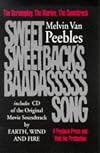
Like the film, this is a weak excuse for a militant book as the main character "sticking it to the man" is doing so solely from his loins (hence the character's name "Sweetback" since he had a good bedside stroke). This book flirts with child pornography (a child sweetback being turned out by a very adult whore) and then rides the waves of black militant crises in America through a manhunt of slinging dick and running from police in what seems to be a convenient excuse for white cops to kill show more a big black dick. And so it goes with Sweetback trying to stay one step of the law while "sticking it to the man" any chance he has with his big black peeter.
Not a fan of the film. Not a fan of the book adaptation. Probably one of thee most overrated film/book combos of all time solely because the Black Panthers made this requried viewing instead of The Spook Who Sat By The Door. show less
Not a fan of the film. Not a fan of the book adaptation. Probably one of thee most overrated film/book combos of all time solely because the Black Panthers made this requried viewing instead of The Spook Who Sat By The Door. show less

Van Peebles first novel is up there with a book like The Learning Tree, except more on the R-rated side of things. This is typical fare coming of age in a black neighborhood fare for the time (which is 1968) but with more political backdrop than The Learning Tree. If The Learning Tree is G-rated, this is caught between an R and NC-17 rating for grittiness.

Don't Play Us Cheap: Melvin Van Peebles’s film version of his own Tony Award–nominated Broadway musical is a bold blend of theater and nervy, New Wave–inflected cinematic invention. A cast of Black stage and screen luminaries including Esther Rolle, Mabel King, and Avon Long stars in this charmingly offbeat, fablelike fantasy in which a pair of mischief-making devil-bats dispatched by Satan assume human form in order to wreak havoc on a Saturday-night house party in Harlem—only to show more find their diabolical plan thwarted by their hosts’ infectious generosity of spirit. Staged with ebullience, the original blues- and gospel-infused songs by Van Peebles burst forth in a life-affirming celebration of Black joy, tenderness, resilience, and strength. (source: The Criterion Collection)
Sweet Sweetback's Baadasssss Song: A landmark of Black and American independent cinema that would send shock waves through the culture, Sweet Sweetback’s Baadasssss Song was Melvin Van Peebles’s second feature film, after he walked away from a contract with Columbia in order to make his next film on his own terms. Acting as producer, director, writer, composer, editor, and star, Van Peebles created the prototype for what Hollywood would eventually co-opt and make into the blaxploitation hero: a taciturn, perpetually blank-faced performer in a sex show, who, when he’s pushed too far by a pair of racist cops looking to frame him for a crime he didn’t commit, goes on the run through a lawless underground of bikers, revolutionaries, sex workers, and hippies in a kill-or-be-killed quest for liberation from white oppression. Sweet Sweetback’s Baadasssss Song’s incendiary politics are matched by Van Peebles’s revolutionary style, in which jagged jump cuts, kaleidoscopic superimpositions, and psychedelic sound design come together in a sustained howl of rage and defiance. (source: The Criterion Collection)
Watermelon Man: Melvin Van Peebles’s only foray into Hollywood filmmaking, Watermelon Man is one of the most audacious, radically conceived works to be financed by a major American studio in the 1970s. Comedian Godfrey Cambridge delivers a virtuoso performance (initially in whiteface) as Jeff Gerber, a loudmouthed, bigoted white insurance salesman whose sitcomlike suburban existence is jarringly upended when he wakes up to discover, in a wild spin on Franz Kafka’s The Metamorphosis, that he has become a Black man. What ensues is a ferocious satire of society’s racist double standards that gradually transforms into an empowering portrait of awakening Black consciousness, executed with a mix of acerbic irreverence and deadly serious political commentary by a relentlessly subversive Van Peebles. (source: The Criteron Collection)
The Story Of A Three Day Pass: Melvin Van Peebles’s edgy, angsty, romantic first feature could never have been made in America. Unable to break into segregated Hollywood, Van Peebles decamped to France, taught himself the language, and wrote a number of books in French, one of which, La permission, would become the stylistically innovative The Story of a Three Day Pass. Turner (Harry Baird), an African American soldier stationed in France, is granted a promotion and a three-day leave from base by his casually racist commanding officer and heads to Paris, where he finds whirlwind romance with a white woman (Nicole Berger)—but what happens to their love when his furlough is over? Channeling the brash exuberance of the French New Wave, Van Peebles creates an exploration of the psychology of an interracial relationship as well as a commentary on France’s contradictory attitudes about race that is playful, sarcastic, and stingingly subversive by turns, and that laid the foundation for the scorched-earth cinematic revolution he would let loose just a few years later. (source: The Criterion Collection) show less
Sweet Sweetback's Baadasssss Song: A landmark of Black and American independent cinema that would send shock waves through the culture, Sweet Sweetback’s Baadasssss Song was Melvin Van Peebles’s second feature film, after he walked away from a contract with Columbia in order to make his next film on his own terms. Acting as producer, director, writer, composer, editor, and star, Van Peebles created the prototype for what Hollywood would eventually co-opt and make into the blaxploitation hero: a taciturn, perpetually blank-faced performer in a sex show, who, when he’s pushed too far by a pair of racist cops looking to frame him for a crime he didn’t commit, goes on the run through a lawless underground of bikers, revolutionaries, sex workers, and hippies in a kill-or-be-killed quest for liberation from white oppression. Sweet Sweetback’s Baadasssss Song’s incendiary politics are matched by Van Peebles’s revolutionary style, in which jagged jump cuts, kaleidoscopic superimpositions, and psychedelic sound design come together in a sustained howl of rage and defiance. (source: The Criterion Collection)
Watermelon Man: Melvin Van Peebles’s only foray into Hollywood filmmaking, Watermelon Man is one of the most audacious, radically conceived works to be financed by a major American studio in the 1970s. Comedian Godfrey Cambridge delivers a virtuoso performance (initially in whiteface) as Jeff Gerber, a loudmouthed, bigoted white insurance salesman whose sitcomlike suburban existence is jarringly upended when he wakes up to discover, in a wild spin on Franz Kafka’s The Metamorphosis, that he has become a Black man. What ensues is a ferocious satire of society’s racist double standards that gradually transforms into an empowering portrait of awakening Black consciousness, executed with a mix of acerbic irreverence and deadly serious political commentary by a relentlessly subversive Van Peebles. (source: The Criteron Collection)
The Story Of A Three Day Pass: Melvin Van Peebles’s edgy, angsty, romantic first feature could never have been made in America. Unable to break into segregated Hollywood, Van Peebles decamped to France, taught himself the language, and wrote a number of books in French, one of which, La permission, would become the stylistically innovative The Story of a Three Day Pass. Turner (Harry Baird), an African American soldier stationed in France, is granted a promotion and a three-day leave from base by his casually racist commanding officer and heads to Paris, where he finds whirlwind romance with a white woman (Nicole Berger)—but what happens to their love when his furlough is over? Channeling the brash exuberance of the French New Wave, Van Peebles creates an exploration of the psychology of an interracial relationship as well as a commentary on France’s contradictory attitudes about race that is playful, sarcastic, and stingingly subversive by turns, and that laid the foundation for the scorched-earth cinematic revolution he would let loose just a few years later. (source: The Criterion Collection) show less
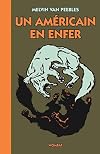
Abe, jeune noir né dans le Sud profond, a 27 ans quand il meurt… la première fois. Il purgeait une peine de prison à vie alors qu’il était innocent. L’entrée au Paradis lui est refusée par le Christ himself et il se retrouve donc en Enfer. Là, il se rend compte que le royaume du Diable fonctionne comme la société… mais à l’envers. Ce sont les Blancs qui y souffrent le plus. Au fil des années, Abe se cultive et sympathise avec Dave, mort après avoir été scalpé par les show more indiens. Tous les 2 décident de revenir sur terre en 1938, à l’aube de la seconde Guerre mondiale… et une nouvelle histoire commence.
Ce court texte (175 p.), qualifié par la critique de conte burlesque, est une délectation. Melvin van Peeble, fondateur du cinéma dit de blaxploitation, ajoute là une nième corde à son arc. show less
Ce court texte (175 p.), qualifié par la critique de conte burlesque, est une délectation. Melvin van Peeble, fondateur du cinéma dit de blaxploitation, ajoute là une nième corde à son arc. show less
May 25, 2021French
You May Also Like
Associated Authors
Statistics
- Works
- 29
- Also by
- 8
- Members
- 178
- Popularity
- #120,888
- Rating
- 4.0
- Reviews
- 4
- ISBNs
- 23
- Languages
- 2