
Nicky Drayden
Author of The Prey of Gods
About the Author
Series
Works by Nicky Drayden
Delightfully Twisted Tales: Wisps, Spells and Faerie Tales (Volume Four) (2011) 25 copies, 2 reviews
Twisted Beyond Recognition: Delightfully Twisted Tales Box Set - Volumes One through Six (2014) 5 copies
Associated Works
Hint Fiction: An Anthology of Stories in 25 Words or Fewer (2010) — Contributor — 147 copies, 26 reviews
Fantastic Stories of the Imagination People of Color Flash Anthology (2017) — Contributor — 6 copies
Tagged
Common Knowledge
- Legal name
- Duson, Nicole Edwards
- Birthdate
- 1977
- Gender
- female
- Education
- University of Texas, Austin (BA|Computer Science, 2000)
- Nationality
- USA
- Birthplace
- Columbus, Ohio, USA
- Places of residence
- Austin, Texas, USA
Houston, Texas, USA - Associated Place (for map)
- Texas, USA
Members
Reviews
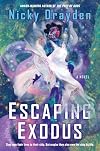
Listen. This book had me at the cover. But then it's about living in octopus-like space beasts with queer women of color? Well, not only did I pre-order, I signed up for the promotional team.
My expectations were so sky-high that maybe it would have been impossible to meet them, but this book was still a fun and absorbing read. Delightfully weird world-building as workers shape wild space beasts into suitable spacecraft from the inside with knives and the creature's own biochemistry. The show more beasts' internal microflora can be classed as helpful, hazards, or sometimes pets. Add class dynamics, secrets, novel (but rigid!) family structures, queer tentacly almost-porn, sort of generation ship dynamics except they keep changing ships, coded braiding patterns, and did I mention the FUCKING WEIRD obscenely biological world-building?
Delightful, even though it wobbled (for me) in a few places. Must prioritize reading Drayden's other work. show less
My expectations were so sky-high that maybe it would have been impossible to meet them, but this book was still a fun and absorbing read. Delightfully weird world-building as workers shape wild space beasts into suitable spacecraft from the inside with knives and the creature's own biochemistry. The show more beasts' internal microflora can be classed as helpful, hazards, or sometimes pets. Add class dynamics, secrets, novel (but rigid!) family structures, queer tentacly almost-porn, sort of generation ship dynamics except they keep changing ships, coded braiding patterns, and did I mention the FUCKING WEIRD obscenely biological world-building?
Delightful, even though it wobbled (for me) in a few places. Must prioritize reading Drayden's other work. show less
I have a hard time summing up how I feel about this book, because I think I love it, but I don't think it's necessarily a good book.
The pacing is nonexistent. The book is constant action, even the downtime scenes are active, and yet so much of the important events happen behind the scenes or between scenes. The story starts as this society has agreed to become a utopia, and it's almost taken for granted. Of course everyone's going to agree to play nice and do the right thing - now let's get show more to the part where they're trying to kill each other!
Despite having somehow succeeded off the page, on the page the characters are constantly failing, making mistakes, alienating allies, stumbling haphazardly into the right solution. Plot threads are set up and then left lying around, and the author doesn't seem to successfully resolve anything.
And yet despite that, this series (duology?) is one of my favorites?? The planet-sized body horror, the 10-person family units, the Lines braided into their hair and grasping hands of the throttle fish?? I dig it. The world and culture Drayden has set up is fascinating. I want to see more exploration of how these people live. Drayden doesn't bother with passively explaining this new reality to the reader, instead throwing us right into the mix and letting the reader figure it out along the way, and it's done so well. I felt lost at times, sure, but the fun kind of lost.
It's hard to describe. I didn't want to put this book down, but every time I had to it was also a relief to take a break. I want more, but maybe a few bite-sized story chunks, instead of a single cluttered, loosely-tied-up novel. show less
The pacing is nonexistent. The book is constant action, even the downtime scenes are active, and yet so much of the important events happen behind the scenes or between scenes. The story starts as this society has agreed to become a utopia, and it's almost taken for granted. Of course everyone's going to agree to play nice and do the right thing - now let's get show more to the part where they're trying to kill each other!
Despite having somehow succeeded off the page, on the page the characters are constantly failing, making mistakes, alienating allies, stumbling haphazardly into the right solution. Plot threads are set up and then left lying around, and the author doesn't seem to successfully resolve anything.
And yet despite that, this series (duology?) is one of my favorites?? The planet-sized body horror, the 10-person family units, the Lines braided into their hair and grasping hands of the throttle fish?? I dig it. The world and culture Drayden has set up is fascinating. I want to see more exploration of how these people live. Drayden doesn't bother with passively explaining this new reality to the reader, instead throwing us right into the mix and letting the reader figure it out along the way, and it's done so well. I felt lost at times, sure, but the fun kind of lost.
It's hard to describe. I didn't want to put this book down, but every time I had to it was also a relief to take a break. I want more, but maybe a few bite-sized story chunks, instead of a single cluttered, loosely-tied-up novel. show less

Daidi’s bells! What a weird, wickedly funny, and ultimately empathetic ride.
(Full disclosure: I received a free e-ARC for review through Netgalley. Trigger warning for slavery, mass murder, rape, and animal abuse. This review contains some general spoilers about the world building - so please skip it if you want to read the book with fresh eyes.)
“She?” I ask, eyes wide. Never in all my dizzy dreams had I thought that our beast was something other than a thing, an animate object, a show more sustainer of life. The idea intrigues me. Scares me some, too.
###
We are careful, taking only what the other offers, knowing that a connection like this is deeper than either of us can fully comprehend. He reads poetry to my spleen. I tell fairy tales to his bile ducts. The inside of his navel is a vast, unexplored desert. He lounges upon the cushion of my lips. His desires rise, and I pretend not to notice, diving right into the pool of tears caught in the corner of his eye. I don’t make a single splash. And while I swim laps, he hikes across the boundless expanse of my molars, and then I’m climbing up his chest hairs.
We’re curious, playful. Adventuresome. The landscapes of our bodies like the foreign world we orbit. Is this how the beasts communicate with one another? A life without secrets? Becoming intimately familiar with everyone you touch?
###
“All throughout our history, we sing of two kinds of women ... those born into power and those who disrupt power. I intend on being the latter.”
###
Excavation, extinction, exodus: these are the phases that define humanity's existence hundreds (thousands?) of years in the future.
Forced to flee a dying earth, humans took to the skies, eking out a rugged existence; searching, in vain, for a habitable planet. Instead, they found the Zenzee: enormous, tentacled animals whose rough hides and bodily secretions allow them to soar through space, as if it was water. Social creatures through and through, they travel in great herds, communicating through touch and flashing lights. Humans being, well, human, we did what we do best: attacked, dominated, conquered, oppressed. Captured, consumed, culled. In short, we made the Zenzee our ships; our homes.
When a new beast is taken, a contingent of workers is sent ahead to make its barely-living zombie carcass habitable (excavation). Its hide is harvested for leather; its flora reshaped into fields; its parasites, harvested for food. Bones are reshaped to provide infrastructure. Every part of the beast is twisted, bent and broken to serve out needs. And what of humanity? We reshape ourselves into parasites.
And we are greedy ones, at that: beasts with a natural lifespan of thousands of years, we deplete within a decade (extinction). Then we simply repeat the cycle again, killing and abandoning one animal after the next (exodus).
So it has been for roughly six hundred and fifty years. But the newest ruler - a young woman named Seske (or Matriling Kaleig; Seske Ashad Nedeema Orshidi Midikoen Ugodon Niosoke Kaleigh if you're feeling especially stuffy) - is poised to change things. She's not the only renegade on the ship, though: also working to effect change is Adalla, Seske's childhood bestie (and soul mate), a lowly beastworker who Seske was forced to shun once she reached marriageable age; Sekse's betrothed, a man named Doka; and Wheytt, one of the few male Accountacy Guards.
I almost passed on Escaping Exodus. As an ethical vegan (read: vegan for animal rights reasons), the thought of plunging into a make believe world where animals are routinely and brutally oppressed in such a way ... let's just say, it's not my idea of relaxing escapism. But I also love interrogating pop culture from an animal rights perspective, so there you go. And, y'all, I am so glad I made the leap. Escaping Exodus is a wildly inventive, wickedly funny, twisty turny science fiction story that, at its core, has a giant bleeding heart (both literally and metaphorically). This book is brimming with compassion and examples of humanity at its best.
Escaping Exodus is told from the alternating perspectives of Seske and Adalla, as each girl hovers on the precipice of adulthood. For Seske, this means taking a wife or husband - the first of eight. You see, in order to keep the ship's population in check, family units are strictly regulated:
"Matris Tendasha made the Rule of Tens that helped to counteract the population explosion after the Great Mending. Ten fingers.” Pai opens his hands and wriggles his long, slender fingers, patinaed with the deepest shade of orange. “Ten persons in the family unit. Three men, six women, and a child shared between them all. Ten for Tendasha.”
Seske's is a matriarchal monarchy, and she's next in line to rule after Matris, one of her six mothers, passes away. As such, her choice of mate is especially important (read: political, calculating, stifling). Yet Seske's position - her very existence - is but a fluke of nature. Seske was the second child conceived in her family unit, but arrived four months early, thus beating Sisterkin by a hair. By all rights, Seske's younger sister ("sister" being a slur in this culture), deemed so unimportant that she's not even granted a name, should be the next ruler. Paradoxically, and by a mere technicality, she should have been killed upon birth, and fed back to the ship. But Matris's weakness may prove to be Seske's downfall, as Sisterkin plots against her in the background (I said this was a twisty turner thriller, did I not?).
Meanwhile, a natural talent for sensing the rhythms of the beast's heart scores Adalla a coveted promotion to caring for the creature's heart. But life comes at you fast, as Adalla wryly observes, and her grief at losing Seske quickly spirals out of control, eventually landing her in the slums of the boneworkers. Vapors aren't the only thing whispering through the working class; before she can say "Daidi’s bells!," Adalla is fomenting her own kind of revolution.
What's interesting is how each woman arrives at the realization that their society is corrupt, built on the broken backs and brutalized bodies of others, rotting from within. Early in the story, when she's off getting into mischief as plucky heroines are wont to do, Seske accidentally stumbles upon the womb of "their beast" - and it is not empty. The beast that Matris has chosen for them is pregnant, and the fetus is draining precious resources, further taxing the Zenzee's already injured body ... and hastening another exodus. The workers are trying in vain to kill the fetus. And this is when the young Zenzee reaches out to Seske for help.
Through her interactions with the fetus - and, later, an adult Zenzee - Seske comes to accept that which she already knows, if only subconsciously: the Zenzee are sentient animals. They are capable of feeling pain and suffering; of experiencing joy and happiness. They form bonds and love their children, their mates, their friends. And they are forced to sit back and watch as we capture and colonize their loved ones. Because of the intimate way in which they communicate, they feel their loved ones' pain as acutely as if it was their own. Their lives predate human existence; yet, as we continue to deplete their herd, they likely will not survive humanity. What gives us the right to put our survival above their own?
Adalla, for her part, comes to epiphany along two parallel roads. Caring for her heart, cutting away murmurs, learning to anticipate an arrhythmic beat: Adalla forms an intimate connection with the beast, which eventually results in her humanizing their would-be vessel. The beast transitions from an "it" to a "her"; a something to a someone. From there, it's just a short hop to accepting that the animal has her own thoughts, feelings, and desires - not the least of which is the will to live.
The second road reveals yet another crack in the foundation of Adalla's society. The grisette - colloquially known as a "bucket waif," for the mindless, repetitive job she performs - assigned to Adalla looks achingly familiar. After some digging, Adalla discovers an especially nasty open secret: in order to excavate a beast as quickly as possible, slave laborers are grown in vats - and then destroyed when their services are no longer needed. (Dissolved into fertilizer for the ship, in an especially grisly scene.) Skilled beastworkers and their husbands are paid a handsome sum to "donate" their eggs and sperm. In a society where siblings are unheard of, Adalla's "brood sister" is destined to become plant food.
So while the world Drayden imagines here is rife with suffering and oppression, there is hope: in Seske, in Adalla, and in the world they want to rebuild on the ashes of the old one. But complications about, as they always do, and Escaping Exodus has some pretty jarring twists late in the game. I'm not entirely sure how I feel about the ending; we certainly didn't land where I expected. But it's an ending that's replete with hope, trust, and empathy, and that's good enough for me.
I also thought it a bold choice to make Seske's society a matriarchy. It's not unusual to think (hope?) that a society ruled by women would be a kinder, more peaceful and equitable one. Yet interrogate this idea further and you'll see that it rests on some gender essentialist bullshit. As a whole, women are not naturally more compassionate or nurturing than men; rather, these are the traits that society fosters in women. Women can be just as brutal, selfish, and hateful as men. Why wouldn't Seske's culture be marked by stark class differences, poverty, inequality, slavery, sexism, and other forms of oppression, when women are in charge ... yet still place a premium on stereotypically masculine traits?
Even more interesting, imho, is how Seske's ship came to adopt a matriarchy. As we discover at the end of the book, hers is but one of seven surviving ships from Earth, each having evolved along separate lines, developing its own unique culture, rule of governance, etc. How did women seize control of her ship? And why are the citizens predominantly (or exclusively) Black? How did b influence a, if at all? I am dying for a prequel!
Social justice and animal friendly plot lines aside, Escaping Exodus is a just a damn good book. The world building is simply breathtaking; crafting a sky-faring creature into a ship is hella inspired (if heartbreaking), and the descriptions of the ship's interior are fascinating. Seske's encounters with the Zenzee - arguably more humane than us - are marvelous. These are some of the most beautiful and bizarre passages I've ever encountered. Really mind-bending stuff. Think: Octavia E. Butler.
And Drayden's sense of humor? Truly gross-out wicked. I mean, talk about your body horror! Between Seske tricking her new groom Doka into deflowering a gel puppet, and Seske expelling a Zenzee fetus from her vag, there are plenty of WTF moments that will either make you hysterical-laugh, or else chuck the book across the room in disgust. It's not for everyone, okay.
http://www.easyvegan.info/2019/11/05/escaping-exodus-by-nicky-drayden/ show less
(Full disclosure: I received a free e-ARC for review through Netgalley. Trigger warning for slavery, mass murder, rape, and animal abuse. This review contains some general spoilers about the world building - so please skip it if you want to read the book with fresh eyes.)
“She?” I ask, eyes wide. Never in all my dizzy dreams had I thought that our beast was something other than a thing, an animate object, a show more sustainer of life. The idea intrigues me. Scares me some, too.
###
We are careful, taking only what the other offers, knowing that a connection like this is deeper than either of us can fully comprehend. He reads poetry to my spleen. I tell fairy tales to his bile ducts. The inside of his navel is a vast, unexplored desert. He lounges upon the cushion of my lips. His desires rise, and I pretend not to notice, diving right into the pool of tears caught in the corner of his eye. I don’t make a single splash. And while I swim laps, he hikes across the boundless expanse of my molars, and then I’m climbing up his chest hairs.
We’re curious, playful. Adventuresome. The landscapes of our bodies like the foreign world we orbit. Is this how the beasts communicate with one another? A life without secrets? Becoming intimately familiar with everyone you touch?
###
“All throughout our history, we sing of two kinds of women ... those born into power and those who disrupt power. I intend on being the latter.”
###
Excavation, extinction, exodus: these are the phases that define humanity's existence hundreds (thousands?) of years in the future.
Forced to flee a dying earth, humans took to the skies, eking out a rugged existence; searching, in vain, for a habitable planet. Instead, they found the Zenzee: enormous, tentacled animals whose rough hides and bodily secretions allow them to soar through space, as if it was water. Social creatures through and through, they travel in great herds, communicating through touch and flashing lights. Humans being, well, human, we did what we do best: attacked, dominated, conquered, oppressed. Captured, consumed, culled. In short, we made the Zenzee our ships; our homes.
When a new beast is taken, a contingent of workers is sent ahead to make its barely-living zombie carcass habitable (excavation). Its hide is harvested for leather; its flora reshaped into fields; its parasites, harvested for food. Bones are reshaped to provide infrastructure. Every part of the beast is twisted, bent and broken to serve out needs. And what of humanity? We reshape ourselves into parasites.
And we are greedy ones, at that: beasts with a natural lifespan of thousands of years, we deplete within a decade (extinction). Then we simply repeat the cycle again, killing and abandoning one animal after the next (exodus).
So it has been for roughly six hundred and fifty years. But the newest ruler - a young woman named Seske (or Matriling Kaleig; Seske Ashad Nedeema Orshidi Midikoen Ugodon Niosoke Kaleigh if you're feeling especially stuffy) - is poised to change things. She's not the only renegade on the ship, though: also working to effect change is Adalla, Seske's childhood bestie (and soul mate), a lowly beastworker who Seske was forced to shun once she reached marriageable age; Sekse's betrothed, a man named Doka; and Wheytt, one of the few male Accountacy Guards.
I almost passed on Escaping Exodus. As an ethical vegan (read: vegan for animal rights reasons), the thought of plunging into a make believe world where animals are routinely and brutally oppressed in such a way ... let's just say, it's not my idea of relaxing escapism. But I also love interrogating pop culture from an animal rights perspective, so there you go. And, y'all, I am so glad I made the leap. Escaping Exodus is a wildly inventive, wickedly funny, twisty turny science fiction story that, at its core, has a giant bleeding heart (both literally and metaphorically). This book is brimming with compassion and examples of humanity at its best.
Escaping Exodus is told from the alternating perspectives of Seske and Adalla, as each girl hovers on the precipice of adulthood. For Seske, this means taking a wife or husband - the first of eight. You see, in order to keep the ship's population in check, family units are strictly regulated:
"Matris Tendasha made the Rule of Tens that helped to counteract the population explosion after the Great Mending. Ten fingers.” Pai opens his hands and wriggles his long, slender fingers, patinaed with the deepest shade of orange. “Ten persons in the family unit. Three men, six women, and a child shared between them all. Ten for Tendasha.”
Seske's is a matriarchal monarchy, and she's next in line to rule after Matris, one of her six mothers, passes away. As such, her choice of mate is especially important (read: political, calculating, stifling). Yet Seske's position - her very existence - is but a fluke of nature. Seske was the second child conceived in her family unit, but arrived four months early, thus beating Sisterkin by a hair. By all rights, Seske's younger sister ("sister" being a slur in this culture), deemed so unimportant that she's not even granted a name, should be the next ruler. Paradoxically, and by a mere technicality, she should have been killed upon birth, and fed back to the ship. But Matris's weakness may prove to be Seske's downfall, as Sisterkin plots against her in the background (I said this was a twisty turner thriller, did I not?).
Meanwhile, a natural talent for sensing the rhythms of the beast's heart scores Adalla a coveted promotion to caring for the creature's heart. But life comes at you fast, as Adalla wryly observes, and her grief at losing Seske quickly spirals out of control, eventually landing her in the slums of the boneworkers. Vapors aren't the only thing whispering through the working class; before she can say "Daidi’s bells!," Adalla is fomenting her own kind of revolution.
What's interesting is how each woman arrives at the realization that their society is corrupt, built on the broken backs and brutalized bodies of others, rotting from within. Early in the story, when she's off getting into mischief as plucky heroines are wont to do, Seske accidentally stumbles upon the womb of "their beast" - and it is not empty. The beast that Matris has chosen for them is pregnant, and the fetus is draining precious resources, further taxing the Zenzee's already injured body ... and hastening another exodus. The workers are trying in vain to kill the fetus. And this is when the young Zenzee reaches out to Seske for help.
Through her interactions with the fetus - and, later, an adult Zenzee - Seske comes to accept that which she already knows, if only subconsciously: the Zenzee are sentient animals. They are capable of feeling pain and suffering; of experiencing joy and happiness. They form bonds and love their children, their mates, their friends. And they are forced to sit back and watch as we capture and colonize their loved ones. Because of the intimate way in which they communicate, they feel their loved ones' pain as acutely as if it was their own. Their lives predate human existence; yet, as we continue to deplete their herd, they likely will not survive humanity. What gives us the right to put our survival above their own?
Adalla, for her part, comes to epiphany along two parallel roads. Caring for her heart, cutting away murmurs, learning to anticipate an arrhythmic beat: Adalla forms an intimate connection with the beast, which eventually results in her humanizing their would-be vessel. The beast transitions from an "it" to a "her"; a something to a someone. From there, it's just a short hop to accepting that the animal has her own thoughts, feelings, and desires - not the least of which is the will to live.
The second road reveals yet another crack in the foundation of Adalla's society. The grisette - colloquially known as a "bucket waif," for the mindless, repetitive job she performs - assigned to Adalla looks achingly familiar. After some digging, Adalla discovers an especially nasty open secret: in order to excavate a beast as quickly as possible, slave laborers are grown in vats - and then destroyed when their services are no longer needed. (Dissolved into fertilizer for the ship, in an especially grisly scene.) Skilled beastworkers and their husbands are paid a handsome sum to "donate" their eggs and sperm. In a society where siblings are unheard of, Adalla's "brood sister" is destined to become plant food.
So while the world Drayden imagines here is rife with suffering and oppression, there is hope: in Seske, in Adalla, and in the world they want to rebuild on the ashes of the old one. But complications about, as they always do, and Escaping Exodus has some pretty jarring twists late in the game. I'm not entirely sure how I feel about the ending; we certainly didn't land where I expected. But it's an ending that's replete with hope, trust, and empathy, and that's good enough for me.
I also thought it a bold choice to make Seske's society a matriarchy. It's not unusual to think (hope?) that a society ruled by women would be a kinder, more peaceful and equitable one. Yet interrogate this idea further and you'll see that it rests on some gender essentialist bullshit. As a whole, women are not naturally more compassionate or nurturing than men; rather, these are the traits that society fosters in women. Women can be just as brutal, selfish, and hateful as men. Why wouldn't Seske's culture be marked by stark class differences, poverty, inequality, slavery, sexism, and other forms of oppression, when women are in charge ... yet still place a premium on stereotypically masculine traits?
Even more interesting, imho, is how Seske's ship came to adopt a matriarchy. As we discover at the end of the book, hers is but one of seven surviving ships from Earth, each having evolved along separate lines, developing its own unique culture, rule of governance, etc. How did women seize control of her ship? And why are the citizens predominantly (or exclusively) Black? How did b influence a, if at all? I am dying for a prequel!
Social justice and animal friendly plot lines aside, Escaping Exodus is a just a damn good book. The world building is simply breathtaking; crafting a sky-faring creature into a ship is hella inspired (if heartbreaking), and the descriptions of the ship's interior are fascinating. Seske's encounters with the Zenzee - arguably more humane than us - are marvelous. These are some of the most beautiful and bizarre passages I've ever encountered. Really mind-bending stuff. Think: Octavia E. Butler.
And Drayden's sense of humor? Truly gross-out wicked. I mean, talk about your body horror! Between Seske tricking her new groom Doka into deflowering a gel puppet, and Seske expelling a Zenzee fetus from her vag, there are plenty of WTF moments that will either make you hysterical-laugh, or else chuck the book across the room in disgust. It's not for everyone, okay.
http://www.easyvegan.info/2019/11/05/escaping-exodus-by-nicky-drayden/ show less

I loved this so freaking much. This is the utterly weird, genre-bending, diverse, mind-blowing story that I want more of. In a future South Africa, there's an old has-been demigoddess hellbent on reclaiming her former glory with lots of murder and mayhem. Standing in her way? A girl with some truly terrible power, a pop diva, a politician who would rather put on a dress and sing on stage than run for premiere, a queer teen, and a robot.
I read half of this in print, and then bought the show more audiobook to finish it on a roadtrip because I needed to know what happens next. This was amazing.
I'm a bit torn if I want a sequel or not. On the one hand, the ending did leave some open-ended bits that I would love to see some resolution to. On the other hand, the book seemed perfect. And that ending was wild. show less
I read half of this in print, and then bought the show more audiobook to finish it on a roadtrip because I needed to know what happens next. This was amazing.
I'm a bit torn if I want a sequel or not. On the one hand, the ending did leave some open-ended bits that I would love to see some resolution to. On the other hand, the book seemed perfect. And that ending was wild. show less
Lists
Generation Ship (1)
BookTok Adult (1)
Awards


You May Also Like


Associated Authors
Statistics
- Works
- 22
- Also by
- 12
- Members
- 1,290
- Popularity
- #19,887
- Rating
- 3.6
- Reviews
- 49
- ISBNs
- 45
- Languages
- 3
- Favorited
- 2