
Clare Oliver
Author of Weather (100 Facts)
About the Author
Series
Works by Clare Oliver
Which Animals Have Scaly Skin? and other questions about types of animals (Why? Why? Why?) (2001) 28 copies
I Didn't Know That Mountain Gush Lava And Ash and Other Amazing Facts About Volcanoes (1998) 19 copies
I Didn't Know That Quakes Split The Ground Open and Other Amazing Facts About Earthquakes (1999) 14 copies
I Didn't Know That Some Boats Have Wings and Other Amazing Facts About Ships and Submarines (1998) 8 copies
Dinosaurs 1 copy
100 facts on Ocean 1 copy
Século XX - Arte - 1980-2000 1 copy
Tengeri rémek 1 copy
Tagged
Common Knowledge
- Gender
- female
Members
Reviews
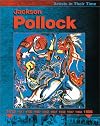
Jackson Pollack (Artists in Their Time) provided a quick biography of one of the most famous American artists. The book begins with Pollack's early life, before his career as an artist, in Cody, Colorado and continues until his demise in the 1950s. I learned a great deal about both the artist and the man. The biography details Pollack's family and long romance with wife Lenore Krasner as well as his artistic phases. Additionally, Jackson Pollack provides historical references of the time show more (such as reviewing the Great Depression).
I enjoyed learning more about Jackson Pollack with this book. It was easy to read and understand and funny at times, too. A timeline throughout the biography helped improve my understanding of the artist and the list of art galleries to see Pollack's work gives the reader an opportunity to continue learning. show less
I enjoyed learning more about Jackson Pollack with this book. It was easy to read and understand and funny at times, too. A timeline throughout the biography helped improve my understanding of the artist and the list of art galleries to see Pollack's work gives the reader an opportunity to continue learning. show less
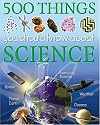
This is a wonderful book arranged by Sandy Creek and Miles Kelly Publishing in 2009 that gives 500 interesting and information facts about the world of science. The beginning of this book gives 100 facts about the many inventors of the world. It begins with the inventors of the Stone Ages bringing in inventions like stone tools. The next inventors were those of fire, the Africans were the first to use fire over 250,000 years ago and fire eventually spread into Europe and Asia. Wheels were show more the next invention in the book, Scandinavian inventors were the first to use the wheel over 5,500 year ago. Harvesting and war tools are the next inventions covered, followed closely by boats and clay. In Italy glasses were created. The Italian developed the spectacle in the 14th century by making their own glass lenses to look through. The spectacles helped people read and the glasses were born. After the development of the glasses a Dutch inventor, Zacharias Janssen of Holland developed the first microscope, and in 1908 Hans Lippershey, a Dutch man, invented the first telescope. The book continues on to cover many informational facts about the inventors of the world. However, this book is not just about the inventors of the world is covers an entire section on space and the many marvels of space and informational facts that everyone should know. The Human Body is the next major section of this book. It covers another group of 100 facts all about the human body, keeping it healthy, anatomy, and the tools hospitals use to make people healthy again. Weather is covered in this book as well, talking about the electricity and what causes weather patterns and clouds. The final section is about general science and all the marvels and inventions of general science education.
This is an excellent resource for any teacher to include in his or her classroom. it is full of useful and accurate information that can supplement any science lesson. Here I talked about the many inventors of the world, but this book covers so much more than just the inventors. Any invention I could think of is covered in this book with factual information that would supplement any research done for teaching a lesson. This book is so beneficial because not only does it cover science lessons but it can be used to supplement history lessons, talking about the many different cultures that exist in the world and the history behind the wars and tools created. It can also be used to accompany some math lessons dealing with measurements. This book is so versatile it should be in every classroom that teaches early education students. show less
This is an excellent resource for any teacher to include in his or her classroom. it is full of useful and accurate information that can supplement any science lesson. Here I talked about the many inventors of the world, but this book covers so much more than just the inventors. Any invention I could think of is covered in this book with factual information that would supplement any research done for teaching a lesson. This book is so beneficial because not only does it cover science lessons but it can be used to supplement history lessons, talking about the many different cultures that exist in the world and the history behind the wars and tools created. It can also be used to accompany some math lessons dealing with measurements. This book is so versatile it should be in every classroom that teaches early education students. show less
Did you know - Planes are quite new inventions, and the age of flight is hardly more than one century old? The human body is made of lots of body parts, or systems? In science, atoms are the tiniest parts of any substance? Robot explorers help us learn more about space by visiting other planets? You'll see inside your body, discover ingenious inventions, travel the Solar System, and unravel the mysteries of science among these 500 Things You Should Know about Science.

Awards

You May Also Like


Associated Authors
Statistics
- Works
- 81
- Members
- 1,711
- Popularity
- #15,003
- Rating
- 3.0
- Reviews
- 4
- ISBNs
- 193
- Languages
- 9