
Lori Mortensen
Author of Cindy Moo
About the Author
Series
Works by Lori Mortensen
Voices of the Civil Rights Movement: A Primary Source Exploration of the Struggle for Racial Equality (Fact Finders: We Shall Overcome) (2015) 6 copies
Thomas Jefferson: A Founding Father of the United States of America (Biographies) (2008) — Author — 5 copies
A grande escavação de Léo 2 copies
A corrida de Samuca 1 copy
Kika visita a fazenda 1 copy
Tagged
Common Knowledge
- Gender
- female
Members
Reviews

Edward Gorey, born in Chicago in 1925, and who died in 2000, was an author and illustrator known for his “strange combination of whimsy and gruesomeness,” and “with a hatful of nonsense thrown in.” His characteristic pen-and-ink drawings often depicted somewhat creepy Victorian and Edwardian settings.
As this biography for kids recounts, Edward wrote stories with curious titles like “The Wuggly Ump, and “The Galoshes of Remorse” and an alphabet book that began:
“A is for Amy show more who fell down the stairs
B is for Basil assaulted by bears
C is for Clara who wasted away
D is for Desmond thrown out of a sleigh….”
The characters in his books, Mortensen tells us, had silly names like Octavia Prong, Williboo Lake, Waffle, Skrump, Humglum, and Crunk.
What child schooled in right and wrong and propriety could resist such blatant and daring departures from convention?
Mortensen employs poetic text with suggestions of a Victorian tone to tell readers about Gorey, who was, as she writes, “a dandy boy who looked out his window, drew sausage-shaped pictures of city-bound trains, and taught himself to read.” He went to Harvard, but, Mortensen asks us to consider,“Did he know what he wanted to do with his life? Alas and alack, he did not.” Until one day, “Voilà!” He decided to write his own books. He used pen and ink to illustrate them, drawing “seas of sketchy black lines, as if the stories were set in a time and place long ago.” She observes:
“To Edward,
the world was an uncertain place
where anything might happen.
And in Edward’s stories, it did!
Anything less would be boring,
And who wanted that?
Not Edward!”
He didn’t explain what his stories meant; he thought readers should use their own imaginations. It would be “the height of folly,” he said, to take his work seriously: “It was just Edward being Edward, with a hatful of nonsense thrown in.”
An Author’s Note further explains that Gorey was a child prodigy, drawing by age one and a half and reading (he taught himself) by age three. She also recounts that Gorey published over one hundred books and illustrated over sixty books by other authors, including Charles Dickens and Lewis Carroll. She points out that “Gorey’s sweet and sinister style continues to have a profound effect,” offering as examples Lemony Snicket’s A Series of Unfortunate Events and Tim Burton’s The Nightmare Before Christmas, inter alia.
Back matter includes further sources.
Illustrator Chloe Bristol captures Gorey’s style while avoiding the look of some of his possibly frightening work, but kids who are up for it can be introduced to Gorey’s art directly by using a Google Images search.
Evaluation: This tribute to someone who insisted on thinking outside of the box and drawing outside of the lines will no doubt delight many children, and introduce them to an artist well worth knowing. show less
As this biography for kids recounts, Edward wrote stories with curious titles like “The Wuggly Ump, and “The Galoshes of Remorse” and an alphabet book that began:
“A is for Amy show more who fell down the stairs
B is for Basil assaulted by bears
C is for Clara who wasted away
D is for Desmond thrown out of a sleigh….”
The characters in his books, Mortensen tells us, had silly names like Octavia Prong, Williboo Lake, Waffle, Skrump, Humglum, and Crunk.
What child schooled in right and wrong and propriety could resist such blatant and daring departures from convention?
Mortensen employs poetic text with suggestions of a Victorian tone to tell readers about Gorey, who was, as she writes, “a dandy boy who looked out his window, drew sausage-shaped pictures of city-bound trains, and taught himself to read.” He went to Harvard, but, Mortensen asks us to consider,“Did he know what he wanted to do with his life? Alas and alack, he did not.” Until one day, “Voilà!” He decided to write his own books. He used pen and ink to illustrate them, drawing “seas of sketchy black lines, as if the stories were set in a time and place long ago.” She observes:
“To Edward,
the world was an uncertain place
where anything might happen.
And in Edward’s stories, it did!
Anything less would be boring,
And who wanted that?
Not Edward!”
He didn’t explain what his stories meant; he thought readers should use their own imaginations. It would be “the height of folly,” he said, to take his work seriously: “It was just Edward being Edward, with a hatful of nonsense thrown in.”
An Author’s Note further explains that Gorey was a child prodigy, drawing by age one and a half and reading (he taught himself) by age three. She also recounts that Gorey published over one hundred books and illustrated over sixty books by other authors, including Charles Dickens and Lewis Carroll. She points out that “Gorey’s sweet and sinister style continues to have a profound effect,” offering as examples Lemony Snicket’s A Series of Unfortunate Events and Tim Burton’s The Nightmare Before Christmas, inter alia.
Back matter includes further sources.
Illustrator Chloe Bristol captures Gorey’s style while avoiding the look of some of his possibly frightening work, but kids who are up for it can be introduced to Gorey’s art directly by using a Google Images search.
Evaluation: This tribute to someone who insisted on thinking outside of the box and drawing outside of the lines will no doubt delight many children, and introduce them to an artist well worth knowing. show less
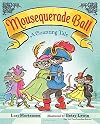
Mice get ready for a very fancy party, but everyone goes dashing for cover when a very unexpected guest crashes! Can the Mousequerade Ball withstand a cat's arrival??
This was a nice counting book, with more of a storyline than many others. It was a bit unusual in going for a masquerade theme, but it is an enriching read with great vocabulary words for young readers like "puff," "whisk," "grand," and "splendid." I could see this being a good readaloud for preschool or younger elementary show more classrooms. The illustrations complement the text nicely, and I love that the cat is just there to dance, providing a subtle message about accepting others and not assuming the worst in everyone. show less
This was a nice counting book, with more of a storyline than many others. It was a bit unusual in going for a masquerade theme, but it is an enriching read with great vocabulary words for young readers like "puff," "whisk," "grand," and "splendid." I could see this being a good readaloud for preschool or younger elementary show more classrooms. The illustrations complement the text nicely, and I love that the cat is just there to dance, providing a subtle message about accepting others and not assuming the worst in everyone. show less
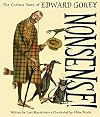
A picture book biography might have been a hard sell, but the author and illustrator pull it off beautifully. Gorey's life is presented chronologically, from his birth in Chicago in 1925, to his love of reading - and how reading Alice in Wonderland and Dracula back-to-back inspired a lifelong aesthetic ("A strange combination that captured his imagination like a penguin sipping tea on a runaway train").
"Quaint and curious, dark and disturbing," Edward was drafted into the army (he worked as show more a clerk), then went to Harvard, moved to New York, and worked in the art department at Doubleday. At last, he began to make the kind of books he wanted to write, and when no one would publish them, he launched his own company, Fantod Press.
(My 4.9-yo's favorite page is the one with all of Edward Gorey's anagrams, each with a different head-and-shoulders picture above it: Dreary Wodge, Edgar E. Wordy, Odgreg Weary, etc.)
Back matter includes an Author's Note and sources.
Illustrations were done in pencil and painted digitally; they hew closely to Gorey's style, softened slightly with color, and instead of a white background, it's a soft flecked cream, evoking handmade paper. show less
"Quaint and curious, dark and disturbing," Edward was drafted into the army (he worked as show more a clerk), then went to Harvard, moved to New York, and worked in the art department at Doubleday. At last, he began to make the kind of books he wanted to write, and when no one would publish them, he launched his own company, Fantod Press.
(My 4.9-yo's favorite page is the one with all of Edward Gorey's anagrams, each with a different head-and-shoulders picture above it: Dreary Wodge, Edgar E. Wordy, Odgreg Weary, etc.)
Back matter includes an Author's Note and sources.
Illustrations were done in pencil and painted digitally; they hew closely to Gorey's style, softened slightly with color, and instead of a white background, it's a soft flecked cream, evoking handmade paper. show less
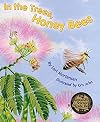
Today I finished a book called “In the Trees, Honey Bee” by Lori Mortensen. I liked this book for two reasons. First, the writing was very engaging. The author did a wonderful job of using rhyming words to transition to the factual information she wanted to share with the audience. For example, on page 4 it says “sisters fly through the sky” which then helps the audience prepare for the factual information the author wants to share next. On page 5 the author states “soon thousands show more of honey bees leave the hive to find the blossoms. These honey bees are called ‘worker’ bees. They are all sister.” The rhyming words are used by the author to connect the information with a fun way of telling a story about honey bees. Second, I liked the illustrations depicted throughout the story. All of the vibrant colors and the amount of detail put into the pictures really helps the reader to apply a visual to the information being shared. On pages 12 and 13, the author shares with the reader that nurse bees take care of eggs that the queen bee lays. The illustrations show the reader what the eggs look like and how the nurse bees feed the eggs. For a young child, these pictures can help to clarify the text. Lastly, I believe the big idea of this story is to share the important role the honey bee plays in our environment. show less
Lists
Awards


You May Also Like


Associated Authors
Statistics
- Works
- 66
- Members
- 1,643
- Popularity
- #15,627
- Rating
- 4.0
- Reviews
- 45
- ISBNs
- 227
- Languages
- 3