
Keith Carabine
Author of Around the World in Eighty Days / Five Weeks in a Balloon
About the Author
Works by Keith Carabine
Associated Works
The Adventures and Memoirs of Sherlock Holmes (1975) — Contributor, some editions — 2,048 copies, 12 reviews
Three Sea Stories: Typhoon, Falk, and the Shadow-Line (1984) — Introduction, some editions — 165 copies, 1 review
Tagged
Common Knowledge
- Gender
- male
- Education
- Yale University (PhD, American Studies)
- Occupations
- professor
editor - Organizations
- University of Kent
Joseph Conrad Society, Great Britain - Short biography
- [from Massolit website]
Keith Carabine did a Ph.D in American Studies at Yale, 1964-67 and has been at the University of Kent ever since, teaching English and American Literature (1967-2005), and is now a Senior Honorary Research Fellow. He has been a Committee member of the Joseph Conrad Society (G.B.) since 1986 and was the Chair-person from 1996-2015. He has been the General Editor of Wordsworth Classics since 1994, and has edited several volumes, including The Selected Stories of Joseph Conrad.
Members
Reviews
Around the World in Eighty Days: 5 Weeks in a Balloon (Wordsworth Classics) (Wadsworth Collection) by Jules Verne
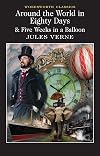
Phileas Fogg must be the most confident and calm man in literature. So many times he fell behind schedule but he did not panick at all. You cheer for him when he realised he had miscalculated the days and managed to dash to the gathering point in time to prove that he got back from traveling around the world in 80 days.
Around the World in Eighty Days: 5 Weeks in a Balloon (Wordsworth Classics) (Wordsworth Classics) by Jules Verne
This volume contains both “Around the World in Eighty Days” and “Five Weeks in a Balloon,” which I did not realize until after I had bought it. Of the two novels, I liked the former better. Both books contained adventure and humor, but I think some of the things I found funny in “Five Weeks in a Balloon” were not meant to be funny. At the start of the story, Dr. Fergusson’s buddy Kennedy tries to talk his friend out of the crazy trip, and Fergusson basically shuts him down, show more saying that he has thought of all possible obstacles and already overcome them with science. Then, about halfway through, things start to go downhill and the plot twists quickly become ridiculous as unforeseen obstacles pop up with a vengeance. In “Around the World in Eighty Days,” I guessed the last plot twist early on, but that was okay. I enjoyed the characters in that book better, too. Fogg’s stoicism was much more intriguing than Fergusson’s sentimentality. Also, the rampant racism in “Five Weeks in a Balloon” greatly offended my modern sensibilities. In “Around the World in Eighty Days,” the prejudices of the time were quite apparent, but you could forgive them because of Fogg’s kind treatment of Aouda. In “Five Weeks in a Balloon,” there was no such redeeming factor, and the racism was much more pervasive and persistent. Overall, I found “Around the World in Eighty Days” to be a much more enjoyable read than and “Five Weeks in a Balloon.” show less

Like most collections of short stories, a bit of a maixed bag, though the positives predominate. The shorter stories (10-15 pagers) are best, esp. A Madman's Manuscript, The Ghost in the Bride's Chamber, Trial for Murder, and The Signalman, all of which are very atmospheric and quite creepy.
A Christmas Carol remains a timeless classic, and deserves to be the most famous ghost story in Western literature. The other longer ones I found disappointing:
Haunted Man and Ghost's Bargain, a long one show more weighing in at 77 pages, I just found tedious and gave up on quite quickly. The Haunted House also was dull and lacking in atmosphere. show less
A Christmas Carol remains a timeless classic, and deserves to be the most famous ghost story in Western literature. The other longer ones I found disappointing:
Haunted Man and Ghost's Bargain, a long one show more weighing in at 77 pages, I just found tedious and gave up on quite quickly. The Haunted House also was dull and lacking in atmosphere. show less
I have always loved classic children's literature and have read much of it. This particular book is one of my favorites and I think it is equally good when you it as an adult or as a child. The characters are engaging and realistic and the story draws you in.
Lists
You May Also Like
Associated Authors
Statistics
- Works
- 8
- Also by
- 14
- Members
- 890
- Popularity
- #28,790
- Rating
- 4.2
- Reviews
- 10
- ISBNs
- 6