
Diane Tullson
Author of Lockdown
Works by Diane Tullson
Tagged
Common Knowledge
- Gender
- female
Members
Reviews
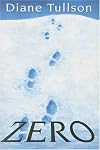
Talented teenage Kas (pronounced Kaz), a budding visual artist, gets the opportunity of a lifetime (due to another student’s misfortune—leukaemia): she is given a much coveted place at an elite arts high school in the small town of Whitchurch, a few hours north of her family’s home. Boarding with a professional couple, the Greens, whom the reader never sees and whom Tullson never shows her protagonist interacting with, Kas soon falls in love with Jacob, a music student at the school show more who also rents a room in the same house.
From the start, Tullson presents Kas as obsessively preoccupied with her body. She’s perpetually assessing herself, particularly her buttocks, in mirrors and other reflective surfaces. The teenager also has a punishing exercise schedule and pushes herself to run in snowy weather and below-zero temperatures.
Kas quickly forms a friendship with Marin, an attractive self-absorbed performing arts student with a stereotypically overbearing stage mother who monitors the girl’s diet, among other things. Initially at least, the reader is led to believe that Marin is anorexic, as she appears to live on Diet Pepsi and smokes more than she eats. On day one, she warns her new friend off the lard-laden school cafeteria food and one morning chides Kas for having eaten multiple slices of cinnamon toast with Jacob the previous evening.
Kas’s spiral into full-blown anorexia and bulimia is somewhat credibly presented. Tullson shows her protagonist to be rigid, perfectionistic, and highly vulnerable to criticism. There’s some rather sophisticated writing for a young adult audience about Kas’s divided self and her desire to disappear—the Zero (as in Size Zero) of the title—which I can’t imagine target readers actually comprehending. Furthermore, the plot takes what seemed to me to be a bizarre and implausible turn when Kas, eventually emaciated and starving, takes a train out of Whitchurch into the city in order to eat unobserved by those who know her. She ends up having a sexual encounter in a car with a very slimy guy. I had no idea why this strange scene was thrown into the book. Was Kas trying to obtain money to purchase a meal? It made no sense. The girl, after all, has been given a bank debit card by her father.
Another weird series of events revolves around Kas stealing a canister of cremated remains from the local animal shelter where Jacob works. She subsequently “artistically” smears ashes on a sketch she’s working on and even applies ashes to her own face. Evidently, this is a sign of how severely psychiatrically disturbed she is. I found the inclusion of this segment mystifying and macabre.
After this, things really go south for the protagonist: her relationship with Jacob roars to a melodramatic end and there are multiple scenes of Kas fainting, gorging on food, forcing herself to vomit, using laxatives, and more. Realistic this may be, but it sure isn’t pleasant reading.
The novel’s conclusion is predictable. Kas’s parents retrieve her and she’s put into treatment. A few weeks later, when the girl revisits Whitchurch for Marin’s performance in the school production of Macbeth, friends notice that she is still losing weight and that she continues to shun food. Both teachers and students express shame at not having recognized the girl’s struggle earlier.
There’s always a danger that books such as this will appeal only to readers with tendencies to anorexia and bulimia, and—more than that—just add fuel to the fire simmering within young people with incipient eating disorders.
Overall, I wasn’t impressed with Tullson’s novel, which I generally found over-the-top. I acknowledge that its author has included an informative afterword about eating disorders, but that’s certainly not enough for me to recommend the novel. show less
From the start, Tullson presents Kas as obsessively preoccupied with her body. She’s perpetually assessing herself, particularly her buttocks, in mirrors and other reflective surfaces. The teenager also has a punishing exercise schedule and pushes herself to run in snowy weather and below-zero temperatures.
Kas quickly forms a friendship with Marin, an attractive self-absorbed performing arts student with a stereotypically overbearing stage mother who monitors the girl’s diet, among other things. Initially at least, the reader is led to believe that Marin is anorexic, as she appears to live on Diet Pepsi and smokes more than she eats. On day one, she warns her new friend off the lard-laden school cafeteria food and one morning chides Kas for having eaten multiple slices of cinnamon toast with Jacob the previous evening.
Kas’s spiral into full-blown anorexia and bulimia is somewhat credibly presented. Tullson shows her protagonist to be rigid, perfectionistic, and highly vulnerable to criticism. There’s some rather sophisticated writing for a young adult audience about Kas’s divided self and her desire to disappear—the Zero (as in Size Zero) of the title—which I can’t imagine target readers actually comprehending. Furthermore, the plot takes what seemed to me to be a bizarre and implausible turn when Kas, eventually emaciated and starving, takes a train out of Whitchurch into the city in order to eat unobserved by those who know her. She ends up having a sexual encounter in a car with a very slimy guy. I had no idea why this strange scene was thrown into the book. Was Kas trying to obtain money to purchase a meal? It made no sense. The girl, after all, has been given a bank debit card by her father.
Another weird series of events revolves around Kas stealing a canister of cremated remains from the local animal shelter where Jacob works. She subsequently “artistically” smears ashes on a sketch she’s working on and even applies ashes to her own face. Evidently, this is a sign of how severely psychiatrically disturbed she is. I found the inclusion of this segment mystifying and macabre.
After this, things really go south for the protagonist: her relationship with Jacob roars to a melodramatic end and there are multiple scenes of Kas fainting, gorging on food, forcing herself to vomit, using laxatives, and more. Realistic this may be, but it sure isn’t pleasant reading.
The novel’s conclusion is predictable. Kas’s parents retrieve her and she’s put into treatment. A few weeks later, when the girl revisits Whitchurch for Marin’s performance in the school production of Macbeth, friends notice that she is still losing weight and that she continues to shun food. Both teachers and students express shame at not having recognized the girl’s struggle earlier.
There’s always a danger that books such as this will appeal only to readers with tendencies to anorexia and bulimia, and—more than that—just add fuel to the fire simmering within young people with incipient eating disorders.
Overall, I wasn’t impressed with Tullson’s novel, which I generally found over-the-top. I acknowledge that its author has included an informative afterword about eating disorders, but that’s certainly not enough for me to recommend the novel. show less
Daniel, an average kid, suddenly draws the attention and affections of hottie Cyn. She makes him feel like he can do anything and then asks him to do just that: take her car across the border into Mexico for "gas." Daniel becomes involved in running drugs -- with increasing awareness -- and is left wondering whether or not Cyn is sincere. An excellent hi-lo read with a surprising amount of suspense, character, and food for thought. Appealing to all but esp. teen boys. The book begs the show more question: what would you do for love? show less
Reviewed by Sally Kruger aka "Readingjunky" for TeensReadToo.com
Corbin and Darius are close friends. They are into the party scene and spend considerable time at Riley Park. This is the story of the last party they attended and its tragic end.
There was the usual drinking and stunting that fateful night. Corbin remembers their daring jump from high on the cliff into the lake. It was a thrill they would be able to share for the rest of their lives. Who knew Darius would be dead by the next show more day?
After everyone left the party, the two friends were about to head home as well, when three strangers attacked them. All Corbin remembers is being hit on the head with incredible force. The next thing he knows he is in the hospital. When he begs a nurse to tell him how Darius handled the attack, she tells him his friend is dead.
What follows for Corbin is a difficult recovery filled with the knowledge that he will never be the same both physically and emotionally. His attempt to deal with the loss of his friend and his physical challenges is complicated by the fact that he is a suspect in the investigation surrounding the attack. He couldn't possibly be responsible for Darius's death, but who were the three strangers, and who can help him solve the mystery?
Diane Tullson uses just over 100 pages to weave a complex story about the tragic death of one young man and the guilt and pain of another. Readers will sense frustration and anger as Corbin searches for answers and adjusts to the changes in his life. show less
Corbin and Darius are close friends. They are into the party scene and spend considerable time at Riley Park. This is the story of the last party they attended and its tragic end.
There was the usual drinking and stunting that fateful night. Corbin remembers their daring jump from high on the cliff into the lake. It was a thrill they would be able to share for the rest of their lives. Who knew Darius would be dead by the next show more day?
After everyone left the party, the two friends were about to head home as well, when three strangers attacked them. All Corbin remembers is being hit on the head with incredible force. The next thing he knows he is in the hospital. When he begs a nurse to tell him how Darius handled the attack, she tells him his friend is dead.
What follows for Corbin is a difficult recovery filled with the knowledge that he will never be the same both physically and emotionally. His attempt to deal with the loss of his friend and his physical challenges is complicated by the fact that he is a suspect in the investigation surrounding the attack. He couldn't possibly be responsible for Darius's death, but who were the three strangers, and who can help him solve the mystery?
Diane Tullson uses just over 100 pages to weave a complex story about the tragic death of one young man and the guilt and pain of another. Readers will sense frustration and anger as Corbin searches for answers and adjusts to the changes in his life. show less
It's hard to enjoy a story when you despise the protagonist; Libby was such a brat, I wished she would be killed by the pirates. When her long suffering stepfather dies as a result of her adolescent pique, I wanted to vomit. Talk about teen wish fulfillment! Unfortunately, Libby's battle for survival did nothing to make me respect , let alone like her character anymore. The ending was predictable and the characters two-dimensional; a disappointing effort for a story that could have been show more really gripping. show less
Awards


You May Also Like


Statistics
- Works
- 12
- Members
- 414
- Popularity
- #58,865
- Rating
- 3.6
- Reviews
- 20
- ISBNs
- 63
- Languages
- 2