

Feodor Rojankovsky (1891–1970)
Author of The Three Bears
About the Author
Image credit: Feodor Rojankovsky
Works by Feodor Rojankovsky
Three Best-Loved Tales: The Three Bears; The Cow Went Over the Mountain; Hop, Little Kangaroo (Little Golden Book) (1992) 29 copies
Mother Goose Rhymes and Other Childhood Favorites: Rojankovsky's Wonderful Picture Book (1972) 23 copies
The Old Woman And Her Pig 1 copy
I Play at the Beach 1 copy
The Golden Bible: The Old Testament — Illustrator — 1 copy
The Three Bears (Connie) 1 copy
Pictures from Mother Goose 1 copy
Robinson Crusoe 1 copy
The Golden Bible 1 copy
Associated Works
The Falcon Under the Hat: Russian Merry Tales and Fairy Tales (1969) — Illustrator — 31 copies, 1 review
Gaston and Josephine Little Golden Book 1948 Georges Duplaix (1948) — Illustrator — 25 copies, 1 review
Tagged
Common Knowledge
- Legal name
- Rojankovsky, Feodor Stepanovich
- Other names
- Рожанковский, Федор Степанович
Rojan
Rojankovski - Birthdate
- 1891-12-24
- Date of death
- 1970-10-12
- Gender
- male
- Education
- Moscow Fine Arts Academy
- Occupations
- artist
Stage Designer
illustrator - Awards and honors
- Caldecott Medal, 1956
- Nationality
- Russia (birth)
USA (citizenship) - Birthplace
- Mitava, Russia (now Jelgava, Latvia)
- Places of residence
- Jelgava, Latvia
Moscow, Russia
Reval Tallinn, Estonia
Paris, France
New York, New York, USA - Place of death
- Bronxville, New York, USA
- Map Location
- USA
Members
Reviews
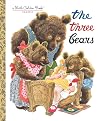
I have always enjoyed the tale of Goldilocks and the Three Bears because, as a child, I liked how distinct the characters were and how the text lent itself to using different (fun) voices for each character. The language and use of repetition by the author makes the story fun and easy to follow for a child. Even as a young adult, I love being able to guess what phrase comes next (for example, every time the author described baby bear's belongings he would use the phrase "wee little"). On the show more other hand, I did not like the illustrations. There was too much text and not enough illustrations on each page (this was part of an anthology). Therefore, the illustrations were not very detailed and could not show all of the main parts of the text. The few pictures that were in the text were so tiny that they were unnecessary and did not add anything to the story. The moral of the story is to not use things that don't belong to you. show less
This book told the story of Goldilocks and the Three Bears, a classic story that many children have enjoyed for years and years. I like this book because of the repetition of the characters names and descriptions like the big papa bear with the big sized voice and wee little bear with the wee little voice. I feel like children will enjoy the repetition when reading on their own and if reading aloud, the reader can exaggerate the voices for a comedic effect. There was also repetition seen in show more the plot. Everything in the bear’s house that was meant for the poppa bear and momma bear would not work for Goldilocks, but all of baby bear’s belongings would have been “just right.” This allows for children to easily predict what will happen in the story. This book also allows children to feel empathy for the little bear. All of his porridge was eaten, his chair was broken, and there was a stranger sleeping in his bed! Students can try and put themselves into baby bear’s shoes and feel his sadness when his property was intruded on. The one thing I do not like about this book is that there is not a clear message like there are in most traditional literature stories. I guess the message would be not to trespass onto someone else’s property but, at least in this version, Goldilocks did not face any punishment for her actions. This version was part of a larger anthology of stories, so it may have been edited to be more school appropriate. show less
The Three Bears tells the traditional story of Goldilocks and the three bears. As we know, each bear is associated with size. The baby bear is associated with small sized things. The mama bear is associated with medium sized things. The papa bear is associated with large things. In this book, the author applies this to text. When the story refers to the difference in sizes, there are small, medium, and large font sizes. I really thought this was really creative of how it reinforced the show more importance of size in the story. I also liked the plot because it followed the story that I remembered as a child. That familiar aspect was very soothing. Even though this is a picture book, I wished that it would have had more detailed and sophisticated illustrations. The illustrations were in color, but they were more like basic sketches compared to other versions of this story I have read. Higher quality illustrations could have highly enhanced this story. The main idea of this story is do not use what is not yours. show less
Read in [b:Story Land: 40 Of The Best Little Golden Books Ever Published|1786505|Story Land 40 Of The Best Little Golden Books Ever Published|Golden Press|https://d.gr-assets.com/books/1188336040s/1786505.jpg|1785397]. Though the bears are extravagantly furry, and though the chairs come before the porridge, this is probably one of the best tellings. It's not adapted, it's not fancy, but there's just enough detail in the pictures and text to make it re-readable. And children do love their show more favorites read to them over and over, so that's a good thing.
Then up the stairs went the three bears, with a thump thump thump, and a trot trot trot, and a skippity-skip-skip. (That was the wee little tiny bear.)" show less
Then up the stairs went the three bears, with a thump thump thump, and a trot trot trot, and a skippity-skip-skip. (That was the wee little tiny bear.)" show less
Lists
Awards


You May Also Like


Associated Authors
Statistics
- Works
- 32
- Also by
- 64
- Members
- 1,892
- Popularity
- #13,595
- Rating
- 3.9
- Reviews
- 20
- ISBNs
- 33
- Languages
- 5
- Favorited
- 2
