
Margaret Wise Brown (1910–1952)
Author of Goodnight Moon
About the Author
Margaret Wise Brown was born on May 10, 1910 in Greenpoint, Brooklyn, New York, to Robert Brown, a Vice President at American Manufacturing Company and Maud Brown, a housewife. She attended school in Lausanne, Switzerland for three years, before attending Dana Hall in Wellesley, Massachusetts for show more two years. In 1928, she began taking classes at Hollis College in Virginia. In 1935, Brown began working at the Bank Street Cooperative School for student teachers. Two years later, her writing career took off with the publication of "When the Wind Blows." Over the course of fourteen years, Brown wrote over one hundred picture books for children. Some of her best known titles include Goodnight Moon, Big Red Barn and Runaway Bunny. Margaret Wise Brown died on November 13, 1952 of an embolism following an operation in Nice, France. (Bowker Author Biography) show less
Disambiguation Notice:
Golden MacDonald, Juniper Sage, Timothy Hay, and Kaintuck Brown are pen names of Margaret Wise Brown.
Series
Works by Margaret Wise Brown
Goodnight Moon Classic Library: Contains Goodnight Moon, The Runaway Bunny, and My World (2006) 122 copies, 2 reviews
The Little Golden Book Library 4 Book Cased Set Golden Favorites * Bedtime Stories * Our Wonderful World * Fairy Tales and Rhymes (1969) 11 copies
A Baby's Gift, Packaging May Vary 6 copies
The Big Fur Secret 3 copies
Black and white 3 copies
the little fireman / I WANT TO FLY 2 copies
The bad little duckhunter 2 copies
The Hidden House 2 copies
The Salor dog 2 copies
The Sailor Dog, 1981 1 copy
Big Red Barn Activities 1 copy
Hyvä yötä, pikku karhu 1 copy
Bonne Nuit ! (Un livre d'or) 1 copy
The Sleepy Book 1 copy
Big Red Hen 1 copy
Slaap zacht Kleintje 1 copy
A CHILD'S GOODNIGHT BOOK 1 copy
Pussys Weihnachtsfest 1 copy
Little Bugs 1 copy
The streamlined pig 1 copy
Willie's walk to grandmama 1 copy
The poodle and the sheep 1 copy
The Peppermint family 1 copy
They all saw it 1 copy
The children's year 1 copy
The Noisy Bird Book 1 copy
Big dog, little dog 1 copy
Pussycat's Christmas 1 copy
The Color Kitchen 1 copy
The Little Scarecrow Boy 1 copy
Tre små bjørne 1 copy
Tel tot 10 met muis 1 copy
Oi, mikä talo! 1 copy
Springtime Stories 1 copy
The Quiet 1 copy
Associated Works
The 20th-Century Children's Book Treasury: Picture Books and Stories to Read Aloud (1998) — Contributor — 1,836 copies, 14 reviews
The Illustrated Treasury of Children's Literature, Volumes 1-2 (1955) — Contributor — 523 copies, 4 reviews
Tagged
Common Knowledge
- Other names
- MacDonald, Golden
Sage, Juniper
Brown, Kaintuck
Hay, Timothy - Birthdate
- 1910-05-23
- Date of death
- 1952-11-13
- Gender
- female
- Education
- Hollins College (BA | English)
Dana Hall School, Wellesley, MA
The Kew Forest School
Chateau Brilliantmont, Lausanne (boarding school) - Occupations
- children's book author
teacher
editor
art student - Relationships
- Oelrichs, Blanche (pen name - Strange, Michael) (partner)
Brown, Benjamin Gratz (grandfather) - Short biography
- Margaret Wise Brown wrote hundreds of books and stories before she died at the age of 42 after surgery for a burst appendix. She published under her own name as well as under several pen names including Timothy Hay, Golden MacDonald, Juniper Sage, and Kaintuck Brown. According to a Web site dedicated to her, before Margaret began writing books for children, fairytales and fables dominated the world of illustrated stories. But Margaret, or Brownie, as her friends called her, wrote with the then "new" idea that children would rather read about their own lives instead. Many of her books are considered classics of the genre.
- Cause of death
- embolism
complications from surgery (for an ovarian cyst) - Nationality
- USA
- Birthplace
- Brooklyn, New York, USA
- Places of residence
- Brooklyn, New York, New York, USA
- Place of death
- Nice, Alpes-Maritimes, France
- Burial location
- cremated
- Map Location
- New York, USA
- Disambiguation notice
- Golden MacDonald, Juniper Sage, Timothy Hay, and Kaintuck Brown are pen names of Margaret Wise Brown.
Members
Reviews
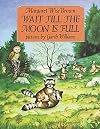
This story is a wonderful way to explore the goodness of patience, even when it is difficult to wait. Mother Raccoon is never short or impatient with the unending questions (who can relate?), but continues to engage with Little Raccoon with love and tenderness. The simple plot is lovely in its exclusive focus on the experience of anticipation, with gentle encouragement to the virtue of doing things at the appropriate time. The ending note at first felt abrupt to me - after the buildup we do show more not get a full description of what happens when the moon is full - but after a few re-reads I think it’s a masterful decision as to pacing and imagination. Williams’ illustrations enhance the emotional narrative, with two-tone black and brown illustrations throughout up until the full-color full moon. show less

The Little Fir Tree, illustrated by Barbara Cooney.
Standing alone in a field, separated from the sheltering bulk of the trees of the nearby forest, a little fir tree leads a lonely life for his first seven years, before he finds himself uprooted one holiday season, and taken into a local farmhouse to be the Christmas tree of a little boy with a lame leg. After this magical experience, the tree is replanted in the field the next spring, only to be uprooted again in winter, forming a yearly show more pattern that the tree comes to anticipate. Then one winter no one comes to fetch him, and the tree wonders what has become of his yearly friends. The answer comes in the form of his own Christmas visit, as the little boy—now healed!—leads his friends in a singing procession to the tree's field...
The Little Fir Tree was originally published in 1954, in this edition, with artwork by the celebrated Barbara Cooney. I have long wanted to track it down, but discovered in previous years that only the newer edition, published in 2005 with artwork from Jim LaMarche, was available at my local library. I read and enjoyed that newer edition, but kept looking for this original one as well, given my fondness for Cooney's work. I am glad that I did, as I think her simple but immensely expressive artwork is perfectly suited to the story, ably capturing both its melancholy and joyful elements. I liked the incorporation of the music for a few Christmas carols, with lyrics adapted to the events of the story (I can't recall if this was done in the LaMarche edition as well), and I appreciated the vintage style here, with the limited number of color washes—red and green predominating, of course!—and those distinctive Barbara Cooney figures. Recommended to anyone looking for lovely Christmas stories for the picture book set, as well as to fellow Cooney fans. show less
Standing alone in a field, separated from the sheltering bulk of the trees of the nearby forest, a little fir tree leads a lonely life for his first seven years, before he finds himself uprooted one holiday season, and taken into a local farmhouse to be the Christmas tree of a little boy with a lame leg. After this magical experience, the tree is replanted in the field the next spring, only to be uprooted again in winter, forming a yearly show more pattern that the tree comes to anticipate. Then one winter no one comes to fetch him, and the tree wonders what has become of his yearly friends. The answer comes in the form of his own Christmas visit, as the little boy—now healed!—leads his friends in a singing procession to the tree's field...
The Little Fir Tree was originally published in 1954, in this edition, with artwork by the celebrated Barbara Cooney. I have long wanted to track it down, but discovered in previous years that only the newer edition, published in 2005 with artwork from Jim LaMarche, was available at my local library. I read and enjoyed that newer edition, but kept looking for this original one as well, given my fondness for Cooney's work. I am glad that I did, as I think her simple but immensely expressive artwork is perfectly suited to the story, ably capturing both its melancholy and joyful elements. I liked the incorporation of the music for a few Christmas carols, with lyrics adapted to the events of the story (I can't recall if this was done in the LaMarche edition as well), and I appreciated the vintage style here, with the limited number of color washes—red and green predominating, of course!—and those distinctive Barbara Cooney figures. Recommended to anyone looking for lovely Christmas stories for the picture book set, as well as to fellow Cooney fans. show less

Celebrated children's author Margaret Wise Brown, creator of such childhood classics as Goodnight Moon and The Runaway Bunny, here delivers a sweet little bedtime tale, one which will lull little children to sleep with its gentle text and charming artwork. As night comes on, the book presents little children with a series of animals who seek their rest, from sleepy sheep to sleepy pussycats, culminating with children who say their prayers and go to bed. The book concludes with a little show more prayer: "Dear Father, hear and bless / Thy beasts and singing birds, / And guard with tenderness / Small things that have no words."
Chosen as a Caldecott Honor Book in 1944 - other titles to be selected that year include Small Rain: Verses from the Bible, Pierre Pidgeon, The Mighty Hunter and Good Luck Horse - this little book has lots of quiet appeal. The text is repetitive but engaging, slowly building up the sense of sleepiness with each scene, and the lithograph artwork is charming. The picture of the sleeping pussycats was particularly adorable! With the caveat that non-religious families will want to be aware that this book closes with a prayer, and make their decisions about reading it accordingly, I recommend A Child's Good Night Book to those looking for bedtime books for little ones. show less
Chosen as a Caldecott Honor Book in 1944 - other titles to be selected that year include Small Rain: Verses from the Bible, Pierre Pidgeon, The Mighty Hunter and Good Luck Horse - this little book has lots of quiet appeal. The text is repetitive but engaging, slowly building up the sense of sleepiness with each scene, and the lithograph artwork is charming. The picture of the sleeping pussycats was particularly adorable! With the caveat that non-religious families will want to be aware that this book closes with a prayer, and make their decisions about reading it accordingly, I recommend A Child's Good Night Book to those looking for bedtime books for little ones. show less

I never thought much of this book the first time I read it, but with this re-read I really like the little battle of wits between the mother rabbit and her son.
And this time I was more struck by things that escaped me before, like the sails on the bunny boat being elongated ears and the connections to Goodnight Moon. I see now that the image of the mother bunny fishing for her runaway bunny recurs as paintings in the other two books in addition to the moon motif. In the Goodnight Moon show more Extended Universe, it seems that whole book is a joyful bedtime story told by the mother rabbit of this book to her bunny in their den under a tree, and the companion book My World is a bleak and bitter tale told later as her relationship with the bunny's father crumbles. Wild.
Side note: This is in my old book database as book #1522 with "indifferent" ratings. show less
And this time I was more struck by things that escaped me before, like the sails on the bunny boat being elongated ears and the connections to Goodnight Moon. I see now that the image of the mother bunny fishing for her runaway bunny recurs as paintings in the other two books in addition to the moon motif. In the Goodnight Moon show more Extended Universe, it seems that whole book is a joyful bedtime story told by the mother rabbit of this book to her bunny in their den under a tree, and the companion book My World is a bleak and bitter tale told later as her relationship with the bunny's father crumbles. Wild.
Side note: This is in my old book database as book #1522 with "indifferent" ratings. show less
Lists
BitLife (1)
Female Author (1)
Books About Boys (1)
Favourite Books (1)
Early Picture Books (12)
Christmas Books (2)
Five in a Row (2)
Ambleside Books (2)
Best Dog Stories (2)
Five star books (3)
Cats in Fiction (1)
Sonlight Books (1)
1940s (2)
Five in a Row (2)
Youth: Poetry (1)
Awards


You May Also Like


Associated Authors
Statistics
- Works
- 264
- Also by
- 15
- Members
- 80,015
- Popularity
- #153
- Rating
- 4.1
- Reviews
- 1,754
- ISBNs
- 1,266
- Languages
- 20
- Favorited
- 25


