
Ruth Krauss (1901–1993)
Author of The Carrot Seed
About the Author
Ruth Krauss was born on July 25, 1901 in Baltimore, Maryland. She attended the Peabody Institute of Music. She received a Bachelor of Arts degree from the Parsons School of Fine and Applied Art and studied anthropology at Columbia University. In 1941, she married David Johnson Leisk, who wrote and show more illustrated children's books as Crockett Johnson. They occasionally worked together. Her first book, A Good Man and His Good Wife, was published in 1944. She was credited as being one of the first authors to use minimal text, concentrating on precise language and working closely with an illustrator. She wrote more than 30 children's books during her lifetime including The Carrot Seed, I Can Fly, and A Hole Is to Dig: A First Book of First Definitions. She received the Caldecott Medal for The Happy Day in 1950 and A Very Special House in 1954. She also wrote verse plays and poetry for adults. She died on July 10, 1993 at the age of 91. (Bowker Author Biography) show less
Works by Ruth Krauss
I Can Fly {abridged} 15 copies
LA GRAINE DE CAROTTE 2 copies
Bears {video} 1 copy
Re-examination of Freedom 1 copy
If Only 1 copy
This Thumbprint 1 copy
Associated Works
Telephone 9 — Contributor — 1 copy
Telephone 11 — Contributor — 1 copy
Telephone 14 — Contributor — 1 copy
Telephone 15 — Contributor — 1 copy
Telephone 8 — Contributor — 1 copy
Tagged
Common Knowledge
- Legal name
- Krauss, Ruth Ida
- Birthdate
- 1901-07-25
- Date of death
- 1993-07-10
- Gender
- female
- Education
- Parsons School of Design (BA|1929)
- Occupations
- children's book author
poet - Awards and honors
- Caldecott Medal (1950 | 1954)
- Relationships
- Johnson, Crockett (husband)
- Short biography
- Ruth Krauss was born in Baltimore, Maryland and graduated from the Parson School of Design in New York City. During the 1940s, she was a member of the Writers' Laboratory at the Bank Street College of Education. In 1943, she married Crockett Johnson, a children's book author and illustrator. They collaborated on many books for children, among them such classics such as The Carrot Seed (1945). Her book A Hole Is to Dig (1952) was illustrated by Maurice Sendak. She produced more than 30 books for children in her career and also wrote poems for an adult audience.
- Nationality
- USA
- Birthplace
- Baltimore, Maryland, USA
- Places of residence
- Baltimore, Maryland, USA
- Place of death
- Westport, Connecticut, USA
- Associated Place (for map)
- Maryland, USA
Members
Reviews

"I'll be the little street and you be the little street cleaner."
"I wouldn't wish to be the moon. Someone might think I was a hole and plant a flower in me."
"I'm the gate that lets the flowers into the garden."
Surprisingly still relevant to children who have not become addicted to their screens. For adults, a powerful and utterly beguiling tribute to the power of imagination. For children, an amusement and a comforting feeling that this author, this illustrator, actually understands them.
I show more wonder about the constant repetition of the word 'little' though. To me that seems patronizing. But it's done for poetic effect, and also maybe it helps a child take ownership of the word, much in the way that certain people have taken ownership of the words Queer and N*.
I wish more of the best older books would stay in print. show less
"I wouldn't wish to be the moon. Someone might think I was a hole and plant a flower in me."
"I'm the gate that lets the flowers into the garden."
Surprisingly still relevant to children who have not become addicted to their screens. For adults, a powerful and utterly beguiling tribute to the power of imagination. For children, an amusement and a comforting feeling that this author, this illustrator, actually understands them.
I show more wonder about the constant repetition of the word 'little' though. To me that seems patronizing. But it's done for poetic effect, and also maybe it helps a child take ownership of the word, much in the way that certain people have taken ownership of the words Queer and N*.
I wish more of the best older books would stay in print. show less
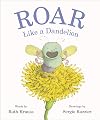
This unusual alphabet book encourages readers to actively engage with a variety of ventures from A to Z.
This title seems like the type of book that would appeal to readers who like weird and quirky texts like those written by Lemony Snicket. Even though I sometimes fit into that category, this book didn't work for me.
Some of the lines were kind of poetic in a way, like the titular one or "Look under the bed for poetry" illustrated with a critter noticing random bits and bobs under the show more bedframe. Others were just bizarre and meaningless, such as "Ignore yourself and get mad" or "Eat all the locks off the doors".
Still others struck me as problematic, such as "Undress to match trees in winter" featuring a bird perched atop a leafless tree with its clothes on a branch nearby. Not the worst thing for a bird and no one else is around, so I guess not horrid for a person either, but still a bit odd. A few pages later though, we get "X out all the bad stuff", which is a clever way to address this tricky letter of the alphabet and is a good message in theory, except the illustration shows a bunch of a creatures with "X"s over their (minimal) belly fat. Holy body image issues, Batman!
The illustrations are in the usual style of illustrator Sergio Ruzzier, which means if you typically like his artwork, you'll like these too. Of course, conversely, if you don't usually like his style, you won't like these either. Luckily I generally fall into the first category. show less
This title seems like the type of book that would appeal to readers who like weird and quirky texts like those written by Lemony Snicket. Even though I sometimes fit into that category, this book didn't work for me.
Some of the lines were kind of poetic in a way, like the titular one or "Look under the bed for poetry" illustrated with a critter noticing random bits and bobs under the show more bedframe. Others were just bizarre and meaningless, such as "Ignore yourself and get mad" or "Eat all the locks off the doors".
Still others struck me as problematic, such as "Undress to match trees in winter" featuring a bird perched atop a leafless tree with its clothes on a branch nearby. Not the worst thing for a bird and no one else is around, so I guess not horrid for a person either, but still a bit odd. A few pages later though, we get "X out all the bad stuff", which is a clever way to address this tricky letter of the alphabet and is a good message in theory, except the illustration shows a bunch of a creatures with "X"s over their (minimal) belly fat. Holy body image issues, Batman!
The illustrations are in the usual style of illustrator Sergio Ruzzier, which means if you typically like his artwork, you'll like these too. Of course, conversely, if you don't usually like his style, you won't like these either. Luckily I generally fall into the first category. show less
This was a fun read. We got it from the library and didn’t know what to expect. I didn’t realize it was an abc book but the statements were so off the wall at times it didn’t seem like an abc book. My kids 10-6 were all laughing and enjoying it together.
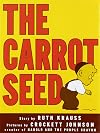
A little boy plants a carrot seed and gathers evidence against his skeptical and toxic family that I hope he one day uses in an emancipation of minor legal filing. What a repetitive and depressing book.
Lists
Awards


You May Also Like


Associated Authors
Statistics
- Works
- 53
- Also by
- 13
- Members
- 11,972
- Popularity
- #1,958
- Rating
- 3.9
- Reviews
- 203
- ISBNs
- 219
- Languages
- 16
- Favorited
- 1