
Marie Hall Ets (1895–1984)
Author of Play with Me
About the Author
Works by Marie Hall Ets
Rosa: The Life of an Italian Immigrant (Wisconsin Studies in Autobiography) (1970) 25 copies, 1 review
By Marie Hall Ets Play With Me 3 copies
Bichos e Bobagens 1 copy
Olívia, o Monstro-Marinho 1 copy
Just Me 1 copy
Little Old Automobile 1 copy
Associated Works
Tagged
Common Knowledge
- Birthdate
- 1895-12-16
- Date of death
- 1984-01-17
- Gender
- female
- Education
- Lawrence University
- Occupations
- social worker
children's book author - Nationality
- USA
- Birthplace
- Milwaukee, Wisconsin, USA
- Places of residence
- Chicago, Illinois, USA
- Place of death
- Inverness, Florida, USA
- Associated Place (for map)
- USA
Members
Reviews

Awarded a Caldecott Medal in 1960, this lovely Christmas tale from co-authors Marie Hall Ets and Aurora Labastida follows the story of young Ceci, a Mexican girl who is excited to learn that she is to host her very first posada, or Christmas party. Full of eager anticipation, Ceci has many exciting experiences in the days leading up to the big party, culminating in accompanying her mother to the market to select a pinata. When the posada finally comes however, Ceci isn't sure how she feels show more about her lovely star pinata being broken apart...
Although Ets was an established children's author in the 1950s and 60s, and wrote and illustrated a number of picture-books, her co-author, Aurora Labastida, who was a librarian at the U.S. embassy in Mexico City during the period, only ever worked on this one book. Apparently it was partially written to counteract some of the more stereotypical depictions on Mexican people abroad in American children's books at the time. Although I am not in a position to judge how well the authors succeeded in that goal, Nine Days to Christmas does feel authentic and respectful to me, depicting a then contemporary child and her many daily activities with sensitivity and affection. The artwork, appropriately enough, given that this won the Caldecott Medal, is lovely. I particularly liked the nighttime scenes, with the glowing candles. Recommended to anyone looking for Christmas stories for younger children with a Mexican cultural setting. show less
Although Ets was an established children's author in the 1950s and 60s, and wrote and illustrated a number of picture-books, her co-author, Aurora Labastida, who was a librarian at the U.S. embassy in Mexico City during the period, only ever worked on this one book. Apparently it was partially written to counteract some of the more stereotypical depictions on Mexican people abroad in American children's books at the time. Although I am not in a position to judge how well the authors succeeded in that goal, Nine Days to Christmas does feel authentic and respectful to me, depicting a then contemporary child and her many daily activities with sensitivity and affection. The artwork, appropriately enough, given that this won the Caldecott Medal, is lovely. I particularly liked the nighttime scenes, with the glowing candles. Recommended to anyone looking for Christmas stories for younger children with a Mexican cultural setting. show less

Nice middle school book published in 1946. it is set in Harlem and the black and white photographs makes it look like what is written really happened, instead of made up. No matter if it was true or not, still a good story.
Rinty gets in trouble throughout the book and David works hard to keep his father from forcing him to give the dog away. I found it very clever how the book takes the reason for Rinty's misbehavior and turns it into an asset in the end.
'That night Rinty slept on David's show more bed, though he wasn't supposed to, and David lay awake thinking. What could he do to make money so he could keep Rinty? He thought of what Mrs. Moseley had said. Then he got an idea.'
The story is nice. I liked how David worked hard to find ways to keep Rinty. If I was reading to a child, I would want to stop not too far in and have them try to think of ideas. The black and white pictures of Rinty (I believe an Airedale) and David are very nice, and ones of Harlem are really great. Definitely a book I would recommend if you can get your hands on a copy. show less
Rinty gets in trouble throughout the book and David works hard to keep his father from forcing him to give the dog away. I found it very clever how the book takes the reason for Rinty's misbehavior and turns it into an asset in the end.
'That night Rinty slept on David's show more bed, though he wasn't supposed to, and David lay awake thinking. What could he do to make money so he could keep Rinty? He thought of what Mrs. Moseley had said. Then he got an idea.'
The story is nice. I liked how David worked hard to find ways to keep Rinty. If I was reading to a child, I would want to stop not too far in and have them try to think of ideas. The black and white pictures of Rinty (I believe an Airedale) and David are very nice, and ones of Harlem are really great. Definitely a book I would recommend if you can get your hands on a copy. show less
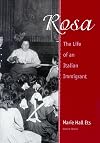
A personal account of the life of Rosa Cavalleri (aka Ines Cassettari) 1866-1943, an Italian American immigrant. The story is in her words, as recorded by Marie Hall Ets. Definitely worth reading if you are interested in Italian Americans and the life they left, and the life they led in the US. The story is honest and unique, and it is hard to read it without getting mad at those that mistreated her.

This is a hard book to review.
Why? Because my parents read it to me as a baby. My love for old books, particularly old children's books, all comes from Mister Penny. So naturally I read it to my little boy, often.
It's a book that has been forgotten by the world. Google as much as you like; you won't find a review of Mister Penny (well, except for this one soon, I assume), although you'll doubtless find a few old reasonably priced copies. More than reasonably priced, actually, because this show more book is a treasure.
But because it has been virtually forgotten, and is unlikely to ever see print again, I feel as if it's up to me to perpetuate the memory of it...at least for a little while longer.
Mister Penny is the story of an old man who lived "in a tumbledown shed on a stony field by a path to the village of Wuddle". He lives there with his "family" of seven animals: Limpy, an old horse, Mooloo the cow, Splop the goat, Mimkin the lamb, Pugwug the pig, Chukluk the hen, and lastly the troublemaker, Doody the rooster. Mister Penny spends his days working in a factory to earn the money he needs to feed them all.
The animals have vivid personalities, and speak to each other when Mister Penny isn't around to hear them. Unfortunately they end up goading one another (led by Doody, who is, as my son says, "very naughty") into devouring a large part of a neighbor's garden. The neighbor is not amused, and Mister Penny is faced with either doing an enormous amount of free farmwork for the neighbor or letting him take the animals to butcher.
What the animals do to save themselves and Mister Penny, and the lesson they all learn from what happens, makes a charming and deeply heartwarming story. Not a moment feels falsely moralistic or out of place, but the moral (although not spelled out as such) is one that children remember. The humor is perfect; my son laughed and laughed throughout the book. And the ending is truly moving.
The voices of the animals are extremely well done and differentiated, making the book a pleasure to read aloud. The extensive black & white illustrations are by the author, and are immediately engaging and very expressive. I can't help but note that most of my favorite old books for children were illustrated by their authors. Most modern books for children, on the other hand, are not illustrated by their authors; in fact, the publishers choose the illustrator, and prefer that there be no direct interaction between the author and artist.
The book is ideal for any child young enough to be read to. Children who are starting to read on their own are likely to enjoy it, too.
Although there's certainly no explicit connection, I can't help but link Mister Penny to the Doctor Dolittle books of [author: Hugh Lofting]. The personalities of the animals are quite similar, as is the general tone of the books (though Mister Penny is definitely more appropriate for younger children than the Dolittle books are). Both were written in the same general time period - the first Dolittle book in 1920, Mister Penny in 1935 - and both have the same gentle, kindly tone. Although Mister Penny never learns to converse with his animals, he does talk to them nonetheless, and the interaction between them all is quite reminiscent of the Dolittle household.
Even though it was written in 1935, the language is extremely accessible. There are no jarring anachronisms, with the single exception of this: Mister Penny is sometimes drawn (as you can see in the cover picture) with a pipe in his mouth, smoking. But that doesn't play a role in the story, and it would be a terrible pity if it put any parent off from reading the book to their child.
Marie Hall Ets published two sequels to Mister Penny:
[book: Mister Penny's Race Horse] and [book: Mister Penny's Circus]. While neither is quite as special as the original, they're both worthy and very enjoyable sequels. For a while my son even liked "Race Horse" better than the original book.
Mister Penny is simply a wonderful book that shouldn't have been forgotten: a lost treasure, one well worth the effort of finding. Although it's rare, it can often be found via inter-library loan. Once you read it, I think you'll likely want a copy for your own. show less
Why? Because my parents read it to me as a baby. My love for old books, particularly old children's books, all comes from Mister Penny. So naturally I read it to my little boy, often.
It's a book that has been forgotten by the world. Google as much as you like; you won't find a review of Mister Penny (well, except for this one soon, I assume), although you'll doubtless find a few old reasonably priced copies. More than reasonably priced, actually, because this show more book is a treasure.
But because it has been virtually forgotten, and is unlikely to ever see print again, I feel as if it's up to me to perpetuate the memory of it...at least for a little while longer.
Mister Penny is the story of an old man who lived "in a tumbledown shed on a stony field by a path to the village of Wuddle". He lives there with his "family" of seven animals: Limpy, an old horse, Mooloo the cow, Splop the goat, Mimkin the lamb, Pugwug the pig, Chukluk the hen, and lastly the troublemaker, Doody the rooster. Mister Penny spends his days working in a factory to earn the money he needs to feed them all.
The animals have vivid personalities, and speak to each other when Mister Penny isn't around to hear them. Unfortunately they end up goading one another (led by Doody, who is, as my son says, "very naughty") into devouring a large part of a neighbor's garden. The neighbor is not amused, and Mister Penny is faced with either doing an enormous amount of free farmwork for the neighbor or letting him take the animals to butcher.
What the animals do to save themselves and Mister Penny, and the lesson they all learn from what happens, makes a charming and deeply heartwarming story. Not a moment feels falsely moralistic or out of place, but the moral (although not spelled out as such) is one that children remember. The humor is perfect; my son laughed and laughed throughout the book. And the ending is truly moving.
The voices of the animals are extremely well done and differentiated, making the book a pleasure to read aloud. The extensive black & white illustrations are by the author, and are immediately engaging and very expressive. I can't help but note that most of my favorite old books for children were illustrated by their authors. Most modern books for children, on the other hand, are not illustrated by their authors; in fact, the publishers choose the illustrator, and prefer that there be no direct interaction between the author and artist.
The book is ideal for any child young enough to be read to. Children who are starting to read on their own are likely to enjoy it, too.
Although there's certainly no explicit connection, I can't help but link Mister Penny to the Doctor Dolittle books of [author: Hugh Lofting]. The personalities of the animals are quite similar, as is the general tone of the books (though Mister Penny is definitely more appropriate for younger children than the Dolittle books are). Both were written in the same general time period - the first Dolittle book in 1920, Mister Penny in 1935 - and both have the same gentle, kindly tone. Although Mister Penny never learns to converse with his animals, he does talk to them nonetheless, and the interaction between them all is quite reminiscent of the Dolittle household.
Even though it was written in 1935, the language is extremely accessible. There are no jarring anachronisms, with the single exception of this: Mister Penny is sometimes drawn (as you can see in the cover picture) with a pipe in his mouth, smoking. But that doesn't play a role in the story, and it would be a terrible pity if it put any parent off from reading the book to their child.
Marie Hall Ets published two sequels to Mister Penny:
[book: Mister Penny's Race Horse] and [book: Mister Penny's Circus]. While neither is quite as special as the original, they're both worthy and very enjoyable sequels. For a while my son even liked "Race Horse" better than the original book.
Mister Penny is simply a wonderful book that shouldn't have been forgotten: a lost treasure, one well worth the effort of finding. Although it's rare, it can often be found via inter-library loan. Once you read it, I think you'll likely want a copy for your own. show less
Lists
Awards


You May Also Like


Associated Authors
Statistics
- Works
- 32
- Also by
- 1
- Members
- 5,423
- Popularity
- #4,594
- Rating
- 3.8
- Reviews
- 69
- ISBNs
- 122
- Languages
- 4
- Favorited
- 1