
Clare Turlay Newberry (1903–1970)
Author of Marshmallow
About the Author
Image credit: source::http://www.cathappy.net/images/newberryphotos/Claresmall.jpg noattribution Originally uploaded by casaloma, but somehow migrated to the wrong author page.
Works by Clare Turlay Newberry
Associated Works
Tagged
Common Knowledge
- Canonical name
- Newberry, Clare Turlay
- Birthdate
- 1903-04-02
- Date of death
- 1970-02-12
- Gender
- female
- Education
- University of Oregon
School of the Portland Art Museum
California School of Fine Arts
La Grand Chaumière - Short biography
- [from Marshmallow, 2010 edition]
Clare Turlay Newberry (1903-1970) was born in Eugene, Oregon. She studied art at the University of Oregon, the School of the Portland Art Museum, the California School of Fine Arts, and La Grand Chaumière in Paris, France. She received the Caldecott Honor for four of her books: T-Bone, the Baby-Sitter (1951); Marshmallow (1943); April's Kittens (1941); and Barkis (1939).
In Ms. Newberry's own words, "Every word of Marshmallow is true, even to the drawing of them wrapped in each other's arms. I know people find this hard to believe, but the bunny was so little and was so convinced that Oliver was his mother, what could Oliver do but be his mother the best way he could?" - Nationality
- USA
- Birthplace
- Eugene, Oregon, USA
- Associated Place (for map)
- Oregon, USA
Members
Reviews

A solitary bachelor cat who enjoyed quiet naps and being waited upon by his human, Oliver was unprepared for the arrival of a small fluffy bunny in his Manhattan apartment. Frightened at first by this leporine intruder, and then all-too-interested in his movements, Oliver had to be separated from tiny Marshmallow when Miss Tilly wasn't around to supervise. Then one day, when Miss Tilly was late returning home, Oliver found a way out of his room, and encountered the happy hoppy little bunny show more at play. Undecided as to what he should do - continue watching the amusing display? or pounce upon the unsuspecting creature? - he was surprised when Marshmallow, mistaking him for a mother rabbit, took matters into his own paws.
This adorable picture-book exploration of an unlikely cross-species friendship was chosen as a Caldecott Honor Book in 1943 - the other title to be so distinguished that year was Mary and Conrad Buff's Dash and Dart - and it is not difficult to see why. Clare Turlay Newberry's soft artwork, which looks like it was done in charcoal and pastel, skillfully captures the winsome appeal of both cat and bunny. The pink accents used on the kitty and bunny noses and ears make a nice contrast to the gray and white of their bodies. The story is just as appealing, although readers should take note: apparently recent reprints have significantly reduced and revised the text, robbing it of much of its descriptive detail. I was lucky enough to find an edition that contained the original text, which opens:
"Oliver was a cat of middle-age, gray with tabby markings. He was a bachelor without wife or kittens, and lived in an apartment in Manhattan. A housekeeper, Miss Tilly, who had been with him since kittenhood, looked after the place and prepared his meals.
Many a cat has to catch his dinner before he can eat it, but Oliver was lucky. When he was hungry all he had to do was mention the fact to Miss Tilly, and she would open the refrigerator and get out his liver or chopped beef."
Compare this to the opening of the revised edition:
"Oliver was a gray cat with tabby markings who lived in an apartment. Many a cat has to catch his dinner before he can eat it, but Oliver was lucky. When he was hungry all he had to do was mention the fact to Miss Tilly, and she would open the refrigerator and get out his liver or chopped beef."
It's unfortunate that such a charming book has been rewritten and abridged in this fashion, especially as I understand that there is nothing on the newer editions specifying this fact. I recommend readers track down the original text, if they can, and enjoy the book as it was originally written. show less
This adorable picture-book exploration of an unlikely cross-species friendship was chosen as a Caldecott Honor Book in 1943 - the other title to be so distinguished that year was Mary and Conrad Buff's Dash and Dart - and it is not difficult to see why. Clare Turlay Newberry's soft artwork, which looks like it was done in charcoal and pastel, skillfully captures the winsome appeal of both cat and bunny. The pink accents used on the kitty and bunny noses and ears make a nice contrast to the gray and white of their bodies. The story is just as appealing, although readers should take note: apparently recent reprints have significantly reduced and revised the text, robbing it of much of its descriptive detail. I was lucky enough to find an edition that contained the original text, which opens:
"Oliver was a cat of middle-age, gray with tabby markings. He was a bachelor without wife or kittens, and lived in an apartment in Manhattan. A housekeeper, Miss Tilly, who had been with him since kittenhood, looked after the place and prepared his meals.
Many a cat has to catch his dinner before he can eat it, but Oliver was lucky. When he was hungry all he had to do was mention the fact to Miss Tilly, and she would open the refrigerator and get out his liver or chopped beef."
Compare this to the opening of the revised edition:
"Oliver was a gray cat with tabby markings who lived in an apartment. Many a cat has to catch his dinner before he can eat it, but Oliver was lucky. When he was hungry all he had to do was mention the fact to Miss Tilly, and she would open the refrigerator and get out his liver or chopped beef."
It's unfortunate that such a charming book has been rewritten and abridged in this fashion, especially as I understand that there is nothing on the newer editions specifying this fact. I recommend readers track down the original text, if they can, and enjoy the book as it was originally written. show less
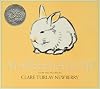
So I definitely had a pet rabbit names Marshmallow after this book. I also definitely wanted him and my cat, Owl, to have this same interaction that Oliver and Marshmallow had but I had to wait for my second bunny, Honey, and Owl's old age to receive this pleasure. Clare Newberry has such an amazing style of writing. Her voice is so strong. Her observations of animal behavior and expressions are so strong. Her style of art is so simplistic and perfect. The integration of poetry into this show more book is also seamless. Of course Mrs Tilly can sit down and come up with a perfectly edited poem relevant to her life specifically in that moment--why not? I cannot believe this book was written in 1943. Somethings in this world have changed so much but this book is timeless! show less

Excited at the prospect of turning nine, James enjoys everything about his birthday, from the gifts he is given to the cake his mother bakes for him. But the highlight of the day comes when his Uncle Jimmy arrives with a cocker spaniel puppy named Barkis. Immediately won over by this soft-furred little being, with his pleading eyes and eager tail, James resists the idea of sharing the puppy with his sister Nell Jean. After all, she has never shared her striped kitten Edward with him! But show more when Barkis wanders off and a crisis ensues, James and Nell Jean both learn an important lesson about sharing, and about the love animals bring to our lives.
Originally published in 1938, and chosen as a Caldecott Honor Book in 1939 - Clare Turlay Newberry would go on to win three additional Caldecott Honors, for Marshmallow, April's Kittens and T Bone, The Baby Sitter - this lovely book spins an engaging tale, but it is the artwork (appropriately enough) that is the true star. Soft charcoal drawings - full page illustrations are paired with pages of text - capture the winsome appeal of both Barkis and Edward. I particularly liked the scene in which Edward is grooming Barkis - so adorable! - and the scene in which he is grooming himself. Some of the content here felt a little dated - the way the family interacts, some of the language used (Barkis is a "swell" puppy) - but not so much that it detracts from the appeal of story and art. Recommended to young animal lovers, as well as to children who are having a little difficulty sharing, or who are experiencing some sibling rivalry. show less
Originally published in 1938, and chosen as a Caldecott Honor Book in 1939 - Clare Turlay Newberry would go on to win three additional Caldecott Honors, for Marshmallow, April's Kittens and T Bone, The Baby Sitter - this lovely book spins an engaging tale, but it is the artwork (appropriately enough) that is the true star. Soft charcoal drawings - full page illustrations are paired with pages of text - capture the winsome appeal of both Barkis and Edward. I particularly liked the scene in which Edward is grooming Barkis - so adorable! - and the scene in which he is grooming himself. Some of the content here felt a little dated - the way the family interacts, some of the language used (Barkis is a "swell" puppy) - but not so much that it detracts from the appeal of story and art. Recommended to young animal lovers, as well as to children who are having a little difficulty sharing, or who are experiencing some sibling rivalry. show less

Clare Turlay Newberry, a four-time Caldecott honoree - in addition to April's Kittens, her other titles to be so distinguished include Barkis, Marshmallow and T Bone, The Baby Sitter - here presents the charming story of a little girl named April, her cat Sheba, and Sheba's three adorable kittens. Although she comes to be very attached to the kittens - named Charcoal, Butch and Brenda by her father - April knows that she cannot keep them, reluctantly accepting this fact when good homes are show more found for Charcoal and Butch. But given the choice between Sheba and Brenda, the little girl becomes truly distraught, having come to truly love little Brenda, but being heartbroken at the idea of giving up Sheba. Fortunately, a solution is found when April's parents discover that she has outgrown her crib, and a larger bed simply won't fit in their tiny New York City apartment.
Published in 1940, and chosen as the sole Caldecott Honor Book in 1941, the year that Robert Lawson's They Were Strong and Good won the medal itself, this sweet little story will capture young cat-lovers' hearts. The joy of having young kittens in the house is ably depicted in Newberry's story, as is the anguish of having to find new homes for some of them. Although I agree that some of the elements here felt a little dated - the fact that Sheba can come and go (in order to get pregnant!) in New York City, and that she isn't spayed - I did appreciate the fact that April and her family are responsible, finding good and loving homes for Butch and Charcoal, and (potentially) for Brenda as well. The ending, in which April gets a partial reprieve, is very satisfactory indeed. As for the artwork, done in pencil I believe, it is just lovely, capturing the charm of our feline friends and the joy they bring to our lives. Although I wouldn't describe it as a personal favorite amongst the many cat-centric picture-books I have read, April's Kittens is a sweetly engaging book, one I would recommend to young cat lovers, as well as to fans of Newberry's artwork. show less
Published in 1940, and chosen as the sole Caldecott Honor Book in 1941, the year that Robert Lawson's They Were Strong and Good won the medal itself, this sweet little story will capture young cat-lovers' hearts. The joy of having young kittens in the house is ably depicted in Newberry's story, as is the anguish of having to find new homes for some of them. Although I agree that some of the elements here felt a little dated - the fact that Sheba can come and go (in order to get pregnant!) in New York City, and that she isn't spayed - I did appreciate the fact that April and her family are responsible, finding good and loving homes for Butch and Charcoal, and (potentially) for Brenda as well. The ending, in which April gets a partial reprieve, is very satisfactory indeed. As for the artwork, done in pencil I believe, it is just lovely, capturing the charm of our feline friends and the joy they bring to our lives. Although I wouldn't describe it as a personal favorite amongst the many cat-centric picture-books I have read, April's Kittens is a sweetly engaging book, one I would recommend to young cat lovers, as well as to fans of Newberry's artwork. show less
Lists
Cats in Fiction (1)
Awards

You May Also Like


Associated Authors
Statistics
- Works
- 18
- Also by
- 1
- Members
- 3,130
- Popularity
- #8,159
- Rating
- 3.7
- Reviews
- 45
- ISBNs
- 40
- Languages
- 1
- Favorited
- 2