
Ruth Sawyer (1880–1970)
Author of Roller Skates
About the Author
Image credit: By Source (WP:NFCC#4), Fair use, https://en.wikipedia.org/w/index.php?curid=36053461
Series
Works by Ruth Sawyer
CHRISTMAS ANNA ANGEL- 1944 1 copy
This Is The Christmas 1 copy
The Crib of Bo' Bossu 1 copy
This Way Christmas 1 copy
Surprise island 1 copy
Associated Works
The Young Folks' Shelf of Books, Volume 02: Once Upon a Time (1993) — Contributor — 213 copies, 1 review
Isaac Asimov's Magical Worlds of Fantasy, Volume 8: Devils (1987) — Contributor — 109 copies, 2 reviews
Midsummer Magic: A Garland of Stories, Charms, and Recipes (1977) — Contributor — 30 copies, 1 review
Kingfisher Christmas Book: A Collection of Stories, Poems and Carols for the Twelve Days of Christmas (1985) — Contributor — 29 copies
Newbery Awards Library A Wrinkle in Time, The Twenty-One Balloons, Strawberry Girl, Thimble Summer, & Roller Skates (1978) 16 copies
Cricket Magazine, Vol. 6, No. 4, December 1978 — Contributor — 1 copy
Tagged
Common Knowledge
- Legal name
- Durand, Ruth Sawyer
- Birthdate
- 1880-08-05
- Date of death
- 1970-06-03
- Gender
- female
- Education
- Columbia University (BS|Fokelore and Storytelling|1904)
- Occupations
- children's book author
storyteller
teacher
folklorist - Awards and honors
- Laura Ingalls Wilder Medal (1965)
Regina Medal (1965) - Relationships
- McCloskey, Robert (son-in-law)
Brackett, Anna C. (teacher) - Short biography
- Ruth Sawyer was born in Boston, Massachusetts, the youngest of five children in a wealthy family. They moved to New York City while she was still a baby. She had an Irish nanny who inspired her love of storytelling. Ruth attended private school and studied at the Garland Kindergarten Training School. In 1900, she traveled to Cuba, where she taught storytelling to kindergarten teachers. After returning to the USA, she won a scholarship to study storytelling and folk lore at Columbia University, earning a BS in education in 1904. She then went to work for the New York City school system, and in 1910 started the first storytelling program for children for the New York Public Library. She wrote articles for The New York Sun, which twice sent her on trips to Ireland, where she collected folk tales and continued to study the art of storytelling. Eventually she became renowned for her folk tale collections and storytelling expertise. In 1911, she married Albert Durand, an ophthalmologist with whom she had two children and lived in Ithaca, New York. She continued to write under her birth name. Her first book was a novel for adults, The Primrose Ring, published in 1915, and adapted into a silent film. The following year, she published her first book for children, This Way to Christmas. She published one book every year or two for the next 20 years. Her best-known book, a fictionalized semi-autobiography entitled Roller Skates, appeared in 1936 and won the Newbery Medal. A second volume continuing the story, The Year of Jubilo, was published in 1940. In 1944, she published The Way of the Storyteller, which was used as a textbook for teachers, librarians and storytellers for many years. The Christmas Anna Angel (1944), illustrated by Kate Seredy, was a runner-up for the Caldecott Medal. Maggie Rose, Her Birthday Christmas (1952) was illustrated by Maurice Sendak. For the book Journey Cake, Ho! (1953), she collaborated with famed children's writer-illustrator Robert McCloskey, her son-in-law (author of Make Way for Ducklings), and the book was a runner-up for the 1954 Caldecott. In 1965, she received the Laura Ingalls Wilder Award from the professional children's librarians, for her "substantial and lasting contribution to literature for children."
- Nationality
- USA
- Birthplace
- Boston, Massachusetts, USA
- Places of residence
- Boston, Massachusetts, USA
New York, New York, USA
Maine, USA
Ithaca, New York, USA
Ireland
Cuba - Place of death
- Maine, USA
- Associated Place (for map)
- USA
Members
Reviews

When David's scientist father heads off to the battlefields of World War I, in order to study a new strain of bacillus just emerging in the soldiers, his mother accompanies his father and David himself is sent to the 'hill country,' where his former nurse Johanna now lives with her husband, Barney. These two good souls, both immigrants from Ireland, share their stories of the fairies with David, and soon he himself encounters one of these little people, in the form of the 'Locked-Out Fairy.' show more With the help of this magical guide, and prompted by his own loneliness, and his desire to find some sort of Christmas feeling, David begins to pay visits to the four other households on the snowbound mountain where he has come to stay. In each one he finds others who are also lonely, and feeling like exiles in this isolated place. There is Fritz Grossman, the German train signalman, who is shunned by everyone in the vicinity, because of his country of origin, and the outbreak of the war. There is old Uncle Joab, the African-American caretaker of the nearby lumber camp, who longs for former days in Virginia, and has only his fiddle to keep him company. There are the boy Alfred and his mother, who hail from somewhere in South America, and who are sojourning in the mountains because Alfred had been sick, and the mountain air was recommended by his doctor. And finally, there is Nicholas Bassaraba, the trapper who came from somewhere in southeastern Europe - most likely somewhere in the Balkans, given the story he shares, although Sawyer's geographic description is rather confusing, as she mentions Bassaraba' country being somewhere near both the Mediterranean and Prussia! - and who now lives by himself, far from anything he has ever known.
Each of these strangers make David welcome, and share a Christmas story with him, which he in turn shares with Johanna and Barney, softening the former's heart, and causing her to slowly reconsider her idea that all these foreigners and strangers must be 'heathens.' When the artist, Mr. Peter, unexpectedly arrives, David enlists his help in creating a most unusual Christmas celebration, one which will bring all of these strangers together in good fellowship. As he observes to this new friend, "Christmas isn't things - it's thoughts," and no thought is more important at this time of the year marking the birth of Christ, than love for one's fellow human beings. The Christmas Eve celebration is a marked success, and features another story of the season - the Irish folktale concerning Saint Bridget, and her magical journey to the Holy Land, to witness and participate in the Nativity - this time told by Johanna. When Christmas Day dawns, David's happiness is completed by one last blessing, in the form ofthe arrival of his mother, come home from Europe ...
Originally published in 1916, at the height of World War I, Ruth Sawyer's This Way to Christmas is a poignant, hopeful tale, one which offers a strong rebuke to the acrimonious nationalism and disregard for common humanity that led to that conflict, and which situates Christmas, and what it represents, as an answer to those ills. It also offers a celebration of the idea of America as a place to which people of all backgrounds can come, and live together in peace. I found the inset stories presented by the characters fascinating and often moving. Barney's tale of Uncle Teig and his Christmas Eve journey with the fairies comes from Irish folklore, and is one I had just recently run across, in somewhat different form, in Eric A. Kimmel's Asher and the Capmakers: A Hanukkah Story. Johanna's retelling of the legend of Bridget is a story that can also be found in such books as Bryce Milligan's Brigid's Cloak: An Ancient Irish Story. Some of the other stories, from the German tale of a Christmas apple, and how a miracle occurred when Hermann the clockmaker offered it as a gift to the Christ child, to Uncle Joab's tale of how Santa Claus allowed the animals to choose their own characteristics, were unknown to me. The story told by Alfred's mother comes from Spain - although she and her son are South American, the implication is that she was originally from that country - and is clearly a legend related to Three Kings Day, although Sawyer has gotten her dates wrong, situating the tale on Christmas Eve. One wonders whether this was owing to ignorance of the fact that Three King Day occurs in early January, or whether she changed it deliberately, in the belief that it would make her story more relatable for her young American readers. The story of the Romany (gypsy) people who sheltered the Holy Family somewhere in the Balkans, when they were on the run from Herod, was also interesting, as most scholars believe that this ethnic group began arriving in Europe sometime between the ninth and fourteenth centuries. The way in which the story is told reflects the now discarded idea that the Romany came from Egypt - thus, the name gypsies - rather than India.
In any case, the stories told by the characters here are interesting, and often moving, and are matched by the overarching story, which weaves them together in a narrative about appreciating the commonalities existing between seemingly different peoples. I appreciated this, and I appreciated the idea of Christmas as an idea, rather than just a collection of customs. I read the edition of this book that came out in 1924, and that featured the gorgeous color plate artwork of Maginel Wright Barney, something which greatly increased my reading pleasure. All that said, my enjoyment of This Way to Christmas was not unalloyed, as Sawyer's depiction of some of her characters is heavily reliant on stereotype. This is particularly apparent in her depiction of Uncle Joab, who is referred to as a 'darky' and 'n*gger' on more than one occasion, and who speaks in the broken dialect often assigned to African-American characters in vintage children's fiction. Although it is very progressive, on the one hand, that in 1916 Sawyer had her other characters welcome Uncle Joab into their midst, as one of themselves, the manner of his depiction is anything but progressive, and is an unfortunate mark of the times in which the story was created. In one very uncomfortable scene, he insists on waiting upon the rest of the guests, before eating himself, even when urged to desist. I have seen a review which mentioned reading this book to children, and omitting the dialect, the objectionable words mentioned above, and the scene in which Uncle Joab waits upon the other guests, and I think that this is a good compromise. The story here has undeniable worth, both in its telling and in its overall idea of Christmas as something that can bring people together, so I would hate to think it had to be discarded as a story for children, because of these objectionable elements. Older readers, of course, are capable of situating the story in its context, but for younger children, I would recommend this one only with adult involvement. show less
Each of these strangers make David welcome, and share a Christmas story with him, which he in turn shares with Johanna and Barney, softening the former's heart, and causing her to slowly reconsider her idea that all these foreigners and strangers must be 'heathens.' When the artist, Mr. Peter, unexpectedly arrives, David enlists his help in creating a most unusual Christmas celebration, one which will bring all of these strangers together in good fellowship. As he observes to this new friend, "Christmas isn't things - it's thoughts," and no thought is more important at this time of the year marking the birth of Christ, than love for one's fellow human beings. The Christmas Eve celebration is a marked success, and features another story of the season - the Irish folktale concerning Saint Bridget, and her magical journey to the Holy Land, to witness and participate in the Nativity - this time told by Johanna. When Christmas Day dawns, David's happiness is completed by one last blessing, in the form of
Originally published in 1916, at the height of World War I, Ruth Sawyer's This Way to Christmas is a poignant, hopeful tale, one which offers a strong rebuke to the acrimonious nationalism and disregard for common humanity that led to that conflict, and which situates Christmas, and what it represents, as an answer to those ills. It also offers a celebration of the idea of America as a place to which people of all backgrounds can come, and live together in peace. I found the inset stories presented by the characters fascinating and often moving. Barney's tale of Uncle Teig and his Christmas Eve journey with the fairies comes from Irish folklore, and is one I had just recently run across, in somewhat different form, in Eric A. Kimmel's Asher and the Capmakers: A Hanukkah Story. Johanna's retelling of the legend of Bridget is a story that can also be found in such books as Bryce Milligan's Brigid's Cloak: An Ancient Irish Story. Some of the other stories, from the German tale of a Christmas apple, and how a miracle occurred when Hermann the clockmaker offered it as a gift to the Christ child, to Uncle Joab's tale of how Santa Claus allowed the animals to choose their own characteristics, were unknown to me. The story told by Alfred's mother comes from Spain - although she and her son are South American, the implication is that she was originally from that country - and is clearly a legend related to Three Kings Day, although Sawyer has gotten her dates wrong, situating the tale on Christmas Eve. One wonders whether this was owing to ignorance of the fact that Three King Day occurs in early January, or whether she changed it deliberately, in the belief that it would make her story more relatable for her young American readers. The story of the Romany (gypsy) people who sheltered the Holy Family somewhere in the Balkans, when they were on the run from Herod, was also interesting, as most scholars believe that this ethnic group began arriving in Europe sometime between the ninth and fourteenth centuries. The way in which the story is told reflects the now discarded idea that the Romany came from Egypt - thus, the name gypsies - rather than India.
In any case, the stories told by the characters here are interesting, and often moving, and are matched by the overarching story, which weaves them together in a narrative about appreciating the commonalities existing between seemingly different peoples. I appreciated this, and I appreciated the idea of Christmas as an idea, rather than just a collection of customs. I read the edition of this book that came out in 1924, and that featured the gorgeous color plate artwork of Maginel Wright Barney, something which greatly increased my reading pleasure. All that said, my enjoyment of This Way to Christmas was not unalloyed, as Sawyer's depiction of some of her characters is heavily reliant on stereotype. This is particularly apparent in her depiction of Uncle Joab, who is referred to as a 'darky' and 'n*gger' on more than one occasion, and who speaks in the broken dialect often assigned to African-American characters in vintage children's fiction. Although it is very progressive, on the one hand, that in 1916 Sawyer had her other characters welcome Uncle Joab into their midst, as one of themselves, the manner of his depiction is anything but progressive, and is an unfortunate mark of the times in which the story was created. In one very uncomfortable scene, he insists on waiting upon the rest of the guests, before eating himself, even when urged to desist. I have seen a review which mentioned reading this book to children, and omitting the dialect, the objectionable words mentioned above, and the scene in which Uncle Joab waits upon the other guests, and I think that this is a good compromise. The story here has undeniable worth, both in its telling and in its overall idea of Christmas as something that can bring people together, so I would hate to think it had to be discarded as a story for children, because of these objectionable elements. Older readers, of course, are capable of situating the story in its context, but for younger children, I would recommend this one only with adult involvement. show less

After reading Margaret Hodge's recent adaptation of this Irish Christmas story (The Wee Christmas Cabin), which first saw print in Ruth Sawyer's 1941 collection, The Long Christmas, I was quite eager to track down the original version, published in this picture-book edition in 2005, with beautiful illustrations by Max Grafe. As much as I liked Hodges' retelling, I suspected that I would enjoy Sawyer's even more, and I was right!
The moving story of Oona Hegarty, a tinker's child left, when show more still a newborn babe, on the doorstep of a farming family in Donegal, The Wee Christmas Cabin of Carn-na-Ween is a tale of kindness and cruelty, of prejudice and love, and of the long-awaited fulfillment of a dream. It follows Oona as she spends her life caring for the children and elderly relatives of others, unable to raise a family of her own, as no man will have a "tinker's child" for a wife. Finally, old and worn out, and determined not to take any more food from the mouths of starving children during that most terrible time in Irish history - the Great Famine - Oona heads out onto the bog one snowy Christmas Eve, to meet death like "an old friend." But the fairies - the "Good People," who have been watching Oona since she was a baby, and have noted her long life of service - have other ideas...
Max Grafe's mixed media illustrations here are darkly satisfying, particularly the outdoor scenes, with their blue overtones, and give the book a true fairy-tale feeling. The language is rich, with an authentic Irish dialect missing from Hodges' retelling. The narrative is longer, more fully fleshed out, and - for me - more satisfying, than the contemporary adaptation, but I think that today's children might also find it more difficult. The Wee Christmas Cain of Carn-na-Ween is, after all, a text-heavy picture-book, so I would recommend it more to older children, those in the beginning-reader, and early chapter-book stages, than to the very young. show less
The moving story of Oona Hegarty, a tinker's child left, when show more still a newborn babe, on the doorstep of a farming family in Donegal, The Wee Christmas Cabin of Carn-na-Ween is a tale of kindness and cruelty, of prejudice and love, and of the long-awaited fulfillment of a dream. It follows Oona as she spends her life caring for the children and elderly relatives of others, unable to raise a family of her own, as no man will have a "tinker's child" for a wife. Finally, old and worn out, and determined not to take any more food from the mouths of starving children during that most terrible time in Irish history - the Great Famine - Oona heads out onto the bog one snowy Christmas Eve, to meet death like "an old friend." But the fairies - the "Good People," who have been watching Oona since she was a baby, and have noted her long life of service - have other ideas...
Max Grafe's mixed media illustrations here are darkly satisfying, particularly the outdoor scenes, with their blue overtones, and give the book a true fairy-tale feeling. The language is rich, with an authentic Irish dialect missing from Hodges' retelling. The narrative is longer, more fully fleshed out, and - for me - more satisfying, than the contemporary adaptation, but I think that today's children might also find it more difficult. The Wee Christmas Cain of Carn-na-Ween is, after all, a text-heavy picture-book, so I would recommend it more to older children, those in the beginning-reader, and early chapter-book stages, than to the very young. show less
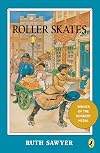
[b:Roller Skates|984168|Roller Skates|Ruth Sawyer|https://d.gr-assets.com/books/1348023335s/984168.jpg|1327018] is the story of 10 year old Lucinda, who has been left in the care of family friends while her parents are in Italy for a year. From an affluent upbringing, Lucinda sees a new side of New York during this year without strict adult supervision. She spends most of her time roller skating through the streets meeting new and diverse groups of people. On first glance, I thought I would show more really enjoy this book as it seemed to have a similar main character as in other books featuring a precocious young lady (think [b:Eloise|782854|Eloise |Kay Thompson|https://d.gr-assets.com/books/1348009989s/782854.jpg|768864]). However, it just didn't live up to my hopes for the book.
Lucinda, though at times helpful and kind, is spoiled and demanding. She begs and whines if she doesn't get her way, which in the end she always does. Such a great example for young readers. She, also, keeps secrets from her caregivers as to her whereabouts several times through the book. For instance, she eats a picnic with a vagrant who she doesn't know and visits a woman with an abusive husband and decides to keep both of these a secret.
The authors prejudices are often seen, as well. As the book takes place in New York City during the early 1930's, Lucinda often meets immigrant workers, including Italians, Jews, Irish, and Chinese. These characters are often referred to as "low class". At the end of the book, Lucinda knows she will not be able to see these friends again, as her parents won't allow contact with them.
The book, which moves along at a fairly nice pace, suddenly accelerates towards the end summarizing several areas of the plot into just a handful of pages. This leaves the reader feeling that the author, perhaps, simply ran out of ideas for her character. About midway through the book, a woman, who is her friend, is killed and the incident is never mentioned again and is never told to her guardians.
I just simply don't think this book is appropriate for young children and I wouldn't recommend it to mine. With racism, murder, abusive, jealous spouses, and bad behavior on the part of the main character it isn't a winning book for me. show less
Lucinda, though at times helpful and kind, is spoiled and demanding. She begs and whines if she doesn't get her way, which in the end she always does. Such a great example for young readers. She, also, keeps secrets from her caregivers as to her whereabouts several times through the book. For instance, she eats a picnic with a vagrant who she doesn't know and visits a woman with an abusive husband and decides to keep both of these a secret.
The authors prejudices are often seen, as well. As the book takes place in New York City during the early 1930's, Lucinda often meets immigrant workers, including Italians, Jews, Irish, and Chinese. These characters are often referred to as "low class". At the end of the book, Lucinda knows she will not be able to see these friends again, as her parents won't allow contact with them.
The book, which moves along at a fairly nice pace, suddenly accelerates towards the end summarizing several areas of the plot into just a handful of pages. This leaves the reader feeling that the author, perhaps, simply ran out of ideas for her character. About midway through the book, a woman, who is her friend, is killed and the incident is never mentioned again and is never told to her guardians.
I just simply don't think this book is appropriate for young children and I wouldn't recommend it to mine. With racism, murder, abusive, jealous spouses, and bad behavior on the part of the main character it isn't a winning book for me. show less

This delightful Tyrolean folktale, originally included by Ruth Sawyer in her 1941 collection, The Long Christmas, where it appears as Schnitzle, Schnotzle, and Schnootzle, follows the story of a poor cobbler and his three sons, who receive a most unexpected visitor one Christmas Eve night, and learn that there is truth in some of the old mountain legends. When the cobbler sets out for the village on Christmas Eve, hoping to earn a little money by mending the soldiers' shoes, he instructs his show more sons to admit no one to their small hut. But a persistent knocking, after he has left, reveals a most unusual visitor at the door: a grouchy little man with a big bulbous nose, who proceeds to make himself a real pest. But although he is very annoying, he also brings great good fortune, for he is none other than King Laurin, the king of all the goblins that live under the Tyrolean alps...
I enjoyed The Remarkable Christmas of the Cobbler's Sons - which I have also encountered in Neil Philip's collection, Christmas Fairy Tales - immensely, and would love to track down more Tyrolean folktales, perhaps Ruth Sawyer's own Dietrich of Berne: Hero Tales of the Austrian Tirol. King Laurin is a fascinating figure, and reminds me of so many other diminutive kings "of the mountain." Barbara Cooney's illustrations are, unsurprisingly, utterly charming, homey and magical by turn. Recommended to all young readers who enjoy folktales, to anyone looking for magical Christmas stories, and to Barbara Cooney fans! show less
I enjoyed The Remarkable Christmas of the Cobbler's Sons - which I have also encountered in Neil Philip's collection, Christmas Fairy Tales - immensely, and would love to track down more Tyrolean folktales, perhaps Ruth Sawyer's own Dietrich of Berne: Hero Tales of the Austrian Tirol. King Laurin is a fascinating figure, and reminds me of so many other diminutive kings "of the mountain." Barbara Cooney's illustrations are, unsurprisingly, utterly charming, homey and magical by turn. Recommended to all young readers who enjoy folktales, to anyone looking for magical Christmas stories, and to Barbara Cooney fans! show less
Lists
Awards


You May Also Like


Associated Authors
Statistics
- Works
- 43
- Also by
- 25
- Members
- 3,675
- Popularity
- #6,886
- Rating
- 3.8
- Reviews
- 70
- ISBNs
- 104
- Languages
- 2
- Favorited
- 1