
Rumer Godden (1907–1998)
Author of The Story of Holly and Ivy
About the Author
Margaret Rumer Godden was born Dec. 10, 1907, in Sussex, England. She was nine months old when her family moved to India, where her father ran a shipping line. She returned to London at age 20 to learn how to teach dance to children, and opened a school back in India. Returning to England while she show more was pregnant, she wrote her first book, "Chinese Puzzle," published in 1936. Her marriage to a stockbroker, Laurence Sinclair Foster, ended in 1941, leaving her penniless. In an effort to pay off her former husband's debts, Godden moved her family into a mountain cottage where she ran a school, made herbal teas for sale, and wrote books. Another novel of India, "The River," published in 1949, was one of her most acclaimed books and was made into a film by Jean Renoir in 1951. She returned to England to stay in 1945. Rumer Godden was the author of more than 60 books, including novels, short story collections, poetry, plays and non-fiction. She published her 21st novel, "Cromartie vs. the God Shiva," in 1997. Rumer Godden died a year later on November 8, 1998, in Thornhill, Scotland, at the age of 90. (Bowker Author Biography) show less
Disambiguation Notice:
Please don't combine this author with her sister Jon Godden.
Image credit: Rumer Godden, on June 1958
Series
Works by Rumer Godden
The Battle of the Villa Fiorita / The Greengage Summer / An Episode of Sparrows (1963) 94 copies, 1 review
The India Novels Volume One: Black Narcissus, Breakfast with the Nikolides, and The River (2018) 10 copies
The India Novels Volume Two: Cromartie vs. the God Shiva, The Lady and the Unicorn, The Peacock Spring, and Coromandel Sea Change (2018) 3 copies
Chinese Puzzle 3 copies
Bengal Journey: A story of the part played by women in the province, 1939-1945 (with 14 pages of illustrations) (1945) 2 copies
The River / Water Music 1 copy
Godden, Rumer Archive 1 copy
Premiēre 1 copy
Despertar a la vida 1 copy
Associated Works
Sing a Song of Popcorn: Every Child's Book of Poems (1988) — Contributing Translator — 1,176 copies, 27 reviews
Prayers from the Ark and The Creatures' Choir (1976) — Translator, some editions — 179 copies, 2 reviews
Reader's Digest Condensed Books 1981 v05: Vermilion / Totaled / Ike and Mamie / The Dark Horse / Fortress (1981) — Author — 38 copies
Reader's Digest Condensed Books 1970 v03: Operation Sippacik / The Secret Woman / One Life / The Song of Bernadette / The Shattered Dream (1970) — Author — 35 copies
Great Tours and Detours: The Sophisticated Traveler Series (1985) — Contributor — 35 copies, 1 review
Reader's Digest Condensed Books 1956 v01: Andersonville / Island in the Sun / An Episode of Sparrows / Minding Our Own Business / The Long Ride Home (1956) — Author — 34 copies
Great Short Stories of the English Speaking World, Volumes One and Two (1977) — Introduction — 30 copies
The Best of Both Worlds: An Anthology of Stories for All Ages (1968) — Contributor — 25 copies, 1 review
Reader's Digest Best Sellers 1969: Airport | Nicholas and Alexandra | The Kitchen Madonna | Vanished (1969) — Author — 20 copies
My Most Inspiring Moment: Encounters with Destiny Relived by Thirty-Eight Best-Selling Authors (1965) 12 copies
These Simple Things: Some Appreciations of the Small Joys in Daily Life (1965) — Contributor — 7 copies
Reader's Digest Condensed Books: The Dark Horse • Still Missing • This Was The North • Sharpe's Gold (1981) 5 copies
Reader's Digest Condensed Books: The Battle of the Villa Fiorita | The Edge of Sadness | On Safari | Of Good and Evil (1964) 4 copies, 1 review
Reader's Digest Condensed Books: One Child / The Dam / The Dark Horse / Wanted Dead — Author — 3 copies
RDCBLP Fireworks for Elspeth | The Education of Little Tree | Rear Window | Zoo Vet (1979) — Author — 3 copies
Reader's Digest Auswahlbücher 90 - Die Hunde des Krieges. La Balsa. Der Kardinal schweigt. Das fremde Kind (1975) — Contributor — 3 copies
Best-in-Books Volume 29: The Greengage Summer; Please Don't Eat the Daisies; Peter Freuchen's Book of the Seven Seas; Shadows Into Mist (1958) — Contributor — 3 copies
Reader's Digest Auswahlbücher 40 - Der Künstler. In den Schuhen des Fischers. Der Kampf in der Villa Fiorita. Strandgut (1965) — Contributor — 2 copies
Black Narcissus [2020 TV miniseries] — Original book — 2 copies
Elephant Bill; Dokter... spoedgeval; Een stukje van de hemel; Zij volgden het spoor 2 copies, 1 review
Der Turm Von Babel, Fuchsspur, Die Küchen-madonna, Aufstand Der Soldaten, Mädchenmord Mit Voranmeldung (1969) 1 copy
Een madonna voor Marta; De President; De wereldreis van de Gipsy Moth; Spion met twee gezichten — Author — 1 copy, 1 review
Sélection du Livre No. 76 : (1) Au nom de tous les miens - (2) Opération Sippacik - (3) Course contre la vie - (4) Le retour de Madame Pollifax — Contributor — 1 copy
Nudo io venni al mondo - Il viale della serenità - La prima pietra - La battaglia di Villa Fiorita (1965) — Contributor — 1 copy
Die Töchter der Madame Liang, Der geschenkte Gaul, Die blauen Blumen der Catstreet, Papillon (1972) — Contributor — 1 copy
Tagged
Common Knowledge
- Legal name
- Godden, Margaret Rumer (born)
Haynes-Dixon, Margaret Rumer Godden (married) - Birthdate
- 1907-12-10
- Date of death
- 1998-11-08
- Gender
- female
- Education
- Moira House School, Eastbourne, Sussex, England, UK
privately educated - Occupations
- dance teacher
novelist
children's book author - Organizations
- Roman Catholic Church
- Awards and honors
- Order of the British Empire (Officer, 1993)
- Agent
- Edith Haggard
- Relationships
- Godden, Jon (sister)
Key, Thomas Hewitt (great-great-grandfather) - Short biography
- Rumer Godden wrote some 60 works, including novels, children's books, biographies, and poetry, a number of them drawing on her experiences of life growing up in British India and then working there as an adult. Her portrayals of the secret thoughts and confusions of childhood are especially noteworthy.
- Cause of death
- complications of a stroke
- Nationality
- UK
- Birthplace
- Eastbourne, Sussex, England, UK
- Places of residence
- Narayanganj, India (now Bangladesh)
Calcutta, India
Moniaive, Dumfriesshire, Scotland, UK
Lamb House, Rye, East Sussex, England, UK
Eastbourne, Sussex, England, UK
London, Middlesex, England, UK (show all 7)
Kashmir, India - Place of death
- Moniaive, Dumfries and Galloway, Scotland, UK
- Burial location
- Rye, East Sussex, England, UK
- Map Location
- England, UK
- Disambiguation notice
Please don't combine this author with her sister Jon Godden.
Members
Discussions
Found: 1960s Children's novel girls ?sisters visiting Japan in Name that Book (January 2025)
July Read: Rumer Godden in Virago Modern Classics (October 2017)
December 2011: Rumer Godden in Monthly Author Reads (February 2012)
Reviews

Selina Russell and her shaggy pony Haggis befriend a cantankerous old farmer in this wonderfully evocative children's novel from the pen of Rumer Godden. Set in the Scottish border country, the story unfolds in the small village of Menoock, when Selina's Great Aunt Emily has left a bequest of twenty thousand pounds to build a park for the people. This good fortune leads to strife however, when solitary Mr. McFadden, the owner of the only piece of land that could work as the site of the park, show more won't sell his land. Angered by his stubborn refusal, the people of Menoock turn their back on him, and the Russell family are caught up in the conflict, owing to their kindness to the old man, after a bad accident occurs. Things come to a head one misty Halloween, as Selina sets out to deliver some of that holiday to her friend, who never seems to have experienced it...
Published in 1975, Mr. McFadden's Hallowe'en is another one of those marvelously engaging tales from Godden, whose children's books I usually find outstanding. I read the book in one sitting, and found everything about it appealing, from the cast of characters both human and animal—stubborn Haggis, with a mind of his own; beautiful, intelligent Lady; obstreperous but eventually friendly Big Wullie the gander—to the beautifully-realized setting, so wonderfully described. I loved the details about a traditional Scottish Halloween, with the carving of the turnips (a precursor to our North American pumpkin jack-o-lanterns), and the gathering of treats. The story itself tugs at the heartstrings, especially if the reader has a weakness for tales about oddballs and misfits finding their own people. There's sub-plot where abandoned Tim finds a home, of course, and Selina herself is a misfit, but the eponymous Mr. McFadden, despite his brusqueness, is the one whose transformation is most satisfying. There were elements here I found disturbing—the village's behavior toward Mr. McFadden, and the elder's boys' treatment of Selina on Halloween night—but they felt somehow true, in context. All in all, a lovely little book, one I would like to add to my personal collection, and reread in future. show less
Published in 1975, Mr. McFadden's Hallowe'en is another one of those marvelously engaging tales from Godden, whose children's books I usually find outstanding. I read the book in one sitting, and found everything about it appealing, from the cast of characters both human and animal—stubborn Haggis, with a mind of his own; beautiful, intelligent Lady; obstreperous but eventually friendly Big Wullie the gander—to the beautifully-realized setting, so wonderfully described. I loved the details about a traditional Scottish Halloween, with the carving of the turnips (a precursor to our North American pumpkin jack-o-lanterns), and the gathering of treats. The story itself tugs at the heartstrings, especially if the reader has a weakness for tales about oddballs and misfits finding their own people. There's sub-plot where abandoned Tim finds a home, of course, and Selina herself is a misfit, but the eponymous Mr. McFadden, despite his brusqueness, is the one whose transformation is most satisfying. There were elements here I found disturbing—the village's behavior toward Mr. McFadden, and the elder's boys' treatment of Selina on Halloween night—but they felt somehow true, in context. All in all, a lovely little book, one I would like to add to my personal collection, and reread in future. show less

The Plantagenets—a group of dolls of different types, made into a family by being thrown together and belonging to the same two girls—long for a proper doll house in this children's novel from Rumer Godden. Their wish is granted when the little girls, Emily and Charlotte, inherit a house from an elderly relative, and everything seems ideal at first. Tottie, a little farthing doll from 1846, is distressed by her experiences being loaned out to an exhibition, but is happy when she show more discovers she is not to be sold. But when Marchpane—a vain and cruel doll Tottie knew long ago—enters the scene, the Plantagenets find their happiness destroyed. Pushed aside in their own house, and disregarded by Emily, the elder of their two human girls, things go from bad to worse. Only an act of sacrificial love on the part of Birdie, a celluloid doll who is the mother of the Plantagenet family, sets things to rights...
Originally published in 1947, with illustrations by Dana Saintsbury, The Dolls' House was republished in the edition I read in 1962, with new artwork from Tasha Tudor. I have not seen the earlier edition, and therefore cannot speak to its appeal, but when it comes to the illustrations, this newer edition was simply charming! Tudor's black and white drawings, sprinkled throughout, are delightful, and greatly enhanced my reading experience. The story itself was fairly engaging, although nowhere near as appealing as some of Godden's other doll tales, such as The Story of Holly and Ivy, which is a personal favorite. I tend to have an on-again off-again relationship with doll fiction, sometimes finding it very appealing and poignant, and then sometimes being indifferent to it. This was shaping up to be in the latter category, until the final few chapters, which were unexpected and quite melancholy. I think Godden does some interesting things here, playing with themes such as the longing for a home—the dolls are a mismatched group, and some have experienced misfortune, so I interpreted this longing not as materialism, as some reviewers have stated, but as a desire for safety—and the silliness of class divisions. After all, Marchpane is a refined and expensive doll, whereas Birdie is a "cheap" celluloid doll, but in the end, it is the latter who has true value. All in all, I'm glad to have read this one, even though it's not destined to become a personal favorite, and I would recommend it to readers who enjoy doll fiction. show less
Originally published in 1947, with illustrations by Dana Saintsbury, The Dolls' House was republished in the edition I read in 1962, with new artwork from Tasha Tudor. I have not seen the earlier edition, and therefore cannot speak to its appeal, but when it comes to the illustrations, this newer edition was simply charming! Tudor's black and white drawings, sprinkled throughout, are delightful, and greatly enhanced my reading experience. The story itself was fairly engaging, although nowhere near as appealing as some of Godden's other doll tales, such as The Story of Holly and Ivy, which is a personal favorite. I tend to have an on-again off-again relationship with doll fiction, sometimes finding it very appealing and poignant, and then sometimes being indifferent to it. This was shaping up to be in the latter category, until the final few chapters, which were unexpected and quite melancholy. I think Godden does some interesting things here, playing with themes such as the longing for a home—the dolls are a mismatched group, and some have experienced misfortune, so I interpreted this longing not as materialism, as some reviewers have stated, but as a desire for safety—and the silliness of class divisions. After all, Marchpane is a refined and expensive doll, whereas Birdie is a "cheap" celluloid doll, but in the end, it is the latter who has true value. All in all, I'm glad to have read this one, even though it's not destined to become a personal favorite, and I would recommend it to readers who enjoy doll fiction. show less
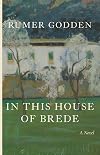
Who knew a book about nuns would be a five star read?! I unexpectedly adored this book. It centers around a Benedictine chapter of nuns - the kind of nuns who lead a contemplative life of prayer and isolate from the outside world. Philippa Talbot makes the unusual choice, as a successful 40-something business woman, to join the order. She remains the central character, and her journey to truly accepting the lifestyle and fulling opening up her heart to it is the crux of the book. But also, show more we see the power dynamics, relationships navigated, illness, financial difficulties of the abbey, and how the changes in the Catholic church over the 1900s will affect the Benedictine lifestyle.
I don't consider myself at all religious anymore, and I know next to nothing about Catholicism. I was really ready to read the first 40 pages or so and set this one aside, but I was totally enamored. As you would expect, it's a quiet, reserved book, but the characters and situations also have a depth and heart that I loved.
I read this on my kindle from the library, and I'm really considering buying a hard copy for my shelves to reread some day. show less
I don't consider myself at all religious anymore, and I know next to nothing about Catholicism. I was really ready to read the first 40 pages or so and set this one aside, but I was totally enamored. As you would expect, it's a quiet, reserved book, but the characters and situations also have a depth and heart that I loved.
I read this on my kindle from the library, and I'm really considering buying a hard copy for my shelves to reread some day. show less

The palace in Mopu had always been used by women - it was built as a harem palace and everyone remembers it as such. Tucked in the Indian Hymalayas, near Darjeeling, in a valley under Kangchenjunga, it belongs to the ruler, the General, of one of the princely states that still exist alongside the Indian Raj in the 1930s. After the death of the last princess to live there, the ruler decides to find a better use for the remote palace so offers it to the religious orders. The first tenants, an show more order of monks, open a school and then give up within a few months. When this novel opens, a different order, one of Anglican nuns, is about to build their new life there - opening a school and clinic for the women and children of the valley.
Sister Clodagh, the Irish Anglican nun, is the youngest Sister Superior of the order and is sent to the remote mountain with 4 more nuns - some of them a lot more experienced than she is, some of them really young. It takes them days to even reach the palace - and when they arrive, the buildings still need repairs and new buildings need to be built. The fact that the General tries to help by paying the villagers to come to the clinic and the school does not help much either.
But that is not the main story of the novel - even if that is the center of it. It is a novel of survival - physical but mostly mental. Nothing happens as anyone expects; the nuns who believe that they are prepared for it slowly realize that the mountain has its own rules and no amount of determination can change some of the realities. Alone in the mountain, alongside the superstitious villagers, with the mountain looming over them, everyone needs to reexamine their beliefs - even nuns. Clodagh, who is the main character and whose thoughts we get to see, is so strongly reminded of her native Ireland that she seems to return back in time at times. The other nuns face their own demons and change - while the mountain remains there, unchanged, unreachable. In a way, the novel really asks the question if belief in God is enough to allow you to deal with anything life throws at you - or if there is something bigger, even when you had promised your life to God - and that is explored not just with the nuns but also with the uncle of the current General - who is as unmovable as the mountain itself.
The mountain is really the main character of the novel - despite all the people (and there are a few more colorful characters in addition to the nuns), the mountain overshadows everything they do. Godden's descriptions of it highlight that - they make you feel as if you were there and saw it.
It is a slow novel - while there is quite a lot of action in it, it happens almost without you realizing it - you are too busy watching the birds which keep circling and still cannot reach the top, too busy just looking at the mountains around you. But at the same time the people we meet and their stories are important - because they are changed by the mountain. And as surprising as it can be in a novel like that, sex plays a major role in it - in multiple ways (none of them being vulgar or pornographic in any way). It is a novel about people's thoughts and feelings and a novel about Nature. show less
Sister Clodagh, the Irish Anglican nun, is the youngest Sister Superior of the order and is sent to the remote mountain with 4 more nuns - some of them a lot more experienced than she is, some of them really young. It takes them days to even reach the palace - and when they arrive, the buildings still need repairs and new buildings need to be built. The fact that the General tries to help by paying the villagers to come to the clinic and the school does not help much either.
But that is not the main story of the novel - even if that is the center of it. It is a novel of survival - physical but mostly mental. Nothing happens as anyone expects; the nuns who believe that they are prepared for it slowly realize that the mountain has its own rules and no amount of determination can change some of the realities. Alone in the mountain, alongside the superstitious villagers, with the mountain looming over them, everyone needs to reexamine their beliefs - even nuns. Clodagh, who is the main character and whose thoughts we get to see, is so strongly reminded of her native Ireland that she seems to return back in time at times. The other nuns face their own demons and change - while the mountain remains there, unchanged, unreachable. In a way, the novel really asks the question if belief in God is enough to allow you to deal with anything life throws at you - or if there is something bigger, even when you had promised your life to God - and that is explored not just with the nuns but also with the uncle of the current General - who is as unmovable as the mountain itself.
The mountain is really the main character of the novel - despite all the people (and there are a few more colorful characters in addition to the nuns), the mountain overshadows everything they do. Godden's descriptions of it highlight that - they make you feel as if you were there and saw it.
It is a slow novel - while there is quite a lot of action in it, it happens almost without you realizing it - you are too busy watching the birds which keep circling and still cannot reach the top, too busy just looking at the mountains around you. But at the same time the people we meet and their stories are important - because they are changed by the mountain. And as surprising as it can be in a novel like that, sex plays a major role in it - in multiple ways (none of them being vulgar or pornographic in any way). It is a novel about people's thoughts and feelings and a novel about Nature. show less
Lists
Which house? (1)
Summer Books (1)
Garden-fiction (1)
Folio Society (1)
Unmarried women (1)
Christmas Books (1)
All Things India (1)
1964 Project (1)
1960s (1)
Comfort Reads (3)
Monastic life (3)
A Novel Cure (2)
Elevenses (1)
Favourite Books (1)
Sonlight Books (1)
Awards


You May Also Like


Associated Authors
Statistics
- Works
- 89
- Also by
- 62
- Members
- 15,297
- Popularity
- #1,486
- Rating
- 4.0
- Reviews
- 300
- ISBNs
- 558
- Languages
- 9
- Favorited
- 69


