
Elizabeth Goudge (1900–1984)
Author of The Little White Horse
About the Author
Image credit: Uncredited Photo Bought from an EBay seller several years ago. The photo is signed by the author on the back.
Series
Works by Elizabeth Goudge
Three Cities of Bells: Oxford - Wells - Ely (A City of Bells + Towers in the Mist + The Dean's Watch) (1965) 35 copies, 1 review
The Eliots of Damerosehay (The Bird in the Tree / The Herb of Grace / The Heart of the Family) (1957) 27 copies
Guideposts Condensed Books: The Dean's Watch/A Mighty Tempest/When Is it Right to Die/Keys to a Successful Life (1993) 3 copies
Det gamle uret 1 copy
A Capela de São Miguel 1 copy
David the Shepherd Boy 1 copy
[Works] 1 copy
Great Grandfather's House 1 copy
Associated Works
Tagged
Common Knowledge
- Legal name
- Goudge, Elizabeth de Beauchamp
- Other names
- Goudge, Elizabeth
- Birthdate
- 1900-04-24
- Date of death
- 1984-04-01
- Gender
- female
- Education
- University of Reading
Grassendale School - Occupations
- children's book author
novelist
short story writer
teacher - Organizations
- Romantic Novelists' Association (vice-president)
- Awards and honors
- Carnegie Medal (1946)
Royal Society of Literature (Fellow, 1945) - Relationships
- Goudge, Henry Leighton (father)
- Short biography
- Elizabeth Goudge was born in the cathedral city of Wells. Elizabeth attended Grassendale School and studied art at University College Reading. She went on to teach design and handicrafts in Ely and Oxford. She was a best-selling author in both the UK and the USA from the 1930s through the 1970s. After her mother's death in 1951, Elizabeth Goudge moved to a cottage on Peppard Common, just outside Henley-on-Thames, where she lived for the last 30 years of her life.
- Nationality
- UK
- Birthplace
- Wells, Somerset, England, UK
- Places of residence
- Oxford, Oxfordshire, England, UK
Devon, England, UK
Ely, Cambridgeshire, England, UK - Place of death
- England, UK
- Map Location
- England, UK
Members
Discussions
Hi, I'm new - and an offer in Tattered but still lovely (June 2016)
Reviews

Oh, glorious. And exactly what I needed just now. She somehow manages to take the utterly banal - haddock and kids being obnoxious (as only kids can) and ordinary stuff like that - and the deeply spiritual - what are we here for, what is the proper aim of the human life - and in between, choices of true love or true happiness or true...call it faithfulness - and combine them all into one smooth tapestry of a very rich story, without those disparate elements jarring at all. A good story, on show more several levels - she's pushing a moral viewpoint, certainly, but it fits these characters and this situation, and doesn't (somehow) feel preachy. Oooh, I didn't know this was part of a trilogy! Must find the rest. This will be a regular reread, I think. show less
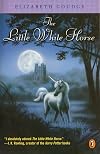
A particular kind of classic children's literature in which nothing too terrible happens, much is resolved, and you know from the first page that everyone is a very nice sort of person and all will end happily for them. And in between there are sometimes mysterious creatures and unexplained things and that's perfectly fine. Many adults would hate this book, but anyone who read it in childhood probably still loves it. It's that kind of book. I suspect it would irritate the shit out of Seanan show more McGuire, of Wayward Children fame, and anyone who longs for snark above earnestness but to me it's a cozy blanket of a book and a comfort in dark times. show less

This was dripping in historical atmosphere. Goudge is clearly in love with her location and historical characters. And so was I---when Philip Sidney, Elizabeth I, and Walter Raleigh weren't in the picture (I have little connection to them). Joyeuse, Nicolas, Faithful, Diccon, and even Canon Leigh were all people I loved living with for a short time. Particularly touching, I thought, was the way the author takes you through the historical facts regarding the religious upheaval of the time and show more then, in an instant, you see what it did to the emotions, the beliefs, and the lives of individuals. And, though I personally didn't care for the grand culminating event, it makes sense in the grand arc of what has and is happening within the individuals. show less

It is Christmas Eve in an English seaport town, and orphaned young Polly Flowerdew longs to leave one of the doors of her Aunt Constantia and Aunt Dorcas' house unlocked, in case the Wise Men decide to visit. Her maiden aunts are shocked - with no man in the house (only THE HAT), who will protect them? Although they love their vivacious young niece, and are in many ways indulgent of her, they do not totally understand her, or know what to make of her arguments. In the end, sly Polly has her show more way, and three men do indeed visit in the night. The strange gentleman, who turns out to be her long-lost Uncle Tom ; Polly's friend, the cat-loving Frenchman, who had recently lost his wife and daughter in the Terror of the French Revolution; and the old beggar "Rags-and-Bones," come to make his final call - this unlikely trio of Wise Men do indeed bring gifts. And when dawn comes, and Christmas Day arrives, three ships arrive in the harbor, one of them bringing a lady and child...
A beautiful, beautiful book, by turns poignant and amusing, with quirky but lovable characters, and a strong undercurrent of deeper meaning, I Saw Three Ships is a Christmas masterpiece! The classic Christmas carol, which gives the book its name, runs like a stream throughout the story, with various verses utilized at key moments, to draw out the themes of the tale. There is a sense of enchantment here, but not in any fantastical sense. It is the ineffable enchantment of the sacred, evoking that feeling of standing at once in two worlds - the world of an early 19th-century English seaside town, and the world of Christmas miracles, in which the Wise Men might indeed visit, and three ships might indeed come sailing in, bringing great blessing and joy with them. That sense of duality, of simultaneously inhabiting the physical world (marvelously and humorously described) and the world of the spirit (beautifully and poignantly evoked), makes this a truly outstanding work - one of Elizabeth Goudge's best!
This is a wonderfully written and descriptive book, with passages that made me stop and reread, sometimes chuckling, sometimes sighing with happy sadness. Consider this description of the Frenchman:
"When he was not kneeling in the old church by the harbor, saying Popish Latin prayers at the top of his high cracked voice and telling his Popish beads to the scandal of all good Protestants going in and out to polish the brass or beat the dust out of the hassocks, he was striding up and down the steep streets of the little town followed by all the cats of the neighborhood, who adored him not only for the fish heads he kept wrapped in newspaper in his pockets for them but for some quality in himself which appealed to their sense of breeding."
What flavor there is here! How one gets a sense of the little seaside town, with its parochial wariness of this outsider, with his "Popish" (AKA Catholic) ways. What a sense one gets of the outsider himself, deranged by his loss, and yet somehow still noble. And the cats! The cats who follow him - surely a sign of his good qualities!
I have had the pleasure of reading I Saw Three Ships on more than one occasion, although this is the first time I have reviewed it. My first reading was of the original British edition, illustrated by Richard Kennedy, whose artwork I found appealing, but not particularly memorable. This reading however, was of the American edition, with the artwork of Margot Tomes, and the visuals made the reading experience something extraordinary. I loved the story on both readings, but I greatly preferred the artwork here, which exactly fit the story, to my thinking. This is a book I would highly recommend, to anyone looking for beautifully written and beautifully illustrated Christmas stories. show less
A beautiful, beautiful book, by turns poignant and amusing, with quirky but lovable characters, and a strong undercurrent of deeper meaning, I Saw Three Ships is a Christmas masterpiece! The classic Christmas carol, which gives the book its name, runs like a stream throughout the story, with various verses utilized at key moments, to draw out the themes of the tale. There is a sense of enchantment here, but not in any fantastical sense. It is the ineffable enchantment of the sacred, evoking that feeling of standing at once in two worlds - the world of an early 19th-century English seaside town, and the world of Christmas miracles, in which the Wise Men might indeed visit, and three ships might indeed come sailing in, bringing great blessing and joy with them. That sense of duality, of simultaneously inhabiting the physical world (marvelously and humorously described) and the world of the spirit (beautifully and poignantly evoked), makes this a truly outstanding work - one of Elizabeth Goudge's best!
This is a wonderfully written and descriptive book, with passages that made me stop and reread, sometimes chuckling, sometimes sighing with happy sadness. Consider this description of the Frenchman:
"When he was not kneeling in the old church by the harbor, saying Popish Latin prayers at the top of his high cracked voice and telling his Popish beads to the scandal of all good Protestants going in and out to polish the brass or beat the dust out of the hassocks, he was striding up and down the steep streets of the little town followed by all the cats of the neighborhood, who adored him not only for the fish heads he kept wrapped in newspaper in his pockets for them but for some quality in himself which appealed to their sense of breeding."
What flavor there is here! How one gets a sense of the little seaside town, with its parochial wariness of this outsider, with his "Popish" (AKA Catholic) ways. What a sense one gets of the outsider himself, deranged by his loss, and yet somehow still noble. And the cats! The cats who follow him - surely a sign of his good qualities!
I have had the pleasure of reading I Saw Three Ships on more than one occasion, although this is the first time I have reviewed it. My first reading was of the original British edition, illustrated by Richard Kennedy, whose artwork I found appealing, but not particularly memorable. This reading however, was of the American edition, with the artwork of Margot Tomes, and the visuals made the reading experience something extraordinary. I loved the story on both readings, but I greatly preferred the artwork here, which exactly fit the story, to my thinking. This is a book I would highly recommend, to anyone looking for beautifully written and beautifully illustrated Christmas stories. show less
Lists
Ambleside Books (1)
Awards


You May Also Like


Associated Authors
Statistics
- Works
- 64
- Also by
- 12
- Members
- 12,470
- Popularity
- #1,878
- Rating
- 4.0
- Reviews
- 208
- ISBNs
- 420
- Languages
- 12
- Favorited
- 53
