
J. C. Ryle (1816–1900)
Author of Holiness: Its Nature, Hindrances, Difficulties, and Roots
About the Author
J. C. Ryle (1816-1900) was the first Bishop of Liverpool and an exemplar of someone of evangelical faith working in a mixed denomination. He first started writing to pay off his fathers debts, and his books have remained in print ever since.
Image credit: Public Domain
Series
Works by J. C. Ryle
Thoughts for Young Men: Addressing the Greatest Challenges in a Young Man's Life (1996) 2,079 copies, 6 reviews
Practical Religion: Being Plain Papers on Daily Duties, Experience Dangers and Privileges of Professing Christianity (1977) 1,074 copies, 2 reviews
Old Paths: Being Plain Statements of Some of the Weightier Matters of Christianity (1972) 409 copies, 1 review
Are You Ready for the End of Time?: Understanding Future Events from Prophetic Passages of the Bible (2006) 132 copies
The Agency That Transformed a Nation: Lessons from the Great Awakening of the Eighteenth Century (2011) 44 copies
The Cross [Annotated, Updated]: Crucified with Christ, and Christ Alive in Me (2019) 27 copies, 1 review
Straightforward Thoughts for Young Men: What Every Young Man Must Consider Now, Before It's Too Late (2019) 22 copies
Coming Events and Present Duties: What the Bible Tells Us Clearly about Christ’s Return [Updated and Annotated] (2014) 21 copies
Principles for Churchmen: A Manual of Positive Statements on Doubtful or Disputed Points (1884) 11 copies
Inspiration of the Scriptures 10 copies
Holiness [Annotated, Updated]: For the Will of God Is Your Sanctification – Hebrews 6:1 4 copies, 1 review
Sanctification 4 copies
The Cross 4 copies
Are You Happy? 3 copies
Are You Fighting? 3 copies
Thoughts on the Gospels 3 copies
Remember Lot's Wife 3 copies
Bible Reading 3 copies
Nicholas Ridley, Bishop and Martyr 2 copies
Bethany: Being expository thoughts, with notes, on the eleventh chapter of St. John's Gospel (1898) 2 copies
No Uncertain Sound and Other Sermons 2 copies
Spiritual Leadership 2 copies
Experiencing God 2 copies
Strijd de goede strijd 2 copies
Can There Be Unity and Other Works 2 copies
Seek The Lord Early 2 copies
Parenting for Eternity: 17 Practical Biblical Principles for Effective and Successful Child Training (2011) 2 copies
Guide to Christian Conduct 2 copies
Flee from Idolatry 2 copies
Home Truths, Volume 8 of 8 2 copies
Hoe gaat het met u? 2 copies
Aspecte ale Sfințeniei 1 copy
Neuva Vida 1 copy
Wheat or Chaff? 1 copy
Santidad 1 copy
None Other Name 1 copy
Perlas cristianas 1 copy
JOHN - VOL 3 1 copy
Our Souls 1 copy
Five English Martyrs 1 copy
JOHN - VOL 2 1 copy
Our Debt to the Reformation 1 copy
Lest we forget: Bishops Latimer and Ridley, their lives and times, their writings and martyrdom (1925) 1 copy
Reality 1 copy
Christian Love! 1 copy
Training of Children 1 copy
Verwacht U Hem? 1 copy
Justification 1 copy
Jesus Alene 1 copy
The Lord's Table 1 copy
Be Zealous! 1 copy
Wie hem vroeg zoekt 1 copy
Thoughts on Immortality with Some Remarks on Canon Farrar's “Eternal Hope” and Kindred Subjects 1 copy
The True Church 1 copy
Stand Firm and Fight On 1 copy
I Hope! 1 copy
Reading your Bible 1 copy
Old Paths, Book 2 1 copy
Vier predikaties 1 copy
De goede keus 1 copy
Old Paths, Book 1 1 copy
The Good Fight 1 copy
Having the Spirit 1 copy
Perseverance 1 copy
Election 1 copy
The World / The Best Friend 1 copy
The Battle for Christ 1 copy
The Lord's Supper 1 copy
Associated Works
Come, Thou Long-Expected Jesus: Experiencing the Peace and Promise of Christmas (2008) — Contributor, some editions — 518 copies, 2 reviews
Jesus, Keep Me Near the Cross: Experiencing the Passion and Power of Easter (2009) — Contributor, some editions — 393 copies, 4 reviews
Faith of Our Fathers, Vol. 1: Daily Devotional Collection from Inspired Christian Authors (2016) 2 copies
Bible Explorer — Contributor — 1 copy
E-Sword [software] — Contributor — 1 copy
Tagged
Common Knowledge
- Canonical name
- Ryle, J. C.
- Legal name
- Ryle, John Charles
- Birthdate
- 1816-05-10
- Date of death
- 1900-06-10
- Gender
- male
- Education
- Christ Church, Oxford University (BA|1838|MA|1871|DD|1880)
Eton College, Eton, Berkshire, England, UK - Occupations
- curate (Exbury, Hampshire)
rector (St Thomas's, Winchester)
rector (Helmingham, Suffolk)
vicar (Stradbroke)
canon (Norwich, honorary)
bishop (Liverpool) (show all 8)
author
writer - Organizations
- Church of England (ordained 1841)
Anglican Bishop of Liverpool (1880) - Short biography
- J.C. Ryle was a prolific writer, vigorous preacher, faithful pastor, husband of three wives (widowed three times) and the father to five children. He was thoroughly evangelical in his doctrine and uncompromising in his Biblical principles.
After being in Pastoral ministry in England for 38 years, in 1880 (at age 64) Ryle became the first Anglican Bishop of Liverpool and remained there for 20 years. He retired in 1900 (at age 83) and died later that same year at age 84.
► See more about J.C. Ryle at http://jcrylequotes.com/ - Nationality
- UK
- Birthplace
- Macclesfield, Cheshire, England, UK
- Places of residence
- Liverpool, Merseyside, England, UK
- Place of death
- Lowestoft, Suffolk, England, UK
- Burial location
- All Saints Church, Childwall, Liverpool, England, UK
- Map Location
- England, UK
Members
Reviews
This book was truly amazing. JC Ryle states at the outset that he chose hymns specifically for those who struggle with poor health, and that he wished to centre their thoughts on Christ. By doing so, he created a volume of hymns that is both encouraging and worshipful.
In addition to this, Ryle also selected hymns that were less well known so that his readers could experience new hymns, rather than those they have heard many times before. He admits that some of these hymns are less popular show more because of irregular metre or other issues. I must say that he succeeded in his choice, as I only recognised four out of the 300 hymns. And I know plenty of hymns.
I listened to the Librivox audiobook, which has the title "Hymns and Spiritual Songs". The narration was impeccable, and is definitely one of the reasons I appreciated this book so much.
As good as the narration was, I still wish I could have a hardcopy of this book. I'd love to be able to hold it in my hands and dip into it on a whim. I could probably find a digital version, but it's one of those books you want to hold and experience more tangibly.
On a final note, I found Victorian Christianity's attitudes about illness and death quite different to those of today. The hymnodists spoke with great surety, openness and hope about heaven. Their faith and acceptance in their suffering was refreshing compared to what I see in both the secular and Christian world. Too often today the patient is blamed for their illness, either for lack of faith or a positive outlook. Disease is a battle in which we either win, or lose in death. Whereas the hymn writers represented in this book accepted suffering as part of life. They saw God as healer, but they also viewed their eventual death as a rest and a final victory.
It's only early in the year, but I think it's safe to say this book will go down as one of my top reads for 2018. show less
In addition to this, Ryle also selected hymns that were less well known so that his readers could experience new hymns, rather than those they have heard many times before. He admits that some of these hymns are less popular show more because of irregular metre or other issues. I must say that he succeeded in his choice, as I only recognised four out of the 300 hymns. And I know plenty of hymns.
I listened to the Librivox audiobook, which has the title "Hymns and Spiritual Songs". The narration was impeccable, and is definitely one of the reasons I appreciated this book so much.
As good as the narration was, I still wish I could have a hardcopy of this book. I'd love to be able to hold it in my hands and dip into it on a whim. I could probably find a digital version, but it's one of those books you want to hold and experience more tangibly.
On a final note, I found Victorian Christianity's attitudes about illness and death quite different to those of today. The hymnodists spoke with great surety, openness and hope about heaven. Their faith and acceptance in their suffering was refreshing compared to what I see in both the secular and Christian world. Too often today the patient is blamed for their illness, either for lack of faith or a positive outlook. Disease is a battle in which we either win, or lose in death. Whereas the hymn writers represented in this book accepted suffering as part of life. They saw God as healer, but they also viewed their eventual death as a rest and a final victory.
It's only early in the year, but I think it's safe to say this book will go down as one of my top reads for 2018. show less
When I think of an Anglican bishop, I don’t think of a rural parson writing evangelical tracts for low-wage agricultural laborers; but then, I never met John Charles (J. C.) Ryle. Through the second half of the 19th century, his preaching and writing in the best traditions of evangelical English Calvinism were so engaging, profound, and gospel-centered that in 1880 he landed the bishopric of the brand-new Diocese of Liverpool. Despite his elevation to high status, he never lost the heart show more of a country preacher who loved Jesus and wanted you to love him too.
I didn’t know that Ryle was such a tract writer, but he published hundreds over the course of his life. One of his favorite annual traditions was to write a Christmas tract, reminding his parish of the reason for the season, encouraging them to step aside from mulled wine and mistletoe for a few minutes to contemplate Christ. Andrew Atherstone, Professor of Modern Anglicanism at Oxford University, does us the service of compiling five of these Christmas tracts into “Christmas Thoughts,” refreshing a modern audience with the heart of a man long entered into the rest he so deeply desired.
Rest in Christ is the thread Ryle weaves through all five tracts: “Real heart-rest is never to be found except in heart-union with Jesus Christ.” Even as curate and vicar in a sleepy rural district, Ryle could not have been unaware of the social ferment bubbling in England. Though Darwin and Marx published their respective magna opera after Ryle published these tracts, the streams of biological science and Industrial Revolution were already carving new channels for the river of time. Rest is hard to come by in unrestful times, and Ryle spared no effort to remind his readers where to find it.
Notably, Ryle doesn’t ground his hopes for happiness in Queen and Country, but in personal submission to a rule greater than the British Crown: “There is no true inward happiness until the true king is on the throne.” In my American context, in this Year of Our Lord Two Thousand and Twenty-Six, I appreciate this emphasis more than ever. I can’t say what Ryle would make of our rising tide of Christian Nationalists, who ground their hopes in a political and cultural dominance of their sectarian interpretation(s) of the faith. Ryle could afford to write casually of England as a Christian nation, and I can’t speculate on his reaction to an England that is largely post-Christian. All that said, the Ryle of the mid-nineteenth century is the one who speaks to me: “Rest not, rest not till you have trustful, loving, experimental, hopeful thoughts of Christ.”
If you think I’m dragging too many current events into timeless devotionals, I can only say that (in my mind, anyway) I’m contextualizing these precious thoughts just as Ryle did. His tracts are very contemporary and very British, drawing on illustrations such as a monument erected by Queen Victoria to a daughter of Charles I, the Glen Croe pass in Scotland, Mr. Standfast in “Pilgrim’s Progress,” Shakespeare’s “Troilus and Cressida,” and the common spiritual life shared by a converted Englishman and a converted “Hindoo” of India. Ryle knew that a faith detached from contemporary life is a meaningless jumble of words, a work done without love, a clanging cymbal. The fact that I can transplant his tracts from 150-year-old British soil to my modern American climate, and eat the fruit thereof with profit and joy, is a testament to the wisdom of building one’s hopes on the rock of Christ instead of on the sands of whatever has you hot and bothered today.
Today, indeed, is just a brief introduction to a very long tomorrow. Ryle had already buried one wife by the time he wrote the first tract in this collection, and he would bury a second before writing the last. He would survive his third wife by 11 years, and felt deeply the thinness of this world compared with the one to come. He urges his readers to consider their final destination, not in the language of fire and brimstone (though he affirms a belief in hell), but in the language of eternal rest open to all. Social status, national citizenship, and geographic location offer no advantage in God’s economy of grace freely given: “All graves are equally near to Paradise.” I can think of no greater summation of the gospel than this, that Christ has changed the doorway to Sheol into the entrance of Paradise.
Whatever Ryle would think of a vastly different and post-Christian world, I have no doubt he would be saddened by the fate of his bishopric. At the time of this writing, the Diocese of Liverpool has been under an interim bishop for more than a year after the previous one resigned over allegations of sexual misconduct. The seat has fallen far from the stature of its first occupant; and yet I think that, after the first wave of discouragement, Ryle would reorient himself heavenward. God’s true children, he wrote, “are still at school. They are daily learning wisdom, though slowly and with much trouble, and often needing to be reminded of their past lessons by chastisement and the rod. Their holidays are yet to come.” Christian nations come and go. Diocesan authorities rise and fall. The king of glory reigns still, and eye hath not seen what he hath prepared for them that love him. show less
I didn’t know that Ryle was such a tract writer, but he published hundreds over the course of his life. One of his favorite annual traditions was to write a Christmas tract, reminding his parish of the reason for the season, encouraging them to step aside from mulled wine and mistletoe for a few minutes to contemplate Christ. Andrew Atherstone, Professor of Modern Anglicanism at Oxford University, does us the service of compiling five of these Christmas tracts into “Christmas Thoughts,” refreshing a modern audience with the heart of a man long entered into the rest he so deeply desired.
Rest in Christ is the thread Ryle weaves through all five tracts: “Real heart-rest is never to be found except in heart-union with Jesus Christ.” Even as curate and vicar in a sleepy rural district, Ryle could not have been unaware of the social ferment bubbling in England. Though Darwin and Marx published their respective magna opera after Ryle published these tracts, the streams of biological science and Industrial Revolution were already carving new channels for the river of time. Rest is hard to come by in unrestful times, and Ryle spared no effort to remind his readers where to find it.
Notably, Ryle doesn’t ground his hopes for happiness in Queen and Country, but in personal submission to a rule greater than the British Crown: “There is no true inward happiness until the true king is on the throne.” In my American context, in this Year of Our Lord Two Thousand and Twenty-Six, I appreciate this emphasis more than ever. I can’t say what Ryle would make of our rising tide of Christian Nationalists, who ground their hopes in a political and cultural dominance of their sectarian interpretation(s) of the faith. Ryle could afford to write casually of England as a Christian nation, and I can’t speculate on his reaction to an England that is largely post-Christian. All that said, the Ryle of the mid-nineteenth century is the one who speaks to me: “Rest not, rest not till you have trustful, loving, experimental, hopeful thoughts of Christ.”
If you think I’m dragging too many current events into timeless devotionals, I can only say that (in my mind, anyway) I’m contextualizing these precious thoughts just as Ryle did. His tracts are very contemporary and very British, drawing on illustrations such as a monument erected by Queen Victoria to a daughter of Charles I, the Glen Croe pass in Scotland, Mr. Standfast in “Pilgrim’s Progress,” Shakespeare’s “Troilus and Cressida,” and the common spiritual life shared by a converted Englishman and a converted “Hindoo” of India. Ryle knew that a faith detached from contemporary life is a meaningless jumble of words, a work done without love, a clanging cymbal. The fact that I can transplant his tracts from 150-year-old British soil to my modern American climate, and eat the fruit thereof with profit and joy, is a testament to the wisdom of building one’s hopes on the rock of Christ instead of on the sands of whatever has you hot and bothered today.
Today, indeed, is just a brief introduction to a very long tomorrow. Ryle had already buried one wife by the time he wrote the first tract in this collection, and he would bury a second before writing the last. He would survive his third wife by 11 years, and felt deeply the thinness of this world compared with the one to come. He urges his readers to consider their final destination, not in the language of fire and brimstone (though he affirms a belief in hell), but in the language of eternal rest open to all. Social status, national citizenship, and geographic location offer no advantage in God’s economy of grace freely given: “All graves are equally near to Paradise.” I can think of no greater summation of the gospel than this, that Christ has changed the doorway to Sheol into the entrance of Paradise.
Whatever Ryle would think of a vastly different and post-Christian world, I have no doubt he would be saddened by the fate of his bishopric. At the time of this writing, the Diocese of Liverpool has been under an interim bishop for more than a year after the previous one resigned over allegations of sexual misconduct. The seat has fallen far from the stature of its first occupant; and yet I think that, after the first wave of discouragement, Ryle would reorient himself heavenward. God’s true children, he wrote, “are still at school. They are daily learning wisdom, though slowly and with much trouble, and often needing to be reminded of their past lessons by chastisement and the rod. Their holidays are yet to come.” Christian nations come and go. Diocesan authorities rise and fall. The king of glory reigns still, and eye hath not seen what he hath prepared for them that love him. show less
The modern church is tragically oblivious to the heroes that have gone before. I doubt whether few Christians could even identify basic facts about any one of the men highlighted in this biographical work: John Hooper, Rowland Tylor, Hugh Latimer, John Bradford, or Nicholas Ridley. Five English Reformers is a faith-stirring work packed with heart-rending testimonies about the martyrdom of saints. These brief chapters are sure to elicit an emotional response from the reader.
J.C. Ryle died in show more 1900. His writing style may be challenging for readers, but the payoff is definitely worth the effort. The first chapter alone provides a wonderful overview of the martyrdom of Protestant Reformers under the tyrannical reign of Queen Mary (Bloody Mary). In a world where persecution seems unthinkable in the western culture, Christians need to read this book.
If you take the time to read Five English Reformers, you will discover one of my heroes - Bishop Hugh Latimer. Old Latimer was burned next to Nicholas Ridley. He looked over at Ridley and declared, "Be of good cheer, Master Ridley, and play the man. We shall this day light such a candle, by God's grace, in England, as I trust shall never be put out." Play the man. How can you not love this challenge? Would that pastors and preachers would proclaim the same today!
While Five English Reformers is not without its flaws, I have given it the highest possible rating because the benefits of digesting a work of this caliber far surpass any flaws the book may have. show less
J.C. Ryle died in show more 1900. His writing style may be challenging for readers, but the payoff is definitely worth the effort. The first chapter alone provides a wonderful overview of the martyrdom of Protestant Reformers under the tyrannical reign of Queen Mary (Bloody Mary). In a world where persecution seems unthinkable in the western culture, Christians need to read this book.
If you take the time to read Five English Reformers, you will discover one of my heroes - Bishop Hugh Latimer. Old Latimer was burned next to Nicholas Ridley. He looked over at Ridley and declared, "Be of good cheer, Master Ridley, and play the man. We shall this day light such a candle, by God's grace, in England, as I trust shall never be put out." Play the man. How can you not love this challenge? Would that pastors and preachers would proclaim the same today!
While Five English Reformers is not without its flaws, I have given it the highest possible rating because the benefits of digesting a work of this caliber far surpass any flaws the book may have. show less
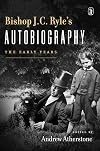
Ever since reading Holiness many years ago, I have been a fan of J C Ryle (1816-1900). I have read many books by him; recently I have read two books about him. The first was Ryle's biography by Iain H. Murray, J.C. Ryle: Prepared to Stand Alone, which was very good. Now I have completed Bishop J. C. Ryle's Autobiography: The Early Years.
Editor Andrew Atherstone prepared the book from the recently-recovered manuscript of Ryle's autobiography, which he wrote for his children. As the title show more indicates, Ryle covers only about the first half of his life (his children were familiar with it from that point on). As one interested in the Victorian Age generally, and Ryle particularly, I found the book fascinating as the man tells his own story. Ryle went from riches to rags, from nominal Christianity to true faith in Christ, from a would-be lawyer, then banker, to a reluctant minister of the Church of England, only to become one of the outstanding evangelical preachers and writers of his day.
In addition to Ryle's autobiography, the book includes some of Ryle's early tracts, a funeral sermon he preached for a beloved parishioner, speeches from his Eton days, and other artifacts. Perhaps the most delightful element of the book is the many photographs of Ryle, his family, and places he lived and ministered. Many were taken by his third wife Henrietta, an early amateur photographer. Her photos include some of Ryle and others acting out scenes from Christian history and the book Pilgrim's Progress.
I have long been blessed and helped by Ryle's books, so naturally I was fascinated to read of his life. I recommend this book to anyone, but especially to a reader of Ryle. Yes, he ended his ministry and life as the first bishop of Liverpool, but he went through many afflictions and much heartache along the way. His steadfastness in life and ministry inspire and encourage. show less
Editor Andrew Atherstone prepared the book from the recently-recovered manuscript of Ryle's autobiography, which he wrote for his children. As the title show more indicates, Ryle covers only about the first half of his life (his children were familiar with it from that point on). As one interested in the Victorian Age generally, and Ryle particularly, I found the book fascinating as the man tells his own story. Ryle went from riches to rags, from nominal Christianity to true faith in Christ, from a would-be lawyer, then banker, to a reluctant minister of the Church of England, only to become one of the outstanding evangelical preachers and writers of his day.
In addition to Ryle's autobiography, the book includes some of Ryle's early tracts, a funeral sermon he preached for a beloved parishioner, speeches from his Eton days, and other artifacts. Perhaps the most delightful element of the book is the many photographs of Ryle, his family, and places he lived and ministered. Many were taken by his third wife Henrietta, an early amateur photographer. Her photos include some of Ryle and others acting out scenes from Christian history and the book Pilgrim's Progress.
I have long been blessed and helped by Ryle's books, so naturally I was fascinated to read of his life. I recommend this book to anyone, but especially to a reader of Ryle. Yes, he ended his ministry and life as the first bishop of Liverpool, but he went through many afflictions and much heartache along the way. His steadfastness in life and ministry inspire and encourage. show less
Lists
You May Also Like


Associated Authors
Statistics
- Works
- 278
- Also by
- 10
- Members
- 21,702
- Popularity
- #990
- Rating
- 4.4
- Reviews
- 70
- ISBNs
- 644
- Languages
- 13
- Favorited
- 18
