
Virginia Lee Burton (1909–1968)
Author of Mike Mulligan and His Steam Shovel
About the Author
Virginia Lee Burton was born August 30, 1909 in Massachusetts. She was an author and illusrator of children's books. Her titles include Maybelle the Cable Car, Mike Mulligan and His Steam Shovel and Choo Choo: The Story of a Little Engine Who Ran Away. In 1942, she won the Caldecott Medal for her show more title, The Little House. Burton died on October 15, 1968 in Massachusetts. (Bowker Author Biography) show less
Image credit: This is a black-and-white headshot of children's author Virginia Lee Burton. By Source (WP:NFCC#4), Fair use, https://en.wikipedia.org/w/index.php?curid=35964318
Works by Virginia Lee Burton
Associated Works
The 20th-Century Children's Book Treasury: Picture Books and Stories to Read Aloud (1998) — Contributor — 1,836 copies, 14 reviews
Tagged
Common Knowledge
- Canonical name
- Burton, Virginia Lee
- Other names
- Demetrios, Virgina (married name)
Jinnee (childhood nickname) - Birthdate
- 1909-08-30
- Date of death
- 1968-10-15
- Gender
- female
- Education
- California School of Fine Arts (Art & Dance)
- Occupations
- children's book author
illustrator
dance teacher
sketcher - Organizations
- Folly Cove Designers, Cape Ann, Massachusetts
Boston Evening Transcript - Awards and honors
- Caldecott Medal 1942
- Relationships
- Demetrios, George (husband)
Demetrios, Aris (son) - Cause of death
- lung cancer
- Nationality
- USA
- Birthplace
- Newton Centre, Massachusetts, USA
- Places of residence
- Lincoln, Massachusetts, USA
San Diego, California, USA
Boston, Massachusetts, USA
Folly Cove, Massachusetts, USA
Carmel-by-the-Sea, California, USA
Alameda, California, USA - Place of death
- Boston, Massachusetts, USA
- Map Location
- Massachusetts, USA
Members
Reviews

What an odd story about obsolescence and repurposing! Riffing off the legend of John Henry, a steam shovel operator wagers that he can completely dig a building foundation in a day with his outdated equipment or he won't get paid. Somehow the whole town gets caught up in this race against time and circle the growing hole to watch.
The cadence of the story is weird, but lends itself to some equally weird experimentation when reading it aloud. Today I tried reading the whole thing as a boxing show more announcer. The anthropomorphized face on the steam shovel seems out of place and unnecessary, but sure, why not.
For me, the best part is the asterisk near the end of the story where the author acknowledges the little boy next door who came up with an ending when she literally wrote herself into a corner. How candid and considerate. show less
The cadence of the story is weird, but lends itself to some equally weird experimentation when reading it aloud. Today I tried reading the whole thing as a boxing show more announcer. The anthropomorphized face on the steam shovel seems out of place and unnecessary, but sure, why not.
For me, the best part is the asterisk near the end of the story where the author acknowledges the little boy next door who came up with an ending when she literally wrote herself into a corner. How candid and considerate. show less

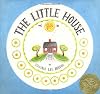
Built to stand the test of time, a little pink house leads a happy life in the countryside, watching the sun rise and set, the moon wax and wane, and the human generations go by. She occasionally wonders what life is like in the big city, never dreaming that one day her curiosity will be satisfied. One day a road is put in, running right by her front yard, and soon the area around her is filled with homes. The homes gives way to buildings, the buildings grow ever taller, and trolley-cars and show more then an elevated train-track appear before her door. Eventually the little house finds that she cannot see the moon or stars, because of the lights of the city, that she sees the sun only at noon, and that she has become dirty and dilapidated. Is it the end for the Little House? Or is another change in store...?
Awarded the Caldecott Medal in 1943, this classic picture-book from Virginia Lee Burton, also the creator of such beloved childhood titles as Mike Mulligan and His Steam Shovel and Katy and the Big Snow, is a sweet tale that, for all its vintage artwork, feels very fresh and contemporary to me. There are days when, part of a rushing crowd here on the streets of New York City, or squeezed into a packed subway car, I long for quieter, calmer locales - places where I can smell the flowers and see the trees. Even in the less crowded suburban town where I live, I sometimes long for the fresh beauty of the country - somewhere I can sit and really see the stars! Burton taps into that longing with this story of change, painting a portrait of development that is by no means flattering. There is real pathos in the transformation of the world around the house, who is overtaken by urban sprawl, and slowly strangled by the inherent disadvantages of city life, just as there is joy in her liberation from urbanity, and her renewed existence as a family home. The artwork has an old-fashioned feeling to it, but is still very appealing. I particularly liked the way that changing fashions - in both clothing and mode of transportation - are chronicled in the illustrations, through the parade of tiny people and vehicles passing by the house in each scene.
In sum: an engaging, heartwarming tale is joined to appealing artwork in The Little House, making it a book that (much like the house itself) has stood the test of time. show less
Awarded the Caldecott Medal in 1943, this classic picture-book from Virginia Lee Burton, also the creator of such beloved childhood titles as Mike Mulligan and His Steam Shovel and Katy and the Big Snow, is a sweet tale that, for all its vintage artwork, feels very fresh and contemporary to me. There are days when, part of a rushing crowd here on the streets of New York City, or squeezed into a packed subway car, I long for quieter, calmer locales - places where I can smell the flowers and see the trees. Even in the less crowded suburban town where I live, I sometimes long for the fresh beauty of the country - somewhere I can sit and really see the stars! Burton taps into that longing with this story of change, painting a portrait of development that is by no means flattering. There is real pathos in the transformation of the world around the house, who is overtaken by urban sprawl, and slowly strangled by the inherent disadvantages of city life, just as there is joy in her liberation from urbanity, and her renewed existence as a family home. The artwork has an old-fashioned feeling to it, but is still very appealing. I particularly liked the way that changing fashions - in both clothing and mode of transportation - are chronicled in the illustrations, through the parade of tiny people and vehicles passing by the house in each scene.
In sum: an engaging, heartwarming tale is joined to appealing artwork in The Little House, making it a book that (much like the house itself) has stood the test of time. show less
I know this wasn't the point of the book, but this story really got me thinking about how much I've been struggling against our new suburban lifestyle. I was longing for urban living---public transit, museums...sidewalks---and I've been chafing a under the difficulty of pedestrian travel, how spread out we are from the people we know, and how much we depend on our car where we live now. But this book helped highlight for me the things I like about living "out in the country".
My kids like the show more story, too, although my daughter is disappointed that it's not a Laura Ingalls Wilder "Little House" story. She seems feel offended at the false advertising of the title. show less
My kids like the show more story, too, although my daughter is disappointed that it's not a Laura Ingalls Wilder "Little House" story. She seems feel offended at the false advertising of the title. show less

A sturdy, hard-working crawler tractor named Katy longs for a big snow in this classic picture book from 1943, so that she too can get out there and do her part as a snow plow. Too heavy to be used on regular snowfall, Katy springs into action when a major snowstorm buries Geoppolis, with drifts up to the second storey of the buildings. As each sector of the city calls for help—the police, the postal service, the telephone and electric companies, the water department, the doctor with his show more patient, the fire department, the airport—Katy steps in, faithfully plowing the snow so that life can get back to normal...
Originally published in 1943, Katy and the Big Snow is another one of those wonderfully nostalgic picture books from author/artist Virginia Lee Burton, who won the Caldecott Medal for her 1942 The Little House, and whose best-known book, Mike Mulligan and His Steam Shovel, was a personal favorite as a child. As someone who loves winter, and who has been happy that the area where I currently live got some proper snow this year—we haven't, the last few years—I thought I'd read this wonderful wintry title and experience the joy and beauty of the season (albeit it a little late at this point, as we head into early spring). I love the story here, with goodhearted Katy steps in to help when her community needs her, never giving up, even when she gets a little tired. I also loved the artwork, with its vintage charm. Recommended to picture book audiences seeking wintry tales, or stories of anthropomorphic vehicular heroes and heroines. show less
Originally published in 1943, Katy and the Big Snow is another one of those wonderfully nostalgic picture books from author/artist Virginia Lee Burton, who won the Caldecott Medal for her 1942 The Little House, and whose best-known book, Mike Mulligan and His Steam Shovel, was a personal favorite as a child. As someone who loves winter, and who has been happy that the area where I currently live got some proper snow this year—we haven't, the last few years—I thought I'd read this wonderful wintry title and experience the joy and beauty of the season (albeit it a little late at this point, as we head into early spring). I love the story here, with goodhearted Katy steps in to help when her community needs her, never giving up, even when she gets a little tired. I also loved the artwork, with its vintage charm. Recommended to picture book audiences seeking wintry tales, or stories of anthropomorphic vehicular heroes and heroines. show less
Lists
Five star books (1)
4th Grade Books (1)
1940s (1)
Which house? (1)
. (1)
Winter Books (1)
Awards


You May Also Like


Associated Authors
Statistics
- Works
- 17
- Also by
- 7
- Members
- 22,622
- Popularity
- #937
- Rating
- 4.2
- Reviews
- 280
- ISBNs
- 214
- Languages
- 9
- Favorited
- 15