
Barbara Cooney (1917–2000)
Author of Miss Rumphius
About the Author
Barbara Cooney and her twin brother were born on 6 August 1917 in Brooklyn, New York, in the Bossert Hotel. She grew up on Long Island, but spent her summers as a child in Maine. Cooney attended a boarding school as a child. Cooney graduated from Smith College in 1938 and studied lithography and show more etching at Art Students League in New York. Just one year after graduation, she had her first commission, the illustrations for Ake and His World by Bertil Malmberg. Recalling an earlier trip to Germany before the war and the horrors that she had seen there, she felt compelled to join the Women's Army Corps during the summer of 1942. She enrolled in officer training and achieved the rank of second lieutenant, but was honorably discharged the following spring because of marriage pregnancy. The couple bought a farm in Pepperell, Massachusetts where they ran a children's camp during the summer months. By this time, Cooney was illustrating several books a year and wrote one now and then. It was for her adaptation of Chaucer's The Nun Priest's Tale that she won the prestigious Caldecott Medal, the highest honor given for illustrated children's books in the United States, in 1959. Twenty-one years later, Cooney again won the Caldecott Medal for Ox-Cart Man written by Donald Hall. In 1993, Ms. Cooney deposited more than 400 pieces of original art from 21 of her books in the Northeastern Children's Literature Collection, a part of the University Libraries' Archives and Special Collections. Works from this collection and from the artist's private collection are shown in this exhibit. Miss Rumphius won the National Book Award in 1983 and inspired the creation of the Maine Library Association's Lupine Award. Cooney died on 14 March, 2000 at the age of 83. Her last book was Basket Moon published in September of 1999. (Bowker Author Biography) show less
Works by Barbara Cooney
The courtship, merry marriage, and feast of Cock Robin and Jenny Wren, to which is added The doleful death of Cock Robin (1965) 32 copies, 1 review
The Man Who Walked Between the Towers --and More Inspiring Tales [2005 animated short] (2005) — Original book — 6 copies
Snow White and Rose Red 1 copy
King of Wreck island 1 copy
Associated Works
Five Little Peppers and How They Grew (Illustrated Junior Libary) (1881) — Illustrator, some editions — 4,677 copies, 49 reviews
The Glorious Flight: Across the Channel with Louis Bleriot July 25, 1909 (1983) — Illustrator — 2,370 copies, 31 reviews
The Year of the Perfect Christmas Tree: An Appalachian Story (1988) — Illustrator — 1,655 copies, 23 reviews
From Sea to Shining Sea: A Treasury of American Folklore and Folk Songs (1993) — Illustrator — 811 copies, 2 reviews
Tortillitas para Mamá and Other Nursery Rhymes (Bilingual Edition in Spanish and English) (1981) — Illustrator — 379 copies, 3 reviews
Louhi, Witch of North Farm: A Story From Finland's Epic Poem 'The Kalevala' (1986) — Illustrator — 122 copies, 4 reviews
Friends with God; stories and prayers of the Marshall family (1980) — Illustrator, some editions — 84 copies
Midsummer Magic: A Garland of Stories, Charms, and Recipes (1977) — Illustrator — 30 copies, 1 review
Cricket Magazine, Vol. 8, No. 1, September 1980 — Illustrator — 1 copy
Tagged
Common Knowledge
- Birthdate
- 1917-08-06
- Date of death
- 2000-03-10
- Gender
- female
- Education
- Smith College (History)
- Occupations
- children's book author
children's book illustrator - Relationships
- Murchie, Guy (husband)
- Short biography
- Barbara Cooney was born in Brooklyn, New York. Her father was a stockbroker and her mother was an artist who encouraged Barbara's talent for art. She attended private schools and graduated from Smith College before briefly attending art school in New York. A year later, she got her first commission: the illustrations for Ake and His World (1940) by Bertil Malmberg. During World War II, Barbara served in the Women’s Army Corps and married Guy Murchie in 1944. They had two children. The couple later divorced and Barbara remarried in 1949 to Charles T. Porter, a physician, with whom she had two children. In the course of her long career, Barbara Cooney illustrated more than 100 books. After receiving her second Caldecott award, she began to write books as well. In her final years, she lived in a house in Maine overlooking the sea.
- Nationality
- USA
- Birthplace
- Brooklyn, New York, New York, USA
- Places of residence
- Long Island, New York, USA
Maine, USA - Place of death
- Damariscotta, Maine, USA
- Map Location
- New York, USA
Members
Reviews

Growing up, Alice Rumphius dreamt of seeing the world, and then settling down in a little house by the sea. Confiding in her beloved grandfather - an artist like herself - Alice is told that she must do one additional thing: she must make the world a more beautiful place. Many years later, having lived her dreams, Alice sets out to fulfill her promise to her grandfather. But what can she do to make the world more beautiful...?
This was a sweet story - and the illustrations were simply show more gorgeous! - but I confess that I wasn't as impressed as I expected to be, given the number of goodreads friends who have awarded it four or five stars. The two main criticisms I have seen of Miss Rumphius - that planting lupines all over the place (the beautification project chosen by our heroine) is actually an ecologically unsound idea, as they are quite invasive, and will destroy indigenous flora; and that the wooden cigar Indians carved by Alice's grandfather are offensive, and should not have been included in a book first published in 1982 - don't really explain my lack of enthusiasm. (not that they aren't true)
I guess the truth is that I'm leery of the notion that beauty - finding it, creating it, being it - is the purpose of life. Of course, we all find our own purpose, and for an artist, beauty must surely come into it. But there is this way, in our culture, that girls and women are shepherded toward the ideal of beauty, persuaded that our highest calling is somehow entangled with it, whether in a personal way (being physically beautiful ourselves) or a practical one (creating beauty in our homes and work). And my response to that is: No. No, I don't think making the world a more beautiful place - as it is defined here - is the highest (or only) goal. I want to help make the world a more just place.
In any case, I don't want to go overboard here. As a tale of giving something back, rather than just living for oneself alone, I think Miss Rumphius has merit, and I understand why it is so beloved by other readers. But I simply can't agree with those reviewers (and there seem to be many of them) who perceive it as some kind of guide to life. A hint, perhaps - one of many... show less
This was a sweet story - and the illustrations were simply show more gorgeous! - but I confess that I wasn't as impressed as I expected to be, given the number of goodreads friends who have awarded it four or five stars. The two main criticisms I have seen of Miss Rumphius - that planting lupines all over the place (the beautification project chosen by our heroine) is actually an ecologically unsound idea, as they are quite invasive, and will destroy indigenous flora; and that the wooden cigar Indians carved by Alice's grandfather are offensive, and should not have been included in a book first published in 1982 - don't really explain my lack of enthusiasm. (not that they aren't true)
I guess the truth is that I'm leery of the notion that beauty - finding it, creating it, being it - is the purpose of life. Of course, we all find our own purpose, and for an artist, beauty must surely come into it. But there is this way, in our culture, that girls and women are shepherded toward the ideal of beauty, persuaded that our highest calling is somehow entangled with it, whether in a personal way (being physically beautiful ourselves) or a practical one (creating beauty in our homes and work). And my response to that is: No. No, I don't think making the world a more beautiful place - as it is defined here - is the highest (or only) goal. I want to help make the world a more just place.
In any case, I don't want to go overboard here. As a tale of giving something back, rather than just living for oneself alone, I think Miss Rumphius has merit, and I understand why it is so beloved by other readers. But I simply can't agree with those reviewers (and there seem to be many of them) who perceive it as some kind of guide to life. A hint, perhaps - one of many... show less

Award-winning American children's author and artist Barbara Cooney retells the medieval French legend of The Juggler of Notre Dame in this lovely little picture book, first published in 1961. Trained to juggle and entertain by his father, Barnaby was left an orphan at the age of ten, and used his only skill in order to survive. But when winter comes and audiences at markets and fairs disappear, the little juggler is not sure what to do. Fortunately a monk sees him performing one wintry day, show more and brings him back to the abbey, where he is given food and shelter. Keenly conscious that he is giving nothing to God, when all those around him are, Barnaby decides to perform for the Virgin Mary and Christ Child in their chapel, leading to a wondrous miracle one Christmas Eve night...
I grew up reading and loving Tomie dePaola's wonderful picture book, The Clown of God, which adapts this story and gives it an Italian setting, and never knew about its French origins until I discovered Barbara Cooney's The Little Juggler. How glad I am to have done so, both because The Clown of God is one of my favorites, and I appreciate having a retelling of the original story it is based upon, and because this is simply a beautiful book, in its own right. The story is beautiful—poignant and engrossing—and the artwork simply gorgeous! I appreciated the background given about the story in the brief author's note, the fact that it was first written down in the 13th century, in an Old French manuscript now held by the Bibliothèque de l'Arsenal in Paris—there is an image of the manuscript on the back cover of the book—and that it has been retold many times since. I think I will have to reread The Clown of God now, and perhaps also track down Violet Moore Higgins' 1917 The Little Juggler and Other French Tales Retold. As for this one, it is highly recommended to anyone seeking wonderful medieval tales of faith and miracles, as well as to fellow fans of the artist. show less
I grew up reading and loving Tomie dePaola's wonderful picture book, The Clown of God, which adapts this story and gives it an Italian setting, and never knew about its French origins until I discovered Barbara Cooney's The Little Juggler. How glad I am to have done so, both because The Clown of God is one of my favorites, and I appreciate having a retelling of the original story it is based upon, and because this is simply a beautiful book, in its own right. The story is beautiful—poignant and engrossing—and the artwork simply gorgeous! I appreciated the background given about the story in the brief author's note, the fact that it was first written down in the 13th century, in an Old French manuscript now held by the Bibliothèque de l'Arsenal in Paris—there is an image of the manuscript on the back cover of the book—and that it has been retold many times since. I think I will have to reread The Clown of God now, and perhaps also track down Violet Moore Higgins' 1917 The Little Juggler and Other French Tales Retold. As for this one, it is highly recommended to anyone seeking wonderful medieval tales of faith and miracles, as well as to fellow fans of the artist. show less

This delightfully nostalgic tale really brought me back to my own childhood, when I constructed entire worlds in my imaginary play, with my own country (Arcania) that had its own language and history. The old carriage house in our back-yard was alternately a castle, a prison, or a mountain (I vividly recall the day I almost rolled off the roof, onto the jagged rocks beneath), while the little wooded area beside it was a forest, and the little valley with the tulip tree an elfin glen. show more Children, when left to their own devices - which, if it can be safely managed, I strongly believe should be done at least some of the time - have incredibly rich inner lives, and will use whatever materials and locations are to hand, in constructing those lives.
This is something that Alice McLerran, who based her story on a real neighborhood "playground" created by her mother, and her mother's sisters and friends, understands. Roxaboxen is a tribute to that disappeared playground - initially, just a local hill with a bunch of rocks and broken boxes on it - and to the many hours of enjoyment the neighborhood children got out of it, creating their own "town," with houses and shops. Who hasn't played "pretend pony," as the children do here? Or gone into business, and "set up shop?" These common childhood games are brilliantly captured here, both by McLerran's narrative, and by Barbara Cooney's appealing illustrations. Highly, highly recommended! show less
This is something that Alice McLerran, who based her story on a real neighborhood "playground" created by her mother, and her mother's sisters and friends, understands. Roxaboxen is a tribute to that disappeared playground - initially, just a local hill with a bunch of rocks and broken boxes on it - and to the many hours of enjoyment the neighborhood children got out of it, creating their own "town," with houses and shops. Who hasn't played "pretend pony," as the children do here? Or gone into business, and "set up shop?" These common childhood games are brilliantly captured here, both by McLerran's narrative, and by Barbara Cooney's appealing illustrations. Highly, highly recommended! show less
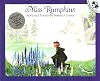
I love this beautiful story, so full of heart. Alice Rumphius has vowed to travel to travel to faraway places, and live by the sea, just like her grandfather. He asked of her only one more thing: to make the world a more beautiful place. While her first two goals are easier to accomplish, she is puzzled by her grandfather's request, until a chance wind teaches her how she can make the world a beautiful place in her own way.
This story rings with wisdom and love. It teaches children (and show more adults, too!) about beauty, whose nature is subjective and personal, shifting and changing, yet present in all the world. The book also challenges readers to discover his or her own definition for beauty, and moreover, to contribute their beauty to others. I am teary-eyed every time I finish this story. Thank you, Ms. Cooney, for leaving us such a powerful book. show less
This story rings with wisdom and love. It teaches children (and show more adults, too!) about beauty, whose nature is subjective and personal, shifting and changing, yet present in all the world. The book also challenges readers to discover his or her own definition for beauty, and moreover, to contribute their beauty to others. I am teary-eyed every time I finish this story. Thank you, Ms. Cooney, for leaving us such a powerful book. show less
Lists
Ambleside Books (3)
Garden (1)
Ambleside Y2 (1)
1990s (1)
Five star books (1)
Five in a Row (2)
Five in a Row (2)
Awards


You May Also Like


Associated Authors
Statistics
- Works
- 27
- Also by
- 67
- Members
- 16,857
- Popularity
- #1,331
- Rating
- 4.1
- Reviews
- 376
- ISBNs
- 169
- Languages
- 5
- Favorited
- 10