
Leander Watts
Author of Beautiful City of the Dead
About the Author
Works by Leander Watts
"Tweye Poems" 1 copy
Sphincter And Sphinx 1 copy
Seized By Meat 1 copy
The Masonic Dream Engine 1 copy
Shock Totem 1 copy
Associated Works
Love in Vein II : Eighteen More Tales of Vampiric Erotica (1997) — Contributor — 513 copies, 7 reviews
Gone to Croatan: Origins of North American Dropout Culture (1994) — Contributor — 110 copies, 5 reviews
Science Fiction Eye #10, June 1992 — Contributor — 1 copy
Tagged
Common Knowledge
- Legal name
- Metzger, Thomas
- Gender
- male
Members
Reviews
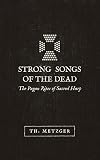
Th. Metzger has a broad ouvre. He's written 3 anarchist horror fiction novels (published by a mainstream publisher), a non-fiction book about the Tesla-Edison rivalry, a book about the history of Heroin, an epic poem about Mormons, Nazi amphetamine use, Rommel in Africa, and the Cabinet of Doctor Caligari, a memoir of his friendship with Hakim Bey / Peter Lamborn Wilson, a fictional memoir of a real Catholic priest / abortionist, a memoir of his pseudonymous flirtation with conversion to the show more LDS church, science fiction short stories, and five young adult novels written as Leander Watts. I doubt that I would be shocked by any subject matter for a new Th. Metzger book, but I was pleasantly surprised when Strong Songs of the Dead was announced. Metzger is interested in Sacred Harp? Who knew?
Sacred Harp is a tradition of Christian hymn singing based on a hymnal entitled the Sacred Harp (although several others are sometimes used). It uses shape notes which supposedly make it easier to learn. This tradition was once widespread in pre-Civil War America, and was preserved in some parts of the country, notably Appalachia. It has experienced a large revival in the last few decades.
Strong Songs of the Dead is mostly an account of Metzger and his wife's engagement with Sacred Harp Singing. Together they travel to all day sings in the south, forging friendships with other singers (who's couches they often sleep on). They teach singing schools in New York state and beyond, helping to repopularize the style.
Metzger emphasizes the ecstatic nature of Sacred Harp singing. All day sings often last for 6 to 10 hours, and these “strong songs of the dead” are belted out at top volume in a hollow square. Singers are divided into 4 parts and each section faces in, so everyone is directly singing at everyone else. The experience is emotionally charged, and often ends with a large communal feast.
Metzger is obviously fascinated with the strange, morbid and archaic seeming lyrics of the hymns. He quotes a number of the most interesting at length, and they often do seem to reflect a connection to the land, what some might see as the Pagan substrate which underlies so much of European (and North American) Christianity. The hymns certainly don't reflect the sorts of messaging promoted by any mainstream Christian denomination. I highly recommend Strong Songs of the Dead for any general reader who is interested in folk music, folk Christianities, conviviality, and the old weird America. show less
Sacred Harp is a tradition of Christian hymn singing based on a hymnal entitled the Sacred Harp (although several others are sometimes used). It uses shape notes which supposedly make it easier to learn. This tradition was once widespread in pre-Civil War America, and was preserved in some parts of the country, notably Appalachia. It has experienced a large revival in the last few decades.
Strong Songs of the Dead is mostly an account of Metzger and his wife's engagement with Sacred Harp Singing. Together they travel to all day sings in the south, forging friendships with other singers (who's couches they often sleep on). They teach singing schools in New York state and beyond, helping to repopularize the style.
Metzger emphasizes the ecstatic nature of Sacred Harp singing. All day sings often last for 6 to 10 hours, and these “strong songs of the dead” are belted out at top volume in a hollow square. Singers are divided into 4 parts and each section faces in, so everyone is directly singing at everyone else. The experience is emotionally charged, and often ends with a large communal feast.
Metzger is obviously fascinated with the strange, morbid and archaic seeming lyrics of the hymns. He quotes a number of the most interesting at length, and they often do seem to reflect a connection to the land, what some might see as the Pagan substrate which underlies so much of European (and North American) Christianity. The hymns certainly don't reflect the sorts of messaging promoted by any mainstream Christian denomination. I highly recommend Strong Songs of the Dead for any general reader who is interested in folk music, folk Christianities, conviviality, and the old weird America. show less
 This review was written for LibraryThing Early Reviewers.
This book is absolutely enthralling. So much so that I read it in a single sitting!
Metzger's style of writing is so intimate that at times I felt like I was in the passenger seat of his car, road tripping to the next singing, or sitting next to him in the tenor section of the hollow square, belting out an all but forgotten tune from "The Sacred Harp."
"Strong Songs of the Dead" details not only Metzger's journey through the strange and surprisingly intense world of Sacred Harp singing, but show more also the history of this uniquely American tradition that is now finding its way around the world. So compelling was Metzger's narrative, that mere weeks after reading "Strong Songs of the Dead," I attended my first ever all-day singing. And now, I am as hopelessly hooked as Metzger himself.
I wasn't sure exactly what to expect with the subtitle "The Pagan Rites of Sacred Harp," but after reading the book I discovered that "pagan" in this sense refers to its original usage from the Latin "paganus," referring to rural and rustic people, and their unique traditions. Traditions that today are kept alive almost solely by the practitioners. And after now singing myself, I feel the word is more than appropriate. Sacred Harp singing is indeed a pagan practice.
(Note: I received an Advance Reader Copy directly from the publisher before release.) show less
Metzger's style of writing is so intimate that at times I felt like I was in the passenger seat of his car, road tripping to the next singing, or sitting next to him in the tenor section of the hollow square, belting out an all but forgotten tune from "The Sacred Harp."
"Strong Songs of the Dead" details not only Metzger's journey through the strange and surprisingly intense world of Sacred Harp singing, but show more also the history of this uniquely American tradition that is now finding its way around the world. So compelling was Metzger's narrative, that mere weeks after reading "Strong Songs of the Dead," I attended my first ever all-day singing. And now, I am as hopelessly hooked as Metzger himself.
I wasn't sure exactly what to expect with the subtitle "The Pagan Rites of Sacred Harp," but after reading the book I discovered that "pagan" in this sense refers to its original usage from the Latin "paganus," referring to rural and rustic people, and their unique traditions. Traditions that today are kept alive almost solely by the practitioners. And after now singing myself, I feel the word is more than appropriate. Sacred Harp singing is indeed a pagan practice.
(Note: I received an Advance Reader Copy directly from the publisher before release.) show less
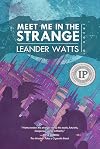
Teenage Davi, along with his sister, lives a rather strange existence on the seventh floor of the Angelus, a once grand hotel, founded by his great-grandfather. A huge fan of glam rock-god, Django Conn, at one of his concerts Davi catches a glimpse of a young girl who appears to be totally lost in the music, even transformed by it. She is completely focused on Django and her very being appears to flicker with the pulse-beat of the music. He is immediately drawn to her and feels an almost show more visceral compulsion to get to know her. Although he loses sight of her at the end of the concert the two do eventually meet up and it is not long before he is drawn into the mysterious world of Anna Z, with her passionate beliefs, her conspiracy theories, her belief in aliens. She believes that Django is the next stage in evolution: “homo lux” – humans made out of light and that so too are she and Davi. He is exhilarated by the new ideas she bombards him with and, in spite of warnings that she is not what she seems, that getting close to her will lead him into uncharted territory, he wants to be part of her vision for the future. He also becomes aware that she is desperate to escape from an abusive brother and so is determined to do all in his power to help to save her. Hopes for their salvation seem to be dependent on following Django on his tour of the continent, hoping to discover the secret of “Alien Drift”, a mysterious force which may hold the answers to the future of humanity.
Any story which involves sci-fi, magic realism, total immersion in the rather psychedelic world of rock music is one which would not attract my attention. However, knowing that “Meet Me in the Strange” is being published by Meerkat Press, a small publishing house which has recently introduced me to some remarkable authors, I felt confident that a treat was probably in store – a confidence which was amply rewarded! As soon as I started reading I felt drawn into the worlds of Davi and Anna Z and I couldn’t bear to put the book down until I had finished it. The story pulses with frantic, passionate, soul-felt emotion and psychic energy and is full of pain, innocence and, ultimately, hope.
Although the music described holds little personal appeal, the story powerfully evokes the power of music to move and infuse your very being and this was something I was very easily able to identify with. I also loved all the references to Frankenstein and Mary Shelley (who, like Anna Z ran away from home as a seventeen-year old virgin and then wrote her famous book!) and to the many reflections on beauty and horror. The short chapters captured the rather ethereal nature of the story and contributed to my feeling that I was joining these two young people on their journey of discovery. Whether their experiences were real or fantasy felt totally unimportant. What was important was their journey towards self-discovery and the many ways in which the author captured the passionate seriousness and single-mindedness of this age group.
I found this a very visual book (it lends itself to being made into a film!) and, for a hugely captivating few hours, felt drawn into a psychedelic fantasy world. Although it is a book which is aimed at the 12-18 age group I, several decades beyond this target group, thoroughly enjoyed being transported to a different realm! A final comment: I loved the cover, another brilliant illustration from the multi-talented Keith Rosson.
My thanks to Nudge/Library Thing for an ARC in exchange for an honest review. show less
Any story which involves sci-fi, magic realism, total immersion in the rather psychedelic world of rock music is one which would not attract my attention. However, knowing that “Meet Me in the Strange” is being published by Meerkat Press, a small publishing house which has recently introduced me to some remarkable authors, I felt confident that a treat was probably in store – a confidence which was amply rewarded! As soon as I started reading I felt drawn into the worlds of Davi and Anna Z and I couldn’t bear to put the book down until I had finished it. The story pulses with frantic, passionate, soul-felt emotion and psychic energy and is full of pain, innocence and, ultimately, hope.
Although the music described holds little personal appeal, the story powerfully evokes the power of music to move and infuse your very being and this was something I was very easily able to identify with. I also loved all the references to Frankenstein and Mary Shelley (who, like Anna Z ran away from home as a seventeen-year old virgin and then wrote her famous book!) and to the many reflections on beauty and horror. The short chapters captured the rather ethereal nature of the story and contributed to my feeling that I was joining these two young people on their journey of discovery. Whether their experiences were real or fantasy felt totally unimportant. What was important was their journey towards self-discovery and the many ways in which the author captured the passionate seriousness and single-mindedness of this age group.
I found this a very visual book (it lends itself to being made into a film!) and, for a hugely captivating few hours, felt drawn into a psychedelic fantasy world. Although it is a book which is aimed at the 12-18 age group I, several decades beyond this target group, thoroughly enjoyed being transported to a different realm! A final comment: I loved the cover, another brilliant illustration from the multi-talented Keith Rosson.
My thanks to Nudge/Library Thing for an ARC in exchange for an honest review. show less

Cards on the table: This is a great book. No point burying the lede. Metzger dives right in in medias res, and throughout the book his descriptions of Sacred Harp gatherings (in which participants, sitting in a square, sing simple, vigorous four-part songs roughly halfway between hymns and folk music) are vivid and direct. The unsentimental, warts-and-all, salt-of-the-earth approach he takes is a perfect match for the untrained, unrefined nature of the Sacred Harp tradition itself. I was show more vaguely aware that this kind of music existed, and this is a really good book through which to explore it in more detail.
While well-researched and knowledgeable, it's not scholarly, and it doesn't pretend to be. It's a series of vignettes, pithy chapter-ettes in roughly chronological order, charting the author's own quarter-century relationship with Sacred Harp. The style is almost gonzo – as one would expect from the maverick author of Big Gurl and a host of books on esoteric religions. Metzger's life history places him firmly within what I might vaguely term Weird America – the heady countercultural circles of Illuminatus!, LaVeyan Satanism, Ginsberg's Howl, all that sort of stuff. There's also an element of Louis Theroux – the slightly too-tidy outsider approaching, with faint apprehension, a rough-and-ready alien culture at odds with his own. Metzger is a self-professed Yankee from New York, and more than once muses on the clash between his own background and the Deep South communities that preserve the Sacred Harp tradition. And yet he's no mere dispassionate documentarian; he's lived with this tradition for twenty-five years. The point of origin for the book is Metzger's own sudden chance discovery of Sacred Harp and his instant, almost compulsive, fascination with it. He's driven hundreds of miles to attend Sacred Harp events, not as an observer but as an enthusiastic participant. He's earned the right to move his perspective from that of an exterior gawker to something approaching an (adopted) native.
A few things about the book didn't quite work for me. It doesn't ever truly deliver on the bold promise of its title – Sacred Harp isn't pagan, never has been, and Metzger can't alter that fact. He doesn't really get any closer to doing so than periodically likening its rawness to an imagined conception of a primitive religious ceremony, which is true as far as it goes but not really the same thing. Later in the book he hedges his bets a little by suggesting that he's actually using the term 'pagan' in its original sense of rural or rustic, and has been all along, but I think that's stretching credibility. I would bet almost any amount of money that he's seen The Wicker Man, and there's certainly a resonance there – Sacred Harp shares some of its musical and religious DNA with the austere Scottish metrical psalmody of the extremely Protestant communities of the Outer Hebrides. But the idea that there's something deeper and more ancient at work – more sinister, perhaps even thrillingly blood-soaked – isn't one that he really commits to once he's teased it, except by vague inferences and occasional turns of phrase.
I also don't think the title's emphasis on the dead really lands. Yes, there's plenty of grim references to Hell and damnation in this sort of music – the kinds of things that extreme Protestants love to revel in, to offset their gratitude at being saved from them – but once again Metzger makes a big opening bid with the book's title and then doesn't follow through. Death isn't what this music is primarily about – as indeed his own experiences and anecdotes show – so that's a strange angle to adopt.
I get the sense that Metzger's dabblings in, and adjacency to, various esoteric and occult scenes are to blame for the framing of the book. It might even be that his publisher Underworld Amusements wanted it to sound more gothic and transgressive than it truly is, which I can well imagine from looking at the rest of their catalogue – they describe themselves as specialising in 'topics such as anarchism, nihilism, satanism and egoism'. Anyway, whoever's fault it is, by the end I realised I wanted to rip the cover off and just keep the meat of the book (not that you can do that with an ebook, but you know what I mean). It's moving, heartfelt, respectful and sincere from beginning to end, and you come away with a real sense of what draws people into this world and keeps them there. It does justice to the realities of the tradition, to the controversies that swirl around the Southern Cause (which Sacred Harp is inextricably bound up with), and to the three-dimensional characters Metzger has interacted with over the course of his participation in Sacred Harp. It's self-aware – towards the end Metzger stops to wonder whether he's just indulging in nostalgic romanticisation of an Old America that never truly existed. It's a question well worth asking whenever one is talking about a preserved-in-amber cultural tradition of this kind (particularly one that's enjoying a new surge in popularity, as Sacred Harp is), and many authors might have breezed right past without stopping to reflect at all.
My favourite element of all is the way Metzger's commitment to the subject material matches the participants' approach to their singing. Early on he recounts a long-standing Sacred Harp singer's advice that singing hard – 'unstinting, not holding anything back' – is the key element, rather than singing well or correctly. And the book reflects that. Metzger tells his tale hard and doesn't hold back.
There's so much good in this book. Underneath it's really a love-letter to a tradition that many might call quirky or quaint or even cultish, but whose appeal short-circuits the thinking parts of the brain and grabs you by the primitive monkey cortex. It will make you want to look up some Sacred Harp recordings online to listen for yourself, which you absolutely should – though Metzger rightly emphasises that it's a tradition meant to be experienced from within, not just played through a speaker, with all the sanitised artifice that that implies. It's just a shame the title makes promises the narrative doesn't keep.
(NB: I received an Advance Reader Copy from the publisher) show less
While well-researched and knowledgeable, it's not scholarly, and it doesn't pretend to be. It's a series of vignettes, pithy chapter-ettes in roughly chronological order, charting the author's own quarter-century relationship with Sacred Harp. The style is almost gonzo – as one would expect from the maverick author of Big Gurl and a host of books on esoteric religions. Metzger's life history places him firmly within what I might vaguely term Weird America – the heady countercultural circles of Illuminatus!, LaVeyan Satanism, Ginsberg's Howl, all that sort of stuff. There's also an element of Louis Theroux – the slightly too-tidy outsider approaching, with faint apprehension, a rough-and-ready alien culture at odds with his own. Metzger is a self-professed Yankee from New York, and more than once muses on the clash between his own background and the Deep South communities that preserve the Sacred Harp tradition. And yet he's no mere dispassionate documentarian; he's lived with this tradition for twenty-five years. The point of origin for the book is Metzger's own sudden chance discovery of Sacred Harp and his instant, almost compulsive, fascination with it. He's driven hundreds of miles to attend Sacred Harp events, not as an observer but as an enthusiastic participant. He's earned the right to move his perspective from that of an exterior gawker to something approaching an (adopted) native.
A few things about the book didn't quite work for me. It doesn't ever truly deliver on the bold promise of its title – Sacred Harp isn't pagan, never has been, and Metzger can't alter that fact. He doesn't really get any closer to doing so than periodically likening its rawness to an imagined conception of a primitive religious ceremony, which is true as far as it goes but not really the same thing. Later in the book he hedges his bets a little by suggesting that he's actually using the term 'pagan' in its original sense of rural or rustic, and has been all along, but I think that's stretching credibility. I would bet almost any amount of money that he's seen The Wicker Man, and there's certainly a resonance there – Sacred Harp shares some of its musical and religious DNA with the austere Scottish metrical psalmody of the extremely Protestant communities of the Outer Hebrides. But the idea that there's something deeper and more ancient at work – more sinister, perhaps even thrillingly blood-soaked – isn't one that he really commits to once he's teased it, except by vague inferences and occasional turns of phrase.
I also don't think the title's emphasis on the dead really lands. Yes, there's plenty of grim references to Hell and damnation in this sort of music – the kinds of things that extreme Protestants love to revel in, to offset their gratitude at being saved from them – but once again Metzger makes a big opening bid with the book's title and then doesn't follow through. Death isn't what this music is primarily about – as indeed his own experiences and anecdotes show – so that's a strange angle to adopt.
I get the sense that Metzger's dabblings in, and adjacency to, various esoteric and occult scenes are to blame for the framing of the book. It might even be that his publisher Underworld Amusements wanted it to sound more gothic and transgressive than it truly is, which I can well imagine from looking at the rest of their catalogue – they describe themselves as specialising in 'topics such as anarchism, nihilism, satanism and egoism'. Anyway, whoever's fault it is, by the end I realised I wanted to rip the cover off and just keep the meat of the book (not that you can do that with an ebook, but you know what I mean). It's moving, heartfelt, respectful and sincere from beginning to end, and you come away with a real sense of what draws people into this world and keeps them there. It does justice to the realities of the tradition, to the controversies that swirl around the Southern Cause (which Sacred Harp is inextricably bound up with), and to the three-dimensional characters Metzger has interacted with over the course of his participation in Sacred Harp. It's self-aware – towards the end Metzger stops to wonder whether he's just indulging in nostalgic romanticisation of an Old America that never truly existed. It's a question well worth asking whenever one is talking about a preserved-in-amber cultural tradition of this kind (particularly one that's enjoying a new surge in popularity, as Sacred Harp is), and many authors might have breezed right past without stopping to reflect at all.
My favourite element of all is the way Metzger's commitment to the subject material matches the participants' approach to their singing. Early on he recounts a long-standing Sacred Harp singer's advice that singing hard – 'unstinting, not holding anything back' – is the key element, rather than singing well or correctly. And the book reflects that. Metzger tells his tale hard and doesn't hold back.
There's so much good in this book. Underneath it's really a love-letter to a tradition that many might call quirky or quaint or even cultish, but whose appeal short-circuits the thinking parts of the brain and grabs you by the primitive monkey cortex. It will make you want to look up some Sacred Harp recordings online to listen for yourself, which you absolutely should – though Metzger rightly emphasises that it's a tradition meant to be experienced from within, not just played through a speaker, with all the sanitised artifice that that implies. It's just a shame the title makes promises the narrative doesn't keep.
(NB: I received an Advance Reader Copy from the publisher) show less
This review was written for LibraryThing Early Reviewers.Awards

You May Also Like


Associated Authors
Statistics
- Works
- 25
- Also by
- 9
- Members
- 320
- Popularity
- #73,922
- Rating
- 3.5
- Reviews
- 17
- ISBNs
- 26
- Languages
- 1
