
George A. Romero (1940–2017)
Author of Night of the Living Dead [1968 film]
About the Author
George Andrew Romero was born in the Bronx, New York on February 4, 1940. He received a degree in graphic arts from Carnegie Mellon University in Pittsburgh in 1960. He learned the film business working on the sets of movies. He created the modern zombie genre with his 1968 film Night of the Living show more Dead. His other films included Dawn of the Dead, Knightriders, Creepshow, Day of the Dead, Bruiser, Land of the Dead, and Diary of the Dead. He created the comic book series The Empire of the Dead in 2014. He died from lung cancer on July 16, 2017 at the age of 77. (Bowker Author Biography) show less
Image credit: George A. Romero. Photo by Michael Coté.
Series
Works by George A. Romero
Night of the Living Dead [1968 film] (1968) — Director, Screenwriter, Cinematographer, Film Editor, Actor — 379 copies, 4 reviews
Dawn of the Dead {2004 film} [and] Land of the Dead (Unrated 2-Movie Collection) (2014) — Director — 28 copies
4 Film Favorites: King of Horror (Creepshow / Dolores Claiborne / Dreamcatcher / Stephen King's Cat's Eye) (2007) — Director — 15 copies
Trilogy of the Dead 6 copies
Night of the Living Dead [and] The Terror (Double Feature Video) — Director — 5 copies
Dawn of the Dead / George A. Romero's Land of the Dead / Halloween II / The People Under the Stairs Four Feature Films (2012) — Director — 5 copies
Night of the Living Dead — Director — 4 copies
Stephen King DVD Collector Set (Misery / The Dark Half / Needful Things / Carrie) (2004) — Director — 3 copies
The Living Dead Sneak Peek 3 copies
Birth of the Living Dead 3 copies
Great Scary Movies (The Terror / House on Haunted Hill / Night of the Living Dead) (2002) — Director — 3 copies
Night of the Living Dead [and] Carnival of Souls (Double Feature Video) (2002) — Director — 3 copies
King of the Zombies [and] Night of the Living Dead (Double Feature Video) — Director — 2 copies
Night of the Living Dead / Flesh for the Beast / Flesh Eater / Carnival of Souls — Director; Director — 2 copies
An Introduction to "Martin" 1 copy
Horror: House on the Haunted Hill / The Bat / The Terror / Night of the living Dead (Videos) — Director — 1 copy
Ring of Terror / The Ghost / Night of the Living Dead / The Snake People (Videos) (2005) — Director — 1 copy
Toetags #5 1 copy
Horror Classics, Anniversary Edition, Discs 7-8: Bluebeard / The Corpse Vanishes / Night of the Living Dead / Doomed to Die / The Phantom of the Opera / The Indestructible Man /… (2008) — Director; Director — 1 copy
Zombi / Dawn of the Dead 1 copy
Best of Horror, Vol. 1 : Night of the Living Dead/Mania/The Little Shop of Horrors — Director; Director — 1 copy
Iron City Asskickers [1998 short film] — Director, Producer, Film Editor, Actor — 1 copy
Associated Works
Horror Movie Classics: Collector's Edition — Director — 6 copies
Night of the Living Dead (Graphic Novel Set: Vol. 1 & 2) by Jean - Lucistin & Elia Bonetti — Original Text — 1 copy
Tagged
Common Knowledge
- Canonical name
- Romero, George A.
- Legal name
- Romero, George Andrew
- Birthdate
- 1940-02-04
- Date of death
- 2017-07-16
- Gender
- male
- Education
- Carnegie Mellon University
- Occupations
- film director
screenwriter
editor
actor - Relationships
- Forrest, Christine (wife)
- Nationality
- USA
- Birthplace
- The Bronx, New York, USA
- Places of residence
- Toronto, Ontario, Canada
- Place of death
- Toronto, Ontario, Canada
- Associated Place (for map)
- Toronto, Ontario, Canada
Members
Discussions
George Romero's Diary of the Dead = Big thumbs up! in Thing(amabrarian)s That Go Bump in the Night (April 2008)
Reviews
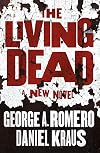
Listened on audio. This is Romero's final zombie opus (and opus it is), he had been writing this in various forms for most of his life and never completed it. The family asked Daniel Kraus (Whalefall) to finish it. Its an epic story of the zombie apocolypse that Romero started, but taken in interesting directions. He focus's initially on how it started, from looking at a medical examiner's office, who see's things kick off, a TV News studio reporting on what's happening, and an aircraft show more carrier, which is the ultimate closed door horror setting. Then he jumps ahead to see how people are surviving years down the road, where we ultimately find that the bad guys aren't necessarily the zombies. He had a pretty interesting take on the mechanics/inner workings of zombies that I haven't seen done before. He must have taking his writing queues from Stephen King cause this book is a doorstop (27 hours, 650+ pages), it probably could have done with some editing, but, heck, what are you going to do, its George Romero. If you're into horror and zombies, a good read. show less
1. This book is long.
2. This book loves its exposition.
3. This book has a pretty big ensemble cast of characters.
4. This book is fantastically well-written, making the previous three facts positives rather than negatives.
It's also about the zombie apocalypse, obviously, which at this point is an overdone topic (I can only imagine it will continue getting more and more unpopular). Aside from the whole zombie thing, and the grisly murders and descriptive gore (I wasn't bothered by the gore, show more but I wouldn't have objected to less of it), there's the characters. Such a diverse cast of personalities, the characters were what kept me reading. They're not all likable, but they're authentic. Etta was my favorite.
I would check out an excerpt to see if the writing jives with you, because I'm sure plenty of people would consider it over-descriptive. For me the descriptiveness made the story more immersive, really brought the characters to life. Overall I had a great time with this book. show less
2. This book loves its exposition.
3. This book has a pretty big ensemble cast of characters.
4. This book is fantastically well-written, making the previous three facts positives rather than negatives.
It's also about the zombie apocalypse, obviously, which at this point is an overdone topic (I can only imagine it will continue getting more and more unpopular). Aside from the whole zombie thing, and the grisly murders and descriptive gore (I wasn't bothered by the gore, show more but I wouldn't have objected to less of it), there's the characters. Such a diverse cast of personalities, the characters were what kept me reading. They're not all likable, but they're authentic. Etta was my favorite.
I would check out an excerpt to see if the writing jives with you, because I'm sure plenty of people would consider it over-descriptive. For me the descriptiveness made the story more immersive, really brought the characters to life. Overall I had a great time with this book. show less
4.5/5 stars.
Zombies are one of my favorite horror story "monsters." There's something so haunting about a threat that is basically humanity but slightly... off. Zombies don't have a motive; there's no reason why they do the things they do. They simply operate off a basic needs-based system. They're the very definition of id: they need to feed and they need to feed now. There's something scary about a foe that looks exactly like us but cannot be reasoned with or stopped. But, all that aside, show more the most interesting thing about zombies is the way the stories that feature them force us to take a good look at ourselves. A common theme in most zombie stories is how the plague turns humanity into the real monsters. It's one of my favorite tropes of the genre and something I love to see various storytellers sink their teeth into. Nobody was better at this than George A. Romero. His films pioneered the modern zombie genre by focusing their lenses on the intimate human stories rather than the epic, action-packed survival stories we might see today. Romero seemed most interested in how individual people react to zombies rather than what, specifically, caused them or how they might be defeated. It's what made his films interesting and it's what makes his novel, The Living Dead (completed by Daniel Kraus after Romero's passing), interesting. The novel is more epic in scale than any of Romero's films but feels no less intimate than the best of his work. It's a brilliant achievement in the career of a man who had many brilliant achievements and it's quite possibly one of the best zombie novels I've ever read.
When I say The Living Dead is a superb book, I'm really not kidding. This book had me hooked from its very first page all the way to its final. The Living Dead is a long book, there's no getting around that, so the fact that the novel managed to hold me captivated for the entirety of its page count is a true success. It is certainly not a quick read, but it is a page-turner that Kraus and Romero have managed to make feel shorter than it is. Kraus and Romero are able to accomplish this by setting up a world the reader desperately wants to know more about and filling it with characters who are devilishly interesting to spend time with.
One of The Living Dead's biggest achievements is its excellent world-building. It's immediately clear how much thought Romero and Kraus put into the creation of this world. Everything is incredibly thought through - from the biggest events to the smallest details. And everything about the novel's world feels authentic. It would be accurate to say that The Living Dead takes place in the modern-day in a world much like our own, much like all of Romero's zombie films. There are news stations similar to those found in our world, presidents who are similar to those currently in power, and people who feel as real as anybody you could find on the street and who react to the novel's events much the way our current society is reacting to the COVID-19 crisis. There is a level of irony in the fact that this novel is being released the same year a major pandemic has swept the globe. There's obviously no way that Romero or Kraus could have predicted these real-world events, but reading the novel during these times certainly makes for an often surreal experience. But it also gives the book a sense of poignance that's even stronger than what it might have been at any other time. Romero had a gift for grounding his work in worlds that felt tactile and lived in and that remains true for what he and Kraus have crafted here.
It's impressive how well this world aligns with what Romero had already created in his films. It feels like there are so many stories that can be told within the world of The Living Dead and it's easy to imagine how, with a few tweaks, Romero's original films could slide easily into this world. Romero and Kraus continue exploring many of the themes Romero loved returning to in his films: namely ones like "how does humanity react to a crisis?" and "what makes humans different from the zombies?" These are both ideas that were heavily explored in Romero's films - and rank among the biggest reasons I enjoy those films as much as I do - and it's great to see them explored here once more. I'm a sucker for stories that tackle these kinds of themes and I really enjoyed The Living Dead's exploration of humanity. Its conclusion may have been bleaker than some would like, but it felt so real and so tangible and it was so effective.
If the novel's worldbuilding is a huge achievement, then its character development is an even bigger one. Novels have an almost unique ability to bring their audience into the minds of the characters - far more than any other medium can do. And Romero and Kraus do a fantastic job bringing us into the minds of these characters. The Living Dead features a wealth of diverse characters - from all kinds of ethnicities, backgrounds, sexualities, and walks of life. There is a character for everyone in this book and all of them are given plenty to do and feel wholly developed as both characters and people. Everybody knows someone like at least one of the characters in the book and having that tangible connection to the main characters helps ground them - and the story, itself - in some semblance of reality. And having that sense of reality established makes the novel's turn into horror all the more effective.
The bulk of the novel's first half is spent introducing each of the main characters and how they're connected to this grander event. We get to know a bit about each of their lives before the zombie plague and then we get to see how each of their lives are uprooted and changed forever by these events. It's easy to track how they develop from the people they begin the novel as to the people they end the novel as and it's an utter joy getting to see them gradually change over the course of the story. Allowing readers the chance to get to know the characters before they're seismically changed by the zombie plague allows us to feel more sympathetic to their troubles. We can relate to them because we understand where they were when all of this began, so we're invested in how they get through this. Kraus and Romero clearly understood this and they utilize this tactic very well and to great results.
The novel does this really interesting thing where all of the scenes from a zombie's point of view are written in the second person - "You did this," "we want this," etc. The first time I read one of those scenes, I couldn't help but feel uncomfortable. It felt strange being lumped alongside the zombies, but I think it's actually really effective in hammering one of the novel's core themes home. Humans and zombies are not that different; we are Them and They are us. The novel suggests that humanity's knack for labeling a group of people as an Other, thus dehumanizing them and robbing them of their rights and liberty. So, it's really interesting seeing that same idea pointed at zombies - creatures who are traditionally depicted as less-than-human. The Living Dead isn't content with that depiction, though, and works really hard to humanize the zombies - through the use of second-person narration and sympathetic language. It serves as a great reminder that we're rarely different from those we try to Other and these moments in the novel rank among the best and most impactful.
As for the plot of the novel, it's honestly less important than the novel's other elements. It's not that there is no plot or anything, just that everything that happens in the novel are so tied in with the character's personal journeys - save for, maybe, the novel's climax - that it feels odd to think of it separate from the characters. While The Living Dead absolutely lives up to its promise to be this big, epic story that shows us the beginning of the plague all the way to the end, it's more concerned with displaying how individual people reacted during these events. It may take place over the course of more than a decade, but it's not a history book that exists to detail how the zombie plague started or how it ended; it's a story about the people who lived during the zombie plague. We learn all of these interesting things about the macro story while we spend time exploring the micro-story.
The novel starts off following numerous seemingly-disparate plot threads only to eventually combine them all into one climactic one. It's actually extremely impressive how well Kraus and Romero are able to execute that. You spend much of the book's first half wondering how on earth it could possibly tie all of these stories together and then it proceeds to successfully do so right before your eyes. While the ending is certainly not quite as good as the novel's beginning, it's still immensely satisfying and the last few chapters are a gut punch that has stuck with me in the week's since I've read the book. It's a great story told remarkably well.
If I had one complaint, it's actually that the book might need to be even longer than it is. There's a time jump in the middle of the story and, while I understand why Kraus included it, I feel it robs the final act of a bit of its weight. We've spent a huge chunk of the novel understanding the beginnings of the zombie plague and then we skip a sizable chunk of the middle of the zombie plague in order to get to the book's finale. While, strictly speaking, it might have been unnecessary, I still think it would have been nice to see a bit more of those years between the first and third acts. It would have been nice to see how all of these characters eventually came together, instead of just hearing about it.
One could argue that Romero's films fill in a lot of this gap, but that would only be half-true. None of the main characters from this book appear in any of Romero's films and it would take a bit of retconning for his films to fully fit within the timeline of this book. So, either way, we don't really get to follow the characters of this book during the years the novel glosses over. Plus there's a particular character who's rather important in the novel's final act who could have used a bit more development to make them fully land as a three-dimensional character instead of the archetype they feel currently exist as. All that said, though, this only ends up being a pretty minor problem as the book's climax re-hooks you into all that's going and explains enough about the missing years that you don't really end up minding this much. But it is a bit jarring, initially, and worth pointing out.
All in all, The Living Dead is one of the best zombie novels I've ever read. It's epic in every sense of the word. It's genuinely frightening, both in ways you expect and ways you don't. It's a long book, but it goes by quickly as you're sucked into the novel's world. All of the main characters feel fully fleshed out and Kraus and Romero do an excellent job of bouncing back and forth between them while retaining some kind of narrative flow for the novel. Everything moves very briskly while also taking its time to properly establish everything and luxuriate in some of its finer details. And, best of all, it holds a magnifying glass up to society, itself, critiquing the way we react to earth-shattering events (like a zombie plague). In these times, it feels particularly poignant. It's unfortunate to see how much our reaction to the COVID-19 virus parallels the initial reactions of those in the novel to the zombie plague. But, as with all good zombie stories, perhaps this examination of ourselves can prompt us into making some kind of positive change. Put simply, The Living Dead is an incredible achievement. It's immensely respectful to Romero's films, taking many of his ideas and examining them in the context of today's world. I can't say enough good things. I encourage all to read it upon its release.
NOTE: A digital arc was provided by NetGalley in exchange for an honest review. show less
Zombies are one of my favorite horror story "monsters." There's something so haunting about a threat that is basically humanity but slightly... off. Zombies don't have a motive; there's no reason why they do the things they do. They simply operate off a basic needs-based system. They're the very definition of id: they need to feed and they need to feed now. There's something scary about a foe that looks exactly like us but cannot be reasoned with or stopped. But, all that aside, show more the most interesting thing about zombies is the way the stories that feature them force us to take a good look at ourselves. A common theme in most zombie stories is how the plague turns humanity into the real monsters. It's one of my favorite tropes of the genre and something I love to see various storytellers sink their teeth into. Nobody was better at this than George A. Romero. His films pioneered the modern zombie genre by focusing their lenses on the intimate human stories rather than the epic, action-packed survival stories we might see today. Romero seemed most interested in how individual people react to zombies rather than what, specifically, caused them or how they might be defeated. It's what made his films interesting and it's what makes his novel, The Living Dead (completed by Daniel Kraus after Romero's passing), interesting. The novel is more epic in scale than any of Romero's films but feels no less intimate than the best of his work. It's a brilliant achievement in the career of a man who had many brilliant achievements and it's quite possibly one of the best zombie novels I've ever read.
When I say The Living Dead is a superb book, I'm really not kidding. This book had me hooked from its very first page all the way to its final. The Living Dead is a long book, there's no getting around that, so the fact that the novel managed to hold me captivated for the entirety of its page count is a true success. It is certainly not a quick read, but it is a page-turner that Kraus and Romero have managed to make feel shorter than it is. Kraus and Romero are able to accomplish this by setting up a world the reader desperately wants to know more about and filling it with characters who are devilishly interesting to spend time with.
One of The Living Dead's biggest achievements is its excellent world-building. It's immediately clear how much thought Romero and Kraus put into the creation of this world. Everything is incredibly thought through - from the biggest events to the smallest details. And everything about the novel's world feels authentic. It would be accurate to say that The Living Dead takes place in the modern-day in a world much like our own, much like all of Romero's zombie films. There are news stations similar to those found in our world, presidents who are similar to those currently in power, and people who feel as real as anybody you could find on the street and who react to the novel's events much the way our current society is reacting to the COVID-19 crisis. There is a level of irony in the fact that this novel is being released the same year a major pandemic has swept the globe. There's obviously no way that Romero or Kraus could have predicted these real-world events, but reading the novel during these times certainly makes for an often surreal experience. But it also gives the book a sense of poignance that's even stronger than what it might have been at any other time. Romero had a gift for grounding his work in worlds that felt tactile and lived in and that remains true for what he and Kraus have crafted here.
It's impressive how well this world aligns with what Romero had already created in his films. It feels like there are so many stories that can be told within the world of The Living Dead and it's easy to imagine how, with a few tweaks, Romero's original films could slide easily into this world. Romero and Kraus continue exploring many of the themes Romero loved returning to in his films: namely ones like "how does humanity react to a crisis?" and "what makes humans different from the zombies?" These are both ideas that were heavily explored in Romero's films - and rank among the biggest reasons I enjoy those films as much as I do - and it's great to see them explored here once more. I'm a sucker for stories that tackle these kinds of themes and I really enjoyed The Living Dead's exploration of humanity. Its conclusion may have been bleaker than some would like, but it felt so real and so tangible and it was so effective.
If the novel's worldbuilding is a huge achievement, then its character development is an even bigger one. Novels have an almost unique ability to bring their audience into the minds of the characters - far more than any other medium can do. And Romero and Kraus do a fantastic job bringing us into the minds of these characters. The Living Dead features a wealth of diverse characters - from all kinds of ethnicities, backgrounds, sexualities, and walks of life. There is a character for everyone in this book and all of them are given plenty to do and feel wholly developed as both characters and people. Everybody knows someone like at least one of the characters in the book and having that tangible connection to the main characters helps ground them - and the story, itself - in some semblance of reality. And having that sense of reality established makes the novel's turn into horror all the more effective.
The bulk of the novel's first half is spent introducing each of the main characters and how they're connected to this grander event. We get to know a bit about each of their lives before the zombie plague and then we get to see how each of their lives are uprooted and changed forever by these events. It's easy to track how they develop from the people they begin the novel as to the people they end the novel as and it's an utter joy getting to see them gradually change over the course of the story. Allowing readers the chance to get to know the characters before they're seismically changed by the zombie plague allows us to feel more sympathetic to their troubles. We can relate to them because we understand where they were when all of this began, so we're invested in how they get through this. Kraus and Romero clearly understood this and they utilize this tactic very well and to great results.
The novel does this really interesting thing where all of the scenes from a zombie's point of view are written in the second person - "You did this," "we want this," etc. The first time I read one of those scenes, I couldn't help but feel uncomfortable. It felt strange being lumped alongside the zombies, but I think it's actually really effective in hammering one of the novel's core themes home. Humans and zombies are not that different; we are Them and They are us. The novel suggests that humanity's knack for labeling a group of people as an Other, thus dehumanizing them and robbing them of their rights and liberty. So, it's really interesting seeing that same idea pointed at zombies - creatures who are traditionally depicted as less-than-human. The Living Dead isn't content with that depiction, though, and works really hard to humanize the zombies - through the use of second-person narration and sympathetic language. It serves as a great reminder that we're rarely different from those we try to Other and these moments in the novel rank among the best and most impactful.
As for the plot of the novel, it's honestly less important than the novel's other elements. It's not that there is no plot or anything, just that everything that happens in the novel are so tied in with the character's personal journeys - save for, maybe, the novel's climax - that it feels odd to think of it separate from the characters. While The Living Dead absolutely lives up to its promise to be this big, epic story that shows us the beginning of the plague all the way to the end, it's more concerned with displaying how individual people reacted during these events. It may take place over the course of more than a decade, but it's not a history book that exists to detail how the zombie plague started or how it ended; it's a story about the people who lived during the zombie plague. We learn all of these interesting things about the macro story while we spend time exploring the micro-story.
The novel starts off following numerous seemingly-disparate plot threads only to eventually combine them all into one climactic one. It's actually extremely impressive how well Kraus and Romero are able to execute that. You spend much of the book's first half wondering how on earth it could possibly tie all of these stories together and then it proceeds to successfully do so right before your eyes. While the ending is certainly not quite as good as the novel's beginning, it's still immensely satisfying and the last few chapters are a gut punch that has stuck with me in the week's since I've read the book. It's a great story told remarkably well.
If I had one complaint, it's actually that the book might need to be even longer than it is. There's a time jump in the middle of the story and, while I understand why Kraus included it, I feel it robs the final act of a bit of its weight. We've spent a huge chunk of the novel understanding the beginnings of the zombie plague and then we skip a sizable chunk of the middle of the zombie plague in order to get to the book's finale. While, strictly speaking, it might have been unnecessary, I still think it would have been nice to see a bit more of those years between the first and third acts. It would have been nice to see how all of these characters eventually came together, instead of just hearing about it.
One could argue that Romero's films fill in a lot of this gap, but that would only be half-true. None of the main characters from this book appear in any of Romero's films and it would take a bit of retconning for his films to fully fit within the timeline of this book. So, either way, we don't really get to follow the characters of this book during the years the novel glosses over. Plus there's a particular character who's rather important in the novel's final act who could have used a bit more development to make them fully land as a three-dimensional character instead of the archetype they feel currently exist as. All that said, though, this only ends up being a pretty minor problem as the book's climax re-hooks you into all that's going and explains enough about the missing years that you don't really end up minding this much. But it is a bit jarring, initially, and worth pointing out.
All in all, The Living Dead is one of the best zombie novels I've ever read. It's epic in every sense of the word. It's genuinely frightening, both in ways you expect and ways you don't. It's a long book, but it goes by quickly as you're sucked into the novel's world. All of the main characters feel fully fleshed out and Kraus and Romero do an excellent job of bouncing back and forth between them while retaining some kind of narrative flow for the novel. Everything moves very briskly while also taking its time to properly establish everything and luxuriate in some of its finer details. And, best of all, it holds a magnifying glass up to society, itself, critiquing the way we react to earth-shattering events (like a zombie plague). In these times, it feels particularly poignant. It's unfortunate to see how much our reaction to the COVID-19 virus parallels the initial reactions of those in the novel to the zombie plague. But, as with all good zombie stories, perhaps this examination of ourselves can prompt us into making some kind of positive change. Put simply, The Living Dead is an incredible achievement. It's immensely respectful to Romero's films, taking many of his ideas and examining them in the context of today's world. I can't say enough good things. I encourage all to read it upon its release.
NOTE: A digital arc was provided by NetGalley in exchange for an honest review. show less
4.5/5 Stars!
In this truly epic novel, we follow a variety of different characters as they deal with this new version of zombies. What a trip!
From a young, black woman in a trailer park to a Japanese officer on an American navy boat; from a woman who inputs medical information into a national database, to a Spanish medical examiner and his assistant, Charlene; (hey, that's my name!), we travel all across the nation over the span of 15 years or so. What's different about these zombies? Why show more isn't this the same old zombie story, that Romero himself invented? You'll have to read this to find out!
What made this different for me, (and Romero did this in his films too,) was the focus on consumption and the American need to have everything, to have the best, to be better than the next.
There was also a bit of climate change commentary in here. In fact, there was a good amount of philosophy within these pages. Does Mother Nature reach out to protect herself when she's used and abused? Does the world, or our environment, do the same? Does humanity need a reset button at times, to get things back to an even keel? Has this happened in the past? Will it happen the future? All valid questions to be sure.
Combine all these philosophical issues with a cast of characters that is truly memorable and you have yourself the nearly perfect novel that is THE LIVING DEAD. I found myself thinking about THE STAND quite a bit-there are some similarities: a large cast of characters to start, all in different places and situations across the United States. Of course the cast eventually come together and over the course of more than a decade we see how they've changed or not, as the case may be. Another thing these books have in common is that they both made this black heart cry. (Acocella will always have a place in my heart.) And never again will I hear about the La Brea Tar Pits and not shed a tear.
The only issue I had with this novel is that it is so long. Not that that's a bad thing, but I think a tiny bit could have been cut without damaging the story as a whole. For that I deducted half a star.
So, let's wrap up here! A novel of epic proportions? Check! A novel filled with characters that feel real and that the reader cares for? Check! Major differences in these zombies from the zombies populating so much of American culture? BIG check! A novel in which you can immerse yourself until you emerge, battered, but stronger for it? Check! I really loved this novel if you couldn't tell by now and I give it my highest recommendation!
Available now: https://amzn.to/3fGIoEl
*Thank you to TOR for the paperback in exchange for my honest feedback. This is it!* show less
In this truly epic novel, we follow a variety of different characters as they deal with this new version of zombies. What a trip!
From a young, black woman in a trailer park to a Japanese officer on an American navy boat; from a woman who inputs medical information into a national database, to a Spanish medical examiner and his assistant, Charlene; (hey, that's my name!), we travel all across the nation over the span of 15 years or so. What's different about these zombies? Why show more isn't this the same old zombie story, that Romero himself invented? You'll have to read this to find out!
What made this different for me, (and Romero did this in his films too,) was the focus on consumption and the American need to have everything, to have the best, to be better than the next.
There was also a bit of climate change commentary in here. In fact, there was a good amount of philosophy within these pages. Does Mother Nature reach out to protect herself when she's used and abused? Does the world, or our environment, do the same? Does humanity need a reset button at times, to get things back to an even keel? Has this happened in the past? Will it happen the future? All valid questions to be sure.
Combine all these philosophical issues with a cast of characters that is truly memorable and you have yourself the nearly perfect novel that is THE LIVING DEAD. I found myself thinking about THE STAND quite a bit-there are some similarities: a large cast of characters to start, all in different places and situations across the United States. Of course the cast eventually come together and over the course of more than a decade we see how they've changed or not, as the case may be. Another thing these books have in common is that they both made this black heart cry. (Acocella will always have a place in my heart.) And never again will I hear about the La Brea Tar Pits and not shed a tear.
The only issue I had with this novel is that it is so long. Not that that's a bad thing, but I think a tiny bit could have been cut without damaging the story as a whole. For that I deducted half a star.
So, let's wrap up here! A novel of epic proportions? Check! A novel filled with characters that feel real and that the reader cares for? Check! Major differences in these zombies from the zombies populating so much of American culture? BIG check! A novel in which you can immerse yourself until you emerge, battered, but stronger for it? Check! I really loved this novel if you couldn't tell by now and I give it my highest recommendation!
Available now: https://amzn.to/3fGIoEl
*Thank you to TOR for the paperback in exchange for my honest feedback. This is it!* show less
Lists
Awards


You May Also Like


Associated Authors
Statistics
- Works
- 89
- Also by
- 11
- Members
- 2,550
- Popularity
- #10,069
- Rating
- 3.6
- Reviews
- 38
- ISBNs
- 152
- Languages
- 7
- Favorited
- 2

