

Cay Rademacher
Author of The Murderer in Ruins
About the Author
Image credit: Cay Rademacher
Series
Works by Cay Rademacher
Geheimnisvolle Garrigue: Ein Provence-Krimi mit Capitaine Roger Blanc (Capitaine Roger Blanc ermittelt, Band 9) (2022) 11 copies, 1 review
Stille Sainte-Victoire: Ein Provence-Krimi mit Capitaine Roger Blanc (Capitaine Roger Blanc ermittelt, Band 10) (2023) 6 copies
Unheilvolles Lançon: Ein Provence-Krimi mit Capitaine Roger Blanc (Capitaine Roger Blanc ermittelt, Band 11) (2024) 5 copies
Bedrohliche Alpilles: Ein Provence-Krimi mit Capitaine Roger Blanc (Capitaine Roger Blanc ermittelt, Band 13) 1 copy, 1 review
Associated Works
Tagged
Common Knowledge
- Canonical name
- Rademacher, Cay
- Birthdate
- 1965
- Gender
- male
- Occupations
- Schriftsteller
Journalist - Nationality
- Deutschland
- Birthplace
- Flensburg, Schleswig-Holstein, Deutschland
Members
Reviews
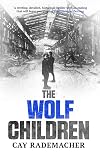
This is the second in the author's murder mystery trilogy set in the ruins of post-WWII Hamburg, featuring Chief Inspector Stave. I loved the first novel in this series, but wasn't so keen on this. The reason for the horrible murders of a number of youngsters didn't seem plausible and the endless details of the complicated smuggling plot I found frankly rather dull. Stave has an interesting backdrop - an anti-Nazi whose view of the Allied liberators is tempered with the tragic loss of his show more wife Margarethe in a British bombing raid, and whose son Karl was an enthusiastic member of the Hitler Youth who ended up in the Gulag. In trying to lay hands on the perpetrator of the murders, an exasperated public prosecutor Ehrlich remarks ruefully that "not so long ago it was less of an administrative task to annihilate an entire race than it is now to bring one man to trial". I was waiting for a twist at the end when Stave was chasing the then unidentified culprit, but there was none. Overall, I found this somewhat disappointing compared to The Murderer in Ruins. show less
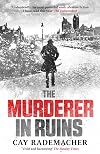
This is the first in a murder mystery trilogy set in the ruins of post-WWII Hamburg, a city devastated by Allied air raids. In the freezing winter of Jan/Feb 1947, with food and fuel in very short supply in the ice-bound city, Chief Inspector Frank Stave (pronounced Stah-vay) has to investigate the discovery of a series of naked bodies in bombed and rubble-strewn working class areas in the east or west of the city, bodies that seem to have nothing in common, lack clues as to their identities show more and, even more strikingly and hauntingly, are completely unclaimed and unrecognised when posters seeking for clues are posted all over Germany. The eventual solution to the mystery has its roots in the events of the war, which still looms large over the city and its inhabitants. This novel is very well written and Inspector Stave quite a well drawn and already quite hard bitten and cynical character, but who still hopes for a better life for his country. Hamburg itself is really the principle character of the novel, with its bleak and rubble-filled streets and wrecked buildings creating a very haunting atmosphere against the background of the one of the bitterest winters for many years. The storyline is based on a real series of murders carried out by a, still to this day, unknown "rubble murderer". A very good, if stark read, and I have already purchased the following two books in the series. show less
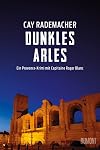
I actually like the Roger Blanc series, but this time it didn't convince me so much.
Roger wants to spend a quiet weekend in Arles with his mistress, the examining magistrate Aveline Vialaron-Allègre. But it doesn't come to that, because before they meet, Aveline is threatened and a dead man is found underneath the tower of the Ampyitheatre. Avline's handbag is stolen by the murderer and contains important documents that she should hand over to her husband, the Minister of the Interior in show more Paris. The 'romantic' weekend turns into a hunt for the missing handbag. There are more deaths and a bitter fight against the Front National, in which the chief policeman of Arles and the minister of culture of Arles play an important role.
I hope I like the next book in this series better than this one. show less
Roger wants to spend a quiet weekend in Arles with his mistress, the examining magistrate Aveline Vialaron-Allègre. But it doesn't come to that, because before they meet, Aveline is threatened and a dead man is found underneath the tower of the Ampyitheatre. Avline's handbag is stolen by the murderer and contains important documents that she should hand over to her husband, the Minister of the Interior in show more Paris. The 'romantic' weekend turns into a hunt for the missing handbag. There are more deaths and a bitter fight against the Front National, in which the chief policeman of Arles and the minister of culture of Arles play an important role.
I hope I like the next book in this series better than this one. show less
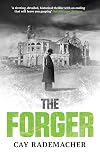
This is the final part of the author's murder mystery trilogy set in post-WWII Hamburg, featuring Chief Inspector Stave. Having been near fatally shot, Stave decides to leave the Homicide department and opts instead to work in Department S which aims to combat the black market that dominates economic activity in the city. While this makes sense in narrative terms, it risks making the plot less interesting for most readers as economic crimes come across as less dramatic. Nevertheless, in show more investigating some rediscovered objets d'art in the ruins of a bombed office block, a skeleton is also discovered. Stave considers this is not being properly investigated by his ex-colleagues in Homicide, and investigates himself. So far, so good, if a little cliched. But the eventual resolution of the crime struck me as rather bizarre and unlikely, while the economic crime exposed in Stave's new regular job is so petty, that the reader, along with the Chief Inspector, feels nothing but sympathy for pathetic (in the true sense of the word) offender. So, in sum, while Rademacher is a good writer, and the atmosphere of post-war Hamburg is evocatively described, I found this a slightly unsatisfying read in some ways. The novels ends with the drama of the economic renaisssance of the new Deutschmark being introduced in what was to become West Germany, while the Soviets begin to blockade Berlin. show less
Lists
Awards

You May Also Like


Associated Authors
Statistics
- Works
- 38
- Also by
- 1
- Members
- 735
- Popularity
- #34,565
- Rating
- 3.7
- Reviews
- 30
- ISBNs
- 133
- Languages
- 6