

Adam Martin
Author of Xenoman
About the Author
Works by Adam Martin
Tagged
Common Knowledge
There is no Common Knowledge data for this author yet. You can help.
Members
Reviews

Very hard to read, but love the interwoven themes, unspoken Black history, memories of Vietnam war,
I got the book as a review copy from the author.
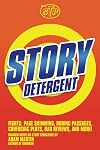
First of all, the cover is something I would (and did) look twice at. It made me curious, so I applied for the book giveaway. When I saw how many chapters the book had (50+), I was awestruck - until I saw that the book was only 48 pages long; the “chapters” are more bullet points with some text underneath. In my opinion, this is an unfortunate decision by the author as the amount of “chapters” make his book appear more than it really show more is: an essay (which the author even states in the introduction).
So, what’s this essay about? Writing, obviously. Specifically, it offers short tips on how to write better and avoid common writing mistakes.
The best tip I found in this book was the author’s note that you can learn everything about writing from books on the craft. No need for expensive courses. I totally agree. I learned (and am still learning) writing exactly the same way.
For total beginners, “Story Detergent” might be useful, though I think the book could be more encouraging and have some more examples on good vs. bad writing. This is exactly what beginning writers need to be able to do: understand why something works and why another thing does not work. There are parts in the book in which the authors gives such examples, and I found these really helpful (for example in the chapter “Reversals”). For advanced writers it’s more a book where one says: “I totally agree!” every other sentence, but doesn’t learn a lot of new stuff (if any) – especially if you do read lots of books on writing.
However, I liked the notion of the book, so I give it four stars. If aspiring writers get a copy, they will hopefully at least understand that writing needs to be learned; even better: it can be learned and learning the craft need not be expensive. Also, they will get some useful direction on what needs to be learned (though they might not learn it from “Story Detergent”).
Last but not least, I found it charming that the author shared his favorite on star review, and encouraged people not to fear getting one star reviews. This is really important! I participate in a lot of writing classes and often times I am astonished on how much writers censor themselves by uttering ideas like “what the market wants” or “what readers like to read.” Yes, you need to learn the craft. But writers should not write what others want to read. They should write about their inner truths. Any story can be interesting if written well. show less
First of all, the cover is something I would (and did) look twice at. It made me curious, so I applied for the book giveaway. When I saw how many chapters the book had (50+), I was awestruck - until I saw that the book was only 48 pages long; the “chapters” are more bullet points with some text underneath. In my opinion, this is an unfortunate decision by the author as the amount of “chapters” make his book appear more than it really show more is: an essay (which the author even states in the introduction).
So, what’s this essay about? Writing, obviously. Specifically, it offers short tips on how to write better and avoid common writing mistakes.
The best tip I found in this book was the author’s note that you can learn everything about writing from books on the craft. No need for expensive courses. I totally agree. I learned (and am still learning) writing exactly the same way.
For total beginners, “Story Detergent” might be useful, though I think the book could be more encouraging and have some more examples on good vs. bad writing. This is exactly what beginning writers need to be able to do: understand why something works and why another thing does not work. There are parts in the book in which the authors gives such examples, and I found these really helpful (for example in the chapter “Reversals”). For advanced writers it’s more a book where one says: “I totally agree!” every other sentence, but doesn’t learn a lot of new stuff (if any) – especially if you do read lots of books on writing.
However, I liked the notion of the book, so I give it four stars. If aspiring writers get a copy, they will hopefully at least understand that writing needs to be learned; even better: it can be learned and learning the craft need not be expensive. Also, they will get some useful direction on what needs to be learned (though they might not learn it from “Story Detergent”).
Last but not least, I found it charming that the author shared his favorite on star review, and encouraged people not to fear getting one star reviews. This is really important! I participate in a lot of writing classes and often times I am astonished on how much writers censor themselves by uttering ideas like “what the market wants” or “what readers like to read.” Yes, you need to learn the craft. But writers should not write what others want to read. They should write about their inner truths. Any story can be interesting if written well. show less
This review was written for LibraryThing Member Giveaways.
I got a copy though a member giveaway and was asked to write an honest review.
A collection of notes on writing. Notes are listed under subtitles each presenting an idea. The notes really get to the point without frills. Examples were provided for most of the storytelling structures that were brought up as well as the ideas presented. This really helped clarify things and the examples were great.
The book divided into 3 sections, one section Structure, a section on "Writing Fails" and a show more section titled Diagrams (they were cool diagrams). The Writing Fails section was my favourite.
Many of these points resonated with me, for example this one..
"Bad writers, not knowing how to exploit the situation, resort to descriptive passages that do nothing but describe entrances and exits, rather than exploiting the motives of why characters come and go."
When I write, I always felt like I was not describing enough. Turns out, long flowery passages of description that do not contribute anything to the story are not good writing, no matter how pretty they are. I still have a problem with lack of description, but it's not as bad as I thought.
"If you’re your own radio station or movie theater, why play your same mediocre thoughts over and over, instead of playing your greatest hits?"
Some points seemed to be provided for humour's sake rather than practicality, which might not be for everyone. I personally don't mind.
I like the humour in the book. I thought it gave it character.
All in all, I had a lot of fun reading this. I will definitely be referring back to it again. I'm giving it 4 stars because the author has something against 5 star reviews. show less
A collection of notes on writing. Notes are listed under subtitles each presenting an idea. The notes really get to the point without frills. Examples were provided for most of the storytelling structures that were brought up as well as the ideas presented. This really helped clarify things and the examples were great.
The book divided into 3 sections, one section Structure, a section on "Writing Fails" and a show more section titled Diagrams (they were cool diagrams). The Writing Fails section was my favourite.
Many of these points resonated with me, for example this one..
"Bad writers, not knowing how to exploit the situation, resort to descriptive passages that do nothing but describe entrances and exits, rather than exploiting the motives of why characters come and go."
When I write, I always felt like I was not describing enough. Turns out, long flowery passages of description that do not contribute anything to the story are not good writing, no matter how pretty they are. I still have a problem with lack of description, but it's not as bad as I thought.
"If you’re your own radio station or movie theater, why play your same mediocre thoughts over and over, instead of playing your greatest hits?"
Some points seemed to be provided for humour's sake rather than practicality, which might not be for everyone. I personally don't mind.
I like the humour in the book. I thought it gave it character.
All in all, I had a lot of fun reading this. I will definitely be referring back to it again. I'm giving it 4 stars because the author has something against 5 star reviews. show less
This review was written for LibraryThing Member Giveaways.
When I first opened this book, I was shocked at how many chapters there were! I then found out that the chapters in question were actually pretty short unlike what I had imagined at a first glance. Story Detergent is a book filled with multiple different tips on improving your creative writing. One of the main features I enjoyed was the author's humour! The multiple jokes and pop culture references made this advice book feel more genuine to me, instead of someone trying to sell their advice show more to you. Overall, I really enjoyed this book! I will definitely refer back to this whenever I need some guidance on writing.
I received this book as an arc in exchange for an honest review. show less
I received this book as an arc in exchange for an honest review. show less
This review was written for LibraryThing Member Giveaways.
Statistics
- Works
- 10
- Members
- 35
- Popularity
- #405,583
- Rating
- 3.8
- Reviews
- 8
- ISBNs
- 9
- Languages
- 3
- Favorited
- 1
