
Vince Rause
Author of Miracle in the Andes: 72 Days on the Mountain and My Long Trek Home
Works by Vince Rause
Miracle in the Andes: 72 Days on the Mountain and My Long Trek Home (2006) — Author — 1,089 copies, 46 reviews
Settantadue giorni 1 copy
Make the Impossible Possible 1 copy
Associated Works
Make the Impossible Possible: One Man's Crusade to Inspire Others to Dream Bigger and Achieve the Extraordinary (2007) 151 copies, 1 review
Tagged
Common Knowledge
There is no Common Knowledge data for this author yet. You can help.
Members
Reviews
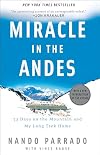
If you’ve never read Alive by Piers Paul Read or even if you have read that book, it would be so well worth your time to read Miracle in the Andes, the first person narrative of Nando Parrado’s survival of a plane crash in the Andes, the extraordinarily high mountain range of South America. The story is compelling, of course, but this memoir, written together with Vince Rouse, provides a heartbreaking recollection of what it feels like to be so close to death yet desire, with all one’s show more heart, not to die despite overwhelming odds against survival.
Even though I knew details of Parrado’s story, reading this book never semed like a “rerun”. I was there in those frigid mountains with him all the way. I suffered with him, both physically and emotionally. I found it amazing that Parrado and Rause could together write a book which felt as if it happened just yesterday although this accident occurred in 1972. In the end, it was rewarding to learn that the survivors have thrived in the many years following their plane accident. Their survival in the Andes was truly a miracle. show less
Even though I knew details of Parrado’s story, reading this book never semed like a “rerun”. I was there in those frigid mountains with him all the way. I suffered with him, both physically and emotionally. I found it amazing that Parrado and Rause could together write a book which felt as if it happened just yesterday although this accident occurred in 1972. In the end, it was rewarding to learn that the survivors have thrived in the many years following their plane accident. Their survival in the Andes was truly a miracle. show less
In 1973, just a year after the fateful crash in the Andes, Piers Paul Read wrote the now epic account of this survivors' story, Alive. Read's story is universally acclaimed as a masterful account of this epic tale of cannibalism and the power of human will. It's a third person account and it has taken 30 years for one of the sixteen survivors to tell their memoir. This task was finally assumed by Nando Parrado, one of the two men who left the relative security of the plane's fuselage to show more scale the mighty Andes mountain in search of a rescuer. He recounts in vivid detail and brutal honesty his personal thoughts and feelings of hunger, thirst, despair, hope, fear, dread, and every motion in between. This first person account is vivid, riveting, and a page turner, even if you have read Alive and know the story. It's spiritual and philosophical too. He concludes that love is what saved him and exhorts readers to live a life of love and to truly live each moment. I was really touched by Parrado's unflinching introspection and modesty and his desire to impart hard earned lessons to us all. show less
Even in the minds of the co-authors, this book is overshadowed by another, Piers Paul Read's Alive, which told this story of a plane crash and the months that followed in the Andes using interviews of the survivors. Nando Parrado, one of those survivors called Alive a "magnificent book" and said he had not tried to tell his own story for 30 years because he felt that book already covered "all the public needed to know." Vince Rause in his acknowledgments admitted wondering if another book show more was necessary since Alive "told that story in such exhaustive detail, and with such definitive scope and power." I read Alive decades ago--it was assigned reading in high school, and it made an indelible impression. There was little in this account that was a surprise to me, because I remembered so many of the details of that other book, and I'd certainly say if you're going to read only one account of this story, it should be that one--it's wonderfully and sensitively written.
But Rouse said he thought another account would be worthwhile if Parrado was really willing to open up and take you back on that mountain and help you think what he thought and felt what he felt and take you along on the spiritual and physical journey he took, and in that I think it succeeds wonderfully. In fact, at certain points I was even moved close to tears, and that isn't easy. Alive emphasized the importance of their shared faith in the ordeal they underwent. There were 45 passengers and crew on that plane, and within a week there were only 27 survivors with all the food running out. To stay alive, those remaining had to resort to eating the bodies of the dead. To allow themselves to do that, some clung to their faith, even trying to see their taking nourishment from their dead as a form of communion.
It was different for Parrado, who would take his survival into his own hands and with one companion make a near impossible climb over the mountain to go get help. Certainly, if there was one survivor of that ordeal whose story I'd want to know, it's his--because he didn't just wait to die. For him in the end the miracle of the Andes wasn't from God. He wrote that he found the "opposite of death is not mere living... courage or faith or human will." It's love. In the end, it was his love for the family that would be grieving for him that pushed him to endure. Parrado's account of the psychology of survival reminded me of nothing so much of accounts I've read of survival in concentration camps--which went well beyond the mere physical. This doesn't to my mind replace Alive, but it's a book well worth having together with it on your shelf. show less
But Rouse said he thought another account would be worthwhile if Parrado was really willing to open up and take you back on that mountain and help you think what he thought and felt what he felt and take you along on the spiritual and physical journey he took, and in that I think it succeeds wonderfully. In fact, at certain points I was even moved close to tears, and that isn't easy. Alive emphasized the importance of their shared faith in the ordeal they underwent. There were 45 passengers and crew on that plane, and within a week there were only 27 survivors with all the food running out. To stay alive, those remaining had to resort to eating the bodies of the dead. To allow themselves to do that, some clung to their faith, even trying to see their taking nourishment from their dead as a form of communion.
It was different for Parrado, who would take his survival into his own hands and with one companion make a near impossible climb over the mountain to go get help. Certainly, if there was one survivor of that ordeal whose story I'd want to know, it's his--because he didn't just wait to die. For him in the end the miracle of the Andes wasn't from God. He wrote that he found the "opposite of death is not mere living... courage or faith or human will." It's love. In the end, it was his love for the family that would be grieving for him that pushed him to endure. Parrado's account of the psychology of survival reminded me of nothing so much of accounts I've read of survival in concentration camps--which went well beyond the mere physical. This doesn't to my mind replace Alive, but it's a book well worth having together with it on your shelf. show less

This is a familiar story that was related in Alive by Piers Paul Read and in a movie of the same title, about a plane chartered by a rugby team in 1972 that went down on one of the highest peaks of the Andes, leaving many of the passengers injured but alive. Parrado was one of those passengers. This is his story. When they heard news on a radio that the search had been called off, he and others decided they had to climb out of the mountains if they were to have any chance of survival. show more Parrado and another young man made a heroic, miraculous trek to reach help. The sensational news was they they had (necessarily) resorted to cannibalism, but although that had been a difficult decision, it was not the most horrific they had suffered. The frigid temperatures, an avalanche that killed eight and left the fuselage, their only shelter, buried, the terrible injuries, the lack of everything they needed, was considerably worse.
The biographical details at the beginning allows the reader to relate so much more to the disaster by getting to know some of the individuals. Also appreciated was the final update on the survivors. A few years ago I saw a movie of the story. Parrado's personal account delivered a more powerful account of the despair, desolation, helplessness and the agonizing trek out. show less
The biographical details at the beginning allows the reader to relate so much more to the disaster by getting to know some of the individuals. Also appreciated was the final update on the survivors. A few years ago I saw a movie of the story. Parrado's personal account delivered a more powerful account of the despair, desolation, helplessness and the agonizing trek out. show less
Lists
Awards


You May Also Like
Associated Authors
Statistics
- Works
- 4
- Also by
- 3
- Members
- 1,100
- Popularity
- #23,361
- Rating
- 4.0
- Reviews
- 46
- ISBNs
- 44
- Languages
- 9