
Staton Rabin
Author of Betsy and the Emperor
About the Author
Image credit: c 2004 by John Maggiotto. I am Staton Rabin and this photo is used by me with the permission of the photographer, John Maggiotto of Dobbs Ferry, NY.
Works by Staton Rabin
Besty and the Emperor 1 copy
Tagged
Common Knowledge
- Canonical name
- Rabin, Staton
- Birthdate
- 1958
- Gender
- female
- Education
- University of New York
Members
Reviews
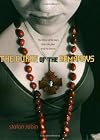
This book was kind of all over the place. It is told from Alexie Romanov's perspective, which I guess I fundamentally couldn't get over. I appreciated the author's note at the end giving the context of Russia and the Russian people at the time, but to have essentially none of that come through felt too much like Romanov apologism to me (is that even a real thing?). I found it interesting enough to finish reading and enjoyed the Russian words sprinkled throughout, but just couldn't quite lose show more myself in it. The change to Rasputin's relationship with Alexie was also very strange. I also found the imagining of where we would be technologically in 2010 to be a little advanced for a book published in 2007. I did like Varda's character, though. show less
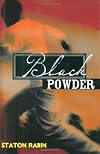
The year is 2010. Fourteen-year-old Langston Davis’s best friend Neely is dead – shot in a gang-related argument. When Langston’s science teacher, Mrs. Centauri, reveals to Langston that she has created a time machine, Langston decides to alter history and stop the invention of the gunpowder that claimed his young friend’s life.
At first blush, this seems to be a very workable premise, but the devil is in the details. Rabin goes off on too many tangents, and the entire work becomes show more muddled. The concept of a sci-fi, historical fiction novel is a good one; however it pairs awkwardly when conjoined with realistic fiction and humor – particularly when the subject is gun violence. The trite, the hackneyed, and the stereotypical all make appearances in Black Powder.
When Langston revisits Lincoln’s assassination, he inexplicably has no idea what is about to occur, even though he is in Ford’s Theater looking at the presidential box during the premier of Our American Cousin. He looks through his telescope, and thinks, “Holy moly! It was like looking at the face on a five-dollar bill come to life. Abraham Lincoln!”
In traveling to and from the time machine, Langston frequently catches a ride with Mrs. Centauri’s milkman, who drives psychedelic green and orange milk truck and makes clichéd comments such as, “Out of sight! That really blows my mind, man,”
There is also the medieval Jewish milkman, “So? You couldn’t maybe have chosen the daytime for this little visit? … You got a sudden yen for milk? Come in – we’ll nosh, we’ll schmooze.”
These attempts at humor mesh clumsily with the more serious story of Dr. Bacon’s experiments, his persecution by the Church, and life in medieval England; or the grim details of violence-plagued gang life in South Central Los Angeles.
The historical aspect of the story has problems as well. Rabin plays fast and loose with history, although this is certainly a writer’s prerogative. Much of the history that is included is unsubstantiated. In Black Powder, Marco Polo sends a postcard relaying his intent to introduce pasta to Italy upon his return from the East. Langston later runs into a scene from the Braveheart movie. The Scots win the encounter because Langston convinces the Brits to chase after the Holy Grail, which Langston notes, is the cup that Jesus used on the eve of his death. To her credit, Rabin does offer numerous explanations for historical inaccuracies in her Author’s Note, but she does not correct either of these questionable historical interpretations. Readers who skip the Author’s Note may not realize that Roger Bacon did not actually “discover” gunpowder, that Pope Clement IX was not murdered, or that it would have been impossible to travel from England to Paris in a single medieval day.
The intent of Black Powder is admirable, to call attention to the gun violence plaguing our society. One of the more chilling facts in Rabin’s author’s note is the following:
“The rate of firearms-related death in the U.S. among children under the age of fifteen is nearly a dozen times higher than it is in twenty-five other industrialized nations combined.” If Black Powder is able to spur teens to action on this crisis, then it is a worthwhile endeavor. I would not, however, suggest this book to a sophisticated YA reader or a history buff. show less
At first blush, this seems to be a very workable premise, but the devil is in the details. Rabin goes off on too many tangents, and the entire work becomes show more muddled. The concept of a sci-fi, historical fiction novel is a good one; however it pairs awkwardly when conjoined with realistic fiction and humor – particularly when the subject is gun violence. The trite, the hackneyed, and the stereotypical all make appearances in Black Powder.
When Langston revisits Lincoln’s assassination, he inexplicably has no idea what is about to occur, even though he is in Ford’s Theater looking at the presidential box during the premier of Our American Cousin. He looks through his telescope, and thinks, “Holy moly! It was like looking at the face on a five-dollar bill come to life. Abraham Lincoln!”
In traveling to and from the time machine, Langston frequently catches a ride with Mrs. Centauri’s milkman, who drives psychedelic green and orange milk truck and makes clichéd comments such as, “Out of sight! That really blows my mind, man,”
There is also the medieval Jewish milkman, “So? You couldn’t maybe have chosen the daytime for this little visit? … You got a sudden yen for milk? Come in – we’ll nosh, we’ll schmooze.”
These attempts at humor mesh clumsily with the more serious story of Dr. Bacon’s experiments, his persecution by the Church, and life in medieval England; or the grim details of violence-plagued gang life in South Central Los Angeles.
The historical aspect of the story has problems as well. Rabin plays fast and loose with history, although this is certainly a writer’s prerogative. Much of the history that is included is unsubstantiated. In Black Powder, Marco Polo sends a postcard relaying his intent to introduce pasta to Italy upon his return from the East. Langston later runs into a scene from the Braveheart movie. The Scots win the encounter because Langston convinces the Brits to chase after the Holy Grail, which Langston notes, is the cup that Jesus used on the eve of his death. To her credit, Rabin does offer numerous explanations for historical inaccuracies in her Author’s Note, but she does not correct either of these questionable historical interpretations. Readers who skip the Author’s Note may not realize that Roger Bacon did not actually “discover” gunpowder, that Pope Clement IX was not murdered, or that it would have been impossible to travel from England to Paris in a single medieval day.
The intent of Black Powder is admirable, to call attention to the gun violence plaguing our society. One of the more chilling facts in Rabin’s author’s note is the following:
“The rate of firearms-related death in the U.S. among children under the age of fifteen is nearly a dozen times higher than it is in twenty-five other industrialized nations combined.” If Black Powder is able to spur teens to action on this crisis, then it is a worthwhile endeavor. I would not, however, suggest this book to a sophisticated YA reader or a history buff. show less
The setting is 1916 Russia where political disaster occurs as the three-hundred-year dynasty of Romanov rule is about to crumble.
Young Alexi Romanov is a hemophiliac, a secret kept from all but the inner circle. He is under the spell of Rasputin who seems to be the only one capable of bringing relief from Alexi's incredible pain.
Mixing science and historical fiction, but also weaving well researched facts about the Romanovs and the Russian revolution, the author details Grigory Rasputin's show more influence on the Romanovs.
Escaping to the future, in New York City, Alexi meets an intelligent distant cousin who happens to be working on a cure for hemophilia. Alexi becomes enamored with her and convinces her to return with him to Russia in a desperate attempt to save his family from murder.
While enjoyed the author's creativity, I cannot recommend this book. It seemed convoluted and trite, filled with unrealistic possibilities and overall pretty darn corny. show less
Young Alexi Romanov is a hemophiliac, a secret kept from all but the inner circle. He is under the spell of Rasputin who seems to be the only one capable of bringing relief from Alexi's incredible pain.
Mixing science and historical fiction, but also weaving well researched facts about the Romanovs and the Russian revolution, the author details Grigory Rasputin's show more influence on the Romanovs.
Escaping to the future, in New York City, Alexi meets an intelligent distant cousin who happens to be working on a cure for hemophilia. Alexi becomes enamored with her and convinces her to return with him to Russia in a desperate attempt to save his family from murder.
While enjoyed the author's creativity, I cannot recommend this book. It seemed convoluted and trite, filled with unrealistic possibilities and overall pretty darn corny. show less
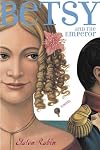
The problem with a lot of our history lessons is that you learn a lot of names, but you never get introduced to the people. I suppose that's one reason why I enjoy reading biographies. Anyway, this is a kind of biography. Technically, it's historical fiction, but a lot of it is based on source materials. The book tells the tale of a few years in the life of Betsy Balcombe. During her teens, she was living on the island of St. Helena when the deposed emperor Napoleon Bonaparte was exiled show more there. Napoleon and Betsy became friends of sorts and years later she wrote a memoir of that time. This isn't that book however. Ms. Rabin admits that she refrained from reading Betsy's work in order that she might craft her own take on Miss Balcombe's character. Since I haven't read the memoir, either, I can't comment on whether Ms. Rabin made a mistake or not. I do know, however, that Betsy and the Emperor is an enjoyable piece of historical fiction. One of those good books that makes one want to delve into some of the real history behind it. So check this one out first, just in case the real story isn't as entertaining.
--J. show less
--J. show less
Lists
Awards


You May Also Like


Associated Authors
Statistics
- Works
- 8
- Members
- 771
- Popularity
- #33,005
- Rating
- 3.7
- Reviews
- 29
- ISBNs
- 22
- Languages
- 5
