

Gloria Whelan
Author of Homeless Bird
About the Author
Gloria Whelan was born on November 23, 1923 in Detroit, Michigan. She took a strong interest in reading early in life when she was bedridden for a year with rheumatic fever. She dictated stories to her sister who would then type them. She then went on to writing poetry and later editing her high show more school newspaper. She attended the University of Michigan and earned her B.S.degree and M.S.W. degree. She began working as a social worker in Minneapolis and Detroit. She soon became tired of Detroit's hectic pace and moved to a cabin in northern Michigan.This peace was disrupted by an oil company 's desire to drill on her property. Because she did not own the mineral rights, the drilling proceeded. This experience inspired Gloria Whelan to write her children's novel, A Clearing in the Forest in 1978, which was about a boy working on an oilrig. Gloria Whelan has written several works of fiction for children and adults, many set in rural Michigan. She has also written stories set in exotic places like China and India. She won the National Book Award for Young People's Literature in 2000 for Homeless Bird - the story of a young woman in India abandoned by her mother-in-law. show less
Series
Works by Gloria Whelan
Associated Works
Tagged
Common Knowledge
- Other names
- Rewoldt, Gloria (birth)
- Birthdate
- 1923-11-23
- Gender
- female
- Education
- University of Michigan (B.S.)
University of Michigan (M.S.W.) - Occupations
- writer
- Awards and honors
- Michigan Author Award (1998)
- Nationality
- USA
- Birthplace
- Detroit, Michigan, USA
- Places of residence
- Detroit, Michigan, USA (birth)
Minneapolis, Minnesota, USA
Mancelona, Michigan, USA - Associated Place (for map)
- Michigan, USA
Members
Reviews
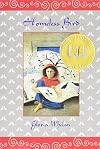
I read this period piece on traditional Indian culture in small villages in the 70’s surrounding arranged marriage in seventh grade and still 12 years later it is still one of my favorite middle grade books of all time. Exploring themes of rising above your circumstances and choosing a new path for yourself despite what society says your fate will be. Koly’s journey inspires me every time. Gloria Whelan’s writing pulls you in to this culture that is so different than my own and shows show more that we are more alike than different. The twists in this story keep the reader guessing as to what will happen next and the fact that this complex story does not feel rushed is beautifully done. This multicultural book that straddles the line between realistic fiction and historical fiction is something I would recommend to reader from 10 years old to 100 years old. show less
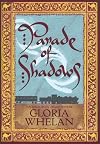
The strong, descriptive writing and concise, eloquent dialogue have all the feel of watching a classic black-and-white movie. A literary getaway.
Julia is a sheltered but determined 16-year-old who convinces her
father to allow her to accompany him on his next business trip through the Ottoman Empire, representing England's Foreign Office. Far more than the leisure trip she expected, Julia finds herself witness to political intrigue and stirrings of revolution against the sultan. Their show more colorful traveling companions, including the handsome Graham Geddes, a Young Turks supporter, are shielding secrets and conspiracies of their own. show less
Julia is a sheltered but determined 16-year-old who convinces her
father to allow her to accompany him on his next business trip through the Ottoman Empire, representing England's Foreign Office. Far more than the leisure trip she expected, Julia finds herself witness to political intrigue and stirrings of revolution against the sultan. Their show more colorful traveling companions, including the handsome Graham Geddes, a Young Turks supporter, are shielding secrets and conspiracies of their own. show less

Queen Victoria longs to go swimming in the sea in this amusing picture-book, told in rhyme. As it would be scandalous for any of her subjects to see her in any fashion undressed, the idea is at first rejected, until Prince Albert puts his mind to the question, and comes up with an ingenious solution. And so the bathing machine, a rolling structure that will shield his wife and queen from prying eyes on the beach, and take her down into the water while preserving her modesty, is invented...
On show more the one hand, I found Queen Victoria's Bathing Machine an absolute hoot. The rhyming text from author Gloria Whelan is a lot of fun to read aloud, and the colorful artwork from illustrator Nancy Carpenter accentuates the humor of the tale. As a work of picture-book history, the title offers a glimpse into Victorian mores concerning modesty, as well as ideas about the proper role of royalty. All that said, I couldn't help but feel that it was also somewhat misleading, as child readers and listeners could very well come away with the notion that Prince Albert invented the bathing machine. Now it may very well be that he designed the machine that Queen Victoria used on the Isle of Wight (I have not read extensively on Victoria and Albert, and cannot say), but the bathing machine itself, as a type, dates back to the early 18th century, and this is really something that should have been mentioned in the afterword. If read solely as a fun tale of a queen going bathing, then this flaw shouldn't matter too much, but if this is intended for use in any non-fiction, historical capacity, than it is a significant detraction from the book. Although I enjoyed this one, I subtracted a star from my rating, as a result of the confusion I think the story creates, regarding this issue. Recommended, but with the caveat that adult readers should offer additional information to their child listeners/readers, regarding the long(er) history of the bathing machine. show less
On show more the one hand, I found Queen Victoria's Bathing Machine an absolute hoot. The rhyming text from author Gloria Whelan is a lot of fun to read aloud, and the colorful artwork from illustrator Nancy Carpenter accentuates the humor of the tale. As a work of picture-book history, the title offers a glimpse into Victorian mores concerning modesty, as well as ideas about the proper role of royalty. All that said, I couldn't help but feel that it was also somewhat misleading, as child readers and listeners could very well come away with the notion that Prince Albert invented the bathing machine. Now it may very well be that he designed the machine that Queen Victoria used on the Isle of Wight (I have not read extensively on Victoria and Albert, and cannot say), but the bathing machine itself, as a type, dates back to the early 18th century, and this is really something that should have been mentioned in the afterword. If read solely as a fun tale of a queen going bathing, then this flaw shouldn't matter too much, but if this is intended for use in any non-fiction, historical capacity, than it is a significant detraction from the book. Although I enjoyed this one, I subtracted a star from my rating, as a result of the confusion I think the story creates, regarding this issue. Recommended, but with the caveat that adult readers should offer additional information to their child listeners/readers, regarding the long(er) history of the bathing machine. show less

A young girl named Zulviya, part of the Turkoman community of Afghanistan, narrates this story of her family's involvement in the rug-making industry, and her own long day at the loom, waiting for the owl's call that signals the end of work. Waking with the muezzin's call to prayer, and working until her fingers bleed, Zulviya sits between her cousin Aghabil and her sister Aqbika, where she holds two patterns in her mind: the pattern of the rug taking shape before her, and her own internal show more pattern, which weaves together the beauty of the world around her, and her own thoughts and dreams. After an evening celebration in honor of a bakshy, or traveling musician, eight-year-old Zulviya falls exhausted into her bed, to dream of a pattern in which there is no loom to cast its shadow over her...
The Turkoman, or Turkmen people, are the majority ethnicity in the country of Turkmenistan, but also have populations in Afghanistan, Iran and other parts of Central Asia. They should not be confused with the Turkoman people of northern Iraq, who are linguistically distinct from the Oghuz Turks (Turkmen). Given that there is potential for this kind of confusion, especially amongst young readers who might be unfamiliar with the region, and given that this is part of a series (Tales of the World) intended to introduce American children to their counterparts around the world, I was particularly disappointed to note that, although Gloria Whelan did include an afterward about the rug industry, and the use of child labor, she did not include any information about the Turkoman people.
Leaving that issue aside, I greatly enjoyed Waiting for the Owl's Call, which offers a very gentle introduction to a sobering reality: the use and abuse of child labor in rug weaving. I liked that the narrative focused on Zulviya, and her thoughts and feelings. I liked that her parents and community are not made out to be the "bad guys," and that the narrative hints that both adults and children are aware that the girls should be in school, but that other (unstated) factors, like poverty, have prevented it. Finally, I simply adored the artwork by Pascal Milelli, with its lovely impressionistic quality! I think the illustrations really bumped this from a three to a four-star rating, and I will definitely be looking for his forthcoming title, Seal Song! show less
The Turkoman, or Turkmen people, are the majority ethnicity in the country of Turkmenistan, but also have populations in Afghanistan, Iran and other parts of Central Asia. They should not be confused with the Turkoman people of northern Iraq, who are linguistically distinct from the Oghuz Turks (Turkmen). Given that there is potential for this kind of confusion, especially amongst young readers who might be unfamiliar with the region, and given that this is part of a series (Tales of the World) intended to introduce American children to their counterparts around the world, I was particularly disappointed to note that, although Gloria Whelan did include an afterward about the rug industry, and the use of child labor, she did not include any information about the Turkoman people.
Leaving that issue aside, I greatly enjoyed Waiting for the Owl's Call, which offers a very gentle introduction to a sobering reality: the use and abuse of child labor in rug weaving. I liked that the narrative focused on Zulviya, and her thoughts and feelings. I liked that her parents and community are not made out to be the "bad guys," and that the narrative hints that both adults and children are aware that the girls should be in school, but that other (unstated) factors, like poverty, have prevented it. Finally, I simply adored the artwork by Pascal Milelli, with its lovely impressionistic quality! I think the illustrations really bumped this from a three to a four-star rating, and I will definitely be looking for his forthcoming title, Seal Song! show less
Lists
Awards


You May Also Like


Associated Authors
Statistics
- Works
- 70
- Also by
- 2
- Members
- 12,366
- Popularity
- #1,893
- Rating
- 3.9
- Reviews
- 257
- ISBNs
- 389
- Languages
- 6
- Favorited
- 7
