

Clyde Robert Bulla (1914–2007)
Author of The Chalk Box Kid
About the Author
Clyde Robert Bulla was born in King City, Missouri in 1914. His first school was a one-room country house. He started out writing stories. After numerous rejections, he finally sold a story to a pulp magazine. He sold more stories to magazines to earn money. He eventually turned to writing show more children's books. Bulla's first children's book "The Donkey Cart," was published in 1946. He has published over 80 titles including "Squanto: Friend of the Pilgrims," "The Chalk Box Kid," "Shoeshine Girl," "The Sword in the Tree" and "The Paint Brush Kid". Clyde Bulla passed away on May 23, 2007 in Warrenburg Missouri. (Bowker Author Biography) show less
Image credit: Scholastic
Works by Clyde Robert Bulla
Benito 4 copies
A Tree is a Plant 2 copies
Squanto, Friend of the Pilgrams 2 copies
Squanto Friend Of The White Man 2 copies
These bright young dreams 2 copies
We are Thy children; 2 copies
Moon singer, The 1 copy
Shoshine Girl 1 copy
White Bird 1 copy
Weißer Rabe 1 copy
Shan's Promise 1 copy
various 1 copy
Too Many Cooks! 1 copy
charlie's hosue 1 copy
Associated Works
Cricket Magazine, Vol. 7, No. 11, July 1980 — Contributor — 1 copy
Tagged
Common Knowledge
- Birthdate
- 1914-01-09
- Date of death
- 2007-05-23
- Gender
- male
- Occupations
- newspaper columnist
children's book author - Nationality
- USA
- Birthplace
- King City, Missouri, USA
- Places of residence
- King City, Missouri, USA
Los Angeles, California, USA - Place of death
- Warrensburg, Missouri, USA
- Burial location
- King City Cemetery, King City, Missouri, USA
- Associated Place (for map)
- Missouri, USA
Members
Discussions
Found: Help identifying 1990's childrens book. in Name that Book (November 2024)
Reviews

Bland, sanitized historical dramatization where the protagonist has to speak in stereotypical broken English because he's Native American, this despite years living amongst English speakers and being portrayed as an interpreter.
Whenever I hear people complain about history being erased nowadays, I always think of whitewashed history like this that has prevailed for centuries. Squanto is basically erased even in a book that's ostensibly about him, reducing him to his value to the white guys show more around him or making his fate dependent on the good graces of a series of white saviors. show less
Whenever I hear people complain about history being erased nowadays, I always think of whitewashed history like this that has prevailed for centuries. Squanto is basically erased even in a book that's ostensibly about him, reducing him to his value to the white guys show more around him or making his fate dependent on the good graces of a series of white saviors. show less

A simple little story that is more sophisticated than it might look at first glance. I quite liked it. Gregory is unhappy because his family recently moved and in all the busy hustle his birthday kind of got forgotten. He’s pleased to have his own room in the new house though- for a while that is, until his uncle moves in and he has to share. It no longer feels private, no longer his own space. He struggles to fit in at his new school and often feels ignored at home. Then he finds an old show more abandoned building behind his house- a failed chalk factory that had burned down. On the blackened walls he starts drawing pictures. In school the kids are learning about gardening, and are given seeds to take home and grow. Gregory doesn’t have space to grow anything, but doesn’t mind because instead he draws a garden on his walls, adding something each day after learning about plants in class. When the kids at school learn that he’s drawing a garden on the walls of an empty building, they tease him. But then some of them come to take a look, and his efforts are met with admiration instead. And he might just have made a new friend. I read this in one sitting. Short and sweet and a very nice message. Reminded me somewhat of The Cartoonist by Betsy Byars. show less

Jan was the son of a blacksmith, and lived in the shadow of his city's great church. His best friend Viktorin, who liked to tell tall tales, one day shared the story of the great golden ball at the top of the church's steeple, said to grant wishes to anyone who could climb up and rub it. When Jan discovered that his mother was deeply unhappy at the fact that she was unable to cross the mountains to see her parents, due to the outlaw Laszlo and his band, he decided to make the dangerous climb show more in order to wish for her heart's desire. Succeeding in his aim, he found it difficult to come down again, and became stuck. No one in the city could think of a way to rescue him, until a strange man showed up and saved the day, leading to an very unexpected happy ending in which Jan and his mother's wish was granted after all...
The Wish at the Top is the first book I have read from prolific children's author Clyde Robert Bulla, but I certainly hope it will not be my last! I initially sought it out because it was illustrated by Chris Conover, whose artwork I find very appealing, and whose books I have lately been exploring. As it happens, the illustrations here are in a different, more painterly style than Conover usually employs, and are apparently inspired by the work of the early Flemish painters she admires. However that may be, they were lovely, and were well-suited to the story, which appears to be set in a medieval or early modern central European city. I suspect that the setting is meant to be Hungarian, given the name of the outlaw, but it is never specified. The story itself is engaging, and although short, fully involves the reader in Jan's dangerous task. This was text-heavy for a picture-book - more of an illustrated short story, really - but I would have enjoyed having even more, perhaps even a short novella. Recommended to older picture-book and beginning chapter-book readers who enjoy (ostensibly) historical fiction, and tales of daring children. show less
The Wish at the Top is the first book I have read from prolific children's author Clyde Robert Bulla, but I certainly hope it will not be my last! I initially sought it out because it was illustrated by Chris Conover, whose artwork I find very appealing, and whose books I have lately been exploring. As it happens, the illustrations here are in a different, more painterly style than Conover usually employs, and are apparently inspired by the work of the early Flemish painters she admires. However that may be, they were lovely, and were well-suited to the story, which appears to be set in a medieval or early modern central European city. I suspect that the setting is meant to be Hungarian, given the name of the outlaw, but it is never specified. The story itself is engaging, and although short, fully involves the reader in Jan's dangerous task. This was text-heavy for a picture-book - more of an illustrated short story, really - but I would have enjoyed having even more, perhaps even a short novella. Recommended to older picture-book and beginning chapter-book readers who enjoy (ostensibly) historical fiction, and tales of daring children. show less
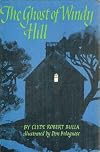
This is a book I believe I have owned since a small child but have never bothered to read for nearly fifty years.
A simple bit of children's literature fluff about a skeptical professor taking his family to the country to prove a farm manor is not haunted. Some mildly mysterious hijinks ensue, but all turns out well in the end.
I'm amused by the major role the wives play in causing everything to happen the way they want it to happen while barely getting to appear in the story at all. The show more husbands get to sit around talking all the time but are shown to really accomplish nothing. I'm convinced the women had the whole mystery worked out in the first chapter with a couple of unstated glances and nods. show less
A simple bit of children's literature fluff about a skeptical professor taking his family to the country to prove a farm manor is not haunted. Some mildly mysterious hijinks ensue, but all turns out well in the end.
I'm amused by the major role the wives play in causing everything to happen the way they want it to happen while barely getting to appear in the story at all. The show more husbands get to sit around talking all the time but are shown to really accomplish nothing. I'm convinced the women had the whole mystery worked out in the first chapter with a couple of unstated glances and nods. show less
Lists
Awards


You May Also Like


Associated Authors
Statistics
- Works
- 95
- Also by
- 7
- Members
- 27,421
- Popularity
- #748
- Rating
- 3.8
- Reviews
- 172
- ISBNs
- 322
- Languages
- 3
- Favorited
- 11
