
Eloise Jarvis McGraw (1915–2000)
Author of The Golden Goblet
About the Author
Series
Works by Eloise Jarvis McGraw
Techniques of Fiction Writing 3 copies
Associated Works
Tagged
Common Knowledge
- Canonical name
- McGraw, Eloise Jarvis
- Birthdate
- 1915-12-09
- Date of death
- 2000-11-30
- Gender
- female
- Education
- Principia College (BA|1937)
- Occupations
- children's book author
- Awards and honors
- Newbery Honor (1952, 1962, 1997)
Edgar Award (1977, 1994)
Lewis Carroll Shelf Award (1963) - Relationships
- McGraw, William Corbin (husband)
McGraw, Lauren Lynn (daughter) - Cause of death
- cancer
- Nationality
- USA
- Birthplace
- Houston, Texas, USA
- Places of residence
- Portland, Oregon, USA
Wilsonville, Oregon, USA
Oklahoma City, Oklahoma, USA - Place of death
- Portland, Oregon, USA
- Burial location
- River View Cemetery, Portland, Multnomah County, Oregon, USA
- Associated Place (for map)
- Oregon, USA
Members
Reviews

A very solid story that reminds me more of the mid-grade historical fiction I was reading in the '90s than a fantasy novel, although there is certainly a distinct fantasy element. McGraw spends a lot of energy involving us in the parochial world of a medieval Scottish village - at turns both wondrous to a child and stifling - and it becomes one of those wonderful books you just enjoy wandering around in with the protagonist. Happily, it also resists the overly simplistic ending you might show more expect, and along the way there's enough half-glimpsed elements of the Folk's fairy world to keep a young imagination going. A quiet book, but very much recommended. show less
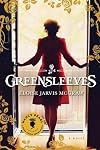
Shannon Kathleen Lightley is an ex-pat mongrel - born in Ireland to a British actress and an American investigative journalist, she has lived her life out of suitcases, residing in houses and hotels all over the world, but never fitting in anywhere. When she finishes high school in America, she revolts against her father's plan that she begin college immediately, and instead takes a job offered by a family friend; a lawyer, he is investigating the strange will left by a woman which show more completely ignores the woman's grown daughter and instead leaves odd bequests to a bunch of strangers in Portland, Oregon. Shannon reinvents herself as Georgetta, a gum-chewing, blue-eyelidded, beehive-hairdo-wearing girl who takes the dead woman's room at a boarding house and starts working as a waitress. Her sleuthing activities, however, teach her much more about herself than the motives of her neighbours.... I first read Eloise Jarvis McGraw's Greensleeves in the early 1970s when I was 12 or 13 years old, and it stayed with me for decades after, so I was very glad to learn that it was being reissued, in e-book form, this Spring as part of a series called "Nancy Pearl Presents A Book Crush Rediscovery." Who Nancy Pearl is and how she found this book (and others, one presumes) is anybody's guess, but I'm delighted to find that the book remains as wonderful on re-reading as it did the first time around. I think what grabbed me the most about the story was the "ex-pat mongrel" bit - like Shannon, I was born in one country of parents from another, lived in four countries by the age of 8 and never fit in anywhere (although my family was not glamorous at all, unlike Shannon's). So I related to the character immediately, and fell into the story because of that. I'm not too sure what the readership for this reissue might be, though, given that the target audience of young girls/women today lead lives completely unlike the lives of people in 1968, and many aspects of the story (the boarding house, the expectation of early marriage for young women, even the way airports were laid out and accessed) would seem entirely foreign to today's youth. Nevertheless, I'm pleased that it exists in the world again, and that it lives up to my fond memories of it; recommended! show less

After The Forbidden Fountain of Oz, Eloise McGraw returned to Oz one last time, making The Rundelstone of Oz the last book written by a "Famous Forty" author. It was originally published in a periodical called Oz-story with pictures by Eric Shanower, and then republished as a standalone volume by Hungry Tiger Press with more illustrations.
Rundelstone is an unusual Oz novel; aside from the opening chapter (set in the Emerald City), the entire book takes place in the confines of a single show more village, and most of it even takes place on the grounds of a single castle! Despite this, it still manages to feel pretty Ozzy. The protagonist is a living puppet, part of a performing troupe of living puppets, but Poco doesn't, say, desire to be a real boy or anything; he just is a living puppet, the kind of thing you might expect to find in Oz. Poco enjoys his life, but suffers because of the cruel maestroissimo of the troupe, its one human member, who bullies all the puppets, but especially Poco.
Poco and his troupe come to the town of Witheraway, where Poco is enchanted—supposedly by accident—by the town's "witherd" (he's not a wizard because there's only one legal wizard in Oz), and the troupe leaves without him while he's in the form of a cuckoo clock. The witherd make him into his lead servant, but as time goes on, Poco become suspicious that there's something more afoot.
With its emphasis on its protagonist's interiority, personal fears, and character growth, this reminded me a lot of McGraw's first Oz book, Merry Go Round, and though I didn't enjoy it as much, as I did enjoy it quite a lot. McGraw is more attentive to this kind of thing than any other Oz writer, and though I can see how some readers may want more cool locations and weird creatures, I enjoyed the change of pace. It feels Ozzy enough while feeling different from all the other books too. (I've seen it suggested that Rundelstone is most like Ozma of Oz, but that really has just one confined section.) Poco is on a quest of sorts, but not a physical journey, a quest to find out what happened to his troupe and a quest to discover his own confidence. The book moves a little slowly, perhaps—an adult reader will certainly be ahead of Poco—but I found it was perfectly paced for a six-year-old listener, who will be a bit less savvy to when characters are lying and what the truth might be.
You can't go wrong with Eric Shanower illustrations; he of course brings a lot of key moments to life. My kid pronounced they enjoyed the "whole thing." They do tend to get confused when there's a lot of "off-screen" backstory, which there is a bit here, with the origin of the Spellstones in Fyordi-Zik. We're told this in a lump of exposition, and I had to remind them of it a few times later on. I only found myself dissatisfied by the very ending. Though Ozma doesn't turn up to sort everything out too early (as she does in some Oz books), meaning Poco is ultimately responsible for solving most of the situation, I did find myself wishing she'd turned up a tiny bit later so he could do a tiny bit more on his own and prove himself.
But much like with Merry Go Round, I found myself wishing there was a sequel. I want to know what other scrapes Poco and the Troupadours get into with their itinerant lifestyle—and how they get back out again! show less
Rundelstone is an unusual Oz novel; aside from the opening chapter (set in the Emerald City), the entire book takes place in the confines of a single show more village, and most of it even takes place on the grounds of a single castle! Despite this, it still manages to feel pretty Ozzy. The protagonist is a living puppet, part of a performing troupe of living puppets, but Poco doesn't, say, desire to be a real boy or anything; he just is a living puppet, the kind of thing you might expect to find in Oz. Poco enjoys his life, but suffers because of the cruel maestroissimo of the troupe, its one human member, who bullies all the puppets, but especially Poco.
Poco and his troupe come to the town of Witheraway, where Poco is enchanted—supposedly by accident—by the town's "witherd" (he's not a wizard because there's only one legal wizard in Oz), and the troupe leaves without him while he's in the form of a cuckoo clock. The witherd make him into his lead servant, but as time goes on, Poco become suspicious that there's something more afoot.
With its emphasis on its protagonist's interiority, personal fears, and character growth, this reminded me a lot of McGraw's first Oz book, Merry Go Round, and though I didn't enjoy it as much, as I did enjoy it quite a lot. McGraw is more attentive to this kind of thing than any other Oz writer, and though I can see how some readers may want more cool locations and weird creatures, I enjoyed the change of pace. It feels Ozzy enough while feeling different from all the other books too. (I've seen it suggested that Rundelstone is most like Ozma of Oz, but that really has just one confined section.) Poco is on a quest of sorts, but not a physical journey, a quest to find out what happened to his troupe and a quest to discover his own confidence. The book moves a little slowly, perhaps—an adult reader will certainly be ahead of Poco—but I found it was perfectly paced for a six-year-old listener, who will be a bit less savvy to when characters are lying and what the truth might be.
You can't go wrong with Eric Shanower illustrations; he of course brings a lot of key moments to life. My kid pronounced they enjoyed the "whole thing." They do tend to get confused when there's a lot of "off-screen" backstory, which there is a bit here, with the origin of the Spellstones in Fyordi-Zik. We're told this in a lump of exposition, and I had to remind them of it a few times later on. I only found myself dissatisfied by the very ending. Though Ozma doesn't turn up to sort everything out too early (as she does in some Oz books), meaning Poco is ultimately responsible for solving most of the situation, I did find myself wishing she'd turned up a tiny bit later so he could do a tiny bit more on his own and prove himself.
But much like with Merry Go Round, I found myself wishing there was a sequel. I want to know what other scrapes Poco and the Troupadours get into with their itinerant lifestyle—and how they get back out again! show less

Another landmark Oz book for me and my kid—the last of the Famous Forty! The only memory I have retained of it from my own childhood is the first chapter, where Oregon orphan Robin Brown grabs the brass ring on a merry-go-round and is transported to Oz; literally none of the rest of the book was even remotely familiar as I reread it. This is a shame because as an adult reader, I loved it. This was definitely my favorite post-Baum Oz novel, and to be honest, there's more than a few Baum show more novels I would say it exceeds too.
The plot owes more to Ruth Plumly Thompson's Oz than Baum's in some ways, reminding of Grampa in Oz in particular, but also Kabumpo in Oz or Purple Prince: the prince of an eccentric, vaguely fairly tale Oz kingdom must go on a quest to save his people. (Though unlike in those books, there's no romance element to the quest.) This isn't really the kind of thing Baum went in for, by and large. In this case, the jousting- and genealogy-obsessed Munchkin enclave of Halidom has lost three Golden Circlets that grant its inhabitants strength, intelligence, and skill in handicrafts. Prince Gules goes on a quest to reacquire them, though as he lacks both intelligence and strength, the quest is really being managed by the page Fess, who comes from the neighboring kingdom of Troth; they are accompanied by Fess's pet Flittermouse (half-mouse, half-bat), Gules's steed Fred (who ostentatiously styles himself Federigo, but is secretly descended from a plow-horse), and a fairy Unicorn (supposedly the only unicorn in Oz, but a footnote reminds us there are other unicorns in Oz that the people of Halidom don't know about; see Magic of Oz and Ojo).
Merry Go Round also merges in notes of Gnome King, Yellow Knight, or especially Speedy in its use of a boy American protagonist who gets to Oz in circumstances that are admittedly somewhat dubious and underexplained. Robin Brown is an orphan in foster care who grabs a magic brass ring on a merry-go-round, transporting him to Oz, but also (for reasons never explained) the merry-go-round horse he was riding, which comes to life. He dubs her "Merry Go Round," and he and Merry are of course swept up into a number of adventures as they try to get to the Emerald City, where hopefully Princess Ozma will be able to transport them home and make Merry into a Real Horse.
At first, we go back and forth between the two parties; eventually the book adds in Dorothy and the Cowardly Lion, who are (initially) setting out to see the Easter Bunny to order Easter eggs for an upcoming Easter party in the Emerald City. First Dorothy and the Cowardly Lion encounter the party from Halidom; then all three groups converge in the city of Roundabout, whose inhabitants think Robin is their prophesied king.
I don't think it's a coincidence that coauthor Eloise Jarvis McGraw is basically the only post-Baum "Royal Historian" to have had a career as a children's author outside of the Oz books; indeed, she was a Newbery Honor recipient three different times! More than any other Oz book, this one actually cares about the characters and development of its protagonists. Robin, who always feels passed over, must learn to speak up if he's to help Merry. Gules must learn how to act as a leader. Fess must manage a group of people without letting them know they're being managed. Flitter must learn to be brave. Fred must learn to not be so vain. Merry must learn what a "Real Horse" actually is. All of the McGraws' original characters have little arcs, and while Dorothy and the Cowardly Lion don't really change, she does well by them, too. While the McGraws are clearly imitating Thompson, this is a depth of characterization and theme that Thompson herself never achieved (except, perhaps, in Kabumpo). She's also a more subtle writer than some of her predecessors, with more stuff communicated through allusion at times; I would say the reading level is pitched slightly higher than most Famous Forty books.
It's a large set of characters, and I do think my kid found this a bit hard to keep track of at first; plus, there's a lot of exposition in the first Halidom chapter, and conversely, the lack of direct explanation at some points meant I had to spell things out. But unlike some other Oz books with large casts (e.g., Hidden Valley), the McGraws are very careful to give everyone something meaningful to do, both in terms of little bits of business throughout, also in that every character meaningfully contributes to the problem-solving multiple times. There's, for example, some good gags about the vegetarian food the Cowardly Lion is forced to eat in the Easter Bunny's kingdom, and the escape from the Land of Good Children is an excellent sequence, pure Oz problem solving combined with pure Oz whimsy.
I came to enjoy every single one of these characters, and it seems a shame that though McGraw made two returns to Oz, I don't think she ever followed up on any of these characters. I want to see Robin and Merry come into their own, or what Fess is like as he grows older! (I have a theory about him...) There were a lot of fun, distinct voices to do here. I of course particularly loved doing the over-the-top princely declamations of Prince Gules. The end of the book is good, too; things are wrapped up for everyone quite nicely.
I think it's a long book. (I looked around for a list of Oz book word counts but couldn't find one; some enterprising fan must have done this, though.) It runs the usual twenty-ish chapters, and several Oz books are longer in terms of page count, but I felt like the typeface was smaller and chapters often took almost thirty minutes to read aloud instead of the usual fifteen/twenty. Despite this, we read it less than three weeks (we usually average an Oz book a month) because my kid kept asking for extra chapters, so they must have been into it. They were very into the untangling of the books' two prophecies,* and the finding of the three circlets, and they very much liked the journey map contained in the front of book. I think it was slightly over their head in some spots, in a way no Oz book we've read has been for a while, but in a good way.(The only thing to not like in this regard is more an issue for the child reader than the adult one; by the time the key character of Sir Greves returned in the last couple chapters, I don't think my kid remembered him from the first couple chapters at all!)
Dick Martin illustrates. I didn't care for his take on Dorothy, and he's no John R. Neill, but his style is well-suited to the tone of the book. Like many of the late Famous Forty books, my big issue with the pictures is that there ought to be more of them! show less
The plot owes more to Ruth Plumly Thompson's Oz than Baum's in some ways, reminding of Grampa in Oz in particular, but also Kabumpo in Oz or Purple Prince: the prince of an eccentric, vaguely fairly tale Oz kingdom must go on a quest to save his people. (Though unlike in those books, there's no romance element to the quest.) This isn't really the kind of thing Baum went in for, by and large. In this case, the jousting- and genealogy-obsessed Munchkin enclave of Halidom has lost three Golden Circlets that grant its inhabitants strength, intelligence, and skill in handicrafts. Prince Gules goes on a quest to reacquire them, though as he lacks both intelligence and strength, the quest is really being managed by the page Fess, who comes from the neighboring kingdom of Troth; they are accompanied by Fess's pet Flittermouse (half-mouse, half-bat), Gules's steed Fred (who ostentatiously styles himself Federigo, but is secretly descended from a plow-horse), and a fairy Unicorn (supposedly the only unicorn in Oz, but a footnote reminds us there are other unicorns in Oz that the people of Halidom don't know about; see Magic of Oz and Ojo).
Merry Go Round also merges in notes of Gnome King, Yellow Knight, or especially Speedy in its use of a boy American protagonist who gets to Oz in circumstances that are admittedly somewhat dubious and underexplained. Robin Brown is an orphan in foster care who grabs a magic brass ring on a merry-go-round, transporting him to Oz, but also (for reasons never explained) the merry-go-round horse he was riding, which comes to life. He dubs her "Merry Go Round," and he and Merry are of course swept up into a number of adventures as they try to get to the Emerald City, where hopefully Princess Ozma will be able to transport them home and make Merry into a Real Horse.
At first, we go back and forth between the two parties; eventually the book adds in Dorothy and the Cowardly Lion, who are (initially) setting out to see the Easter Bunny to order Easter eggs for an upcoming Easter party in the Emerald City. First Dorothy and the Cowardly Lion encounter the party from Halidom; then all three groups converge in the city of Roundabout, whose inhabitants think Robin is their prophesied king.
I don't think it's a coincidence that coauthor Eloise Jarvis McGraw is basically the only post-Baum "Royal Historian" to have had a career as a children's author outside of the Oz books; indeed, she was a Newbery Honor recipient three different times! More than any other Oz book, this one actually cares about the characters and development of its protagonists. Robin, who always feels passed over, must learn to speak up if he's to help Merry. Gules must learn how to act as a leader. Fess must manage a group of people without letting them know they're being managed. Flitter must learn to be brave. Fred must learn to not be so vain. Merry must learn what a "Real Horse" actually is. All of the McGraws' original characters have little arcs, and while Dorothy and the Cowardly Lion don't really change, she does well by them, too. While the McGraws are clearly imitating Thompson, this is a depth of characterization and theme that Thompson herself never achieved (except, perhaps, in Kabumpo). She's also a more subtle writer than some of her predecessors, with more stuff communicated through allusion at times; I would say the reading level is pitched slightly higher than most Famous Forty books.
It's a large set of characters, and I do think my kid found this a bit hard to keep track of at first; plus, there's a lot of exposition in the first Halidom chapter, and conversely, the lack of direct explanation at some points meant I had to spell things out. But unlike some other Oz books with large casts (e.g., Hidden Valley), the McGraws are very careful to give everyone something meaningful to do, both in terms of little bits of business throughout, also in that every character meaningfully contributes to the problem-solving multiple times. There's, for example, some good gags about the vegetarian food the Cowardly Lion is forced to eat in the Easter Bunny's kingdom, and the escape from the Land of Good Children is an excellent sequence, pure Oz problem solving combined with pure Oz whimsy.
I came to enjoy every single one of these characters, and it seems a shame that though McGraw made two returns to Oz, I don't think she ever followed up on any of these characters. I want to see Robin and Merry come into their own, or what Fess is like as he grows older! (I have a theory about him...) There were a lot of fun, distinct voices to do here. I of course particularly loved doing the over-the-top princely declamations of Prince Gules. The end of the book is good, too; things are wrapped up for everyone quite nicely.
I think it's a long book. (I looked around for a list of Oz book word counts but couldn't find one; some enterprising fan must have done this, though.) It runs the usual twenty-ish chapters, and several Oz books are longer in terms of page count, but I felt like the typeface was smaller and chapters often took almost thirty minutes to read aloud instead of the usual fifteen/twenty. Despite this, we read it less than three weeks (we usually average an Oz book a month) because my kid kept asking for extra chapters, so they must have been into it. They were very into the untangling of the books' two prophecies,* and the finding of the three circlets, and they very much liked the journey map contained in the front of book. I think it was slightly over their head in some spots, in a way no Oz book we've read has been for a while, but in a good way.(The only thing to not like in this regard is more an issue for the child reader than the adult one; by the time the key character of Sir Greves returned in the last couple chapters, I don't think my kid remembered him from the first couple chapters at all!)
Dick Martin illustrates. I didn't care for his take on Dorothy, and he's no John R. Neill, but his style is well-suited to the tone of the book. Like many of the late Famous Forty books, my big issue with the pictures is that there ought to be more of them! show less
Lists
1950s (1)
1970s (1)
Hidden Classics (1)
Female Author (1)
Awards


You May Also Like


Associated Authors
Statistics
- Works
- 25
- Also by
- 2
- Members
- 11,828
- Popularity
- #1,986
- Rating
- 4.0
- Reviews
- 141
- ISBNs
- 120
- Languages
- 3
- Favorited
- 7
